
*A version of this article was published at Christ and Pop Culture on July 20th, 2026.
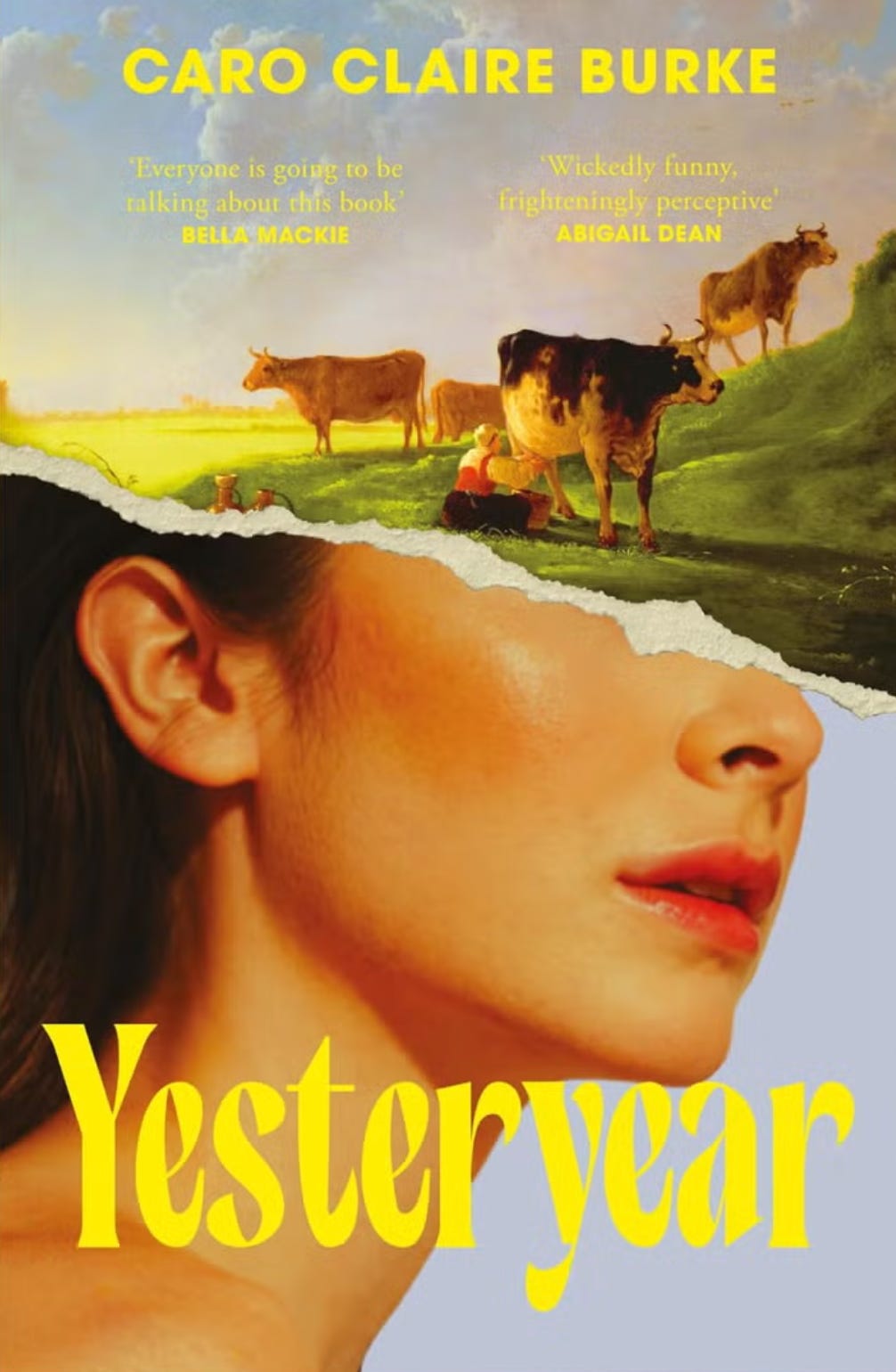
When I first came across this book, I literally rolled my eyes. A novel about a tradwife influencer who wakes up one day back in the 19th century world she pretends to live in felt, honestly, kind of dumb. But I was so wrong. Yesteryear by Caro Clairo Burke is a captivating and brilliant satire.
Yesteryear centers around the story of Natalie Heller Mills, an influencer who lives with her husband Caleb and five children on a farm in Idaho. Her account @Yesteryearfarm has gone viral and Natalie spends her days making sourdough and supposedly doing farm chores for the camera. Behind the scenes is a team of nannies and hired farm hands. Her Shaker-style kitchen cabinets hide her modern appliances and her husband’s failing cattle farm and “organic” vegetable garden hardly produces enough food to feed a family.
With Natalie as our narrator, the timelines of the book fluctuate between the supposed present where she is losing control of the online empire, her past upbringing, her education at Harvard (where she discovers all the “angry women,” and vows to live a life different than that of her peers) and her engagement and marriage to Caleb (the youngest son of a GOP career politician). As they build their family, they set out with a plan. Backed by this father-in-law’s enormous fortune, the Mills intend to cosplay homesteading in Idaho. Natalie is driven—by keeping up appearances, by avoiding suffering, by finding acceptance from an online following, by anything that keeps her from actually settling into the reality of herself and her own life. She is delusional and infuriating because deep down, we are all a little like Natalie.
And who was I? A flawless Christian woman. The manic pixie American dream girl of this nation’s deepest, darkest fantasies. The mother every woman wanted to be, and the wife every man wanted to come home to…My name is Natalie Heller Mills, and I was perfect at being alive.1
The book’s plot twist occurs when present Natalie wakes up to find herself actually living in the same Idaho farmhouse, but in 1855. She is disoriented and desperate to find her way back to the old present. The labyrinth of appearances she has built becomes a trap she can’t escape from.
Although the book currently sits at the top of the New York Times Bestseller list, it has caused a serious stir. I think some of the most controversial aspects of the story (its portrayal of religion and women) are actually its greatest strengths. As Burke said recently in an interview, “We were all sold a bill of false goods, and that’s true for conservative women and it’s true for liberal women. … The point of the book is that no one wins.” Every culture script described falls short and the way Burke paints Natalie and her world serves as a cautionary tale for us all.
Two competing cultural scripts emerge early on in Yesteryear. Natalie is confronted with a world of girl-boss inspired, driven, feminist peers during her time at Harvard. She hates these women, but also is obsessed with them. Driven by her hate, she decides to take a hard right turn for herself. Happiness, she decides, is to build a kingdom of motherhood. She strives just as hard as her liberal feminist peers and her job of keeping up the performance has more in common with her corporate climbing former roommate than she cares to admit.
I have long been fascinated by the confluence of influencer tradwife content and liberal feminism. What is billed as a return to God’s plan for women in being a traditional wife and mother (while capturing it as content and making money doing it), is ironically only possible because of the contributions of second and third wave feminism. We all recognize the failures of post-enlightenment modernity and long for a return to simpler times. Tradwife content provides the escape out of the rat race we long for. But it turns out, most of the time the influencers making the content driving this desire are pretending. Or are backed by enormous fortunes and are privileged enough to take the risk.
Some of the magic has worn off recently in tradwife influencer culture as scandals emerge. Last year, a disorienting interview of Hannah Neelman of Ballerina Farm, one of the most successful tradwife influencers to date, showed that all may not be as it seems, or at least not as effortless and shiny. In Yesteryear, Burke pulls the psychological and physical curtain back to reveal where this promise of a simpler life falls short. In fact, it’s all a game of pretend that requires an enormous amount of effort.
Online Natalie was merely posturing herself as a homesteader and Offline Natalie was never actually homesteading. Natalie makes a fantasy world so her husband can feel useful, her father-in-law can feel justified, and so she herself can feel validated and accepted:
I wanted the whole entire world to see itself through my eyes.2
Natalie’s entire life is pretend. All of it. Her marriage is a sham, she doesn’t really like being a mother, and as she discovers, the thing that kept her own mom going was “pretending someone was watching.” So Natalie embarks on her own version of this—she lives for her online following. Natalie is well aware of this and she also knows that her online audience only needs the appearance of authenticity to be satisfied. Because tradwife content is an escape, it only has to have the appearance of cottage cozy comfort because actual pioneer life was honestly brutal and not at all cozy.
These women wanted their content to be every bit as mindless and pleasurable as their lives were not. These women wanted—no they needed—perfection from me. After all, the tighter the stitching, the more soothing it is to pick apart at the seams.3
The life Online Natalie presents as one of not striving but simply and effortlessly keeping house and raising children, is in fact a mirage. The product of Offline Natalie’s intense performance looks simple but is just the result of her tireless efforts. The tradwife influencer life isn’t anymore an escape than the girl-boss corporate grind.
Some recent reviews have criticized Burke for constructing a main character that doesn’t seem like a real person. Natalie doesn’t feel very realistic, I think, because she never truly learned how to be a person. This is most evident in all her relationships—with God and with virtually everyone else in her life. One minute she is praising God for “the Inheritance,” the next she is cursing out some woman in Target. She seemingly has no idea how to have a real friendship, or how to to really connect with her children or her dopey husband. Her mother is constantly reminding her to exhibit basic human traits, like kindness. Natalie’s personality shifts and changes at Burke’s whim to fit the narrative because she is a hollow shell of a fully grown woman.
Some readers are rightfully frustrated with this. But I think as Serena Siglitto argues in her recent review, Natalie “has no stable sense of self, only a series of personas that she inhabits in order to get what she wants in any given situation. As a result, Natalie is unable to truly encounter any of the people around her, including her husband. She cannot see them as persons. She cannot even see herself as a single integrated person. Instead, she treats herself as a product that exists for the entertainment and consumption of others.”
She is a commodity, and she exists in order to commodify others. In our moment, we live in a culture of narcissism. We are all tempted to lose the plot, seeing only ourselves and living for only ourselves. Natalie fails to see anyone around her as a person, because she doesn’t know herself. Her inner emptiness leads her to objectify others and see the world as a place where her only worth is in her own performance, self-objectification, and self-love. Again, Siglitto:
“Even those who eschew social media may unconsciously begin to view themselves through the dehumanizing lens of performative commodification. If women do not possess a stable sense of their own personhood, lovability, and inherent worth, they can easily fall into the trap of believing that they must construct one.”
Not only is Natalie’s personhood self-constructed, but her Christianity is as well. Natalie feels like a satire of a woman raised in fundamentalism because she is. And I will admit, in the beginning of the novel, I found the descriptions of religion off-putting. It all felt so generic and ambiguous. Is this a CREC cult, or Mormonism, or some kind of IFB holdout? But as I read, I wondered if the author intentionally left the particular sect of Christianity ambiguous on purpose.
Bits and pieces of the brand of Christianity Natalie practices are familiar to most of us. It is conservative, yes, but beyond this, it is a tightly controlled Gospel of hierarchy. Everyone in this system knows their place and their roles and doesn’t stray from them. This is God and Country faith at its finest. And as the novel goes on, we find how these ideas of God, country, and family are ultimately all interchangeable with one thing: politics (and behind that: power).
In a recent interview with The Rumpus, Burke said that “whether it’s Mormonism or evangelicalism or Jehovah’s Witness, it’s really all the same in terms of how women are treated and what the expectations are for them.”
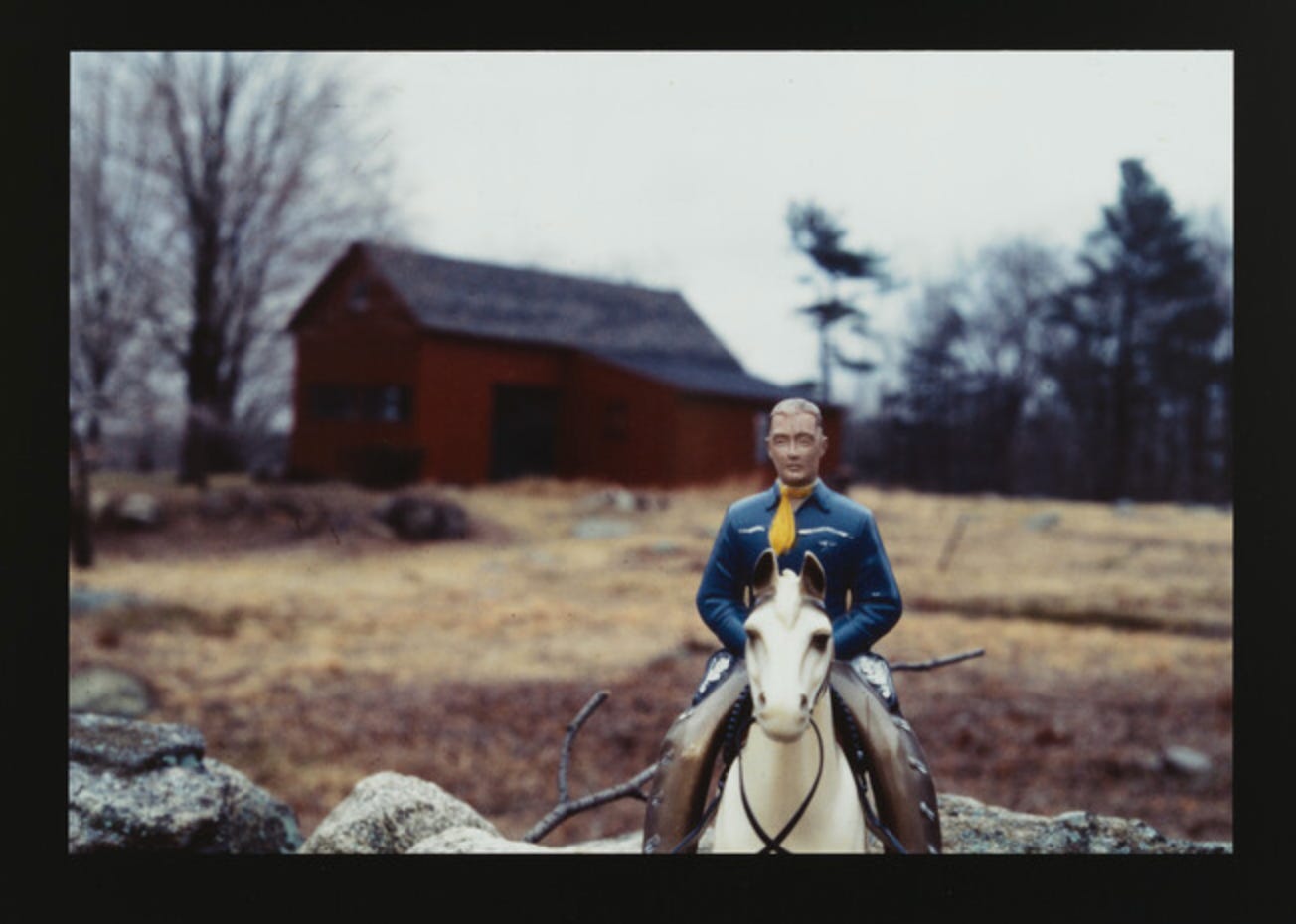
I don’t think the point of Yesteryear was to accurately sketch the complex inner workings of a woman in a high control form of Christianity or to mine the depths of its theological or social impacts. Natalie feels like a paper doll version of a good Christian wife and mother because the cultural script she has been handed literally is that—she is to play house. Real women in fundamentalism are much more nuanced and their lives contain both beauty and hardship. The strength of a generic Jesus and John Wayne flavor of Christianity in the novel is that it becomes a striking contrast to the secular feminist script. In fact, from the strictest fundamentalism to Evangelicalism, women are often told that their worth and value are in God’s plan for them as wives and mothers and this supposedly stands in direct opposition to what “the culture” expects of them.
The ultimate brilliance of Yesteryear is that it shows how these two seemingly rival cultural scripts for women actually have much more in common than we have been led to believe. They are, in fact, two sides of the same coin. What the cult of biblical womanhood and the secular girl-boss script have in common is that they both place immense burdens on women and the results they promise come up short.
One of my absolute favorite moments in the book is when Natalie is interviewing Shannon, a 19 year old east coast cultural elite college drop out who is not only interested in coming alongside Natalie as a producer, but is a huge fan of her account.
“Everyone at my school loves you, you know. They think you’re a feminist icon.”
For a moment my guard dropped. I leaned back and snorted. “Really?”
She laughed. “Hell yeah! I mean, no one I know wants to go spend their one wild and magical life being a shill for some billionaire tech a**hole, just so they can get access to s****y healthcare and put away like five dollars a month for their retirement.”
“Just so they can breastfeed in a broom closet someday,” I added quickly. I was familiar with this game.
Shannon pointed a finger at my chest, dead-on, like a pistol. “Exactly. What they want is what you have, Natalie.”
“Which is what?” She smiled and said softly, “Freedom, of course.”
“So I’m—what?” I said. “Some kind of catharsis for girls your age?”
“It’s not catharsis,” Shannon said. “It’s more like a road map.” She was speaking with the kind of urgent self-seriousness that only a twenty-year-old can have. “What you’re doing on your farm, with the homesteading and the farm-to-table and the keeping your kids away from technology? Building a business with your husband, and owning all the means of production, and running it from the comfort of your house? That’s the future, Natalie. That’s the way out.”
“The way out of what?” “Oh,” she said, like it was obvious. “The maze.”4
Gen Z Shannon is disillusioned with the girl-boss empowerment 90’s feminism has made possible for her. And Natalie has seemingly found a way out of the maze: freedom in a self-made life. The only problem is, Natalie’s life is actually all pretend (except for the very real Inheritance funding her pursuits). There is no cultural script that offers a way out of the maze. Natalie has just created a new variation of the maze, one still based on striving and performing.
Natalie’s faith isn’t even an antidote to the maze she has found herself in. Jesus is around, but more as someone who is ready to reward and bless only when properly obeyed. Her constant scrutiny of herself is a reflection of God’s supposed constant scrutiny of her. There is no good news, no grace, for herself or anyone else. Her entire life as a woman is a test; she can either pull herself up by her bootstraps or fail. The future of her soul is entirely dependent on her success as a Christian woman. Natalie’s perfectionism couldn’t secure for her the outcome she desired.
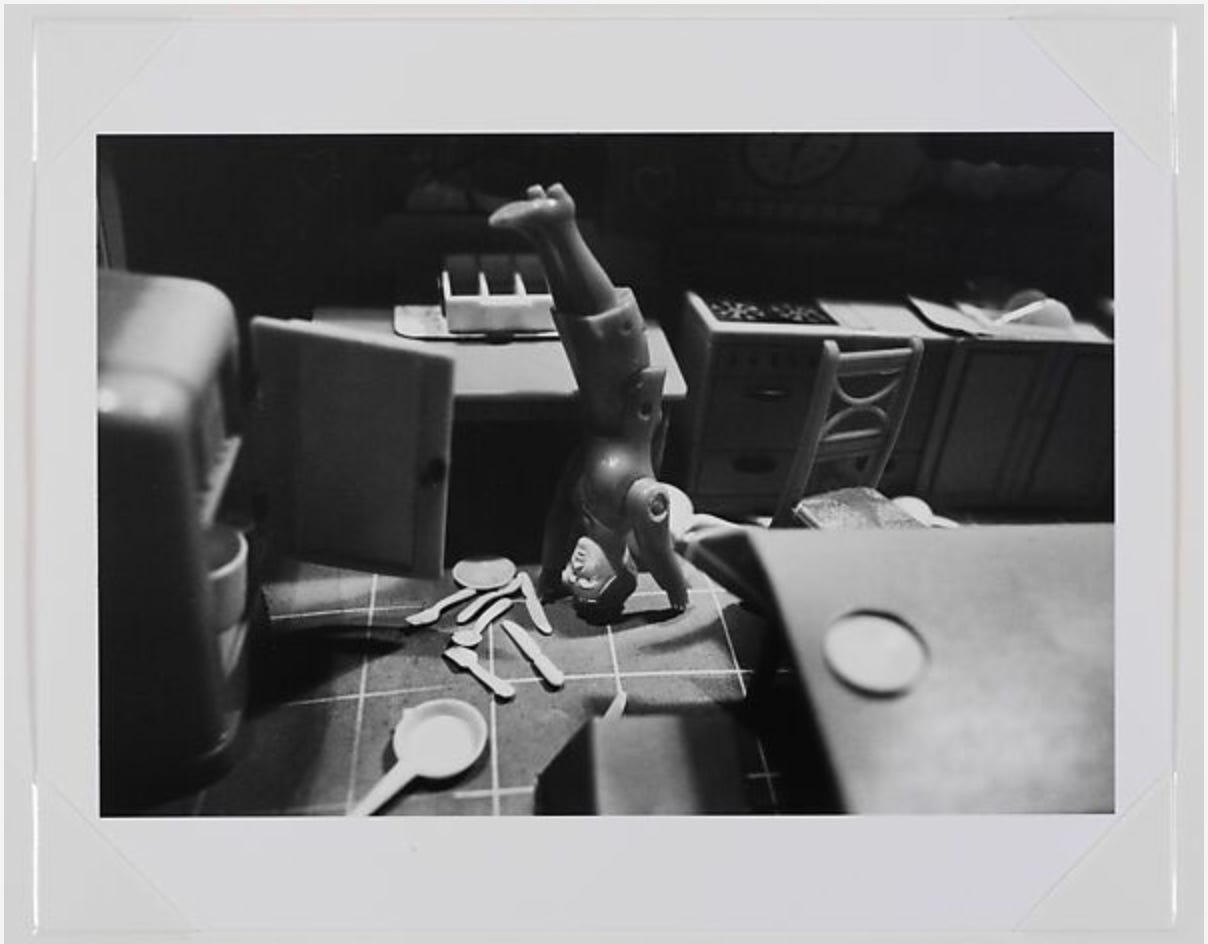
How boring. How deeply and utterly unfair. I did everything I was supposed to. I had the children and married the man and created a universe for all of us to live in, and what was I going to get for it?5
In the end, it’s too late for Natalie. She loses the plot and she loses not only herself but everything she has tried to build. But there is one character who gets out and pulls others out along with her. The end of the novel wraps up almost a bit too quickly, but the sudden emergence of Natalie’s oldest daughter, Clementine, shines a light into the darkness. Clementine has spent her life in the internet’s spotlight, crafted in the image of her mother. At 16 she leaves home to find herself. And in doing so, returns to bring her younger siblings out of the chaos her mother has constructed.
Clementine has nothing to prove but her court order. She has no justification for her return except a concern for the welfare of those left behind. Whether she is driven by justice, love, or spite, she does what her mother could never do: she sees others as full persons in need of love and care.
Regardless of the cultural script we adhere to, what gives us the freedom to act in this kind of self-denying love? We all ultimately just want a script; we want to be told what to do. If we can do it well enough, maybe then we can secure for ourselves the kind of real stability, acceptance, and rest from the constant striving we truly desire.
But real acceptance and rest isn’t something we can manufacture for ourselves. It has to come from outside of us. Apart from grace breaking in and re-orienting us, we will never have know the freedom it is to take our gaze off of ourselves and give ourselves as a gift to others. The way out of the maze isn’t in disappearing or running as fast or as hard as we can. It’s in finding our true selves rooted in Love and surrendering to the grace of God already at work in us. True freedom comes in being rooted in this love and grace, and having nothing to lose in giving ourselves up for others.
When Jesus said he offers rest for the weary and that his yoke is easy and burden light, do we believe he really meant it? Striving or grasping for power won’t bring us the outcomes we can only find in resting in the abundant life he has secured for us and offers freely. You don’t have to run anymore.
In Summary:
I think perfectionism is based on the obsessive belief that if you run carefully enough, hitting each stepping-stone just right, you won’t have to die. The truth is that you will die anyway…6
Yesteryear, pages 250-251
No posts
Comments
Nothing yet. Say the first thing.
Sign in to join the conversation.