
There has been a lot of talk recently about the “disenchantment” of our current culture. And rightly so. As we sit, post-enlightenment, post-post modern, we are a culture and time obsessed with productivity. Our ambitions lie in streamlining and pruning everything down to its most efficient and competent parts. What worth is anything that doesn’t add productivity to our already optimally operative lives? We will exploit and extract whatever is necessary from the world to get ahead. Call it The Machine, or just the de-humanization of our time, this endless pursuit of optimization is the rat race we are trapped in.
Unfortunately, imagination gets in the way of this pursuit of efficiency. We have no individual or collective time to sit and contemplate that there may be more to reality than what we can see or take or climb for our own benefit. A cosmos that is built on things we can’t see or explain really is a waste of time if it’s not something we can harness for our own ends. As Charles Taylor noted in his work A Secular Age, ours is now a “world painted by a reductive and mechanistic science.” This reducing of the world to what intellect can understand and hard work can achieve has led to our modern secular age, an age of disenchantment and disillusion. Faith feels at odds with these secular pursuits.
This age of disenchantment has done away with two things, according to Taylor. The first is belief in a world apart from our own material world: one of spirits and moral forces. The second thing we have lost is the idea that there is inherent meaning in the cosmos. Not only is there more to reality than we can see, but there are patterns and forces at work beyond our control.
These two ideas, historically, have given cultures meaning and direction. The stories and myths we tell about the nature of the world and our relationship to it and the gods gives our lives shape and purpose. But take away the stories and replace it with an entirely material world, and suddenly there go the patterns and inherent meaning in the cosmos that have always existed.
Christianity has a way of creating its own form of disenchantment, not in the sense of bringing secularism, but in challenging pagan culture. Early Christianity freed people from the pagan mindset that attributed every experience to a satisfied or unsatisfied god. Jesus drove out demons and the Gospel brought light to people stuck in the rat race of placating spirits. It turns out that we, as moderns, are not much different. We have just subjected ourselves to different gods.
I will not argue for a full scale return to “enchantment.” Let’s face it, modern progress has been possible because we no longer attribute everything that happens in the world to spirits, demi-gods, or demons. I am far too cynical to ascribe to post-milleniallism, but if we are honest, as broken as our modern world is, things like life expectancy and quality of life on a global scale are at a historic high. There is something to be said for technology and progress. It can’t just be undone or ignored. But this progress does come at a price. The ancients spent an enormous amount of time attempting to appease the spirit world and it is no wonder that the modern age as we know it started with the Enlightenment. But we have lost something that existed pre-Enlightenment: the idea that the world is more than meets the eye.
It is not only in secular spaces that this disenchantment has occurred. The hyper-cessationism of certain kinds of conservative Christianity, ironically, commits the same errors as secular modernism. In a good effort to draw us back to Scripture and protect against a kind of frenzied charismatic faith, it has, in its own ways, demystified Christianity. What is often left is a reformed faith that is almost scientific in how it approaches the Bible and the world. God is explainable and there is a sense of comfort in a black and white faith that accounts for everything. Because of this, some modern forms of reformed faith have more in common with secular materialism than they would care to admit.
This is not new. During the Protestant Reformation, in response to the Catholic Church, things like signs, visions, and miracles were no longer attributed to the work of God, but Satan.1 In an attempt to draw faith back to Scripture and away from subjective mystical experiences and the whims of popes, Christianity was stripped of a bit of mystery. It was argued that because the canon was closed and God was done speaking, he was also now limited in how he interacted in the world. But again, we lost something in rightly reigning in some of the unhinged practices of medieval Christianity. Mix this with the Enlightenment and we have a faith that can explain everything in a world that is devoid of mystery and enchantment.
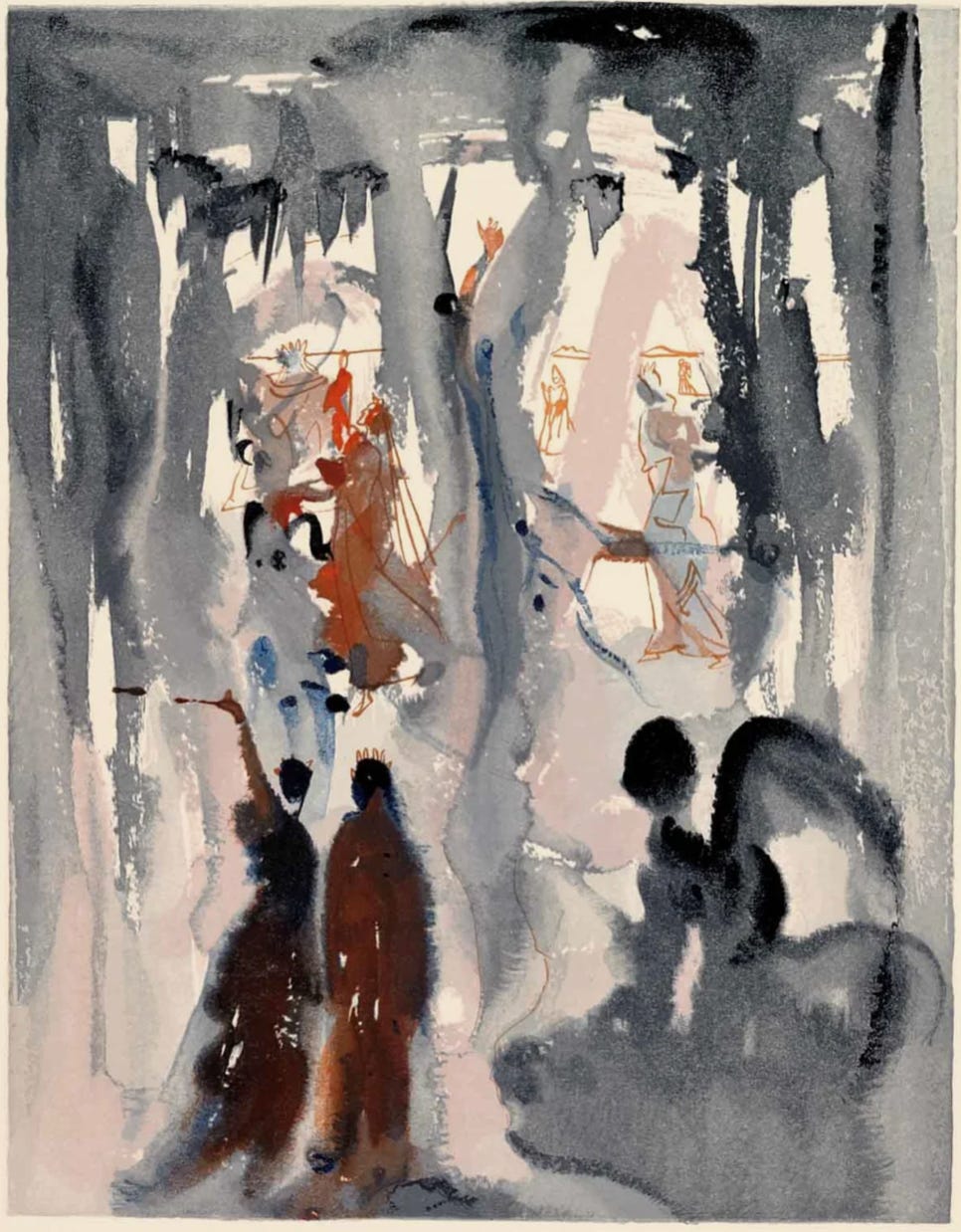
Along with this disenchantment comes a faith built not on story or sacramentality, but on intellect and reason. I once had a pastor who claimed that Christianity was the most obvious and rational way of seeing the world. If you reject it, you are nothing but an idiot, he often reminded us. Faith is rational, he claimed. But is it, by the definition of post-Enlightenment materialism? The core tenet of our faith involves an impossibility: the miracle of an Incarnate God rising from the dead. Is it so strange then that there may be more to the world than meets the eye?
Several years back, we attended a mainline service for Easter. The minister stood before us and admitted that since the resurrection is a scientific impossibility, it is just a fairytale. We had come to pay homage to a lie. But really what were we all doing there? I imagined the Apostle Paul standing in the back, 1 Corinthians 15 style, shouting, “Yes, what are we all doing here!?” The whole thing hinges on this suspension of reality, a miracle in which the fabric of the cosmos is torn and God and man are reunited in the Person of Christ. This may not be strictly rational. But it is real.
So what does this mean for our apologetic? I don’t know anyone personally who has converted as an adult because Christianity turned out to be the most scientific or rational explanation.2 I do know several people who converted because they encountered something they couldn’t explain by the material world or intellect alone. So instead of an apologetic that seeks to use Christianity as a means of explaining the scientific or material world alone, what if we contemplated an apologetic that not only accounts for the physical world we experience with our senses, but one that is not afraid to turn the actual perception of physical reality on its head?
Faith is upside-down. Faith in a God who made everything and loved his creation enough to become incarnate in order to save it doesn’t really make sense in the way our post-Enlightenment culture operates. To believe in a God and a spiritual world that we can’t see is everything materialism tells us not to do. If what is real is what I can sense and touch, then this reality I experience with my consciousness here and now is all that there is. But as Flannery O’Connor wrote,
“For me it is the virgin birth, the Incarnation, the resurrection which are the true laws of the flesh and the physical.”3
At the very heart of our faith is Incarnation and Resurrection. In order to believe in this God, we have to believe that reality as we know it can be turned upside-down. In fact, we believe that a world in which these things are not only possible but are normative. Resurrection is the way the world is meant to be.
We think embodied intelligence is the primary way in which we interpret reality. This was the gift of the Enlightenment- we have senses and intellect and this is how we experience the world. And while intelligence is a necessary tool, this way of engaging with the world only goes so far if the nature of reality isn’t primarily a material one. However, if reality is more than meets the eye, if the nature of the cosmos is symbolic and what we see is just the tip of the iceberg, then yes, Christianity gives us the most reasonable explanation for the way things are. The entire Bible presents us with a glimpse behind the curtain, a way in which heaven meets earth, and will someday perfectly coincide. If the world is patterned in a particular way, and our lives are shaped by these same patterns, then the way we interact with the world is not so much as embodied intelligences, but as embodied participants in the story of reality.
The way of the Kingdom is constantly going against our own intuitions: the poor are made rich, the weak are strengthened, the outcasts are brought in, orphans are given families, and kings are brought low. If you want to find your life, you need to lose it. If you are scorned and beaten, you turn the other cheek. If you have two coats, you give one away to someone in need. Our values of self-preservation, ambition, and materialism are challenged by this self-giving God who poured out his life for us so that we could know him.
The church, then, is called to be “other-worldly.” Not in the sense of being disconnected from the physical present world, but to live out an apologetic that displays a love and life that defies our culture’s empty ambitions and promises. We have been loved and have received grace and are set free to embody that grace and love in the world now. The mystery of our faith is not an “empty curio cabinet,” something almost embarrassing that we tuck away and forget about. The mystery is the true nature of reality.
Disenchantment is a bit of a misnomer—the world isn’t devoid of its former enchantment, we have just stopped noticing it. It is the mystery of God breaking into our world and making us a part of his story that makes our faith unique. This mystery has been realized in the person of Jesus and we have been caught up into it, calling others to taste and see that he is good.
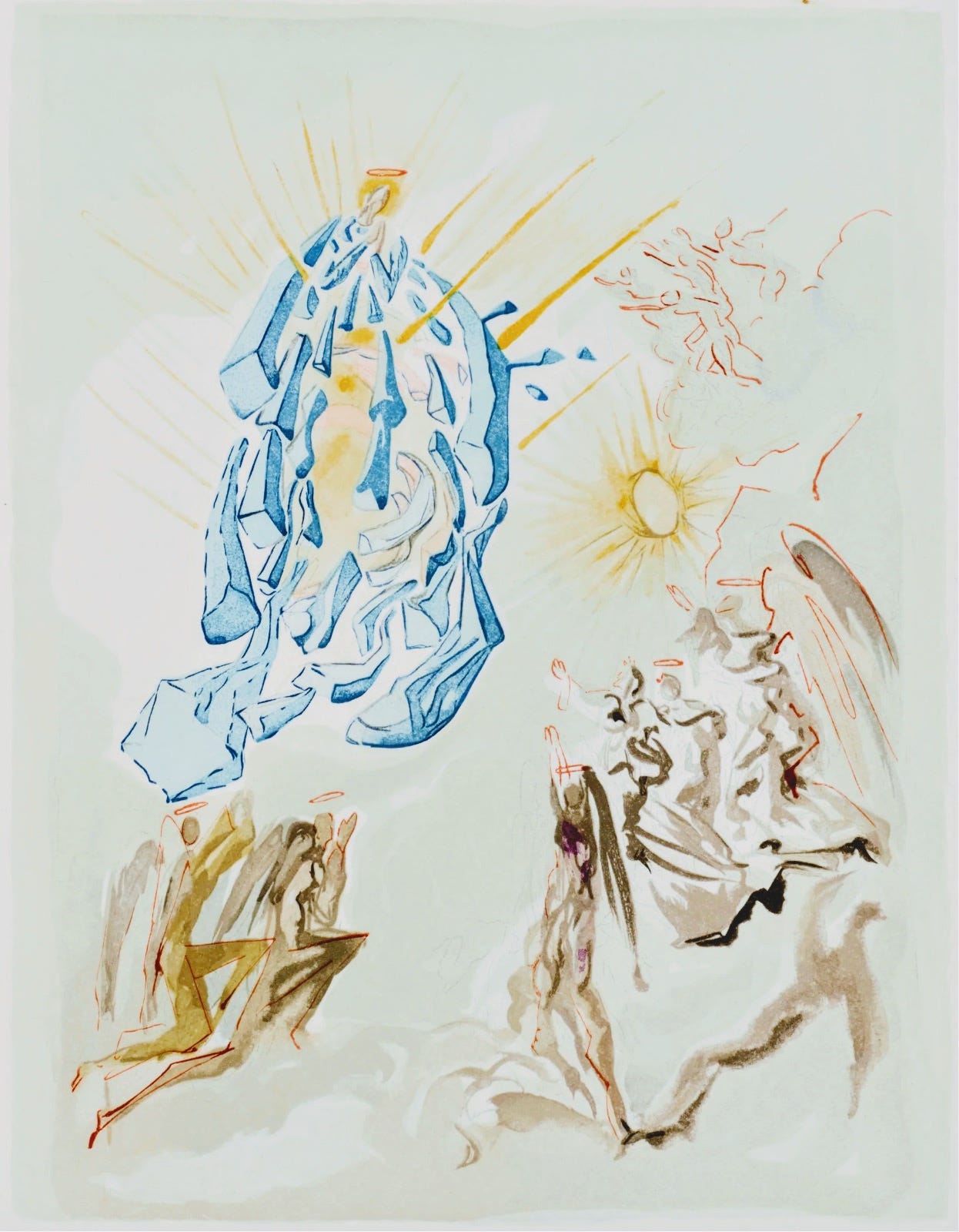
Cessationism, Caleb Westbrook
Has the wheel of magic
ceased to turn,
the world once charged
with ghosts and spiritsbut languishing now in hush
Belief remains steady, they say
God exists!
but what of belief,what does it signify? What
empty curio cabinet is our faith?Beware! The devil prowls around
in our ancient books, our modern
minds much too refined for
such superstitionwhile points of light
bespeckling
the primitive night are
balls of dying gas4
Not entirely ruling this kind of conversion out! Tim Keller seemed to be drawn to Christianity because it presented itself as a faith that not only answered his deepest longings, but offered an explanation for the material, scientific world in a way that satisfied him. See The Reason For God by Tim Keller for more on his conversion.
Flannery O’Connor, The Habit of Being
https://www.ekstasismagazine.com/poetry/2024/cessationism
No posts
Comments
Nothing yet. Say the first thing.
Sign in to join the conversation.