
As I was going over articles and books I have been reading the last few weeks, a common theme emerged- America. America 250 honestly caught me off guard. A friend had gone to the Museum of the Bible in the spring and was reporting back and it all hit me—the complex narratives we tell and the myths we hold to regarding who we are as a country and how we came to be, shape our current values and the ways we interpret both the past and the present.
America is beautiful. America is broken. American is complicated. From the very beginning, the idea that one should be able to live a life in pursuit of happiness and freedom has been at the core of the American project. Long before 1776, those on the persecuted religious fringe of Europe moved to the New World for a mixed bag of reasons. Little did they know, the land they established would become a place of promise, adventure, and ideally, of liberty and justice for all (although, not always). At our best, we are a land that is open to anyone, and full of possibility.
Sometimes America in 2026 still feels like possibility. Sometimes it feels like a capitalist wasteland. America is a land of contradictions. It always has been. As a whole, we enjoy a kind of prosperity that our great-grandparent immigrants couldn’t fathom. And on the other hand, we still grapple with immense poverty, injustice, and inequality. Yes, some founding ideas jive with the teachings of Jesus. But America, like all the nations of the world, is Empire. And Empire is always locked in a struggle against the Lamb. We, as Christians, often find ourselves caught in the middle of this conflict.
America welcomes you to devote your life to the pursuit of happiness. There is no guarantee, however, that you will ever find it.1
This Commonplace edition seeks to explore America in all its paradoxes. I will continue to add to it as this 250th year rolls on. Enjoy.

Universal History: The American Religion, Symbolic World podcast.2 My goal for the summer was to read more on sacramentality but alas, I have become side tracked on the wildest dive into the roots of Puritanism and subsets/cults of Christianity that were born in America. This gets weird, I will warn you. But it’s so fascinating and shows that the American form of Christianity wasn’t birthed in a vacuum. Most persecuted religious sects brought along folk magic practices (from both Germany and England), which explains a lot!3 The Mathers were obsessed with Kabbalah and convinced a mass Jewish conversion was coming and their presence in the New World would usher in the millennium. All of these religious groups had three driving ideas in common: spiritual solitude, special revelation, and a restorationist impulse. Enjoy.
Malcolm Gladwell on Radical Forgiveness and the Death Penalty, The Russell Moore Show. Something quintessentially American is the death penalty. And one of the darkest penal systems in our country is the one in Alabama. This is a beautiful interview in which Gladwell debriefs with Moore on his 8 part series on the horrific reality of Alabama death row. You will be surprised, confronted, and possibly challenged in how you think about justice, redemption, human dignity, and judgment. Oh yeah, and the way we as Americans understand all of this.
What becomes clear in this conversation is that justice, as we often imagine it, doesn’t resolve things nearly as cleanly as we think. And in that waiting, we’re forced to confront something deeper: whether we really believe in the possibility of redemption, or whether we’ve quietly decided that some people are simply beyond it.
Related follow up to this story here: Supreme Court Blocks Alabama From Executing Inmate Using Nitrogen Gas, NYT
Demand to Be Taken to Heaven Alive, Horse Lords. Here I will attempt to convince you that a band comprised of group of friends who met at a small liberal arts college in Baltimore and now devote their lives to performing math rock embodies the American dream. Trust me. If you like Philip Glass, Steve Reich, Caroline Shaw or fill in the blank for any American Minimalist or New Music composer, you will dig the sultry, vibey trance of these bass clarinets and guitars.
If you need more convincing, Pitchfork’s review calls it Horse Lord’s “prettiest and most welcoming music to date.”
A History of the United States in 100 Objects, 99% Invisible and BBC. It’s been years since I have been a devoted 99% Invisible fan but Roman Mars is really in his wheelhouse here with this podcast series. There are about half a dozen episodes out so far, 94 to go!
A Strange and Complicated People, Plough. Plough’s entire issue this quarter is dedicated to “the Soul of America” but this interview with Ken Burns stands out. Here he reflects on his documentary film series on the American Revolution, the paradoxes in our nation’s past and present, and the idea of “becoming a more perfect nation.” May it warm your heart as it did mine a tiny bit.
It is complicated and bittersweet in the way that most of life is, and we tend to fail ourselves and our posterity by giving a sort of superficial, Madison Avenue version of our past when the real thing is much more interesting, more compelling, and at the end of the day, much more inspiring than the regulated history some would like to promote.
At the heart of the American experiment is possibility. At the heart is risk. At the heart of it is this willingness to be this new thing, a citizen.
The American Family is at the Breaking Point, NYT. The tide is turning on both the left and right in regard to rethinking public policy when it comes to child care. As a culture and country, we are facing a similar crisis seen in other first-world nations: rising costs of everything paired with lower fertility rates. The privatization of parenting and motherhood in the 1970’s and 80’s opened the door to gender equality in the American workplace but at the expense of acknowledging the necessity of care work. Now in our post-COVID society, parents (especially Millennials) are spending more time with their kids than ever before, but juggling both work and parenting in this way may not be sustainable for much longer.
Without public assistance, parenting has become increasingly privatized — an expensive, stressful endeavor that many households manage alone. Half a century into this shift, the American family is buckling under the weight.
Society benefits when people get to experience a life in which they have time to care for other people — not just children, but neighbors and friends — and in turn be cared for themselves, argues Erika Bachiochi, a Catholic legal scholar and the author of the book “The Rights of Women: Reclaiming a Lost Vision.” A child surrounded by loving adults represents a robust civic life, filled with strong families, schools, congregations, friends who are so close they are called aunts and uncles. This should be the day-to-day practice of living together in a democracy.
See related, You Can’t Buy Care, Leah Libresco Sargeant for the limits of seeing care work purely from an economic or political angle.
It's Not Just *This* Trillionaire: It's Trillionaire-dom, Myles Werntz. Remember when Elon Musk was essentially given free rein to slash and burn all government programs? I like to forget about this as well. He’s back! And this time, as the world’s first trillionaire. This should sicken us, really. Becoming a trillionaire isn’t something you achieve by virtue. But it is kind of the fulfillment of everything America values: hard work, economic creativity, ingenuity, dominance. Never mind at who’s or what’s expense. Werntz draws our attention to this conundrum and gives us food for thought about how we as Christians can understand this kind of unprecedented wealth.
You can get through the eye of the needle, but it’s pretty hard, someone said. What does the presence of the world’s first trillionaire say about our world, our culture, our values?
The real case against the trillionaire is quite simple: by Scripture’s lights, the presence of a trillionaire is the sign of a corrupted culture which has declared that excess wealth is not only justified, but admirable. The goods of the world are meant to be shared, to circulate like water. When they aren’t, you have an algae-ridden pool, reflecting our opulence back at us.
Related: My brother-in-law sent me this great piece on California’s billionaires, the state’s proposed “Billionaire Tax,” and what all these heaps of money look like. I like to picture this kind of wealth as Breaking Bad Walter White’s storage unit cash, but it is more like as SNL Kate McKinnon/Elizabeth Warren said, “Money is a promise made to you by a computer.”
Travels with Charley: In Search of America, John Steinbeck. This is a delightful book chronicling Steinbeck’s 1961 roadtrip with his Parisian poodle, Charley. Really, this book should be called “John Steinbeck Discovers Modern America.” Things like the highway system, rest stops, and fancy vending machines all blow his mind and propel him to California and back. The last part of the book focuses on his return journey through the South, right on the cusp of the Civil Rights Movement. The fodder is gathering, and the match is about to be lit in this land still riding high on post-WWII patriotism. 1961 is a fascinating year in our country’s history and this book gives a little slice of what average people were thinking.
I do know this—the big and mysterious America is bigger than I thought. And more mysterious.
I don’t remember, but it must be so. It is my guess that we cut and divide our inherited guilt like a birthday cake.
Could it be that Americans are a restless people, a mobile people, never satisfied with where they are as a matter of selection? The pioneers, the immigrants who peopled the continent, were the restless ones in Europe. The steady rooted ones stayed home and are still there…Wouldn’t it be unusual if we had not inherited this tendency? And the fact is that we have.
No it was a sickness, a kind of wasting disease. There are wishes but no wants. And underneath it all the building energy like gases in a corpse. When that explodes, I tremble to think what will be the result…the pressures are debts, the desires are for more material toys and the anguish is boredom. Through time, the nation has become a discontented land.
American Religion, Harold Bloom. I discovered this work from the early 1990s in my deep dive on American Christianity and man, it is prophetic. Bloom is best known as a prolific literary critic, but he turns to religious criticism here (in the manner of Kierkegaard and William James). Bloom, a non-practicing Jew, is astonished that 90% of Americans in a 1991 Gallup poll cited that they believed that “God loves them.”4 He sees the American religion as one informed by Gnosticism, with Emerson and Whitman as its main prophets. It is a religion of self-reliance, self-discovery, and solitude.
American culture in the early ‘90s was religious saturated and Bloom sets up to trace what all indigenous American religions (Mormonism, Seventh Day Adventism, Jehovah's Witnesses, Pentecostalism, the New Age movement, African-American religion, and Southern Baptists) have in common. A good thing to keep in mind as American civic religion is at its height this year.
See related, a NYT book review from 1991 when the book first came out.
The Revolution corresponds to us and is the inverse of the Reformation: then everything pointed to a religious movement and proved to be political; now everything points to a political movement, but will become religious - Soren Kierkegaard (as quoted in the book’s Introduction)
The American Christ is sometimes more American than he is Christ.
The authentic American Religion rarely proclaims its full knowledge..and since it was syncretic from the start, it can establish itself within nearly any available outward form.
To say that we are a post-Christian country is misleading. Rather, we are post-Protestant, and we live a persuasive redefinition of Christianity…A blend of ancient heresies, and nineteenth century stresses, the American Religion moves towards the twenty-first century with an unrestrained triumphalism, easily convertible into our political vagaries.
A German Soccer Fan Walks Into Buc-ee’s and Discovers Abundance, Halina Bennet. At this point, we have all seen Tik-Toks of Europeans gawking at American fast-food or Japanese tourists expounding on the sheer size of Texas. Bennet highlights some of the best of these World Cup tourist hot-takes and reminds us that on one hand, yes America is unlike anywhere else in the world, and on the other, these poor tourists have yet to get swept into the vortex that is the American healthcare system or discovered our crumbling infrastructure. But, I am glad they are enjoying their stay!
These visitors see it as scale, variety, and a kind of democratic excess that doesn’t exist anywhere else. A gas station with dozens of pumps and a smokehouse and a beaver mascot is a fabulously quirky experience that gives the all-American road trip its character.
The gap between how that America gets described and how it actually gets experienced by the people in it is a failure of observation masquerading as sophistication that comes off as condescension…The urbanist policy agenda that argues for better land use and walkable density where appropriate is worth fighting for, but it doesn’t require treating the existing landscape as a moral embarrassment, and the habit of doing so has costs.
The Testament of Ann Lee. I saw this film earlier this week and am still thinking about it. The Shakers represent the epitome of American Religion. Ann Lee was an illiterate woman from Manchester who suffered unimaginable loss (and a traumatic marriage) and became a visionary religious leader. The film is partly a musical, featuring Shaker hymns and marches. Stylistically and visually it is stunning. Lee is obviously a heretic and a bit of a kook, however, I found myself tearing up when her people finally find solace and respite in a land and place5 for themselves. This is the American story: possibility and freedom and flourishing. The Shakers also created a unique American art form and their commitment to “working quietly and with their hands,” pacifism, abolitionism, and caring well for one another and the earth is aspirational for us all.
Related:
If you love Shaker gift art, chairs, and cradles, check out this article on a past exhibit that highlighted some of their greatest works
David French reviews the film here
Due to their commitment to complete celibacy, there are currently only three remaining Shakers left. This is a lovely piece from a few years back highlighting them and their legacy. Also see an NPR interview here.
Ken Burns made a documentary in the 1980s on the Shakers. This includes interviews with Shakers and is a great overview of their part in the American story.
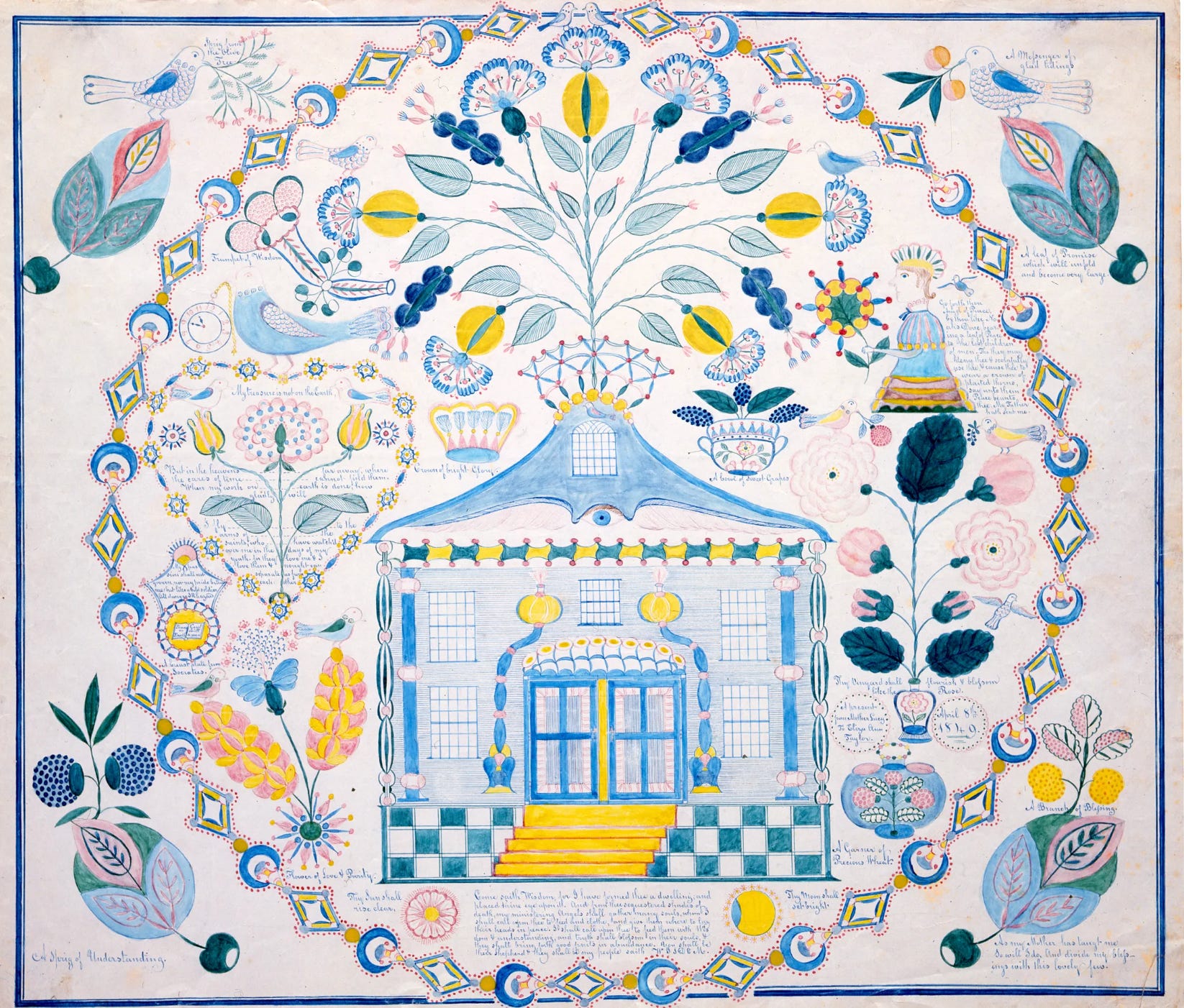
Reading America, The New York Public Library. This is the best round up of essential American memoirs, poetry, history, fiction, etc. from all perspectives and persuasions. Some of my favorites include:
Beloved, Toni Morrison
Demon Copperhead, Barbara Kingsolver
A Field Guide to American Houses, Virginia Savage McAlester
How to Survive a Plague, David France
Lafayette in the Somewhat United States, Sarah Vowell
Minor Feelings: An Asian American Reckoning, Cathy Park Hong
The Namesake, Jhumpa Lahiri
The Warmth of Other Suns, Isabel Wilkerson
What else would you add that NYPL left off?
Boosey & Hawkes: American Catalog overview. Great list here of both living and dead American composers and their most iconic works. See also American Composers playlist by the late Michael Tilson Thomas for some fun works.
25 Most Important American Recipes of the Last 100 Years, Slate. This is a few years old but a lovely list of famous American recipes and the chefs who inspired/invented them. Starting with the Toll House cookie in 1938, the article highlights other famous dishes such as Julia Child’s Boeuf Bourguignon, Green Bean Casserole, Caesar Salad, and Ina Garten’s Provençal Potato Salad
Related: The Pursuit of Hungriness: 250 Years of American Food Innovation. NTY. From the first Colonial cookbook in 1790 to refrigerated railcars to the delivery app, you have to admit, we know how to industrialize/innovate food in this blessed land.
Iconic American Landscapes Through Artist’s Eyes, National Gallery of Art. A fun collection of American landscapes as interpreted by artists such as Winslow Homer, Ansel Adams, and Thomas Moran. Hot take: the National Park system is probably our finest national achievement. Nothing says “this great American thing”6 like the National Parks.
Six Sentences That Shaped America, NYT. Love this collection of six of the most famous lines ever written/said in our nation’s history. And, of course, visually, this is a fun read.
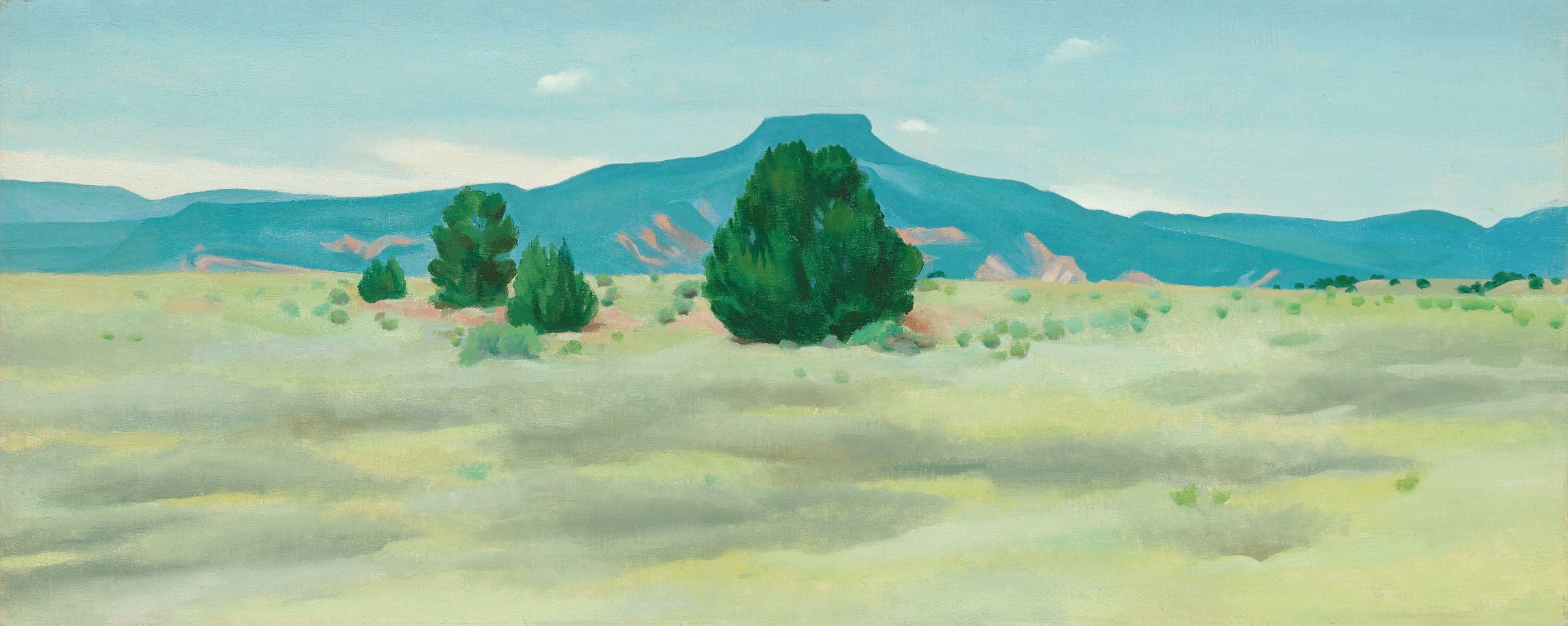
This monster of a land, this mightiest of nations, this spawn of the future, turns out to be the macrocosm of microcosm me….If I found matters to criticize or to deplore, they were tendencies equally present in me. - John Steinbeck
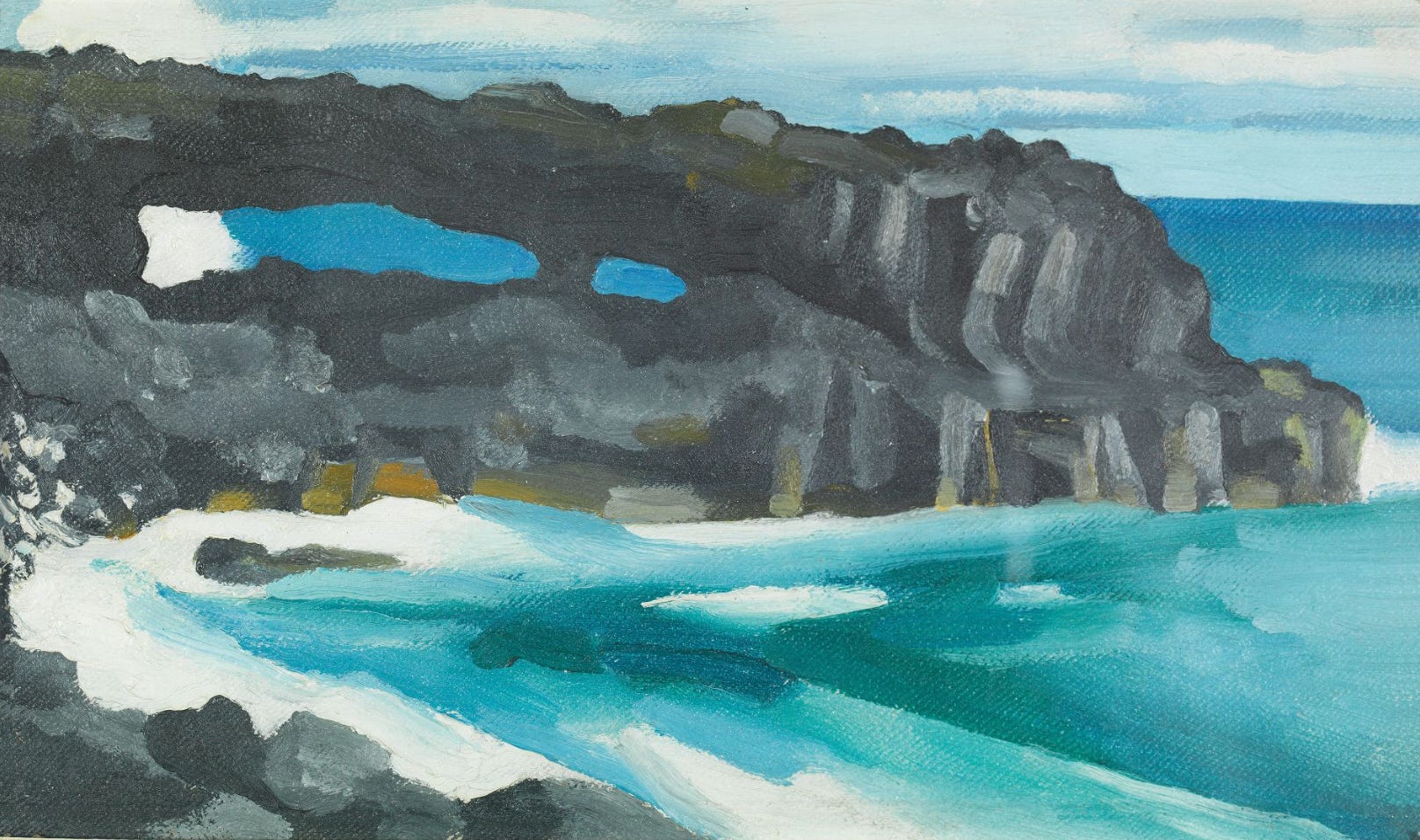
See also: How Kabbalah Shaped America:
and Making Way for Mormonism:
Witches in Salem, anyone? Also plenty of amulets and divining stones in use among both Puritans and Brethren/Quaker kinds. Turns out, Joseph Smith wasn’t unique for having a divining stone—his stone just spoke to him in totally crazy ways (out of the bottom of his hat, of course).
In a very Jewish manner, Bloom replies to this statistic with “How dare they ?!” which made me chuckle.
They settled in upstate NY- a place where many a cult/sect of Christianity was born (it would be the epicenter of the Second Great Awakening, and the birthplace of both Mormonism and the modern day Charismatic movement). Charles Finney would later call this region the “burned over district” and cease holding revivals here because it was so spiritually saturated.
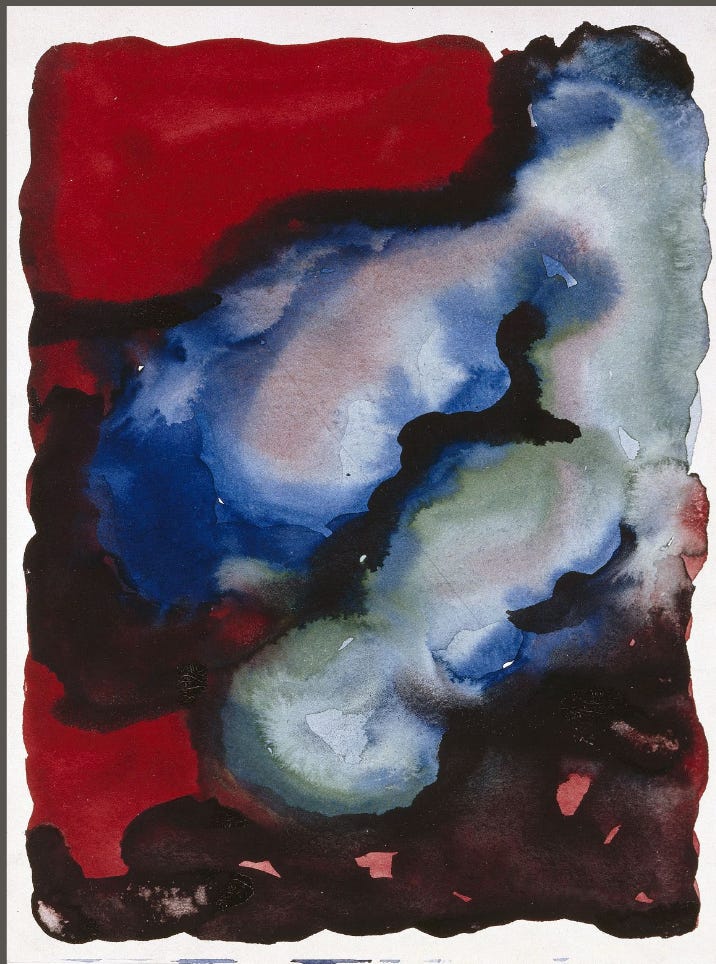
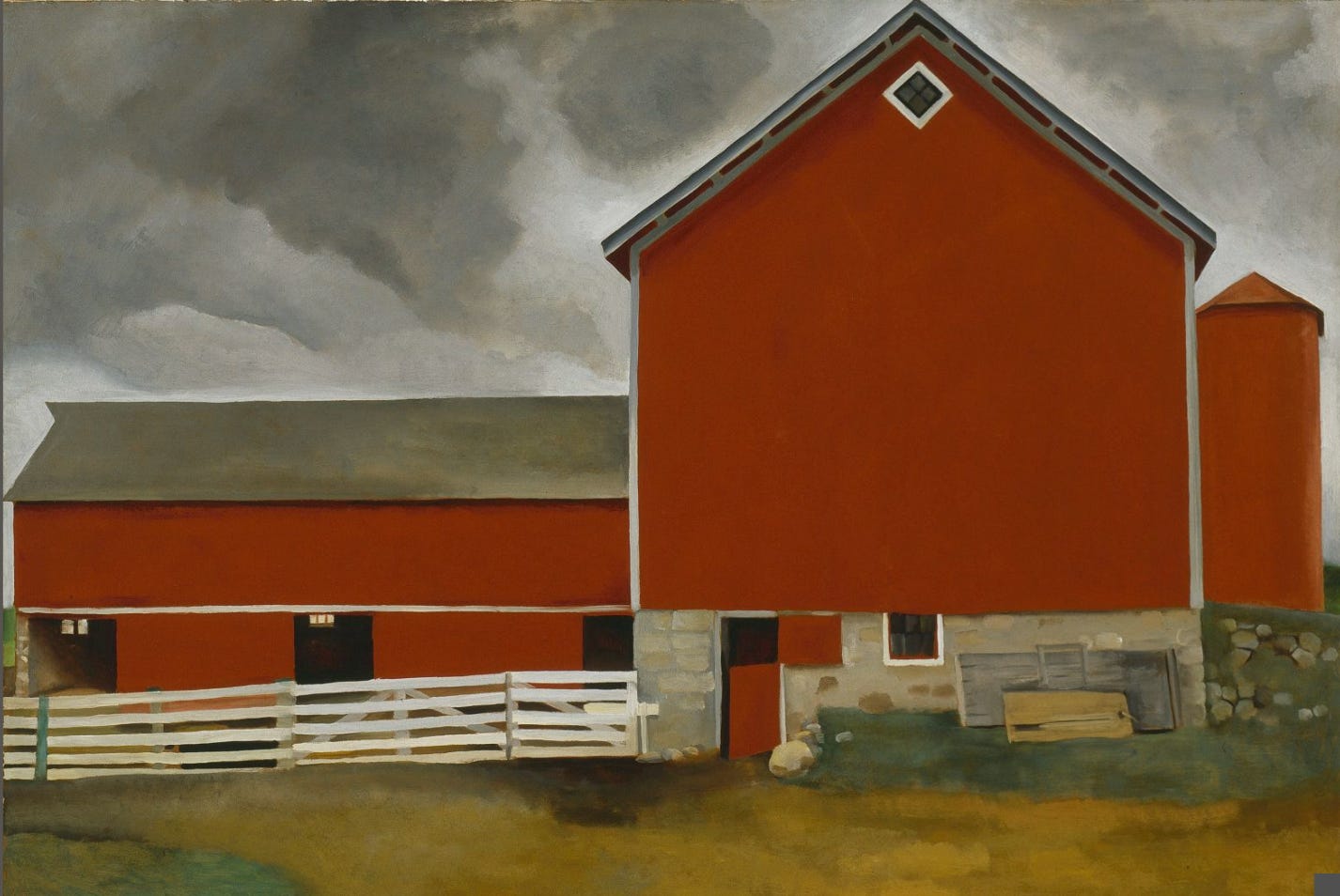
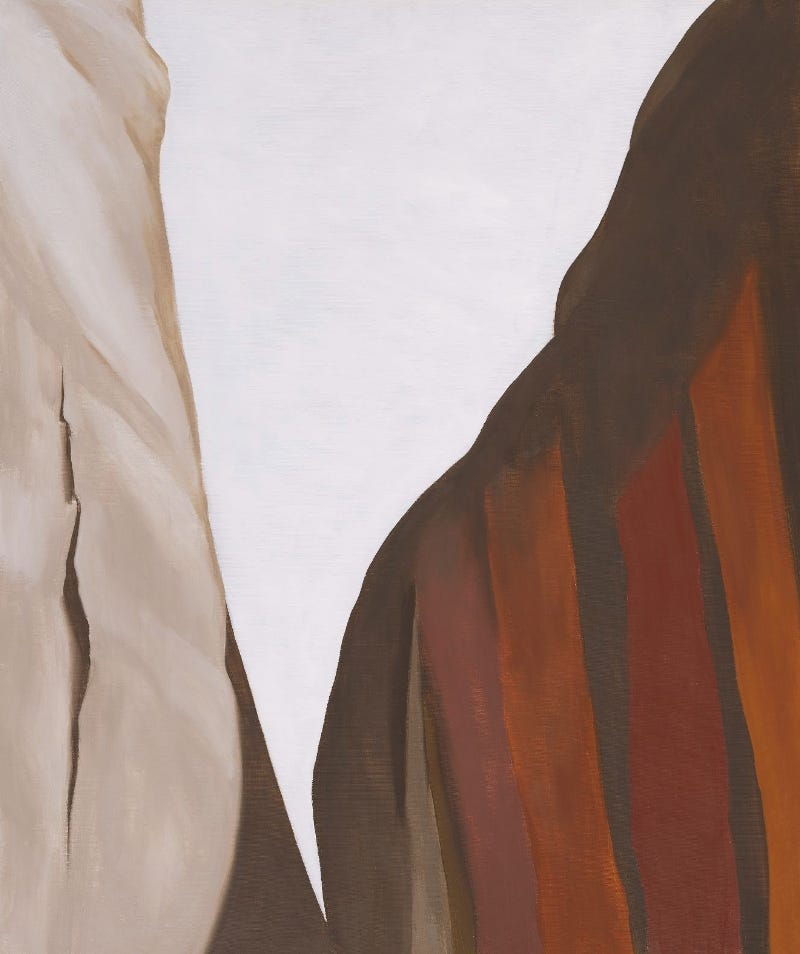
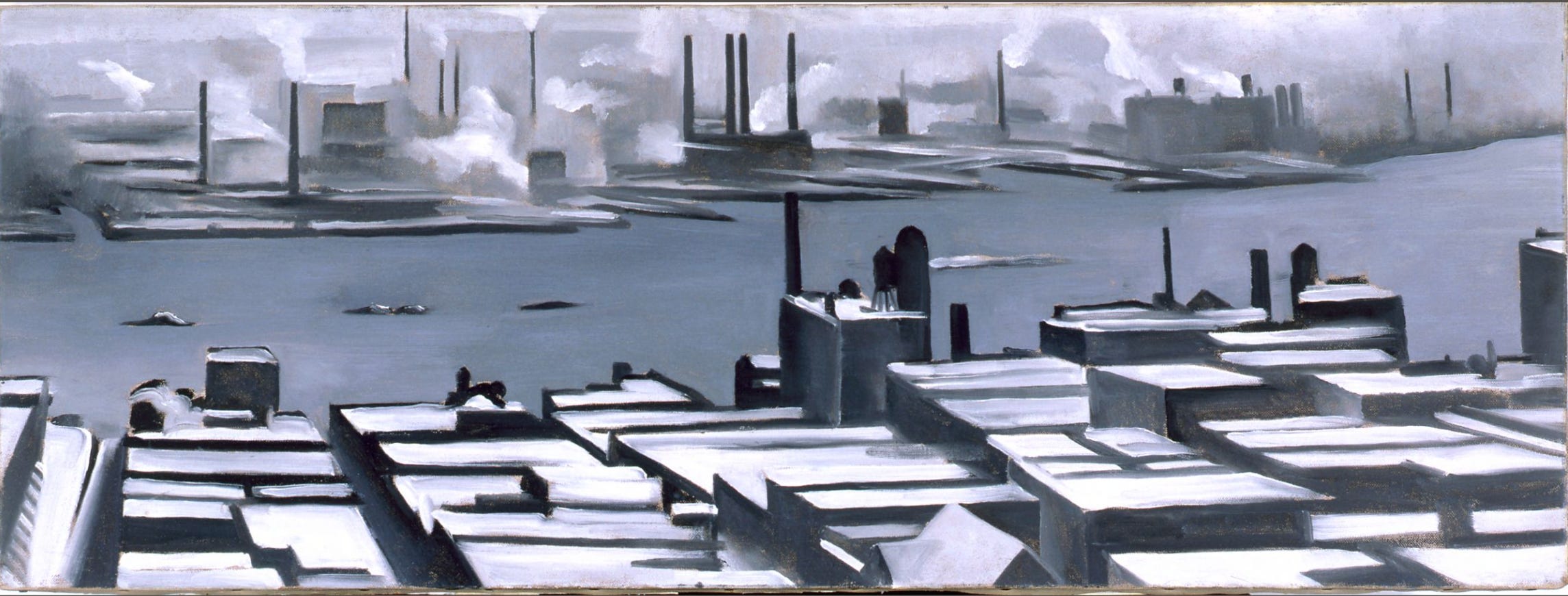
“This great American thing” is how O’Keeffe described the subject she spent her life painting
No posts
Comments
Nothing yet. Say the first thing.
Sign in to join the conversation.