
It’s this she-could-be-from-my-hometown feel to Nino that everyone around her enjoys. But surely, it could not have been easy – transforming from a kid to a star athlete in the middle of political upheaval?
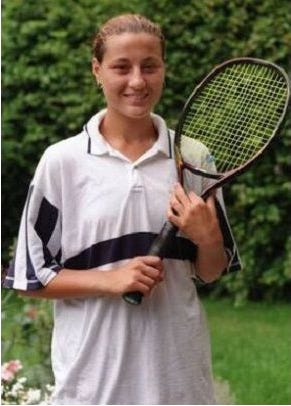
After the Tbilisi Massacre, and despite the political chaos engulfing her country, Nino returned to the rhythms of her daily life. In the maniacal way of the old, autocratic Soviet Union, all children turning seven years old were evaluated for signs of prodigy - the official regime testing for athletic and artistic aptitude. Every possible talent was evaluated in every child for usefulness in the country’s propaganda machine. Nino loved music, but her parents eventually discouraged this avenue after listening to her attempts at playing piano and singing. Her next obsession was to be a ballerina like Nino Ananiashvili (also from Georgia and at the time starring in the ballet at the Bolshoi theater in Moscow), but alas, by age seven she was already taller than the other girls, not promising for the ballet.
Her parents wanted Nino to be active and pursue a passion outside of school. Because she had no musical ear, was too tall for ballet, and was turned away by a gymnastics coach, her mom decided that tennis would be a good fit. One of her coworkers’ daughters played tennis recreationally and enjoyed it. That’s how Nino was introduced to tennis. It was a casual activity at first. She had no background in tennis or any history of competitive sports (nor did her very intellectual parents). To that point she’d had a normal childhood with loving parents who emphasized school and studying over sports and other activities.
Nino tried to join the local non-competitive team being formed for kids with low skill levels. In her own blunt assessment, she was “kicked out for being no good”, even as compared to the bottom rung of players. The brief tryout consisted of the coach asking her to hit 10 times against the wall - at which point he judged her as being not coordinated enough to join (her phrase) “a group of nerdy, unathletic kids”. Thankfully, her dad intervened and convinced the coach to put her into a twice a week class with the kids at the lowest skill levels. What followed was the development of a close camaraderie with this group of smart, talented kids, one of whom is still among her closest friends. Nino cherishes this group of kids for the friendship they gave her, and for helping spark a love of tennis that might not have developed in the more competitively driven Soviet style class.
That was to be the extent of her tennis training from ages seven to ten: hitting just twice per week with fifteen or so other kids in the non-competitive group, all crammed onto three local courts with a single coach. Nino puts it in Roundhill terms as being like “hot shots for non-hot shots”. It was the least likely setting to develop an elite player. Nino enjoyed tennis, but she really enjoyed her friendships with the “non-cutthroat” kids. As the lessons continued, she was the only player within her tennis group to develop a desire to win. Something innate in her caused her to develop a stubbornness on the court, a competitive, defiant attitude that would surface as a complete surprise to her coach. By about age ten Nino says she was “good” and by age eleven she was “OK”. Her natural competitiveness had driven her beyond the skills of her nerd friends, and she was certain she was good enough to advance to more competitive tennis. Her coach relented, putting her into an intra-club tournament but predicted that her opponent would win the match. The gauntlet was thrown. Nino describes it simply “I bore down and beat the boy (yes, boy) in an upset, surprising my coach”. With this competitive win on her otherwise empty resume, the unknown Nino began entering tournaments within the city of Tbilisi. Before long she was winning locally and advancing to regional events. Then she started winning regionally. By age twelve she was the #1 junior in Georgia, flying past the kids in the tennis academies without ever leaving home for instruction. All through this period of her life, her parents stressed academics over athletics, discouraging her from attending a tennis-intensive school. She is very grateful today for the wisdom that kept her close to her family.
The tournament draws Nino entered continued to expand, and the wins kept coming. By age 13 she was #1 in the entire Soviet Union in the 13 and under age group.
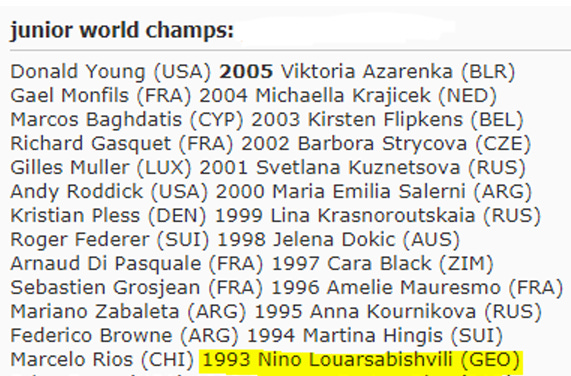
Soon after she was selected for the Soviet National Team, where she traveled extensively for the first time, meeting another layer of lifelong friends. It was on that team that she met a young Elena Likhoveseva. Elena would go on to a stellar professional career, reaching #15 in the world in singles, securing wins over Maria Sharapova and Serena Williams, among many others. Today she is a top teaching professional at Roundhill Country Club, having been recruited by Nino as soon as Nino took the job as Director of Tennis - testimony to how closely Nino held her friends from her early playing days.
Comments
Nothing yet. Say the first thing.
Sign in to join the conversation.