
On the morning of April 8, 1989, Nodar Louarsabishvili, a Georgian physicist, his wife Medea, their daughter Nino and her little brother George packed bag lunches and navigated their way across the restless town of Tbilisi (pronounced ti-blee-zee), scene of the largest of the mass anti-government protests that had recently spread violence across Georgia. Invaded by the Soviet Union in 1921 and annexed in 1922, the Democratic Republic of Georgia had enjoyed only a brief period of independence post-WWI, followed by nearly 70 years of aggressive Soviet domination. Now, in the growing movement to break away from the Soviet Union a large crowd comprised of men, women and children of all ages had gathered in front of the House of Government on Rustaveli Avenue. For four days students from several universities peacefully sang Georgian songs, gave speeches, and conducted a multi-day hunger strike. While it would take two more years of protest, politics, and even bloody violence before Georgia would be able to declare its independence, these mass protests against foreign rule were an important catalyst, and Nino’s father was determined that his daughter should understand what it took to become a sovereign country. In fact, it would be the first time in his life he himself would know freedom from Soviet rule as well.
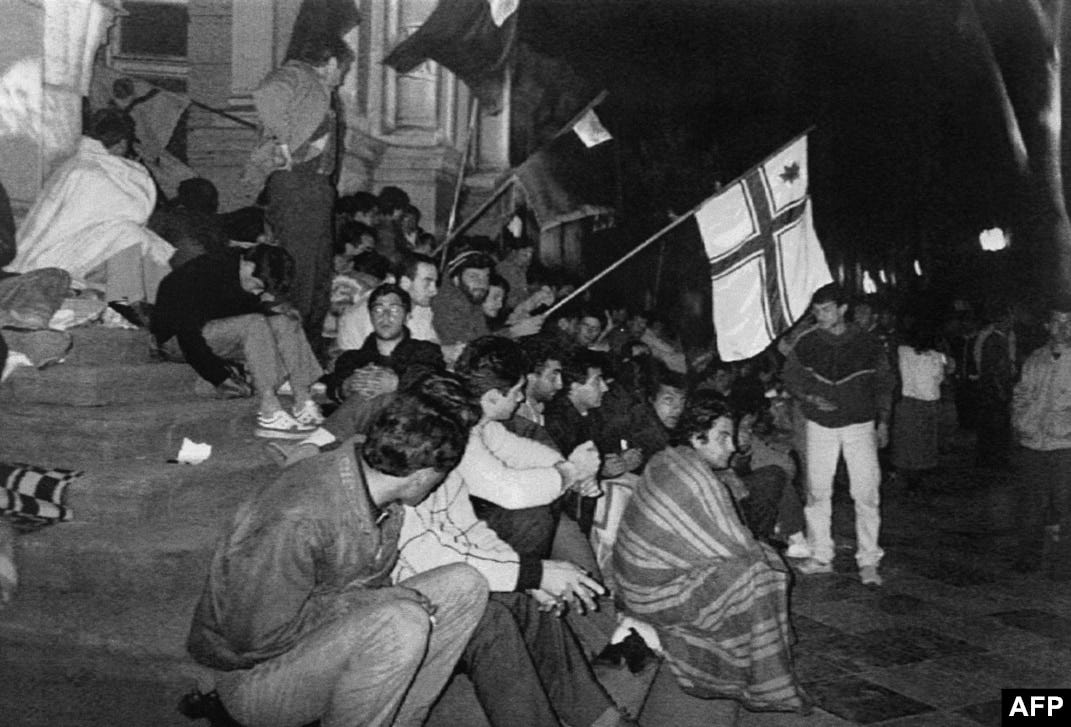
Nino, her brother and her parents arrived in the center of town, near the House of Government in the late afternoon. It was clear to her father that this crowd was more agitated than in the prior several days. During the evening units of the Soviet Military had been called in to contain the protests. A violent clash between the Soviet army and the protestors seemed a real possibility. Tensions between soldiers and protestors continued to build through the early evening. At about 8:00pm, Nino’s family was approached by a group of students who asked her parents to leave because the students “didn’t have a good feeling” about the evening. Tension eventually gave way to violence. In the early morning hours of April 9, the Soviet military suddenly attacked the protesters using heavy shovels (a favored weapon of Soviet special forces), military batons and chemical agents, causing massive panic in the large crowd. Twenty-one people were killed, including 17 women - and hundreds were injured. Soviet Special Forces chased people down to make sure they did not survive. Among the women killed were a 17-year-old, and a pregnant woman. The slaughter would become known as The Tbilisi Massacre.
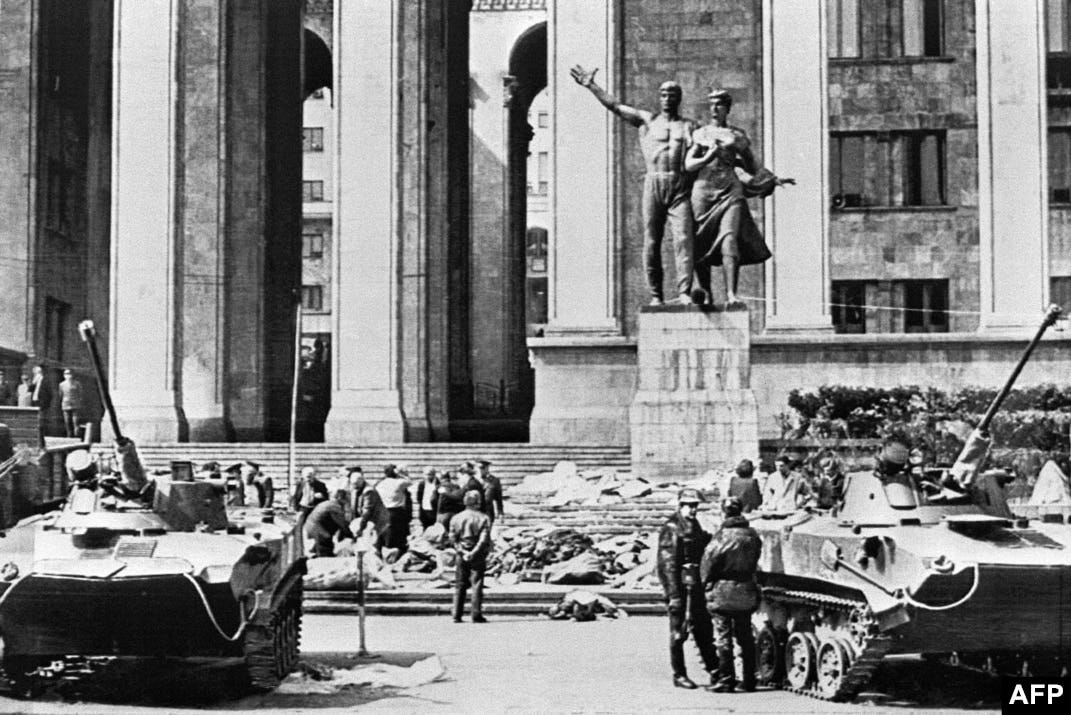
Nino’s mother and grandmother took her back to the massacre site the day after the massacre:
“I still remember the street stained with blood and random shoes scattered on the ground. People were laying flowers and mourning together. It was there that my mother and grandmother told me never to forget this tragic day and what the Soviet army did to peaceful protesters.”
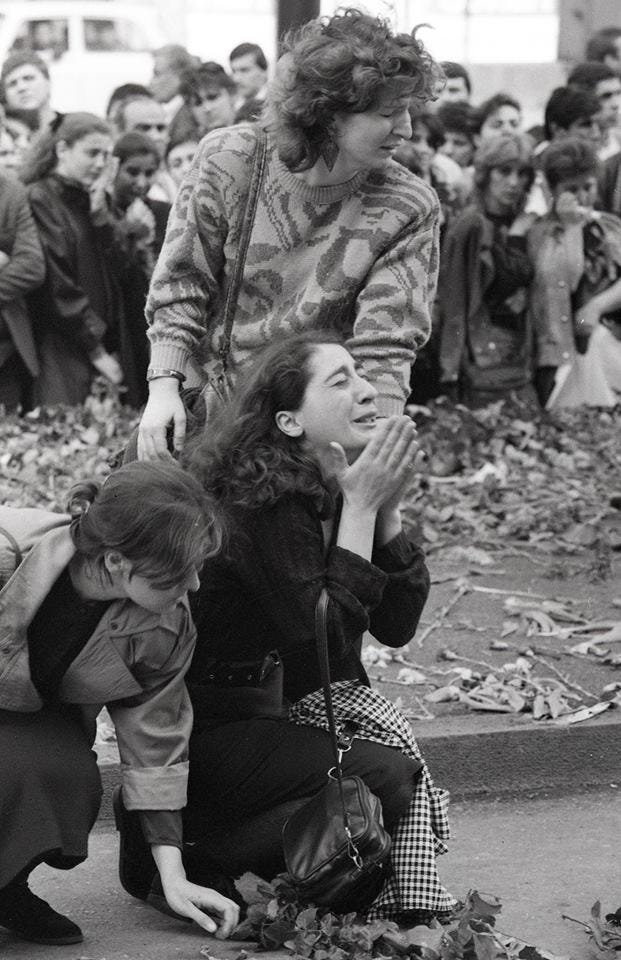
The fierceness of the violence inflamed Georgia. The death of innocent citizens sparked the passion Georgians would use to build a true revolution and eventually evict the Soviet Union from their country. Georgia became a harbinger of the tectonic shifts in power and influence within the Soviet Union, coinciding with the rise of nationalism in Ukraine and the Baltic republics. Seven months after the Tbilisi Massacre, the Berlin wall would be torn down.
Exactly two years later, on April 9, 1991, following an overwhelming vote, Georgia declared its independence, and by the end of 1991 the Soviet Union was dissolved. Tbilisi, the town that Stalin first published communist propaganda pamphlets on a smuggled printing press played a key role in dissolving the of the Soviet Bloc.
This foundational moment in the history of her beloved country of Georgia was formational to the way Nino thinks and talks about her life and her tennis career. She relates her story in terms of those things she holds most dear – family, friends, relationships, laughter, food, culture, country, fashion, connection. She loves her adopted country too, but she is unmistakably Georgian. Her personality reflects the resilience of her home country. Try to engage Nino in a detailed discussion of her tennis journey, you’ll be redirected seamlessly to the friends she made early in her Georgian upbringing, the culture her parents imbued in her, the friends she made in many countries, and the people who helped her along the way. She holds them dear, quick to relate what makes each of them special to her. Ask her about matches, you’ll hear about other players, their habits and quirks. Ask her about tactics, she replies with favorite moments. Try to get to her competitiveness, you’ll hear about her host family and the generosity of her coaches. Life’s journey has been about people, places, experiences. Not just tennis. Her life is a young-girls (the way she thinks of herself) travelogue while swinging a racket.
Comments
Nothing yet. Say the first thing.
Sign in to join the conversation.