
As one rose, the other fell. While Nino built her playing resume the Soviet Union collapsed. Her career took off, while behind the iron curtain airline flights were beginning to be cancelled. Then Soviet airlines ceased to operate altogether. Then the electricity was shut off. People became angry. Students attended school in the cold Georgian winters, freezing in unheated classrooms. Nino was able to play very little tennis.
In the midst of this upheaval an unexpected call came in one night - Nino’s former soviet coach, Evgeny Pozdniakov (an ethnic Russian from Moscow), contacted her parents with an offer to take her on as a coach. They agreed, but it was a long trip to Moscow for a girl that age. Train rides at that time were risky, due to rising violence. Stray bullets were a danger both in Russia itself, and in Georgia. No place in the crumbling Soviet Union was safe. Her father accompanied young Nino on the train to Moscow, where she met her first professional coach.
With better coaching and an improved world standing, she picked up a sponsorship from Larissa Neiland - an established tour player from Latvia who would go on to claim a singles win over Martina Navratilova and achieve multiple Grand Slam Doubles titles (including Wimbledon) and a #1 world ranking in doubles playing with Natasha Zvereva in 1992. Larissa generously gave Nino $30k with no interest and no strings attached. Her coach managed the money while also training her for free and taking her into his home. Nino lived in a 1-bedroom apartment with the coach, his wife and their daughter who was the same age and would go on to play tennis at the University of Pennsylvania and form a life-long friendship with Nino. They were like second parents to Nino, providing the home she needed to thrive in while moving up the world rankings. Nino counts them as one of life’s greatest blessings. It has continued to weave that chain of connectivity for her from tennis to friends to lifelong attachments. When her Coach turned fifty he celebrated with a trip to Napa to be with Nino and family.
The period was also one of shortages of everything. It was both a difficulty and a blessing as the players formed close bonds, sometimes over funny things. They couldn’t afford to change their overgrips as frequently as top players require, and that sort of luxury was often not available in any event. The solution? They learned to take off their dirty overgrips after multiple uses, wash them by hand and regrip their rackets with the newly cleaned overgrips - just like new (by Soviet standards). Once Nino made the Soviet national team, she received a stipend, the equivalent of about $15 per day of spending money. She and her teammates would save it up to buy overgrips, as well as gifts for her family. A memorable purchase was a Sony Walkman, available only in countries that had western goods, and a possession that made her very popular with the older kids.
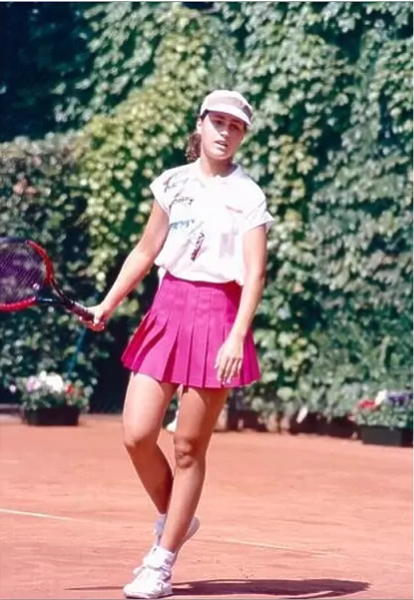
Under Evgeny Pozdniakov Nino continued to thrive, continued to advance in the world rankings. Her coach put her in ITF tour events for juniors at age 15. At age sixteen she reached #1 in world in the 18 and under ITF tour rankings. That same year she graduated from high school and turned pro. Moscow was now her base, the place where she became a professional tennis player.
Comments
Nothing yet. Say the first thing.
Sign in to join the conversation.