
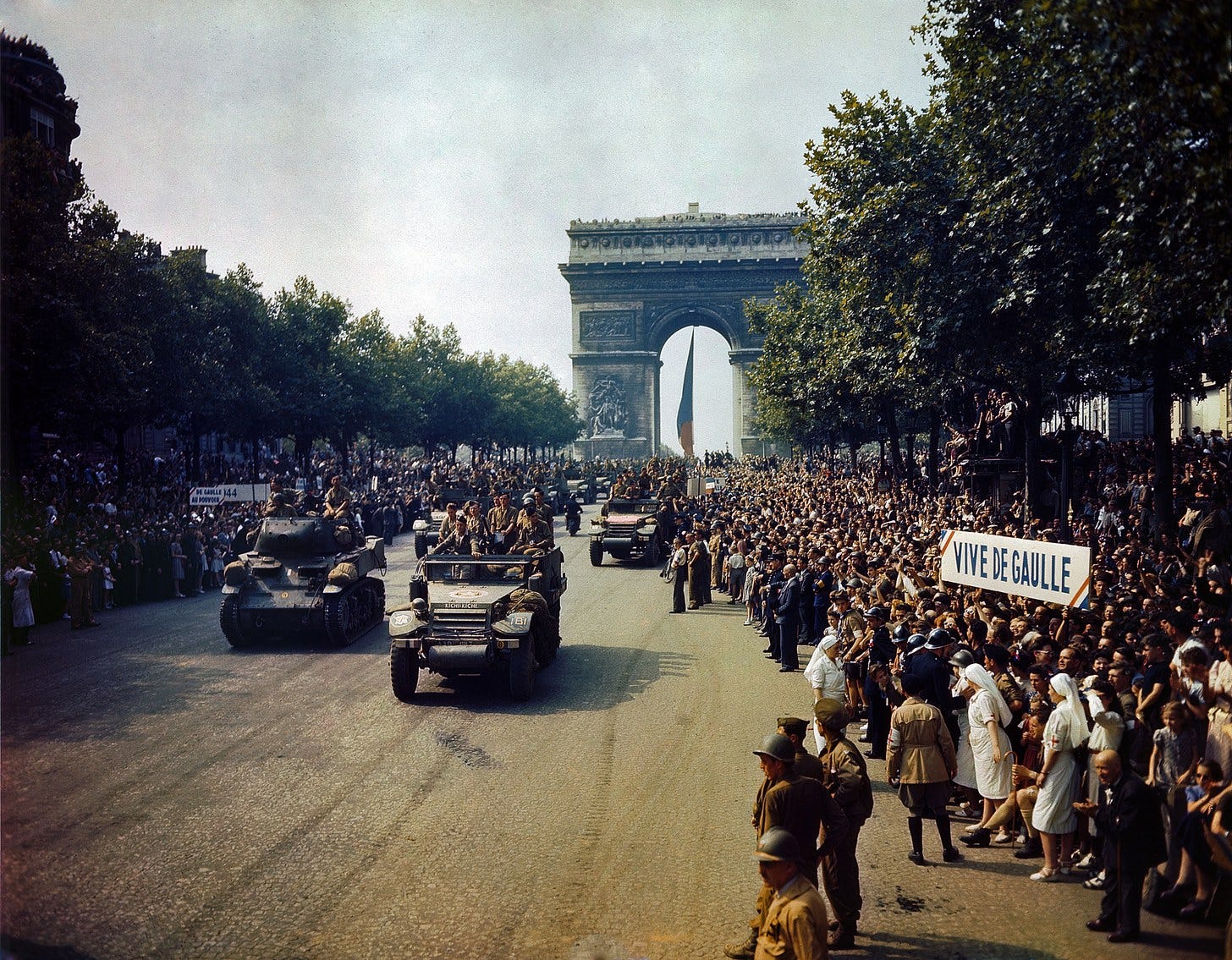
In the early hours of August 25, 1944, the sound of tank treads reached the center of Paris for the first time in four years. They were French tanks. General Philippe Leclerc's 2nd Armored Division had pushed through the southern suburbs overnight, racing not only the Germans but the clock itself. Behind them, American units held back by design. Ahead of them lay a city that Hitler had already written off as a ruin.
Paris had been under German occupation since June 1940. By mid-August 1944 the Allied breakout from Normandy had made the city's fall inevitable. Supreme Allied Commander Dwight Eisenhower preferred to bypass it, conserve fuel, and drive for the German border. Charles de Gaulle refused that logic. He told the Allies that a French division must enter first, that the capital could not be left to chaos or to a communist-led uprising without a Free French presence. Leclerc got the mission.
Inside the city the French Resistance had already risen. Since August 19, barricades had gone up, police stations had changed hands, and snipers traded fire with German patrols. The German garrison commander, General Dietrich von Choltitz, held roughly 20,000 men and enough explosives to drop every major bridge into the Seine and gut the landmarks that made Paris Paris. Orders from Berlin were unambiguous. The city was to be held or destroyed. Bridges, power plants, the telephone exchange, and historic sites were wired.
On the morning of the 25th, Leclerc's columns rolled in from the south and southwest. Fighting flared around the Porte d'Orleans and along the avenues leading to the Quai d'Orsay. German strongpoints at the Chamber of Deputies and the Hotel Meurice still answered with machine-gun fire. Yet the defense was already cracking. Many German units had begun slipping east. Choltitz remained at his headquarters in the Hotel Meurice on the Rue de Rivoli, weighing the last order against the city outside his windows.
Swedish consul Raoul Nordling had spent days shuttling between the Resistance, the Allies, and Choltitz, arguing that a fight to the finish would kill tens of thousands of civilians and erase a thousand years of stone and memory for no military gain. By midday the pressure was total. French armor reached the Place de la Concorde. Resistance fighters closed in on the remaining garrison pockets. Choltitz gave the order to stand down.
At the Hotel Meurice he signed the surrender. Leclerc accepted it on behalf of the French forces. The act was deliberate and formal: Paris would not be treated as a prize taken by foreigners. Later that afternoon Charles de Gaulle arrived. He went first to the Ministry of War, then to the Hotel de Ville. From the steps he delivered the words that still echo: "Paris outraged, Paris broken, Paris martyred, but Paris liberated! Liberated by itself, liberated by its people with the help of the French armies, with the support and the help of all France."
The parade down the Champs-Elysees the next day drew two million people. Snipers still fired from rooftops. De Gaulle walked the length of it anyway. The political point was as sharp as the military one. France had reclaimed its capital with French blood and French armor. The Fourth Republic would be built on that claim.
The liberation mattered far beyond one city's joy. It restored a major Allied capital intact, denied Germany a final act of spite, and gave de Gaulle the legitimacy he needed to sideline rival factions and speak for France at the victory table. The bridges still stood. Notre-Dame still stood. The Louvre still stood. One commander's refusal to carry out a scorched-earth order kept them that way.
The charges had come close to being fired. The final decision turned on conversations held in the Hotel Meurice in the forty-eight hours before the tanks arrived.
2012: Voyager 1 Crossed the Edge of the Solar System
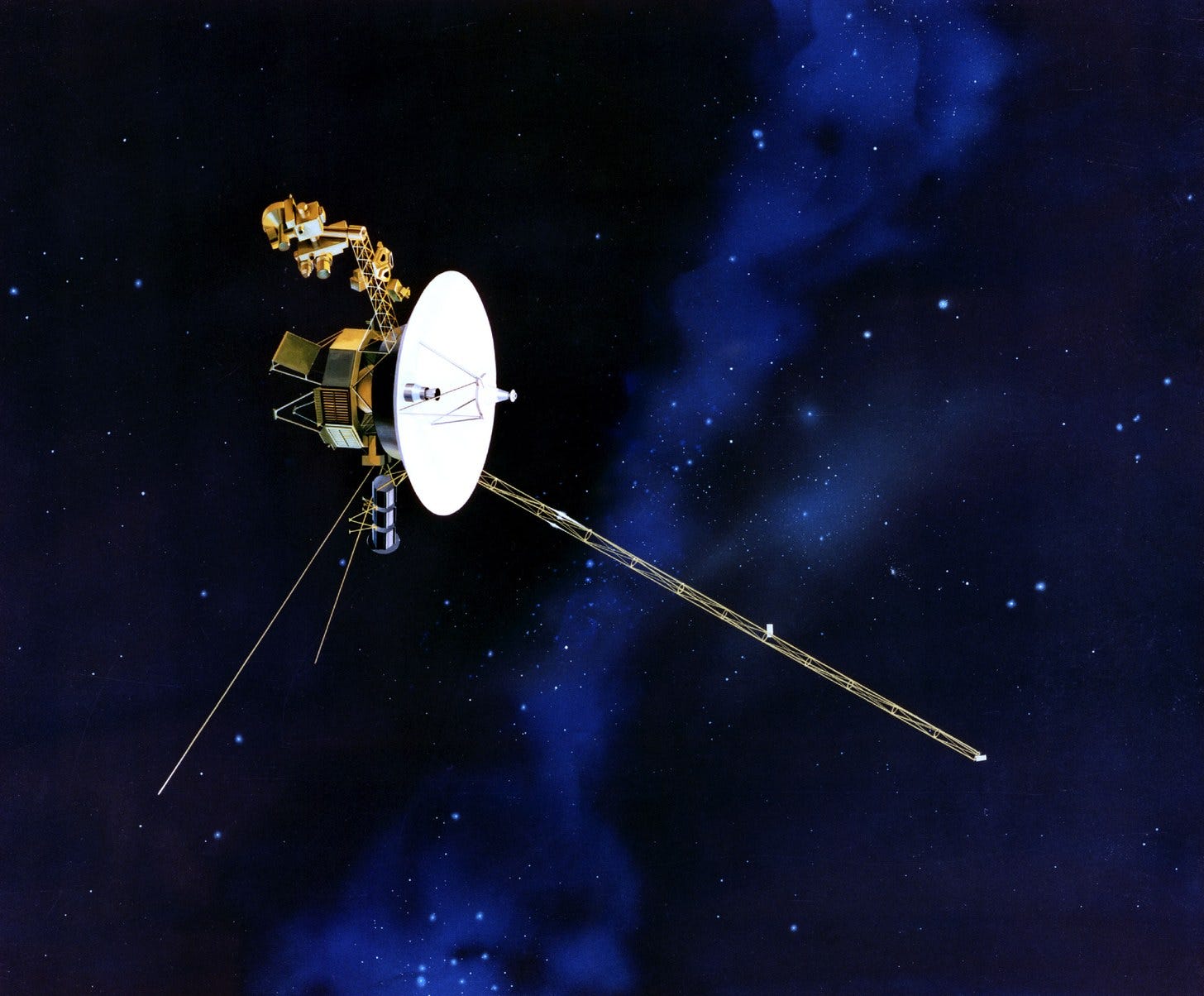
On August 25, 2012, the NASA probe Voyager 1 became the first human-made object to enter interstellar space. Launched in 1977, the craft had already flown past Jupiter and Saturn, sending back images and data no one had seen before. By 2012 it was more than 11 billion miles from the Sun, traveling at roughly 38,000 miles per hour.
Scientists watching its instruments saw a sharp drop in solar wind particles and a corresponding rise in cosmic rays from outside the heliosphere. That shift marked the crossing of the heliopause, the boundary where the Sun's influence yields to the thin gas between the stars.
Voyager 1 carried a golden record with sounds and images of Earth, a message in a bottle for anyone who might one day find it. The craft still answers faint commands from home, its power dwindling year by year. It will outlast every person now alive, a silent witness that we once reached beyond our own star.
2012: Richard III's Bones Found Under a Car Park
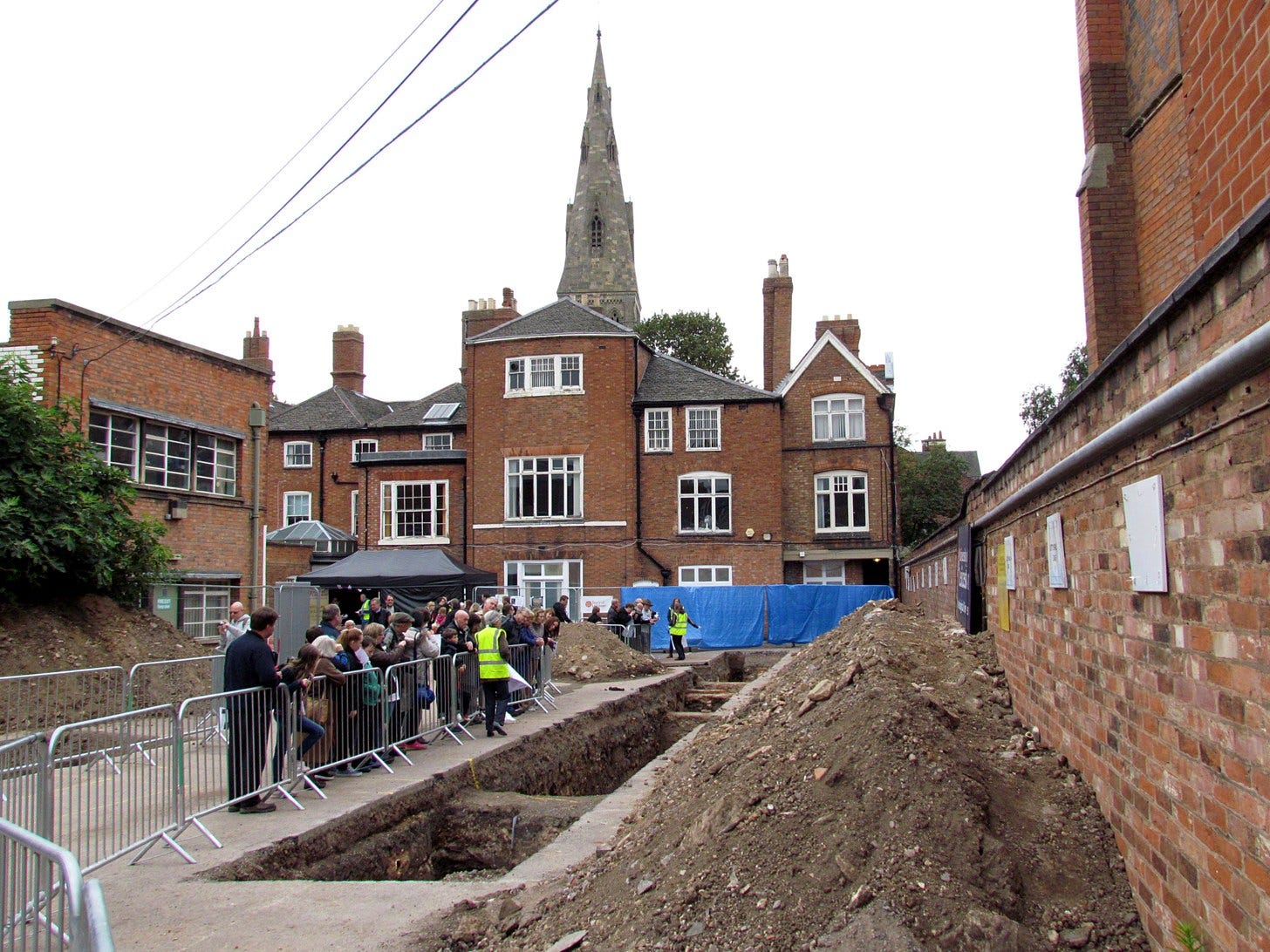
On August 25, 2012, archaeologists in Leicester began the dig that would unearth the lost remains of King Richard III. The search, driven by historian Philippa Langley and the Richard III Society, targeted the site of the long-vanished Greyfriars friary, by then a social-services car park.
Within days the team uncovered a skeleton with a strikingly curved spine and fatal wounds to the skull, exactly where old records suggested the last Plantagenet king had been buried after his death at Bosworth Field in 1485. DNA matched living descendants. The bones confirmed scoliosis, battle injuries, and a hasty, disrespectful burial.
Richard had spent more than five centuries as Shakespeare's hunchbacked villain. The discovery forced a fresh look at the man himself: a short reign, a contested throne, and a death that ended the Wars of the Roses. He was reburied in Leicester Cathedral in 2015 with the dignity denied him on the battlefield.
2005: Katrina Came Ashore in Florida
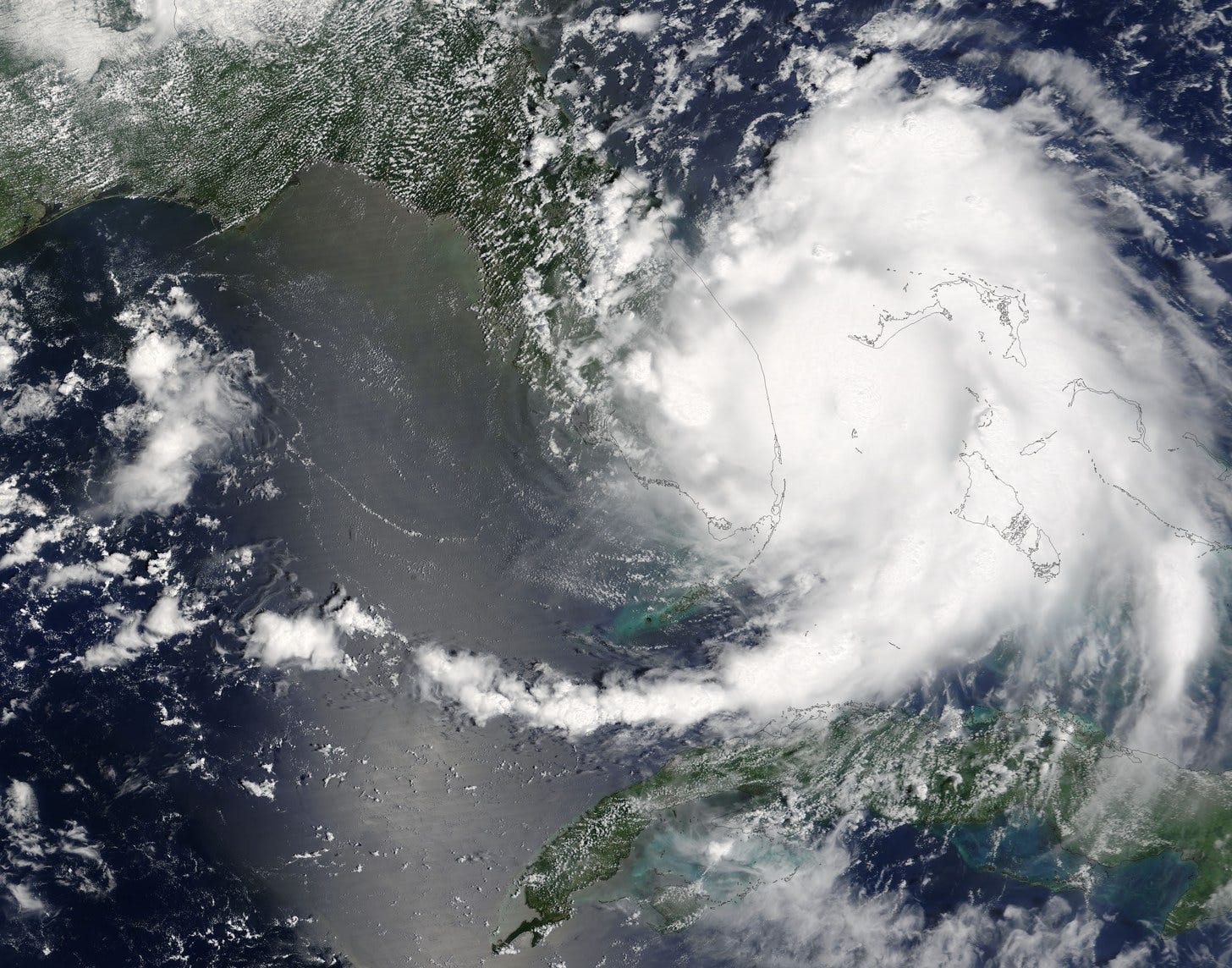
On August 25, 2005, Hurricane Katrina made landfall near the Miami-Dade and Broward county line as a Category 1 storm. Winds near 80 miles per hour knocked out power to more than a million customers, killed more than a dozen people, and flooded neighborhoods along the southeast coast.
At the time it looked like a serious but manageable Florida hurricane. The storm then moved into the Gulf of Mexico, where warm water fed explosive strengthening. Within days it would become a Category 5 monster before striking the Louisiana and Mississippi coasts.
The Florida landfall was the opening chapter of a disaster that exposed levee failures, evacuation breakdowns, and the human cost of delayed response. What began as downed trees and local flooding in the Sunshine State became one of the costliest and deadliest natural disasters in modern American history.
1975: Springsteen Put Born to Run on the Record Store Shelves

On August 25, 1975, Bruce Springsteen released Born to Run, the album that turned a New Jersey bar-band hero into a national figure. Columbia Records had already sunk money into two earlier records that earned critics but little cash. This one had to work.
Springsteen spent months chasing a sound big enough for the boardwalk dreams and factory dead-ends he wrote about, layering guitars, saxophone, and piano until the title track felt like a runaway engine. The cover showed him leaning on Clarence Clemons's shoulder, casual and defiant. Radio finally bit.
"Born to Run" and "Thunder Road" became anthems for anyone who ever wanted out. The record saved his career, put him on magazine covers, and locked in the themes he would carry for decades: escape, loyalty, and the price of both. Nearly fifty years later the opening drum crack still sounds like a door kicking open.
The free story tells you Paris survived. The deep dive opens the door to the men who got there first: Captain Dronne's half-track column and La Nueve, the Spanish Republican soldiers who led the Free French into Paris. Meet the exiles who fought for a country not their own, see how de Gaulle used their arrival to outmaneuver both the Allies and the Communist-led Resistance, and follow what happened to them after Paris was free, still without a homeland to return to. Start your free 7-day trial to read it all, and every future deep dive we publish.
Comments
Nothing yet. Say the first thing.
Sign in to join the conversation.