
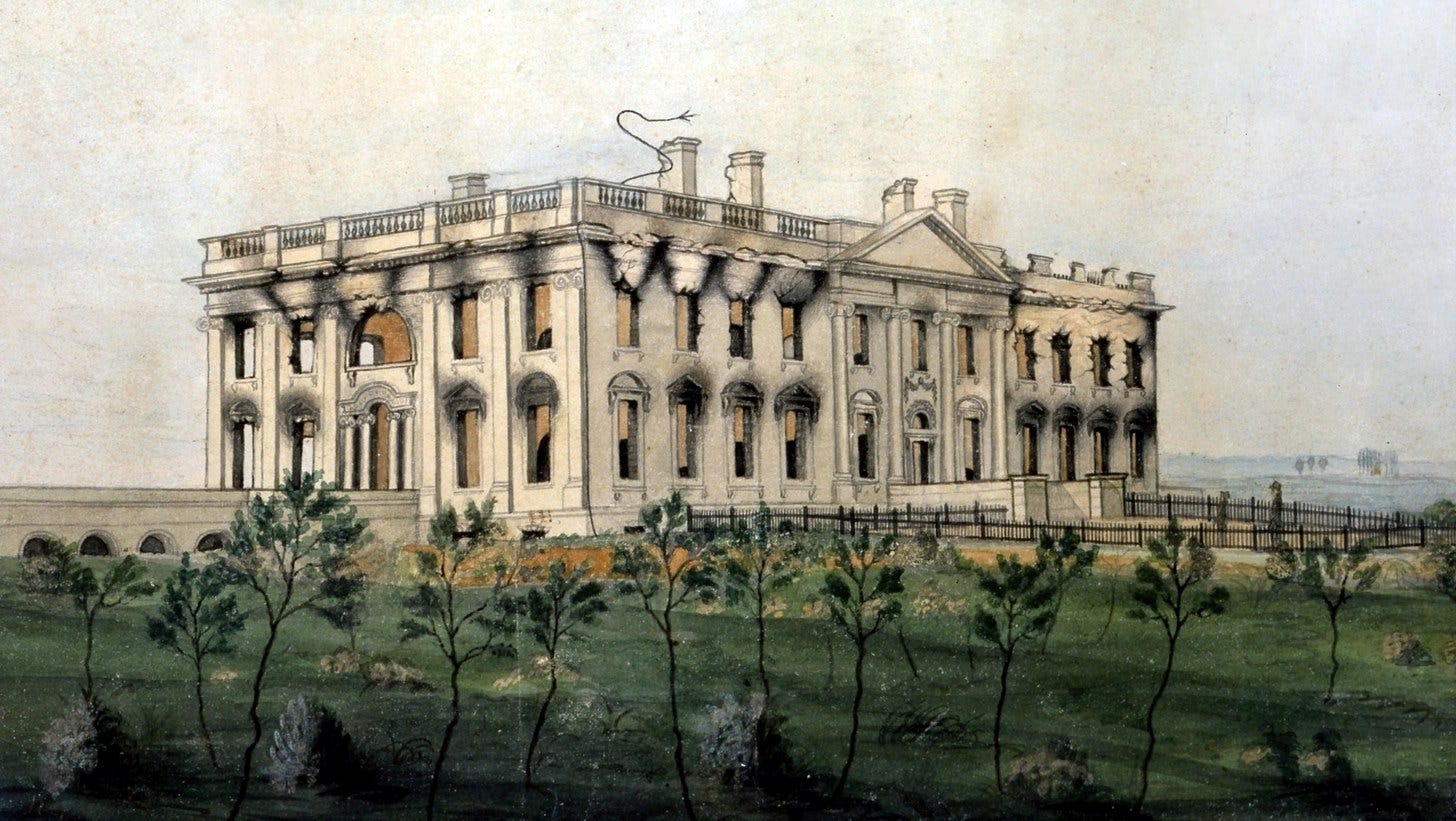
The dinner was still on the table when the British walked into the President's House on the evening of August 24, 1814. Places set, wine poured, the food not yet cold. The Madisons were gone. The officers sat down and ate it, and when they had finished they gave the order to burn the house.
Hours earlier, the roads out of Washington were already jammed with carts, servants, and frightened families when Dolley Madison made her choice. It was August 24, 1814. Smoke from the ruined American line at Bladensburg hung in the afternoon air. British regulars under Major General Robert Ross were marching on the capital, and almost everyone with sense had already fled.
President James Madison was somewhere on the roads himself, separated from his wife after watching militia break and run that morning. At the President's House on Pennsylvania Avenue, the First Lady was still inside. She had packed cabinet papers, silver, and the crimson curtains. One object still hung screwed to the dining-room wall: Gilbert Stuart's full-length portrait of George Washington.
Dolley refused to leave it for the enemy. With the help of household staff she had the heavy frame broken apart so the canvas could be rolled and carried out. Only then did she climb into a waiting carriage and join the exodus toward Virginia. Behind her, the capital of the United States stood almost empty, waiting for the torch.
The British entered that evening. First they took the Capitol. Soldiers piled furniture, books from the Library of Congress, and the belongings of Congress into great heaps and set them alight. Flames punched through the roofs of both the House and Senate chambers. From the hill the glow was visible for miles.
Then Ross and Rear Admiral George Cockburn rode with a detachment down Pennsylvania Avenue to the President's House, unlocked and abandoned, where that dinner was waiting. When they rose from the table they gave the order.
Soldiers moved from room to room with oil and firebrands. Curtains, furniture, and personal belongings went up. By full dark the President's House was a shell of flame. The Treasury and the War Department burned the same night. At the Navy Yard, American sailors lit their own stores and ships rather than let them fall into British hands. Washington, barely two decades old as a capital, looked like a conquered European city.
Madison returned the next day to ruins and the smell of wet ash. A violent storm had swept through overnight, tearing roofs and helping drown some of the fires, but the damage was done. The Capitol was gutted. The President's House stood blackened and hollow. Critics already called the administration weak for the fiasco at Bladensburg and the ease of the British raid. For a young republic still unsure of its permanence, the humiliation cut deep.
Yet the burning also hardened resolve. Within days the British moved on toward Baltimore, where they would meet stiffer resistance and fail to take Fort McHenry. The capital would be rebuilt. The President's House would be repaired and painted, and the image of Washington that Dolley saved would hang again in the restored mansion. The night of fire became a shared memory of violation and survival rather than simple defeat.
Dolley's decision looks small beside armies and treaties. It was not. In the hours when government had collapsed into flight, she treated a painting of the first president as something that could not be surrendered. The British could burn the house. They would not burn the face of the man who had held the country together at its birth. That stubborn act of preservation, carried out while the enemy was almost at the gate, is why so many Americans still picture her in that dining room on August 24, ordering the frame broken and the canvas pulled free.
The officers who ate Madison's dinner before lighting the curtains were not the only people in that house. A fifteen-year-old footman named Paul Jennings had set the table they sat down to. What he remembered about the scramble for the portrait does not match the story Americans have been telling ever since.
2006: Astronomers Voted Pluto Off the Map
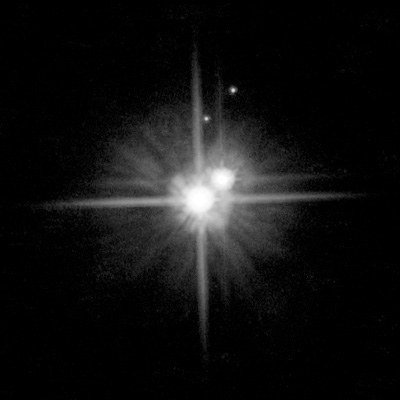
In a conference hall in Prague, members of the International Astronomical Union raised their hands and ended a seventy-six-year argument. On August 24, 2006, they adopted a new definition of the word "planet." A true planet had to orbit the sun, reach a nearly round shape under its own gravity, and clear the neighborhood around its orbit of other debris.
Pluto failed the third test. It shares its zone with the icy bodies of the Kuiper Belt. Under the new rules it became a "dwarf planet," joined by Eris and later others. The vote was decisive among those present, yet it stunned the wider public. Schoolroom charts, lunchboxes, and a generation of childhood memory had treated Pluto as the ninth planet since its discovery in 1930.
Scientists argued the solar system had grown too crowded for sentimental definitions. Critics called the decision rushed and incomplete. Overnight, "plutoed" entered the language as a verb meaning to be suddenly demoted. The rocks and ice at the edge of the system did not care. The argument over what counts as a world, and who gets to decide, has never fully quieted.
1995: Microsoft Put a Start Button on Every Desk
Stores stayed open past midnight. People stood in lines for a piece of software. On August 24, 1995, Microsoft released Windows 95 in North America and turned the personal computer from a specialist tool into a household appliance.
The system introduced the Start button, the taskbar, and long file names that ordinary users could actually read. Plug and play promised that new hardware might work without an afternoon of driver hell. A massive advertising campaign, built around the Rolling Stones song "Start Me Up," made the launch feel like a pop-culture event rather than a product drop.
First-week sales smashed records. Offices and living rooms alike suddenly shared the same blue sky desktop and the same cascading menus. Rivals scrambled. For better and worse, the personal computer had a new default face, and most of the world would learn computing by clicking that single glowing button in the corner of the screen.
1991: Gorbachev Walked Away From the Party
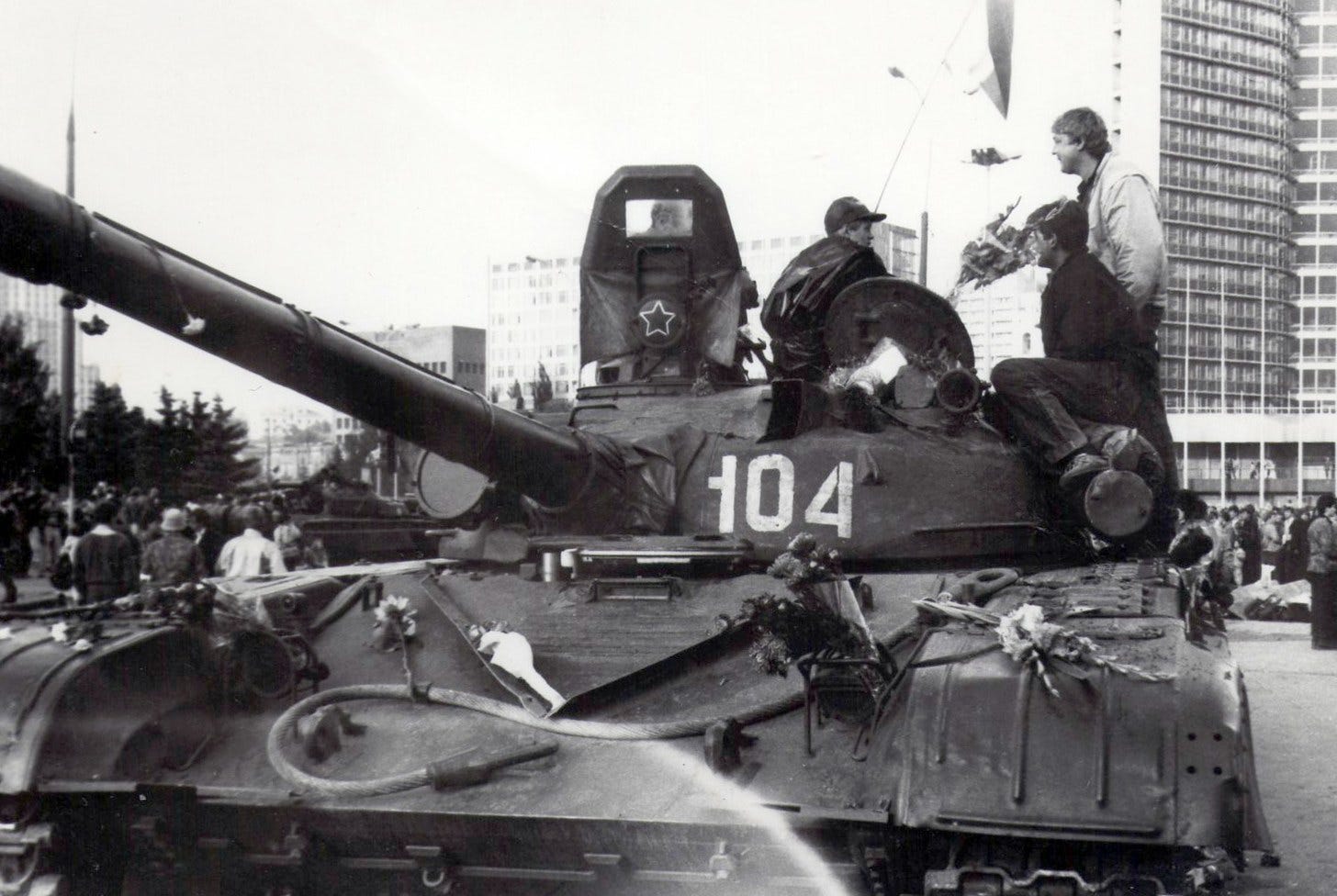
Three days after hardliners failed to seize power in Moscow, Mikhail Gorbachev did what once would have been unthinkable. On August 24, 1991, he resigned as General Secretary of the Communist Party of the Soviet Union and urged the Central Committee to dissolve itself.
The coup had already destroyed the party's authority. Boris Yeltsin stood atop a tank and claimed the future. Republic after republic was peeling away. By quitting the leadership of the party that had ruled since 1917, Gorbachev acknowledged that the old center no longer held. He remained president of a crumbling union for a few more months, but the machinery of Communist control was finished.
The resignation did not end the Soviet Union by itself. It removed the last pretense that the party could reform its way out of collapse. Within four months the flag over the Kremlin would come down for good. August 24 marked the moment the man who tried to save the system admitted the party itself was beyond saving.
The free story ends with the officers at Madison's table. The deep dive belongs to Paul Jennings, the enslaved fifteen-year-old who set it, whose memoir says the story of Dolley and the portrait is not what Americans were taught. It also follows William Thornton's face-off with British troops to save the Patent Office, Cockburn's personal vendetta against the National Intelligencer, the storm that finally drowned the fires, and how Jefferson's own library became the seed of the rebuilt Library of Congress.
Comments
Nothing yet. Say the first thing.
Sign in to join the conversation.