
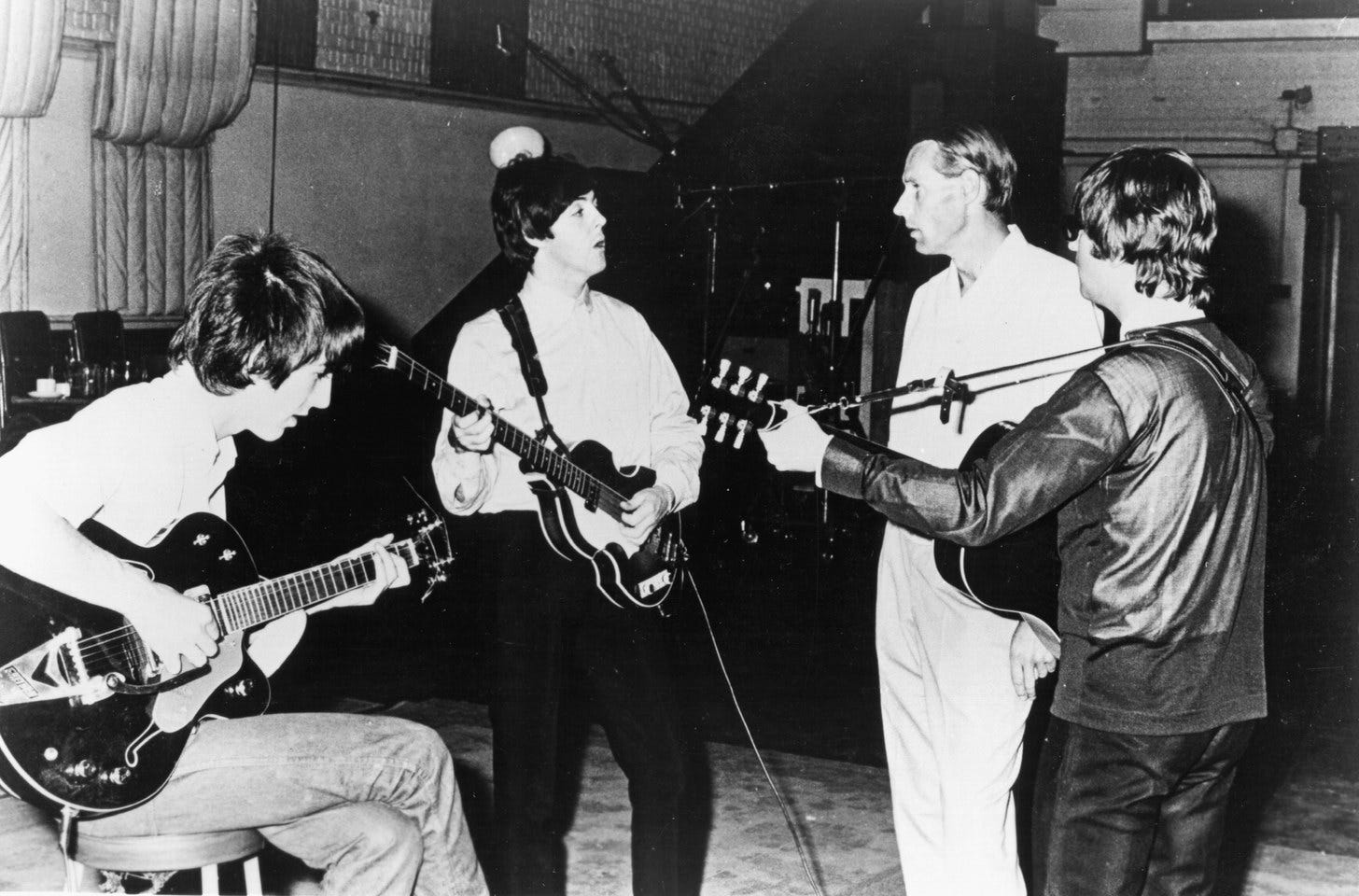
Paul McCartney pointed his Aston Martin south out of London and kept the radio off. It was the middle of 1968. John Lennon had left Cynthia. Their five-year-old son Julian was caught in the wreckage of a marriage that had once looked solid to the rest of the world. Paul was going to see the boy and his mother at the house in Weybridge. Somewhere on that drive the melody arrived, simple and direct, the kind of tune that feels as if it has always existed.
He began singing to himself. Hey Jules, don't make it bad. Take a sad song and make it better. The words were for the child in the back seat of a broken family, a small attempt to say that the adult chaos did not have to define him. By the time Paul reached the house the shape of the song was already there. Later he changed Jules to Jude because the harder consonant sat better in the mouth and carried a faint biblical echo. The feeling stayed the same.
The Beatles took the song into Trident Studios in London that summer. They were launching their own label, Apple Records, and this would be the first single. George Martin produced. The basic track came together quickly, Paul's vocal and piano out front, the band locked in behind him. Then came the decision that broke every radio rule of the era. The song did not end at three minutes. It opened into a long, rising coda of na-na-na refrains that kept building until the whole thing ran seven minutes and eleven seconds.
Programmers insisted nothing that long could chart. Singles were built for two and a half minutes of airtime, three at the outside. The Beatles released it anyway on August 26, 1968, with "Revolution" on the B-side. The public ignored the rulebook. "Hey Jude" climbed straight to number one in Britain and stayed there. It was the longest single that had ever topped the UK charts. In the United States it held the Billboard Hot 100 summit for nine weeks, the longest run of any Beatles single. It sold in the millions and kept selling.
Part of the power was the openness of the lyric. Anyone who had ever tried to steady another person through heartbreak could hear themselves in it. Part of it was the sheer physical pleasure of that fade-out, a communal chant that invited listeners to join rather than simply observe. Concert crowds and wedding guests still belt the coda decades later without needing a lyric sheet. Paul has said he was trying to comfort one small boy. The record ended up comforting just about everybody else too.
John Lennon, for all the tension inside the band by 1968, recognized what his partner had done. He later called it pure McCartney and one of his favorite Beatles songs. Julian Lennon grew up, learned the origin story, and eventually understood the gesture for what it was. The song outlived the marriage, the band, and the century that produced it.
August 26 therefore marks more than a release date. It marks the moment a private act of kindness, written in a car on the way to a hurting child, became public property on a scale no one in the Aston Martin that day could have predicted. Radio said the length would kill it. The charts, and millions of throats still singing the na-na-nas, said otherwise. That is why the record still feels less like a period piece and more like a hand on the shoulder whenever it comes on.
The men who cut it were already drifting toward the end of the Beatles. Yet on that late-summer single they sounded unbreakable. One drive, one worried five-year-old, one refusal to trim the tape to radio length, and the result was a song that refused to leave the culture. Fifty-plus years on, it remains the sound of someone trying, in the simplest language available, to make a sad song better.
1883: Krakatoa Tore Itself Apart and Dimmed the Sun
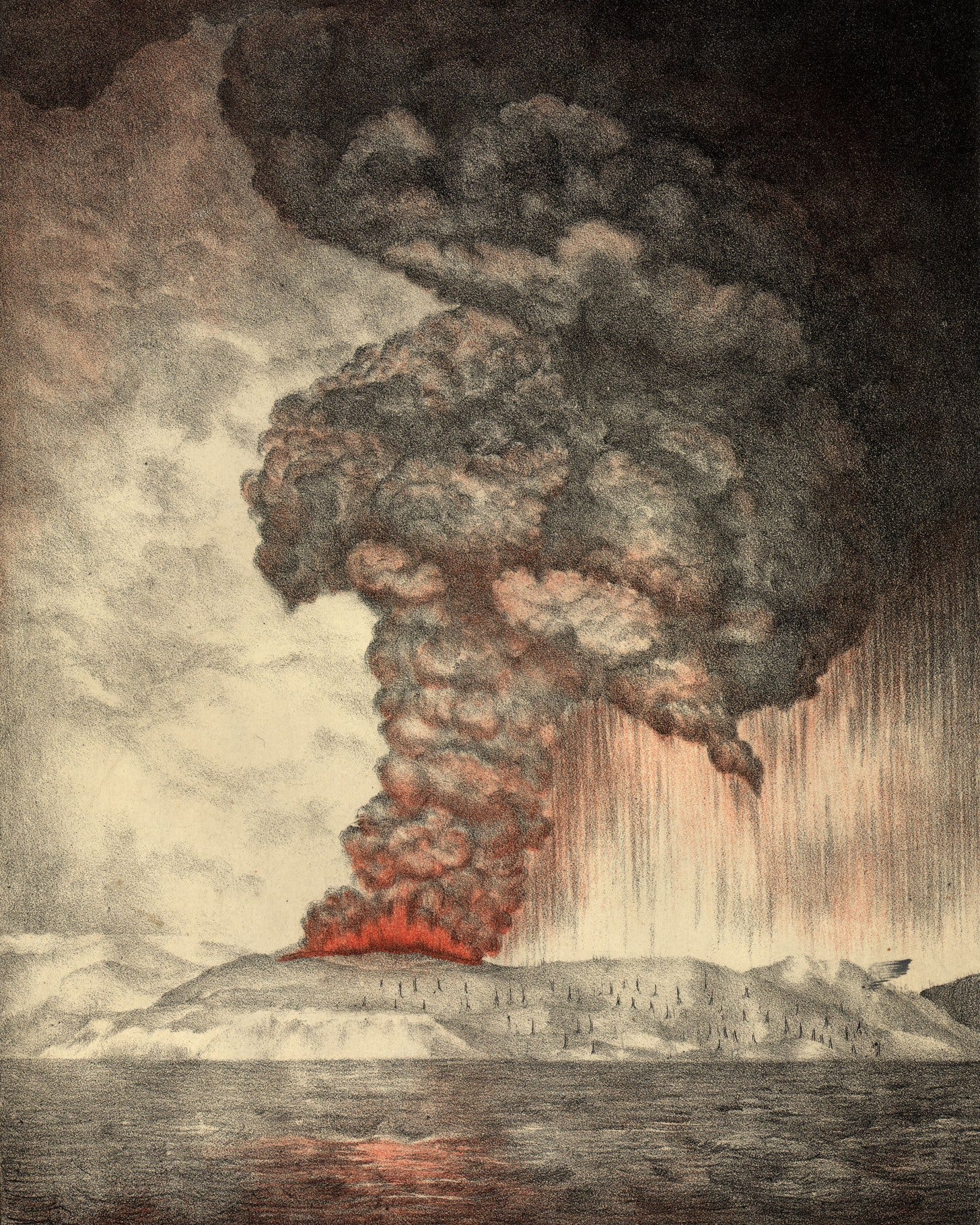
In the Sunda Strait between Java and Sumatra the volcanic island of Krakatoa had been restless for months. On August 26 the unrest became catastrophe. A series of immense explosions began that afternoon and continued into the next day, the largest of them heard nearly three thousand miles away. The island largely vanished. Ash columns rose into the stratosphere. Tsunamis raced outward and drowned more than thirty thousand people in the coastal villages of the Dutch East Indies.
The dust and aerosols circled the planet. Sunsets turned lurid red across Europe and North America for months. Average global temperatures dropped by as much as 1.2 degrees Celsius the following year. Harvests suffered. The event forced scientists to confront the idea that a single geological convulsion could alter climate on a planetary scale. Sailors logged floating fields of pumice. Artists painted the strange skies without fully knowing why the light had changed. Krakatoa was not the deadliest eruption in human memory, but it was the first to be studied almost in real time by a wired world, and the measurements it left behind still anchor textbooks on volcanic winter.
1768: Cook Cleared Plymouth on the Endeavour
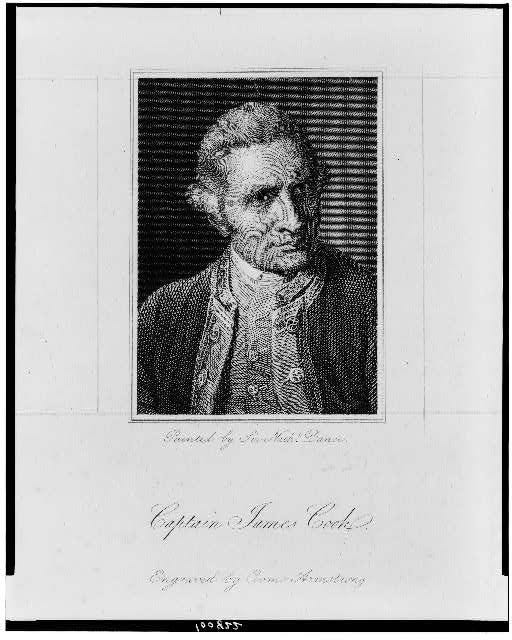
Captain James Cook eased the bark Endeavour out of Plymouth Sound on August 26, 1768, bound first for Tahiti and then for whatever lay beyond. Officially the Admiralty wanted observations of the transit of Venus. Quietly they also wanted the eastern coast of New Holland charted and any useful harbors claimed before the French arrived. Cook was forty, a gifted navigator risen from the merchant service, and he carried a mixed company of sailors, marines, and gentlemen naturalists led by Joseph Banks.
The ship was small, just under one hundred feet, crowded, and already smelling of tar and damp wool. Cook's orders were sealed. His real test would come in unmapped waters where a single reef could end the voyage. He would go on to survey New Zealand with astonishing accuracy, run the east coast of Australia, and name Botany Bay. That August morning none of the men on deck knew they were opening the British claim on half a continent. They knew only that the Channel was gray, the stores were stowed, and the captain intended to bring them home again.
2009: Jaycee Dugard Walked Back Into the World
For eighteen years the world believed Jaycee Dugard was gone. Kidnapped in 1991 at age eleven from a school bus stop in South Lake Tahoe, she had been held in a hidden compound of sheds and tents behind the Antioch, California, home of Phillip and Nancy Garrido. On August 26, 2009, the secret collapsed. Garrido appeared at a University of California, Berkeley, police office with two young girls, seeking permission to host a religious event. Suspicious officers ran his record, noticed the girls' odd behavior, and kept asking questions.
By evening the truth was out. Jaycee was alive. She had borne two daughters by her captor inside that backyard prison. Phillip and Nancy Garrido were arrested the same day. The rescue ended one of the longest missing-child cases in modern American memory and exposed catastrophic failures in parole supervision. Dugard later wrote her own account and built a foundation for other survivors. The date belongs to her reappearance, not to the crime that preceded it, and to the ordinary detectives who refused to wave Garrido through.
2021: A Suicide Bomb Tore Through the Kabul Airport Gate
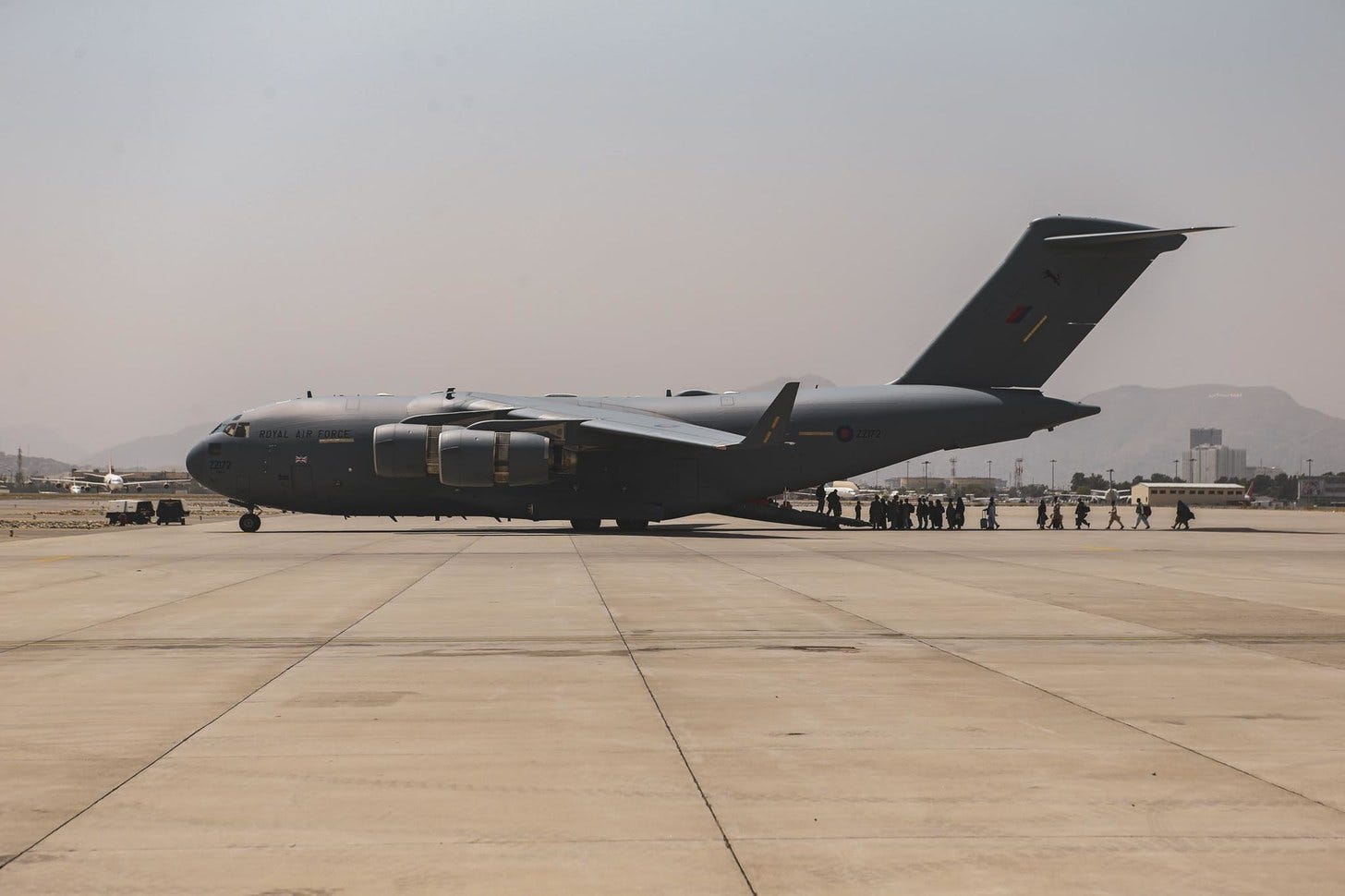
By late August 2021 the American withdrawal from Afghanistan had funneled tens of thousands of people toward the sole remaining exit: Hamid Karzai International Airport in Kabul. Crowds pressed against the Abbey Gate for days, clutching documents and children, hoping for a seat on a departing aircraft. On August 26 a suicide bomber from an ISIS affiliate walked into that throng and detonated.
Thirteen U.S. service members died, mostly Marines, along with at least 169 Afghan civilians. The blast turned a desperate evacuation into a scene of shredded luggage and emergency triage on the tarmac. In the hours that followed, aircraft still lifted off under threat of a second attack. The bombing became the deadliest single day for American forces in the entire withdrawal and fixed the chaotic final image of a twenty-year war. Bodies were still being identified while the last transports cleared Afghan dust from their landing gear.
What most accounts leave out is the night thirty-six hired classical musicians were asked to put down their instruments and sing the na-na-nas themselves, and the one who refused and walked out rather than do it. The deep dive has that session, and the argument over the running time that nearly cost the song its ending. Start your free 7-day trial now to read it and every future one.
Comments
Nothing yet. Say the first thing.
Sign in to join the conversation.