
First came the forests, then came the humans.
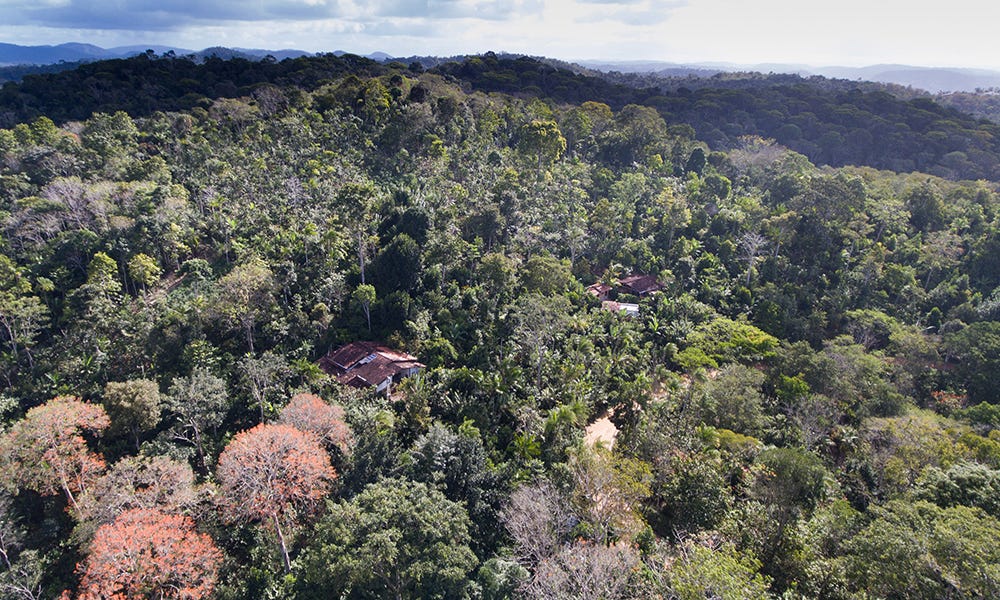
The story of humanity has very much been one of deforestation. Over the past 5000 years, the more there have been humans the less there have been forests. The quintessential patchwork in the British countryside, for example, is a rather modern site for our land - Britain was once 75% forest, now it’s less than 14%. Today one of the most famous remaining frontiers against deforestation is the Amazon rainforest.
Almost all this deforestation over the past 5000 years has been due to agriculture, 98% to be precise.
For thousands of years, forests grew more and more abundant, building more and more fertility underground, which when we then cleared into fields for farming. Year after year we yielded from the fertility, eventually reaching an unsustainable violence when, at the end of the Second World War, we waged a chemical-farming warfare on nature.
Our history of deforestation and field-farming is founded on one important preconception; you can’t produce food in a forest. It is this preconception that we, alongside all our food-forest and agroforestry folk, are here to question.
We believe that the forest is an inspiration for farming. We believe that the forest’s health and abundance is like none-other, and that we can learn from it to create a food production that is more healthy and more abundant than agriculture has ever seen.
The way we farm here at Higher Farm is by planting highly diverse forest rows, and then we grow our crops in the strips of land in-between the rows. We call the strips in between the rows ‘alleys’. The alley-crops in our case are currently mainly beetroot, onion, garlic and horseradish, which we use for our ketchup.
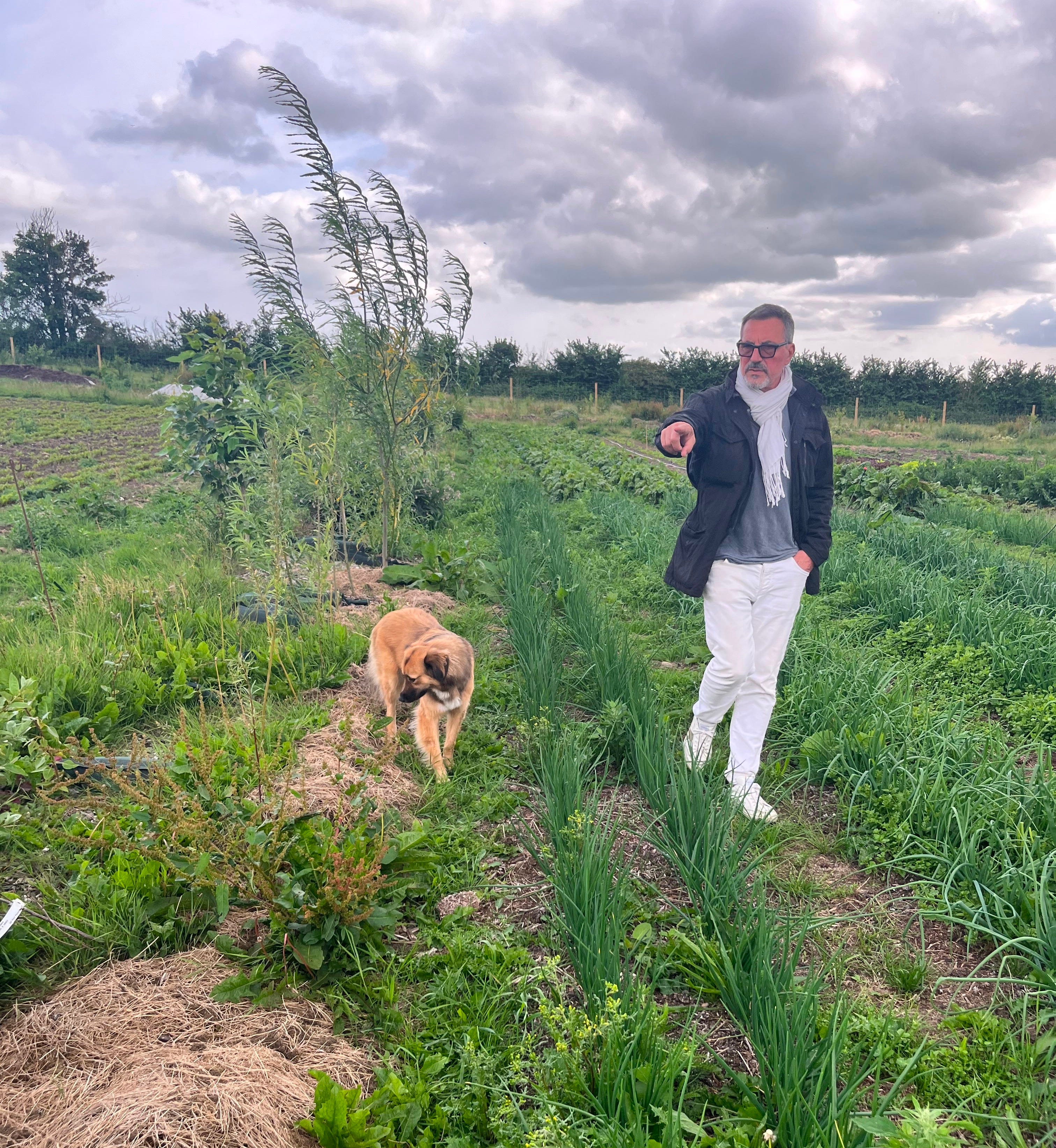
Our forest rows include the whole range of stratification and diversity you would see in a natural forest: large trees, medium trees and small trees; shrubs, large herbaceous plants, smaller plants and eventually fungi. For example in one of our rows we might have oaks, cherries, plums, willows, poplars, gooseberries, blackberries, comfrey, mint, garlic and mushrooms - all growing together, densely planted.
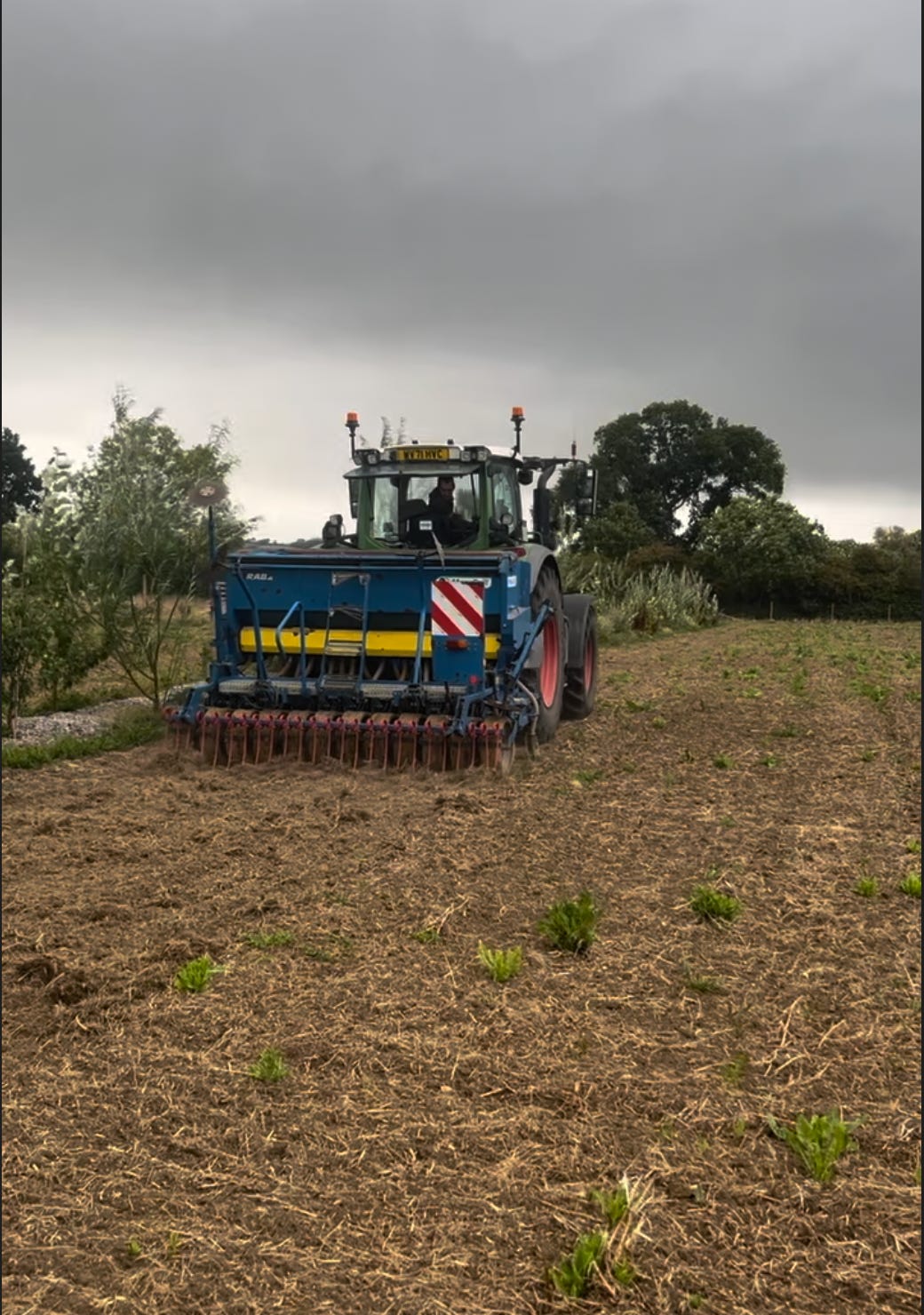
It’s very early doors and we are still learning a lot, but I believe farming in this way can completely turn the effects of agriculture on their head. From a system that degenerates land, emits carbon and poisons its eaters, to one that regenerates land, sequesters carbon and increases nutrition.
There is much to discuss on food-forests, including methods, benefits, challenges and scaling . “What about the shade?” is a question I get a lot. I’ve not yet gone deeper into farming here with our mighty group of food-movement friends - so today I thought I’d first test by sharing this introduction, and if it seems of interest we can then start to delve deeper.
13/02
Matteo
Comments
Nothing yet. Say the first thing.
Sign in to join the conversation.