
I have had a bit of a hiatus from my Substack this past month and a half. We are currently navigating a tricky period in our company’s evolution, one that is demanding a lot of attention, care and problem solving. Let me tell you about it.
What I have found is that when you start a business, you plan it top down: vision, mission, goals, strategic objectives etc. However, when it comes to actually building your business, you do it in reverse - bottom-up. Therefore, you are constantly testing to see if the reality of your business marries up with the theory of your plan. And guess what: it never does.
The best piece of advice Matteo and I received when starting Higher Farm was from Keith Abel, founder of Abel & Cole, who said: ‘Lads, the problem with any business plan is that nothing ever goes to plan.’
Now, Project Ketchup has been in the works for over 18 months. We started recipe development in 2024, launched in November 2025, and are currently selling in roughly 30 local shops, 10 pubs and cafes, plus 7 new accounts in Bristol. Feedback is great,and sell-through is strong. Seems like things are going to plan, right?
Not so fast.
Matteo and I are hitting our first major test where the reality of our business is pushing up against the theory of our plan. This is coming in the form of the important question: how does this work at scale and maintain the integrity of our product and business? And it’s the second part of this question that is presenting the crucial challenge.
Currently, everything is produced, bottled, and delivered by us in-house, and we have full control over the couple hundred orders of ketchup we get each week. But what happens if those couple hundred start turning into a couple thousand?
Traditionally, the way any food brand solves this is to out-source production to a large manufacturer. Therefore, on page 6 of our lovely business plan, that is the solution we wrote down.
Well of course, it’s proving far more complex than that pithy little sentence suggests. I can hear Keith whispering: I told you so.
Every co-manufacturer we’ve spoken to has industrial practices that you need to conform to in order to partner with them - it’s a plug and play system. They’re not changing their operations for a tiny start-up. And when they say sure, we can make your ketchup — but you’ll need to use our chemically farmed ingredients, industrial processes, and preservatives — Matteo and I face a dilemma that a significant number of other industrial food businesses don’t need to consider.
Do we outsource, scale efficiently, and save ourselves enormous time and headaches — at the cost of risking our product’s integrity? Or do we walk away, stay true to our principles, and risk being unable to scale at all?
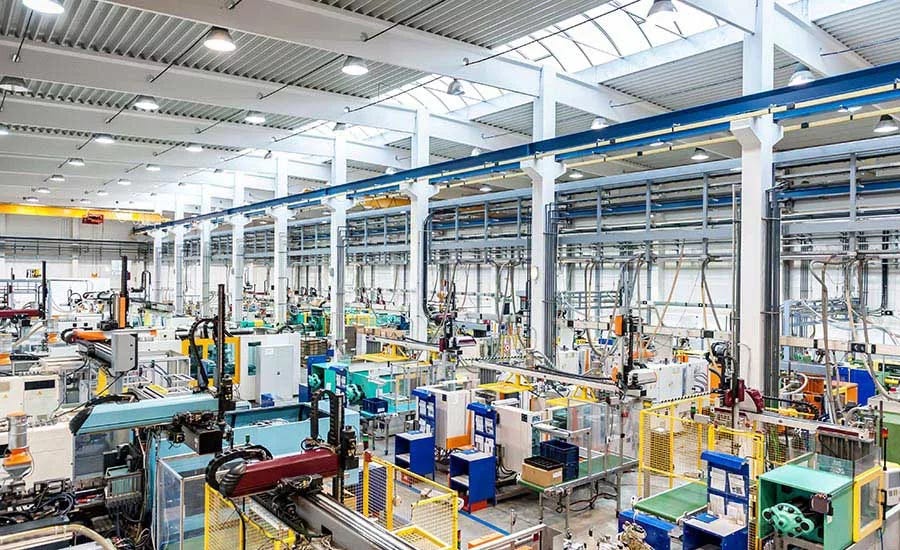
(The inside of a food manufacturer not too disimilar to the one Matteo and I visited)
For regular followers of Higher Farm, you already know the answer. But for those who’ve just joined, I will reiterate: the integrity of our product is non-negotiable. It’s the bedrock of everything we do. We’re here to regenerate the planet and increase access to healthy, regeneratively farmed food — and that promise runs soil-to-bottle. The moment we compromise on it, we start undermining the very mission we exist to fulfil.
And then what do we become? Another food brand that promises a better world, gets swallowed by the industrial food system, cops out on its values, sells to Unilever or P&G, and ends up on a supermarket shelf as a highly processed, chemically farmed pile of crap. We’ve all seen it.
Stepping back, I realise the deeper conundrum we face is that the challenges we’re encountering are emblematic of the very problems Higher Farm exists to solve. We’re trying to scale a regenerative food brand and fix a broken food system whilst operating inside a food system that is highly industrial, ultra-processed, and structurally geared against everything we stand for. We’re trying to use the system to beat the system — and it’s not easy.
I know we aren’t the only ones facing this dilemma. There are many amazing businesses out there in our industry operating at scale, and I admire them deeply. It just saddens me to think that the small businesses out there who are trying to do good for our planet and society actually find it harder, not easier, to scale their organisations.
It seems like we are attempting to clutch victory from the jaws of a monster that hinders those seeking to increase our health, restore nature, and regenerate our planet, whilst simultaneously supporting others who poison our society, decimate our natural ecosystems, and scorch our living earth.
It’s a difficult fact to face up to, but as Samwise Gamgee says in his inspiring speech to Frodo in The Two Towers: ‘There is some good in this world Mr. Frodo, and it’s worth fighting for.’
So that’s what we’re doing.
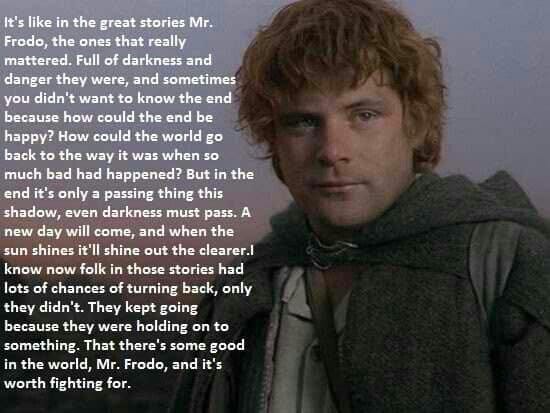
(Samwise’s Gamgee’s closing speech in Lord of the Rings: The Two Towers)
Comments
Nothing yet. Say the first thing.
Sign in to join the conversation.