
(This post was originally issued to paid subscribers in February 2026)
In 1882 a large new public cemetery was opened by the local authority on Barleywood Road off Greenland Road, in what most of us now call Darnall. That was just a year after City Road Cemetery was built, and they have some similarities with each other. Tinsley Park Cemetery retains that original name, but just what is left now of Tinsley Park? Indeed where was that area - and what happened to it? The truth is that what is now a lost community was at one time a powerhouse of the Victorian town; an old and historically important part of the industrial East end. Thousands of Sheffield people lived and worked in the area, their children went to school here - and finally the new cemetery was the last resting place for many of that now mostly lost population.
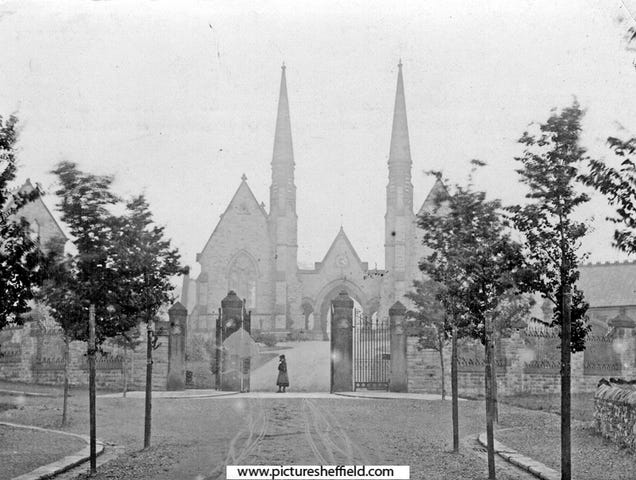
Tinsley Park Cemetery, pictured around 1900
The 1855 Ordnance Survey map shows a large wooded Tinsley Park beyond the edges of Darnall. This is a time when the nearby Attercliffe area was rapidly developing into the industrial centre it was to become. That map does give us the area we are looking at, and shows the beginning of the industrialisation process with small coal pits along with the Tinsley Park Works near the canal, and the Peacock Colliery at the far side of the wood. Along the current line of Greenland Road ran a branch of the canal, the Greenland Arm, which was opened along with the main route in 1819 to serve the collieries in the area. The map also shows the tramway linking the canal with the Peacock Colliery, which would otherwise have been quite distant from the road and water connections.
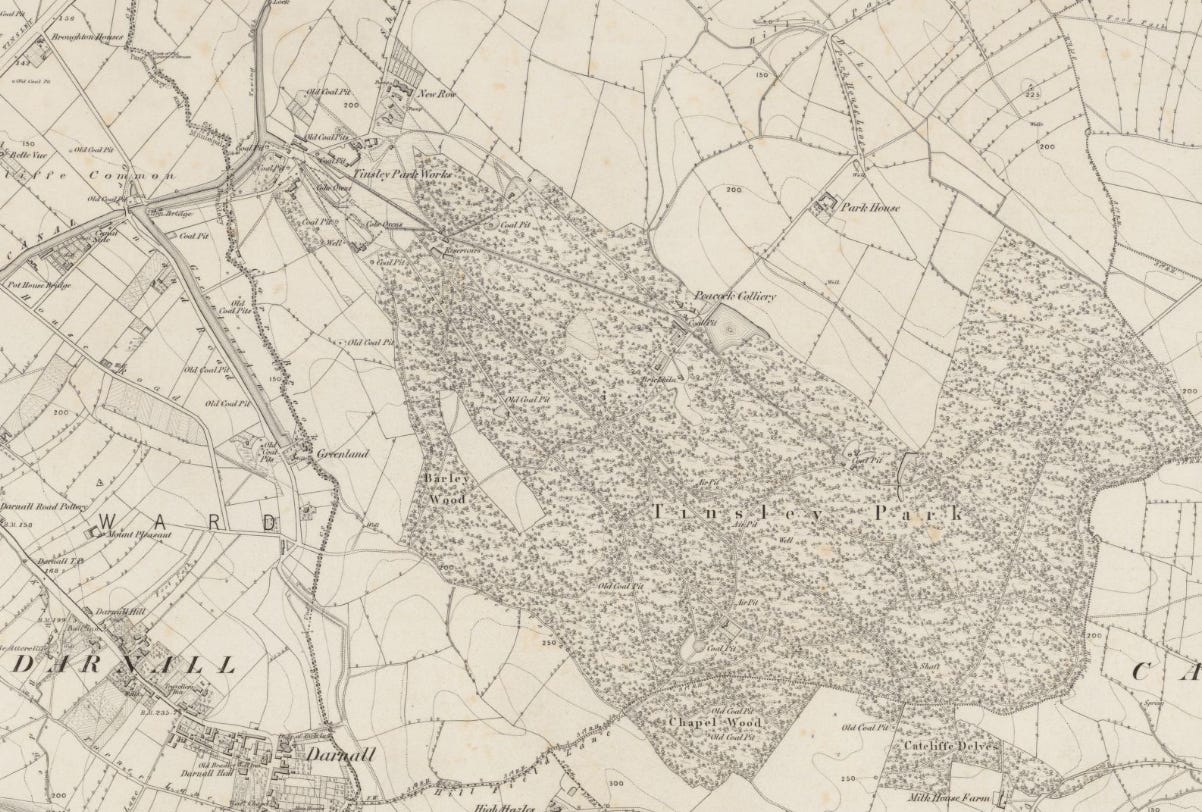
A wooded Tinsley Park on the 1855 OS map
On the map above there is a small area called Barley Wood, and this is still the name of the short road leading to the cemetery. By the time that the cemetery was operating there are some other changes to the area. Peacock Colliery has expanded into the larger Tinsley Park Collieries, and there are a couple of pieces of industry replacing the old pits previously marked along the canal arm; Tinsley Park Iron Works and a rope works too. In the map below the Greenland Arm has now been severed from the main canal, and curiously the new cemetery is named ‘Attercliffe Cemetery’ although I haven’t found any other reference to it having that name - apart from anything else it isn’t in Attercliffe.
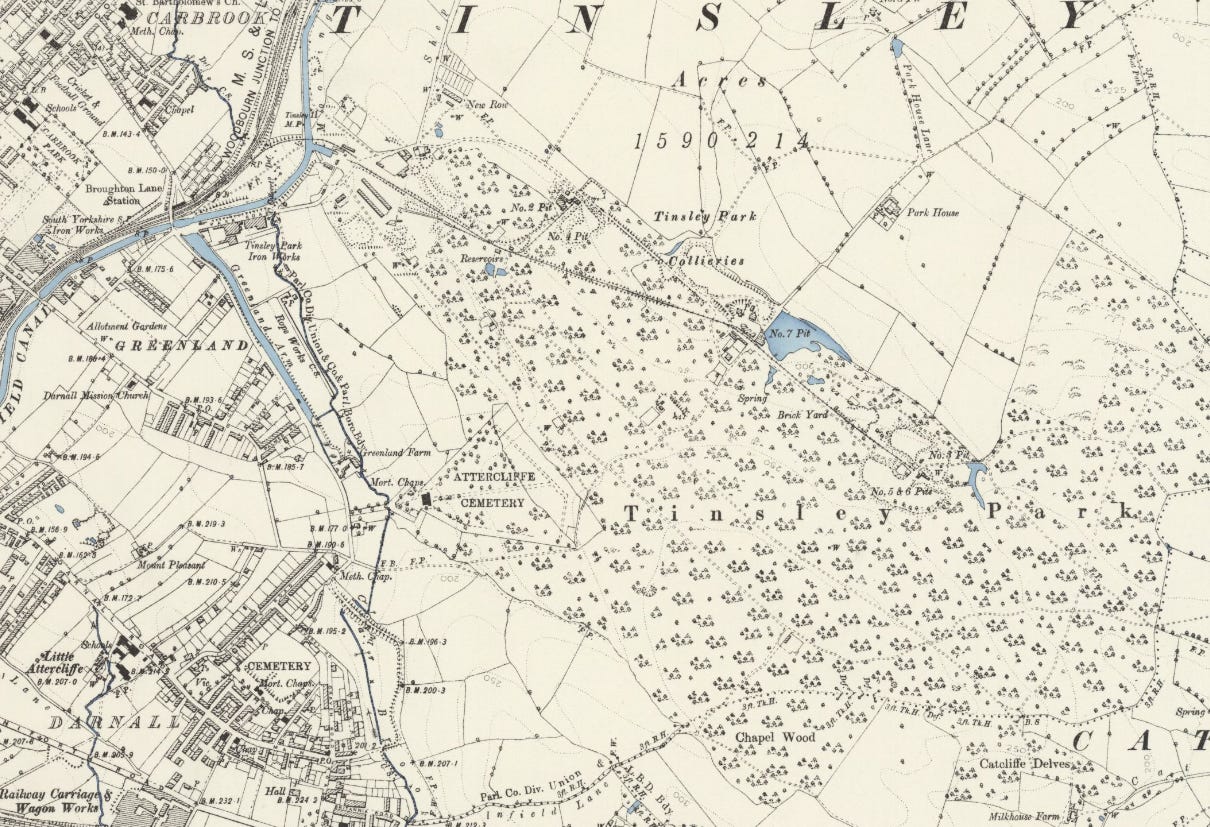
The mis-named cemetery appears on the map in 1889
The colliery story of the area began with the opening of the canal in 1819, and these were the pits of Earl Fitzwilliam in competition with those of the Duke of Norfolk in Manor and Park. The original smattering of small pits was then replaced later in the nineteenth century by deeper pits needing shafts - and more workers. Those men and their families began to form a community near to the canal, mainly along Tinsley Park Road, which was built alongside the canal cutting across the line of the by then redundant Greenland Arm. There were small houses here which opened right onto the canal towpath until the 1950s, along with the more typical terraced housing. The road was also home to one of the large collection of Sheffield board schools, a lovely building which still survives - a clear indication of local population numbers.
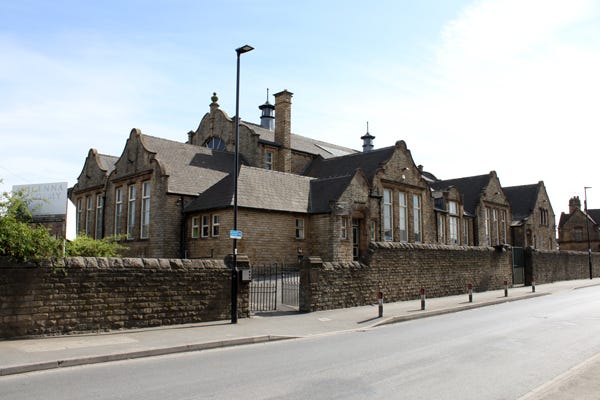
The former Tinsley Park Road board school
After 1900 a further transport connection to the coal mines was made when a branch split off from the Sheffield District Railway on the way to Treeton. The tramways still ran in the other direction to the canal throughout the lives of the pits. The end for the Tinsley Park Colliery came in 1943, bringing to end a century and a quarter of mining in the area. At the outbreak of the Second World War the map shows more industry and less of the wood, along with allotments and two sports grounds too. The football facilities were presumably for the colliery workers; the Tinsley Park Colliery Football Club had won the Sheffield Challenge Cup in 1915.
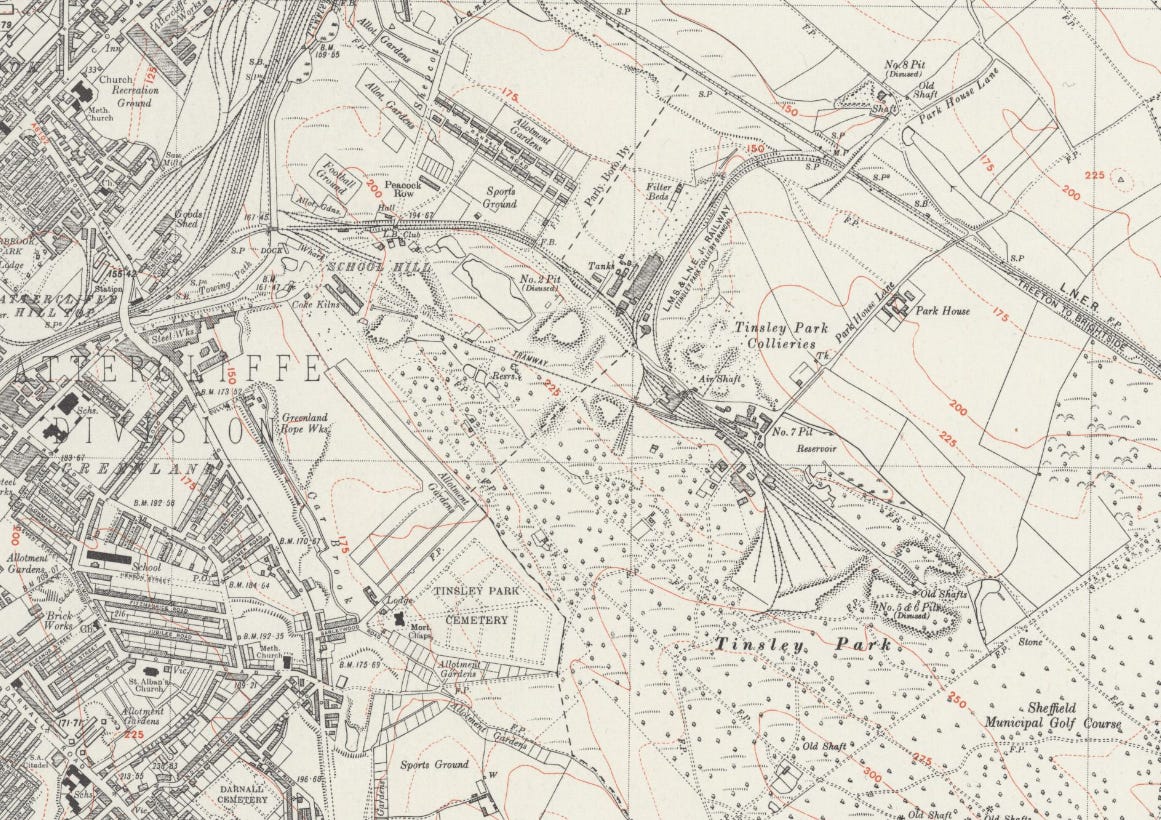
Tinsley Park and surrounding area in 1938
After the war different industry started to become established, beginning another chapter in the story of Tinsley Park. The site of the closed colliery was developed by English Steel’s Tinsley Park Works, which was there from 1963 to 1985. Tinsley Park Road is interesting - part of the long road is now occupied by industrial units, but a stretch of it is quite empty now, especially near the old school (which is now a private academy). What has changed is that there is no longer really a population living here; the workers in the local industry must now come from elsewhere. Like the nearby Attercliffe there is still the regular sound of heavy work being carried out - we do still make things in the East end of Sheffield whatever else has changed over time.
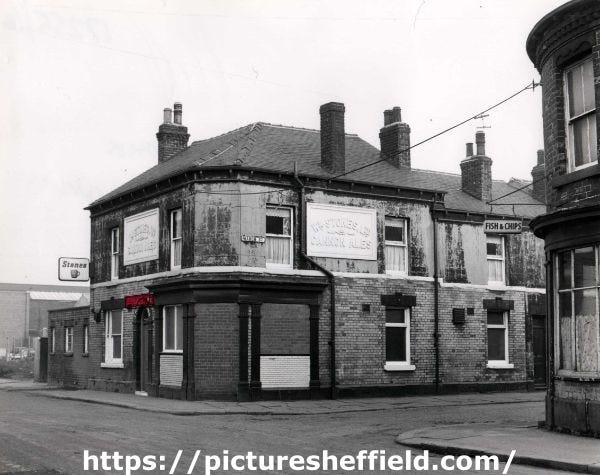
Tinsley Park Road at the junction with March Street in 1970
Some of you are likely ahead of me here, as the site of Tinsley Park Collieries and the later steel works was to have a short-lived renaissance as the ill-fated Sheffield City Airport. From 1997 to 2008 the airport saw short-haul flights to several European destinations, with annual passenger figures peaking at 75,000 in 1999. The airport story is another issue, and one chapter in the long-running attempts to establish an air travel connection in Sheffield. More happily there is now yet another chapter in the Tinsley Park story with the establishment of the Sheffield Business Park, and in particular the technology specialists that are based there today.
The fact that Sheffield had an airport at all will be news to many younger people in the city - a lot has happened since 2008, but it is nevertheless very recent history. It is appropriate that the site is now focused on discovery and invention, as the industrial story of Sheffield throughout history has been about those things for centuries. There has also been a transport connection back to the early days of the story; the canal and branch arm, tramways, a rail link, and much later the city airport - Sheffield had to move the things we made, and we were often innovative in doing so. The coal mines saw so many developments over their long life; miners in the twentieth century were doing the same thing, just in a different way to their predecessors.
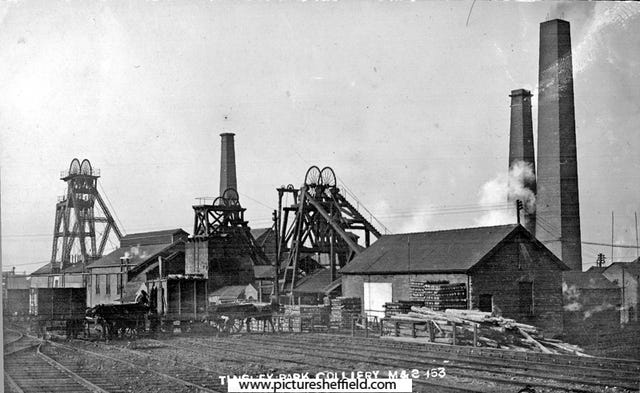
Tinsley Park Colliery with the Sheffield District Railway branch in 1904
I started looking into this area to tell a different story - and I maybe even started writing that different story too. However Tinsley Park is still undeniably a thriving part of Sheffield, with lots of large companies and organisations employing many staff. What I do find interesting is the question of identity; do those people consider themselves working in Tinsley Park as they did in the past? I suspect the name has slowly been erased. The same goes for living in the area - far fewer people do these days, and the many changes to Tinsley Park Road tell that story. Returning to the top of the page Tinsley Park Cemetery is the main survivor, and has carried the name through the eras. It is a sad reflection that the remaining residents of Tinsley Park are those there for eternity.
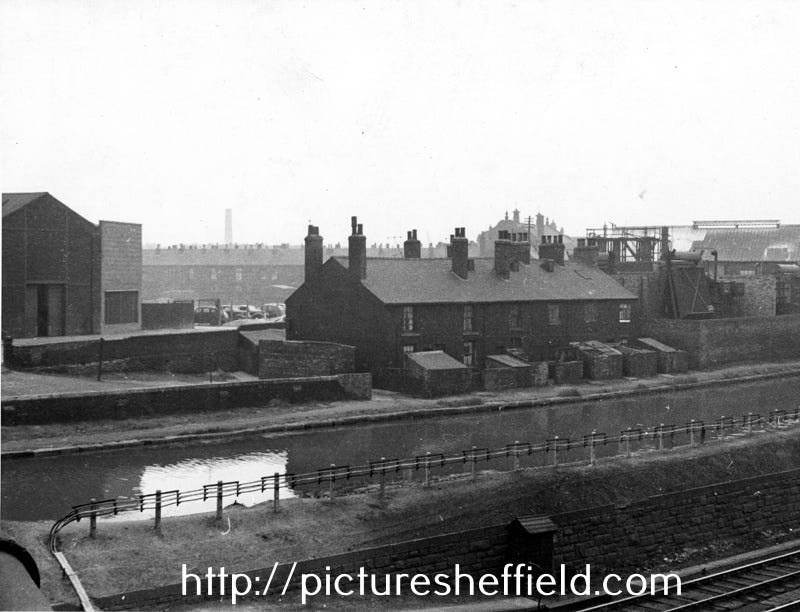
Cottages on Tinsley Park Road backing onto the canal towpath in 1957
No posts
Comments
Nothing yet. Say the first thing.
Sign in to join the conversation.