
I’m becoming aware of how far we’ve come and I’m frightened to name it, for fear of fooling myself with the belief that, “We’re done with grief”. We’re nowhere near “done”. We’re very far from that, we may never be done with bereavement. But that’s an impossible concept for most of us to hold onto. It’s especially difficult for my children to accept that this pain is permanent.
We’re orientated towards safety, comfort and ease; my kids assume freedom, and they demand it as they grow. And yet my mind remains terrified of what the future may bring. Ultimately that’s the price I pay for being the only adult around here. As though driving in the fast lane towards our future, I’m avoiding eye contact with the guardrail. While focusing on the open road ahead, it’s easy to become strained simply by the effort of travelling safely onwards. My fear of crashing into something has no concrete obstacles to avoid, other than the road itself.
As I look in the rear mirror at the year behind us, I'm aware of how far we've come. In an astonishingly short amount of time, I’ve come to feel completely different and somewhat unrecognisable to myself. How dare it be possible to be OK?
Before writing this, I went back to the post I wrote in July last year. I was curious how it would feel to read my own words from six months into grief. Visceral is how it feels. With every sentence I remembered the process of turning my insides into words. The moments which inspired me flooded back into my bones. As the plane took us away in that post, I was happy to leave the pain of that airport. The absence of my husband remains just as real today, but not as precise. It’s a wider ache, reaching out across a larger area of space or time. It's not a coincidence that again, at the same time as last year, I’ve chosen to book a trip away from it all. I'm trying to escape. School has ended, we need to leave. The only should I felt obliged to follow was a promise I made to myself a long time ago. I wanted to take our daughter to Paris.
With the end of routine, less pressure to perform, and fewer people watching our activities, we began to feel more free and more alone than usual. The kids need space from people and the chance to choose the pace of their existence. As soon as school broke I felt the need to go AWOL. The only thing that I feel we should be doing, is going on family adventures, to give ourselves the time to heal together. Stop working, start resting, and keep living. Last year we abandoned normality and I took the kids to Sweden, this year I went to France.
Although of course it’s Mark who’s technically AWOL, Absent Without Official Leave; he’s the one who left his responsibility to be here. I’ll only ever be temporarily AWOL. I’m actually fulfilling my responsibilities now, to the best of my ability, in every waking minute, of every day - at home or away. During term time I’m always “on”. And during school holidays I’m even more available to my children, often inaccessible to myself, less able to connect with other adults on my own terms. And as a result rarely “off”. Yet the absence of routine gives me permission, because I’m answerable to fewer constructs than our usual scheduling. These unstructured weeks are a balm and a bane.
I am Absent With Official Leave, but he’s the soldier who left his duties without permission. He should be here. Être en absence irrégulière, he’s AWOL but not absconding, his absence is known, felt and visible. Desertion is defined as leaving with the intent of not returning, it’s an abandonment of loyalty, or a failure of duty. He has not deserted us. There were some extraordinarily painful moments, when I felt rejected by Mark during his illness. Now his death feels like a failure of our dreams. I do feel betrayed by the universe. And he died with a promise that he’d stay with me forever. It's not desertion. We knew that we couldn’t control his absence, but we also couldn’t not promise to stay together.
I still believe that we’re both wholly committed to keeping our vow to be together forever, regardless of the absence of any rational meaning in that promise. He committed to keep our connection alive, come what may, which means I don’t feel deserted by him.
The friends who mention Mark freely are now the ones who mean the most to me. They don’t desert him in my presence, and therefore they’re still good for me, for us, for him. It helps me to experience other’s tentative incursions into my grief, “Is it OK if I ask …?” Yes, it is. Whatever comes next has never yet not been OK. The fact that you’re asking makes it mostly OK, and I have grown my ability to say “No”, which paradoxically makes “Yes”, more available to me.
My fear of the unknown is just as real as it was a year ago, but my ability to handle it is exponentially better. I may not show my grief as quickly now, I'm less fragile than I was last summer. As a result, my body now measures grief’s strain in weeks and months, not hours and days. Although I live at an elevated number of breaths per minute, ailments take longer to heal, and a heavy heart is always hard to sleep with. Like a marathon runner at mile 20 of 26, the hardest part is still to come because we’ve already carried our burden such a long way.
Travelling is always an adventure, that’s why I love it. Adventure was a key ingredient in my life with Mark, and it was a significant part of who I was before I met him. He believed our adventures together had made his life “good”, which is why he made me promise to continue travelling without him. He wanted me to keep taking the kids on adventures. He knew that I’d talk myself out of it financially, so he made me promise that I’d not let rationality squash adventure for them. I think he underestimated how hard it would be to do anything fun without him. But I guess that’s the prerogative of the dying – like deities or royalty - the dead get to have wishes unencumbered by practical realities.
And so, I had the beautifully disorientating opportunity to visit Paris this week with our eldest daughter. It was a special chance to bond with her, alone, in the City of Love. I’ve always wanted to take her there because I love Paris, and for years I’ve wanted to inject my Francophilia into her French studies. This trip is one of my only remaining dreams which Mark knew of - the list of things not done, on the list of things I told him I'd do, is now very short.
On the day before, and during the day of leaving, I felt myself quietly slip into the now familiar tenderness of grief. On days like these my sadness bubbles to the surface uncontrollably. I have to move slower, breathe deeper, and I regularly take myself off to the bathroom. I still cannot truly grieve in public.
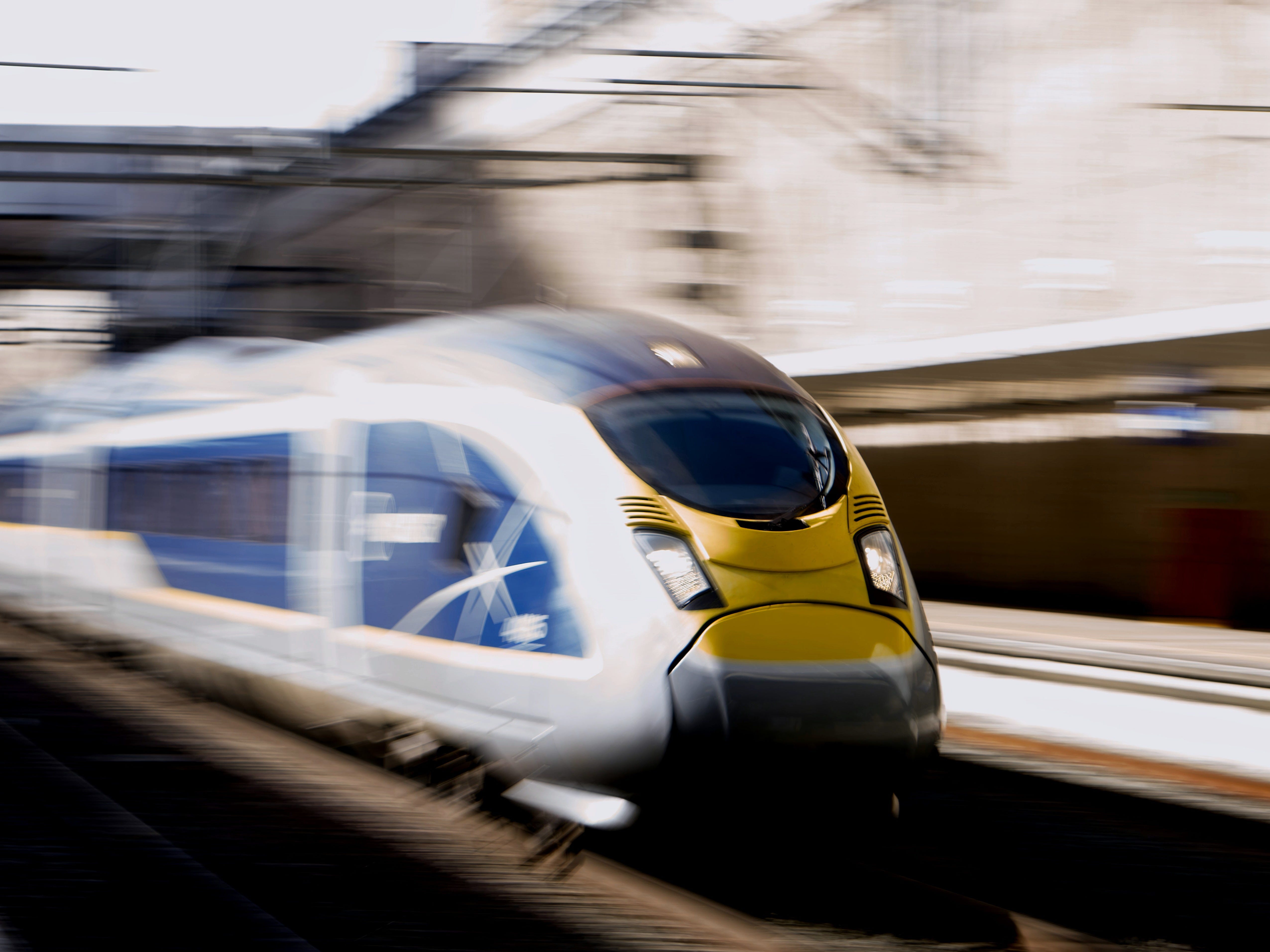
The idea of getting on the Eurostar without Mark made me want to vomit. There wasn’t a cell in my body that wanted to leave home without him, and yet I very much wanted to be in Paris. I knew that I was going to have a lovely time. And that knowing couldn’t reach my heart and make it sparkle with excitement. It made me horribly sad, for him, for her, and for me.
With hindsight, I’ve also realised that more than sad it made me feel lonely. It’s awful to feel lonely while being with someone you love. I felt obliged to hold my daughter at a distance from these feelings, until I’d wrangled them into an exportable form. I didn’t want her to think that she was responsible for my sadness, or that I wasn’t looking forward to our trip. Quite simply, I just didn’t want to feel like this.
I knew she could handle my truth, once I was ready to share it. I also knew that as soon as I voiced my emotion, I’d crumble into many pieces. I couldn’t share it on the train into London, on the underground, or in the overcrowded Eurostar terminal. I decided to keep it in my hand luggage, and carefully carry my broken heart through our arrival, until we’d have time to sit and be with it alone, together.
As our train submerged itself under the Channel, I sat in a comfortable silence with her next to me. She played games on her phone and I began to write this post. In the subdued light of the tunnel I reflected on my grief, how far we’d come and what was still ahead for us.
I closed my eyes to rest with my woes, and my mind began to look ahead. I felt myself begin to fear that every significant stage ahead or any enjoyable event in our future was also going to bring me sadness. In the years to come our children will leave primary school, begin puberty, get GCSE results, go to college, drink too much alcohol at a party, have sex for the first time, learn to drive, go to university. And I’ll have to pass through each of these milestones alone. All of these moments will be marked by the occasion and attention they deserve, by me, without him. It was exhaustingly sad to think of it all.
The idea of driving into sadness at every potentially joyful moment of progress began to feel suffocating. Our children’s exact destination in life is unclear - they’ll do, or not do, any version of these milestones. The name of the event is irrelevant, it’s the thought that these passageways into their lives, their moments of pivot, possibility and wonder, are paths that their father won’t see.
He can’t offer an opinion, an idea, or a judgement. My circumstances are lonely, not my identity. My insides still look for his companionship. But no matter how much his opinions, ideas and judgements are what we need, they’re not forthcoming. I have no idea how to actually live a meaningful life, while sustaining the reality of that absence.
I have no witness beside me. Without him I lack a breadth in my understanding of what’s going on, which would have previously eased any discomfort in its happening. It’s a very specific form of companionship which takes the weight of existing, without the need to be asked for, or the effort of explaining.
If he was there he was carrying it with me. What “it” is doesn’t matter, that’s the point - he partnered me with everything. The repeated continuous choice of one person to be there, to have them stay for decades, and choose me every day, is what’s missing now. The weight of that future loneliness is hard to convey; it’s a loss, carving itself from inside a loss.
I’m lonely because my person is missing. No other person can fill the Mark-shaped gap in my connection to the world. I have people, but not the person my body was bonded to for a lifetime. My inner world learned to feel entirely safe in Mark’s presence. Without it my nervous system has no guarantees. It means other people have to be extraordinarily effective at creating safety for my body to truly feel it. Without it I'll continue to be a tiny bit guarded. And when others need me, because I make them feel safe, I no longer have my own resting place in which to recover.
Nobody will care about our children’s well-being as much as me, or him. There’s no point pretending that it’s otherwise - people love us, they love my children, and they’re not my co-parent. Being one person’s chosen one is an irreplaceable treasure that a human heart longs to carry. With no-one out there who thinks of me more than themselves, or at least as much as someone else, I’m inevitably less carried.
I don’t want this reality to make me feel unloved or abandoned. It would be so treacherously easy to begin to feel deserted now. People are busy, life moves onwards, our bereavement doesn’t screech or wail quite so loudly with its emptiness as it used to. We ache because we have lost our precious person everywhere we go. We are not failing because we feel that still.
As we journey onwards towards France my brain wants to know how I will do this. How will I have a good time, while carrying such emptiness. My mind knows not to foresee Mark in any future scenario. I tell myself, not to think of him. But because it doesn’t want to conjure feelings of being abandoned, refuses to feel unwanted, and rejects inadequacy, I can’t self-identify as lonely. My mind can’t not recall how Mark made me feel; I'm always thinking of him. Because imagining a future with just me curating it, makes me wince with exquisite aloneness. I’ve hopefully got forty more years without him. It’s not forever, but it is a very, very long time to be afraid and avoidant of happiness.
And so, inside the train tunnel’s darkness, my body tended to its lonely wound by being busy. I restlessly pursued my passions, devoted myself to my children, numbing pain by quietly holding what’s mine alone to carry. There’s no externally recognisable way of naming this transitional form. Bereaved and brave. The one who has lost and is lost - she’s changed beyond recognition, while remaining exactly where she always was. As Lord Byron says, in Childe Harold's Pilgrimage, “And thus the heart will break, yet brokenly live on.”
I’m unsure which parts of who I am now are fixed and which still want to change. Which parts of myself need to become something different to make room for the grief which has yet to come.
We travel onwards, towards Paris, in the direction of my memories, and into my fear at remembering him there. Then it dawned on me that I may never be here, or anywhere like this, with my teenage girl again. As we accelerate through France, my sadness begins to feel like a burden that I need to leave behind. I’d promised Mark that I would not lose my sense of self, because neither of us was willing to let cancer take another parent from our children. It suddenly felt crucially important to not be a sad version of me while we were there. But who is happy-me, now?
As we travelled away from home, I began to feel an imperative to be myself, not just to make the most of this trip but also so that Mark could be with us both. I didn’t want our daughter to remember this trip because I was sad, or to second-guess if I was OK while she tried to have fun. As we zoomed towards our destination, I realised that these days together were literally a once in a lifetime experience for us both. And I also knew how careful I had to be with those sort of expectations inside of myself.
When I lived in the 17th arrondissement of Paris, as a twenty-something, it was perhaps the most free I've ever felt in my life, before that time and since. That early-2000s-Rachel was in love with several French men, before she met Mark. He knew all about those liaisons, and it’s part of why he loved me. While I was there, I remembered that some of the bravest and loneliest days I’ve ever lived were during the months that I lived alone in Paris. Perhaps being alone and risking loneliness is the real price of freedom.
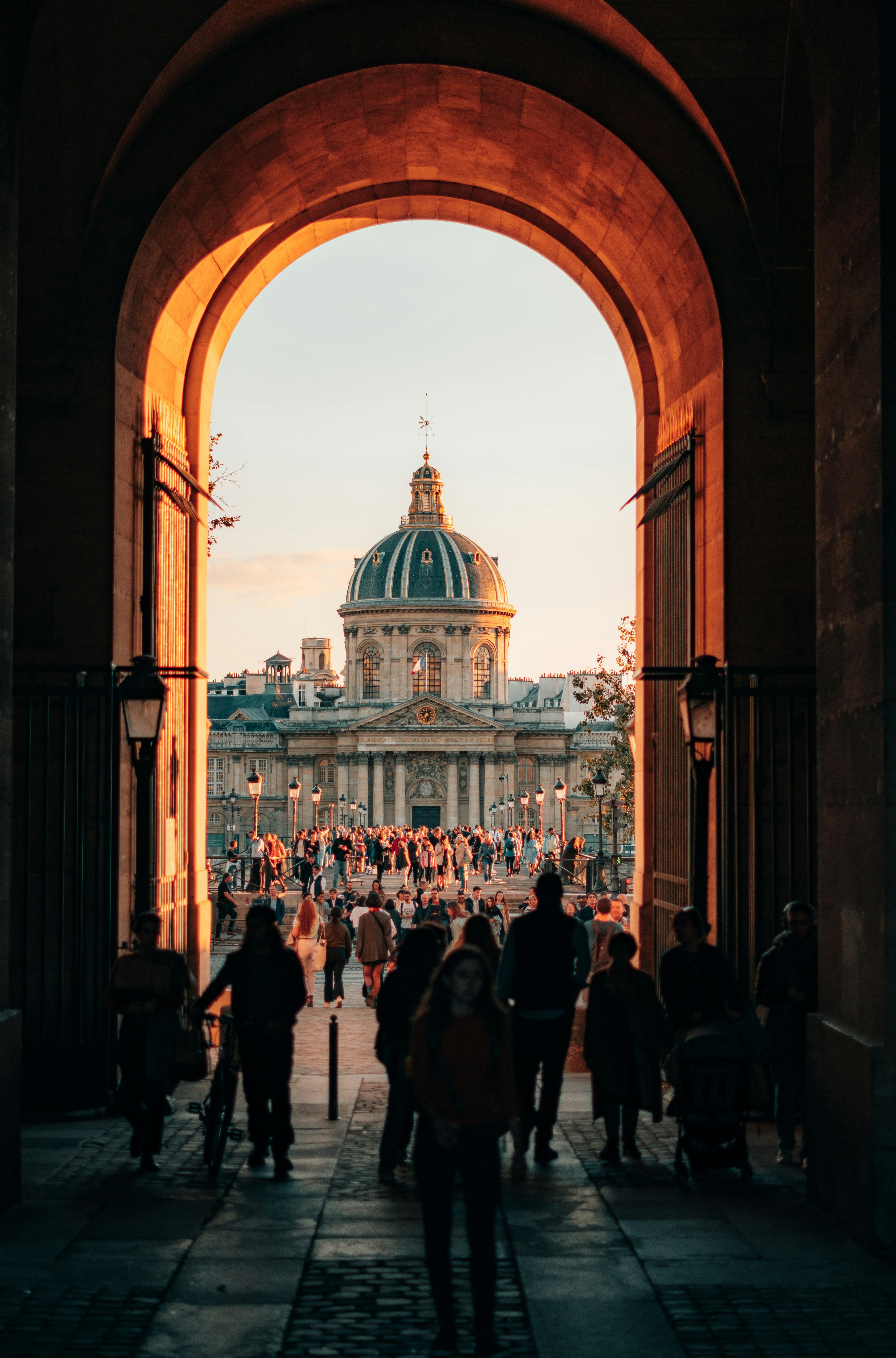
Mark and I went to Paris ten years later, for a weekend together. He was supposed to be running the marathon. We’d bought the flights, but he’d had to pull out of the running because of a knee injury. Instead we drank wine on the steps of the Sacré-Cœur, enjoyed coffee on bistro terraces, watched other runners run, and we made memories by simply having a lovely time. I’m so glad that we did it, because when he was dying in hospital, to lighten the mood one day, I asked, “If you could be anywhere right now, where would you be?” He replied instantly, “Sat in a Paris café with you, eating a fresh croissant, drinking black coffee.”
To revisit the City of Light this week was happily haunting for me, on many levels. Twenty-Something-Me was happy, joyful, brave and free. Thirty-Something-Me was happily married, actually in love, and giddily content drinking cheap Sancerre. Forty-Something-Me was sad and happy. Grieving a dream that had been partially lived. It was impossible to be there and not wonder how Mark would have enjoyed it. I was longing for my true love, happy to be there with our daughter, grateful to see it all, and willing to find my way through it. Just like living and working in a city where you don't speak the language, I can't tell you that it was easy, but I am proud that I did it.
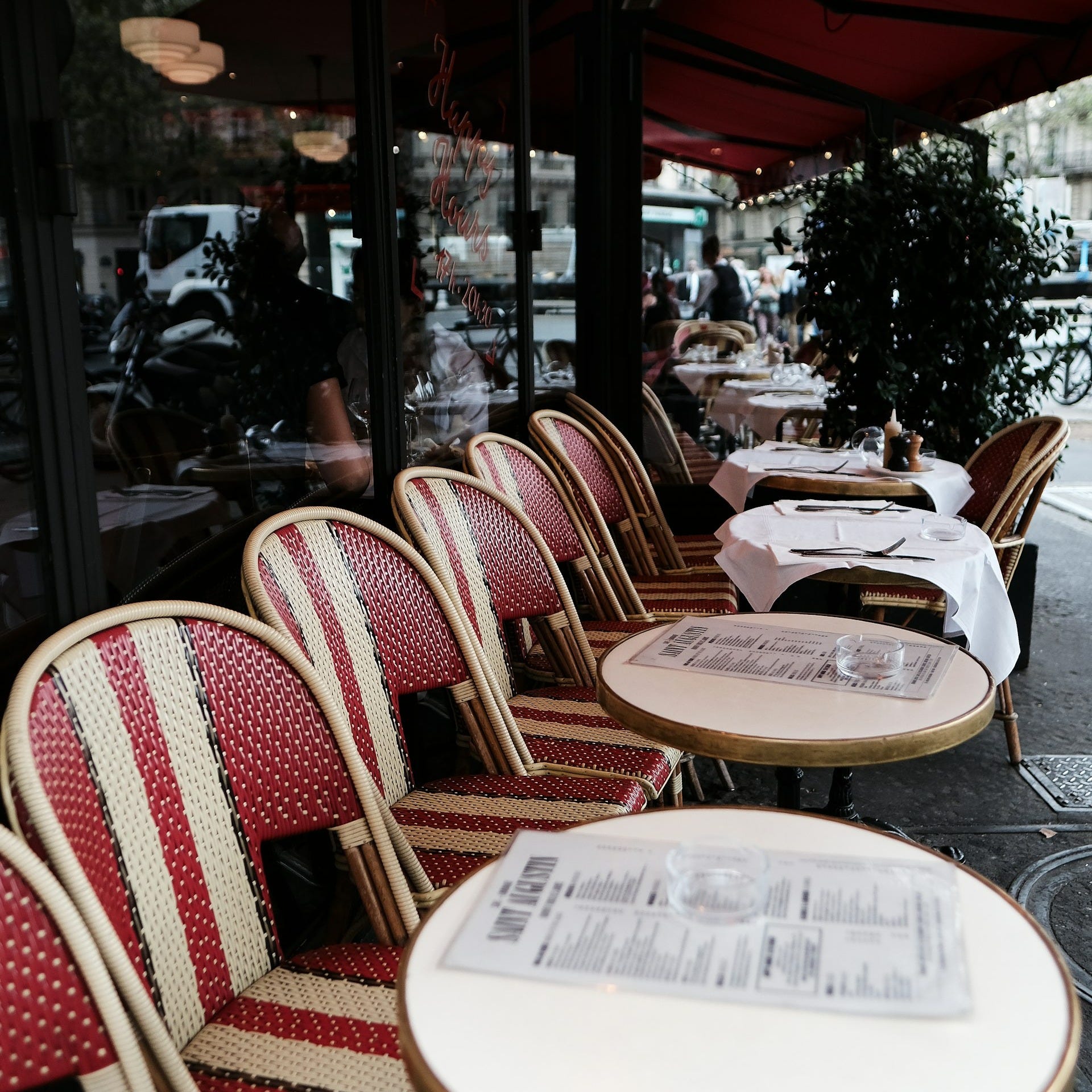
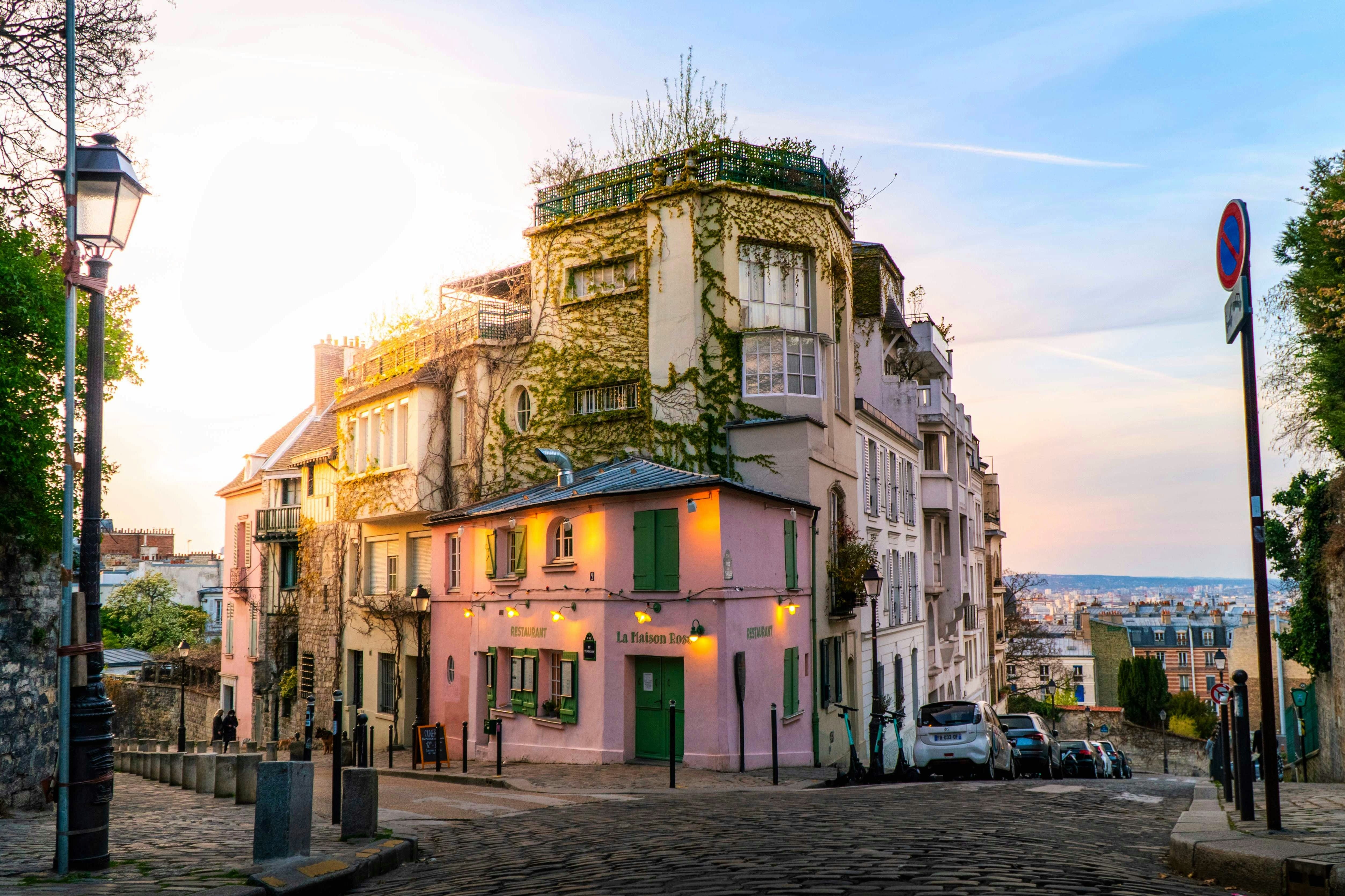
I shared my truth with our daughter on the first evening. Sat in the delightfully warm evening breeze of Montmartre, it had been a hot, sweaty day in Paris. Everyone was glad for the evening cooling, especially people like us, sat on a restaurant terrace, sipping iced drinks. I simply said, “I've been feeling sad about Daddy today.” I began to tell her about my memories of being there with Mark. We talked about the difficulty of feeling sad, while being happy. I tried not to propagate the inevitable lie of pain being fixable. Instead I simply showed how I was able to exist while such a deep loss continued. I told her that any sadness she felt while she was with me, was my love for Mark reappearing, and that it meant he wanted to be here with us. We were enjoying people-watching and observing our selves as we changed. Our hearts squeezed, our eyes leaked, and our bodies breathed while we talked.
This conversation felt like progress, I could see her back straighten as she began to trust herself with the truth of my feelings. She knew how I felt, she recognised it in herself, and asking me questions about my grief, helped her to understand her own experience. She confessed that she was worried if he reappeared, he wouldn’t recognise her anymore. We had to gently unpack what was true and not true about those painfully innocent fears.
The delicious thing about these dreaded moments is how much lighter they feel once they've travelled through the voice box and out into the open. It can take a while to get it out, but so far in my experience sorrow, loneliness and fear have never been made worse by being said or shared. Even with a teenager. I was quietly content with how we worked this out together.
I don't feel as heavy hearted as I did a month ago. I’m definitely stronger than I was this time last year. It seems plausible that something is changing in my relationship with Mark. He's AWOL and I'm more at peace with his goneness. I'm fighting with it less than I used to.
That this engulfing emptiness in the midst of our family’s existence is love with nowhere to go is unsettling. Although it’s a belief which I can live with. The consequences of his absence are just as awful as they always were. The common term for it in bereavement therapy is acceptance. I'd call it adjustment, easement, assimilation, or regulating. Because I never really want to completely accept it. I expect less of myself now, which is a new form of self-standardising drawn out of an understanding that nothing about this is OK. I can be more casual in my discomfort, allowing these new rules to apply only to myself. It’s an extraordinary agency within a tiny universe. I’m a version of myself that I’ve never known, which I suppose on a good day could be called freedom.
Comments
Nothing yet. Say the first thing.
Sign in to join the conversation.