
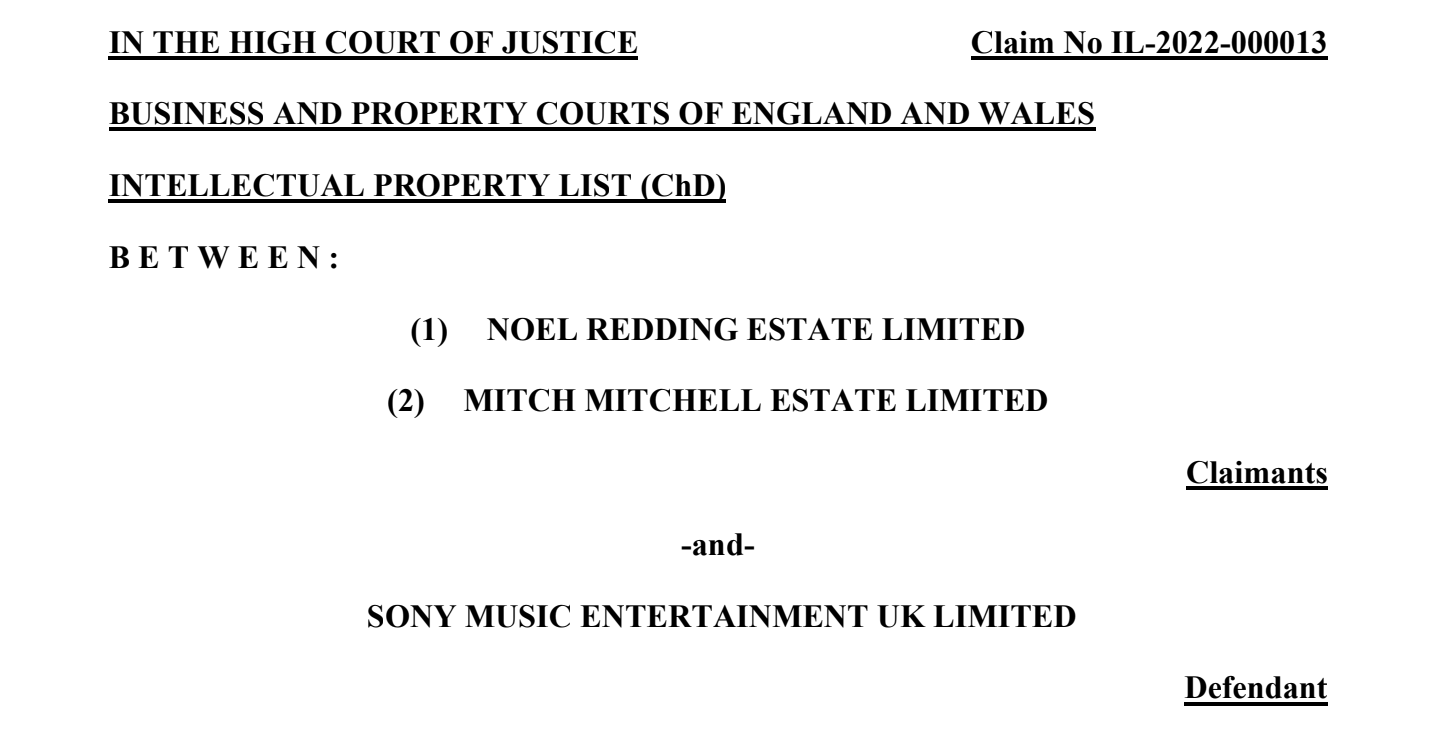
The decision is in! On April 28, 2026, the High Court of Justice issued its judgment in the case of Noel Redding Estate Ltd and Mitch Mitchell Estate Ltd v. Sony Music Entertainment UK Ltd. It represents a near-complete victory for Sony, Experience Hendrix, and record industry as a whole, and a devastating loss for Mitch and Noel’s families and other musicians of the past.
In Parts One and Two of this series, I provided an overview of the case, the legal issues, the arguments presented by both sides, and my own analysis of the likely result. The court largely agreed with my analysis on most of the issues. However, on the most important and challenging issue of the case—the retroactive application of newly-created legal rights in the UK—the court reached a decision with surprising, and questionable, reasoning that could have broad effects.
Here in Part Three, I break down the court’s decision and share my thoughts on what might happen next.
Parts One and Two of this series are necessary background reading for this article, so if you haven’t read them, I suggest doing that first. If you’ve already read them or value your time, however, here’s a refresher.
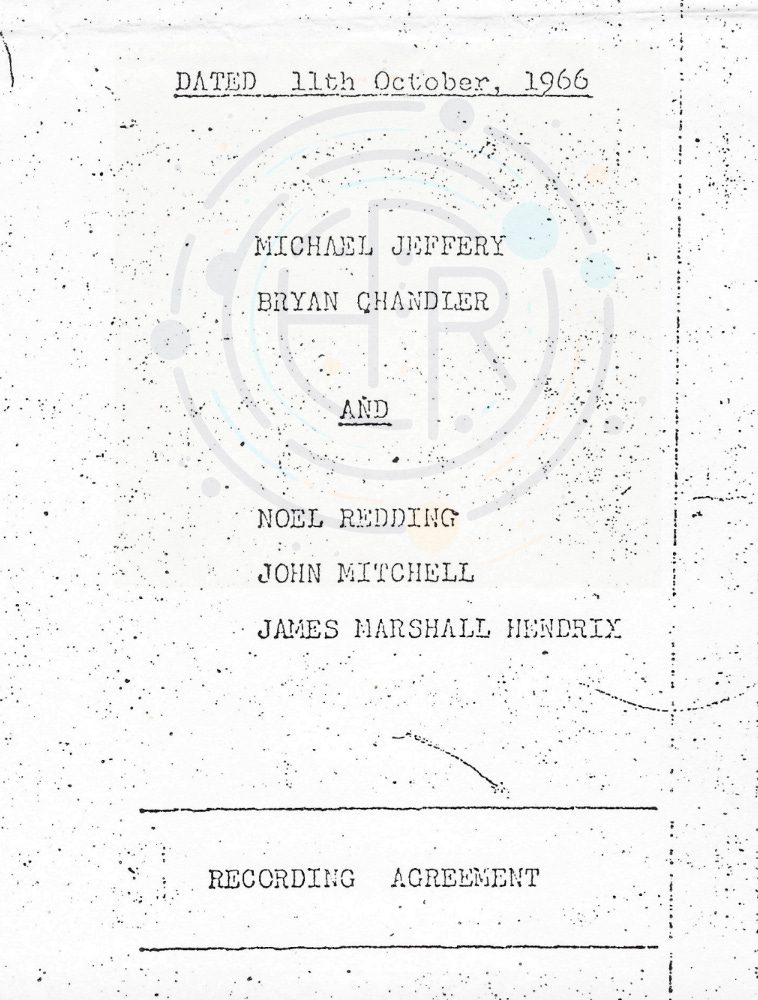
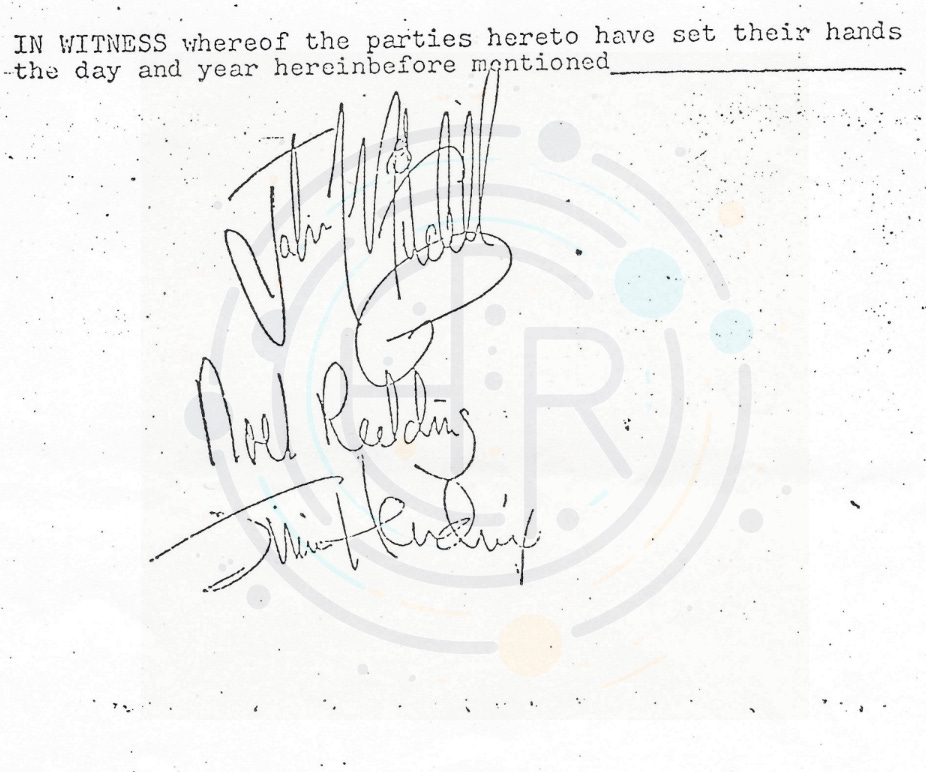
The Redding/Mitchell litigation is an effort of the heirs to Noel Redding and Mitch Mitchell to assert rights against Sony Music UK regarding the Jimi Hendrix Experience’s three lifetime studio albums: Are You Experienced (1967), Axis: Bold As Love (1967), and Electric Ladyland (1968). The case centers on the original recording agreement that Jimi, Mitch, and Noel signed with Mike Jeffrey and Chas Chandler in October 1966 when the band was formed in London, which granted Jeffrey and Chandler nearly total rights and control over the Experience’s music in exchange for very little.
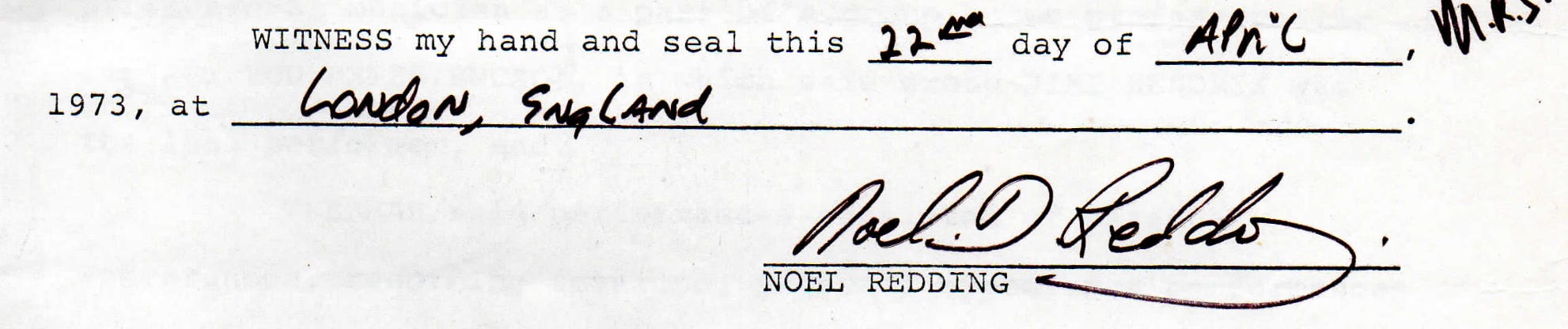
The case also concerns settlement agreements that Noel and Mitch signed in the 1970s with the Hendrix Estate to resolve legal claims that they brought after Jimi’s death in New York, in which they each accepted lump-sum payouts in exchange for broad releases and covenants not to sue again.

There are two primary legal claims. First, they asserted a joint copyright, with Jimi, in the “sound recordings” of the three studio albums. Second, they sought the retroactive assertion of “Performers’ Property Rights” (or “PPRs”) in the recordings, a unique type of right created by English law in the over the course of late 1980s and 1990s with little to no precedent. To succeed, Mitch and Noel faced several formidable factual and legal hurdles, primarily given the breadth of the agreements they signed in 1966 and in the 1970s.
Now let’s get down to business.
On April 28, the court issued a lengthy post-trial judgment following a trial in December 2025. Over the course of 140 pages, the court methodically worked though the complex legal history of the Jimi Hendrix Experience from 1966 to the present and the legal issues presented by the parties. In the end, the court ruled in favor of Sony on every issue of importance. As discussed below, however, some of the court’s reasoning is likely to raise some eyebrows.
Before digging into how the court reached its decision, it’s important to again make clear what the case was not about. It was not about whether Noel and Mitch (or Jimi, for that matter) were taken advantage of by the Experience’s management or by record labels. Nor was it about the validity or fairness of the agreement they signed in October 1966. As I detailed in Part One, the agreement was a truly awful deal for the band, and it’s unlikely they knew what they were signing. As the court acknowledged, however, those issues were not before it in this case:
There is no claim in this action to set aside the Recording Agreement, either on the basis that it was unfair or on any other ground. It follows that I have to construe the Recording Agreement as it was entered into. It may be that its terms were unfair to the Band Members. It may be that its terms can be described in even more trenchant form. . . . I am not in a position to make a decision on questions of this kind.
That’s unfortunate, given what we know about the naivete of the band and the unscrupulous nature of their manager, Mike Jeffrey. (In at least one interview in the 1990s, Chas Chandler even suggested that Jeffrey had forged his signature on some contracts!) It’s hard to ask a court to unwind sixty years of history, however, particularly when everyone involved is long deceased. If only Jimi, Mitch, and Noel had received decent advice at the time, things might look quite different today.
The first claim required the court to decide whether Noel and Mitch, alongside Jimi, held original joint ownership of the masters for the Experience’s three lifetime studio albums. To succeed, the Claimants argued they were the “makers” of these recordings—a status defined under English law by capital investment and the payment of studio costs rather than creative performance—and contended that the October 1966 agreement did not divest them of these rights. They faced formidable hurdles: proving their financial role amidst sparse documentation, overcoming the October 1966 agreement’s broad, catchall terms, and evading the legal releases they signed in the 1970s. Unsurprisingly, they were not successful.
Noel and Mitch didn’t even get past the first hurdle, with the court finding that Mike Jeffrey and Chas Chandler were the “makers” of the recordings and, therefore, the original owners of the copyright. The court reached this conclusion based on the text of the October 1966 agreement and the limited evidence presented (and summarized in my last post), which indicated that Jeffrey and Chandler booked the studio time, paid for the recording sessions, and fronted the cash. The court also didn’t find that the rights of Jeffrey/Chandler to recoup their costs from the band’s royalties made a difference, because costs could only be recouped if the band was successful. As I previewed, this seems like the right call.
Having resolved that question in Sony’s favor, the court could have stopped there. Instead, the court continued its analysis, addressing the remaining questions. It next found that, even setting aside the “maker” question, the October 1966 agreement clearly granted the copyrights to Jeffrey/Chandler. Although the court noted the oddities of some other provisions in the agreement, it found that those provisions, which were ambiguous at best, were insufficient to overcome the plain meaning of the copyright provisions. This decision also seems right.
The court continued further. It concluded that, even if the first two questions had been resolved in Noel and Mitch’s favor, their copyright claim would still fail because they had released their claims against the Hendrix Estate in the 1970s and entered into covenants not to sue.
The copyright claim was merely the undercard in the litigation. The PPR claim was the main event. Here again, Sony (and, by extension, Experience Hendrix) was victorious. The court’s reasoning, however, seems shaky in some places.
In Part Two, I explained the background and history of the PPRs. In short, the English law generally requires the consent of every performer on a record—from the lead singer down to the triangle player—in order to distribute the record or make it available to the public, among other things. There’s also an unusual twist: the law applies retroactively, meaning that it applies to records that were made before the law was put into place, including the Experience records. To mitigate this, however, the law permits performers to sell their PPRs to others and gives some protection to acts and agreements that happened before the law went into place.
I last identified three key questions for the court to answer: (1) whether Jimi, Mitch, and Noel gave “consent” in October 1966; (2) whether the law’s backward-looking “transitional provisions” protected Sony; and (3) whether Mitch and Noel waived their claims in the 1970s. The court answered all three questions in Sony’s favor.
The court answered, “Yes.” It found that the broad language in the October 1966 recording agreement, which granted Jeffrey/Chandler “[t]he sole and exclusive right” to distribute the Experience’s records “by any method now known or hereafter to be known” provided the requisite “consent” under the PPR laws. In my view, this is the most dubious part of the court’s decision.
In my last post, I drew a distinction between consent to distribute or broadcast the records using future, uncontemplated technology and consenting for purposes of future, uncontemplated legal rights. I wrote that while Noel and Mitch’s argument about uncontemplated technology seemed weak, given the clear and specific language in the October 1966 agreement, the argument that their consent could not extend to legal rights that had not yet existed was a very strong one.
The court disagreed, adopting Sony’s position that this was a distinction without a difference:
It is of course the case that PPRs did not exist in 1966, but I accept the Defendant’s argument that it is necessary to focus upon what acts of exploitation of the Recordings were being consented to by the terms of the Recording Agreement . . . as opposed to legal rights. Indeed, this seems to me to be consistent with the Claimants’ concession, which in my view was a correct concession, that the Copyrights carried with them the making available right, even though this did not exist at the time of the Recording Agreement.
This is puzzling. It seems to me that, in creating the PPRs, the British government intended to create a new form of legal rights, adjacent to copyright. Unlike copyright, which is initially owned by the “maker” of the record, PPRs are personal to the performer. The government also made the extraordinary decision to apply these new rights retroactively, further suggesting that they had not previously existed. The court, however, appears to have treated PPRs as simply a subset of copyright that was later repackaged as PPRs, while paradoxically acknowledging their legal novelty.
With this framing, the court found that following provision in the October 1966 recording agreement (quoted in part above) “was intended . . . to secure the consent of the Artistes to a wide variety of acts of exploitation of the Recordings, including the acts now protected by the PPRs”:


According to the court, this meant that, although English law granted them new rights decades later, they had already signed away those rights to Jeffrey/Chandler in 1966.
This led the court to consider a logical follow-up question: Could Jeffrey/Chandler transfer the rights they received to anyone else? For all its breadth, the October 1966 recording agreement did not say one way or the other. The court explained that, under English common law, the general rule is that, in such a situation, contractual rights can be transferred to third parties (and those third parties can then transfer the rights onward), “unless the contract involves personal confidence or personal skill so that the identity of the person who is to perform it is material” (emphasis added). The court rejected Noel and Mitch’s argument that that exception applied here and concluded that Jeffrey/Chandler could transfer or sell the consent they received to anyone they liked.
In my view, this may be the greatest error. It seems obvious that any artist would care deeply about who has the rights to distribute their music, particularly if they are granting rights that are exclusive and apply until the end of time and to all future technology. The court’s reasoning—limited to only a couple of sentences—that this may be true of live performances, but not of recordings that had already been made, seems like a stunning failure to appreciate artistic integrity. Jimi, Mitch, and Noel made personal decisions to go into business with Chas Chandler and Mike Jeffrey due to their success with The Animals and valuable connections within the booming London rock scene. There is extensive evidence to support this. All too easily, however, the court infers on its own that it would have been immaterial to the band if Jeffrey/Chandler had turned around and sold their rights to any random person or company in the world. In what universe would Jimi Hendrix not have cared about who had exclusive control over his music until the end of time?
On the basis of these findings, the court ruled in favor of Sony. A surprise, to say the least.
Before the court issued its decision, the answer to this question was the most highly anticipated. The court’s decision on the previous question, however, had the effect of minimizing this one.
As a reminder, to counterbalance the extraordinary retroactive application of the new PPRs, the law offered protections to record companies that distributed records under agreements that had been made before the law was enacted, referred to as the “Transitional Provisions.” No court had ruled on the meaning of these provisions or how they applied, although legal commentators generally took the view that the provisions were intended to have a limited application.
Again, the court essentially adopted Sony’s position, treating the Transitional Provisions as doing little more than to confirm the continuing validity of the prior consent. The court deftly skirted the legal commentary, focusing on a particular Transitional Provision that addressed the separate question of who owned the new PPRs. While the court found in favor of Mitch and Noel on that limited issue, it was a hollow victory. I look forward to the forthcoming legal commentary on this (and any potential appeal).
The court answered this question the same way as it had for the similar question under the copyright claim. Although, here, the question concerned a waiver of a legal right that had not yet existed or been contemplated, the court applied the same reasoning and found that, in the 1970s, Mitch and Noel gave up their right to pursue the future PPR claim.

The Claimants faced a very difficult task here. While the ultimate judgment favoring Sony isn’t too surprising, certain important aspects of the court’s decision are.
In particular, the court’s reasoning and conclusions with respect to the PPRs seem at odds with the spirit and intent of the PPRs, as I understand them. In many ways, the decision appears overly deferential to the industry, perhaps more concerned about upsetting the status quo than really engaging with the complex and novel questions that were presented. If left to stand, the decision would seem to render the retroactive application of PPRs a nullity for most practical purposes. After all, it’s difficult to imagine any notable recording contract that wouldn’t have included the same type of broad, boilerplate language as the one the Experience signed in October 1966. What, then, is the value of the new law? Unless the Claimants (which are actually special purpose vehicles for this litigation) are facing financial difficulty, an appeal should be expected.
Setting aside whether the court’s decision was legally sound, it’s hard to escape the general feeling of injustice. The outrageous contract that Jimi, Mitch, and Noel signed in October 1966—with no legal representation, minimal education, and likely without even reading it—shouldn’t carry so much weight today. If properly presented to a court, it should be tossed out. Unfortunately, that’s something that Jimi, Mitch, and Noel should have done during their lifetimes, but now seems far too late. According to the legal filings, Mitch and Noel died destitute, and their heirs have received little for their critical contributions to some of the most spectacular music ever recorded, which generates millions of dollars a year in revenue for other people that weren’t involved in creating it. The law might say that’s a consequence of their bad decisions in signing bad agreements, but, on a human level and as a lifetime fan, that feels overly harsh.
It’s my hope that, even if Sony is ultimately successful in the litigation, Experience Hendrix can reach an arrangement with Mitch and Noel’s heirs to allow them to share a piece of the wealth and fully and finally resolve their decades of discontent.
No posts
Comments
Nothing yet. Say the first thing.
Sign in to join the conversation.