
The earliest encounter I had with my hometown through archival research was a description of a breeze. I was in Washington DC, the furthest I had ever been from home, researching the Jewish community that once lived in Nabeul. In the 18th century, an Austrian pneumologist traversed the south of the Mediterranean and arrived in this Tunisian town, describing a light wind that could cure diseases. I have since tried and failed to resurface this reference, which has stayed with me so vividly. But I know this breeze. It has enveloped me so closely in all the summers I have returned to the city where my mother grew up. It was restorative, and it soothed my longing for home and my dream of returning to a place unchanged.
For most of my trips, memory saturated every walk through Nabeul. From the moment I set foot in my maternal grandmother’s house, after months away, I could no longer see the city for what it is, only for what it once was. But memory could no longer heal my longing. In the summer of 2021, there was no breeze, only an unforgiving heat that seemed to sink into my bones and left little room to the past. I tried to hold on to the city through the rituals of summers past, but I found its emblems disappearing. The shop where my cousins and I bought pirated DVDs of American series dubbed in French now sells artisanal items. The medina’s white walls are chipping, revealing the grey underneath. The popular hotels that brought many tourists into the city have gone out of business. My cousins are growing up, and other relatives are getting older. My hopeful optimism of the Tunisian revolution turned sour, met instead by economic crisis and the collapse of public services.
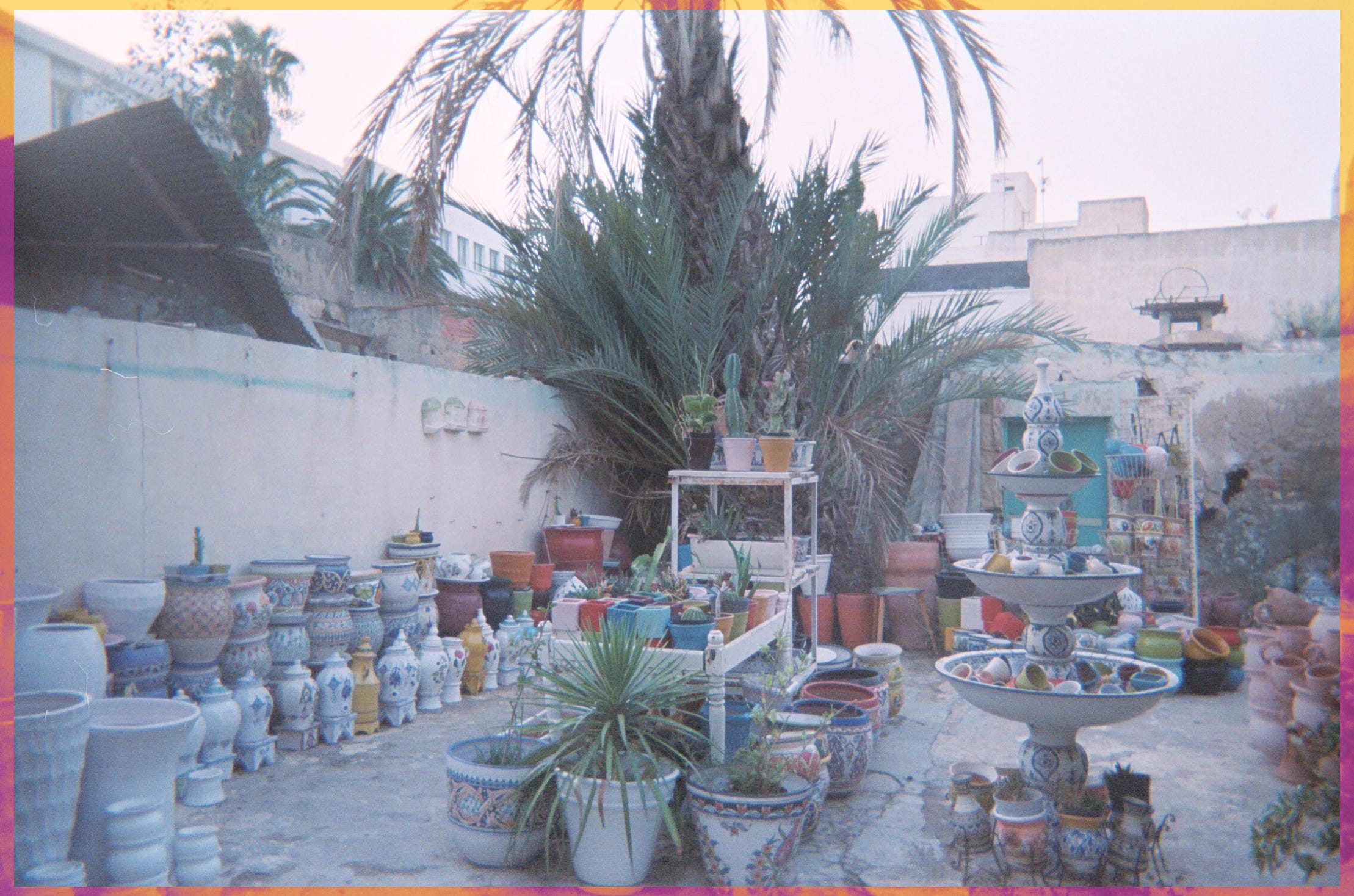
I believed I was witnessing a rupture in the city’s rhythm. It was only the beginning. This summer holds many parallels to the summer of 2021: major countrywide power and water outages, wildfires and protests. The heatwave, with the absence of water and electricity, makes life impossible. Memory cannot cool a nation while the present runs too hot.
So what comes after memory, after it no longer renews or gives meaning. What comes after longing? Elsewhere I have referred to this moment as postnostalgia, a state in which nostalgia is no longer a stable way of returning to the past. Nostalgia disrupts linear time through the emotional bridge between past, present and future, but postnostalgia calls us to reconsider how else we relate to what is slipping away. It relates to a cyclical and seasonal understanding, where the longing is not just for a summer from a decade ago, but the entire corpus of summers.
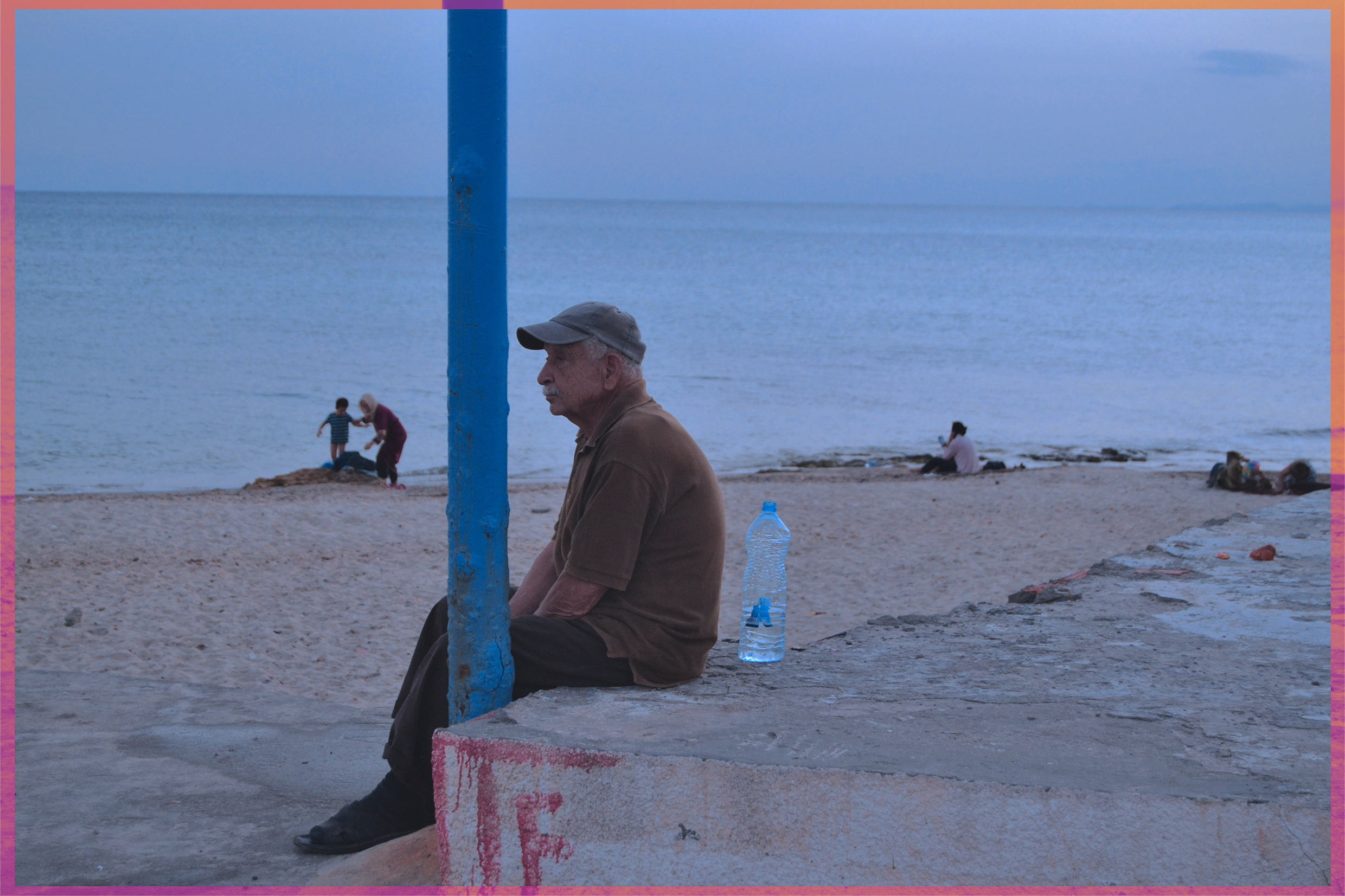
And memory can only offer one version of the city. It fixes people in particular summers, particular rooms, particular conversations. I want to see Nabeul as a site of possibility, and its contours decorated by transformative imagination.
I see a Nabeul where the sea advances into the city, not as a progressing shore but as bubbles floating throughout the air. Fish float into the air instead of birds. They drift between balconies and telephone wires, stopping occasionally to ask questions we usually leave for the later hours of the night. Sometimes, they inquire about the people that have left the city or this world, other times, they ask what time it is, and sometimes, the revolution, and what happened to it.
Every shuttered hotel contains a different decade. In one of the hotels, I see my grandmother at my age and in another, my mother. Behind each door, there is a celebration which extends indefinitely into the future, a wedding, a graduation, a circumcision, a retirement party, the Islamic New Year, Republic Day. Nobody worries about tomorrow.
The shop still sells pirated DVDs of TV shows and movies from the 2000s and early 2010s, but somewhere in the back, it keeps copies of the alternative endings of our lives. A version where my grandfather survived illness. Another where the revolution delivered on its promises. A version where my cousins, sister and I never grew up, and are spending endless idle mornings at the beach.
There is a restaurant in the city that serves only bread and harissa. Customers receive a basket of a sliced baguette, and a small bowl of the red chilli paste. Each spoonful of harissa reclaims a forgotten dream. One elderly woman remembers her dream of finishing high school. An architect remembers his dream of designing a cultural landmark. A fisherman recalls a journey he wished he had taken. The restaurant is always full. The owner keeps no record of these dreams. He says it is because they do not belong to him, but to the city.
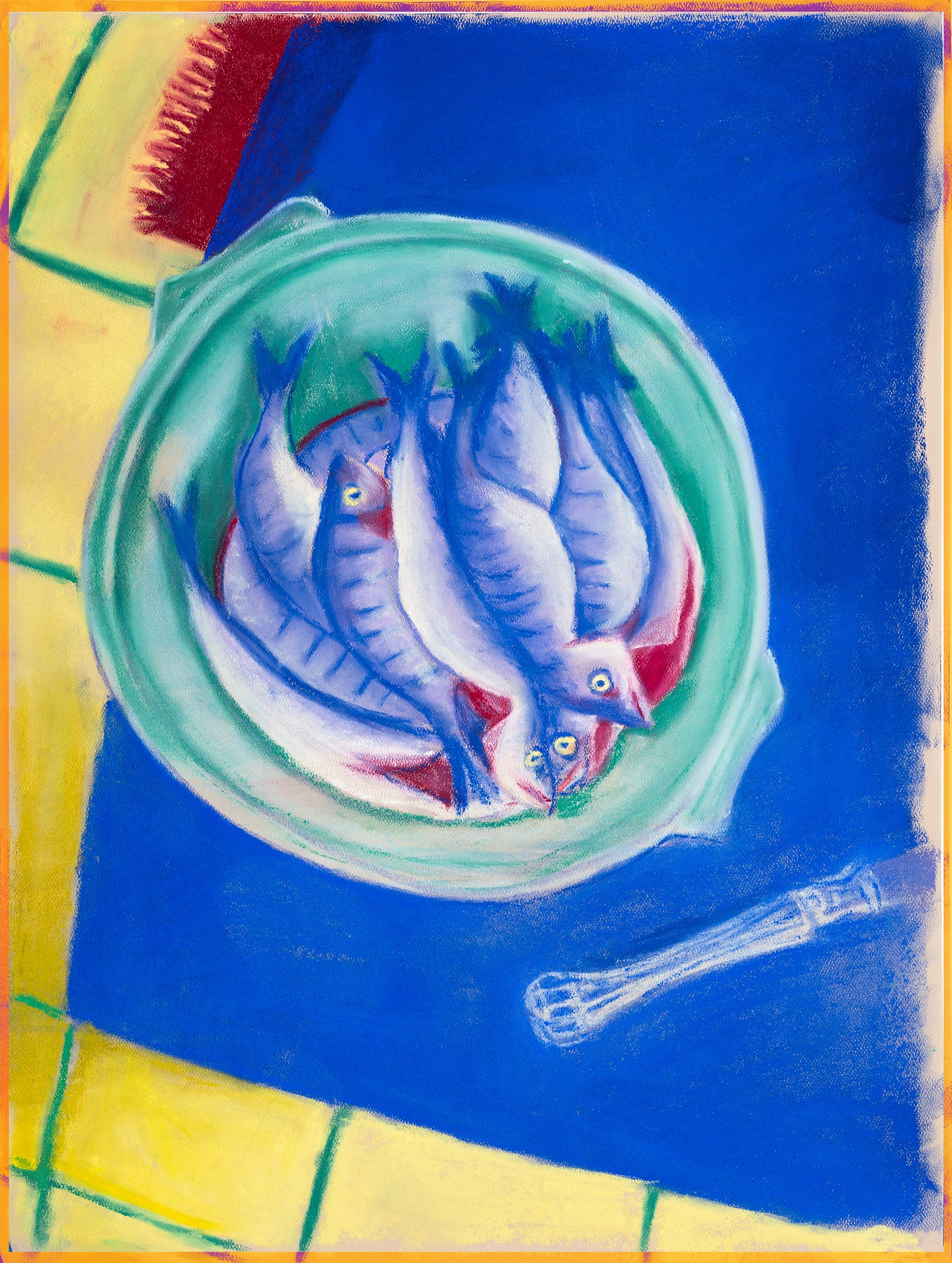
In this Nabeul, the medina is thriving. Its spotless white walls have expanded beyond their old boundaries into the rest of the city. Children run through its narrow pathways, the storeowners and tourists are haggling loudly and ceramics studios appear at every corner. The walls grow larger every year, making room for whoever wishes to stay.
There are no more cars in the city, every resident has a pair of balgha, a leatherless shoe, capable of crossing impossible distances. Young adults studying abroad return for lunch. Relatives who emigrated decades ago arrive unannounced for afternoon coffee. The roads have disappeared, replaced by ceramic tiles, handpainted in blue, orange and red, whose colours never fade.
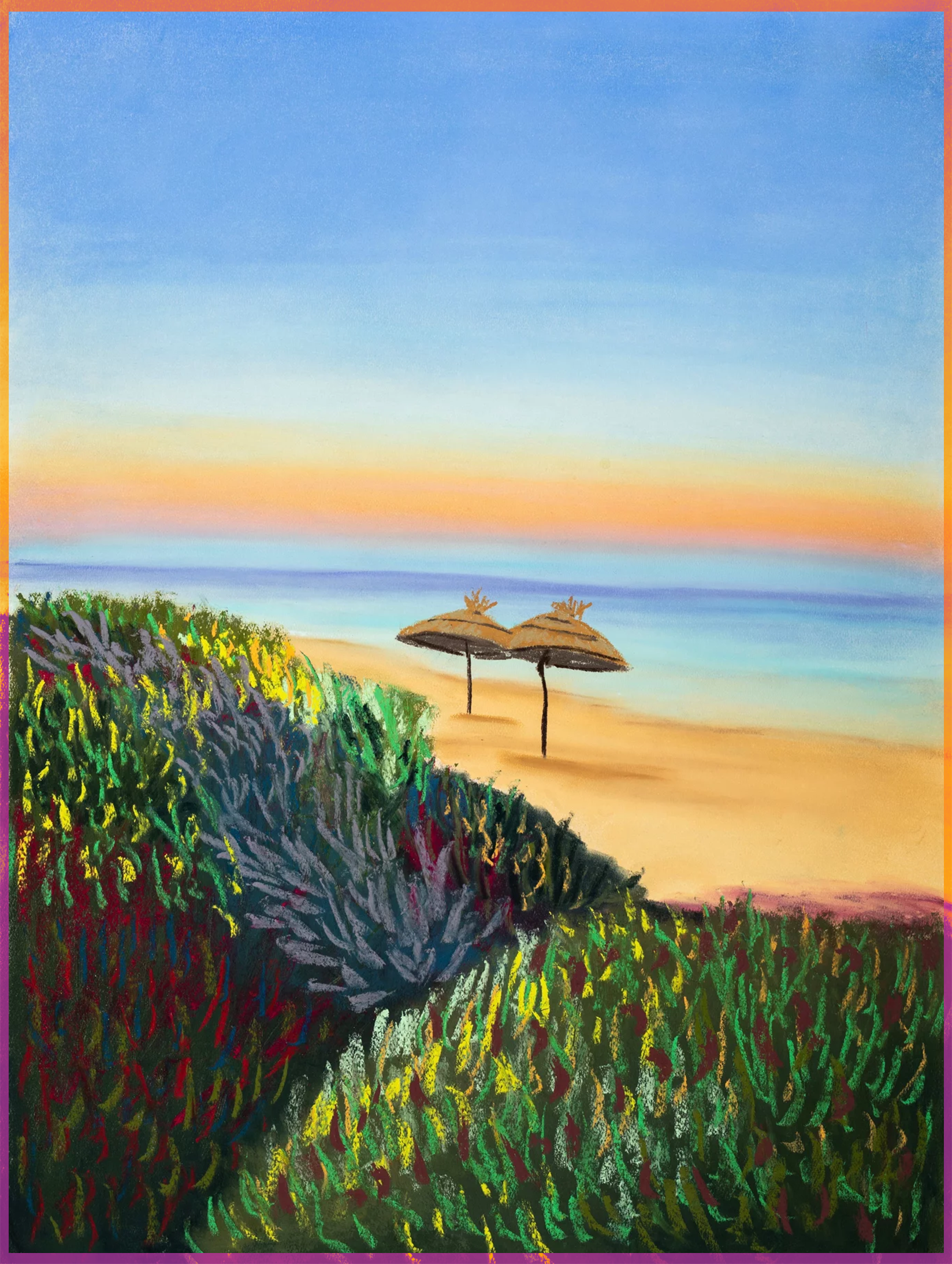
The ruins of Neapolis (the ancient Greek “new city” whose Arabised name Nabeul still carries), once submerged by an earthquake, have risen from the sea. At night shadowy figures dance to the music from the wedding across the street. By morning, they leave behind sugar dolls, a custom symbolic of renewal. Children collect them as they dissolve in the summer heat.
Oranges grow throughout summer. And the breeze returns whenever someone names a relative who is no longer with us. It carries the scent of jasmine through the streets and into open windows. For a few moments, the living and the dead occupy the same season.
This city does not exist. And yet it is no less real than the city I carry in memory. And in this version of the city, my late grandfather is still around for me to show him where my imagination has taken me. To the city of my dreams, a Nabeul shaped by what could still be.
Comments
Nothing yet. Say the first thing.
Sign in to join the conversation.