
Have you ever gone grocery shopping in a different country? “Groceries differ” was the only thing I managed to utter to a woman in Tesco who asked if I was OK, seeing as I was bawling my eyes out in the dairy section. I had found kiselo vrhnje (sour cream, more or less, except nothing is really what it translates to).
It’s March 2015, my second year in London. 2am in the basement kitchen of a Kings Cross flat-share. I’m on FaceTime to my mum. She’s just informed me I’ve been beating the mascarpone too long, so it’s turned into something closer to cheese. “What can I do?!” I yelp. “Your recipes never come with clear instructions.” Thank God I had a spare pack. I’m making Edina torta for my friend’s 21st birthday.
Eda is my mum’s childhood friend and she makes the best Edina torta, which is understandable, seeing as it is hers. Where the recipe actually came from, nobody knows. My mum’s on the other end of the line, citing straight from her little black baking book. She started writing the recipes in it the year she got married, in 1986. Pages and pages and pages of handwritten recipes, and next to each one, a woman’s name. Kolači (cakes) go by women’s names where I’m from, and for thirty-one years I thought that was the most normal thing in the world.
Croatia has always prided itself on being hospitable. My partner once sat me down and gently explained that no, I cannot invite a stranger to Croatia just because they’d heard it was beautiful. It takes every fibre of my being not to blurt out “you should come visit” the moment anybody so much as gestures towards my homeland. You are only ever as good a person as you are a host. That’s how my life has been shaped.
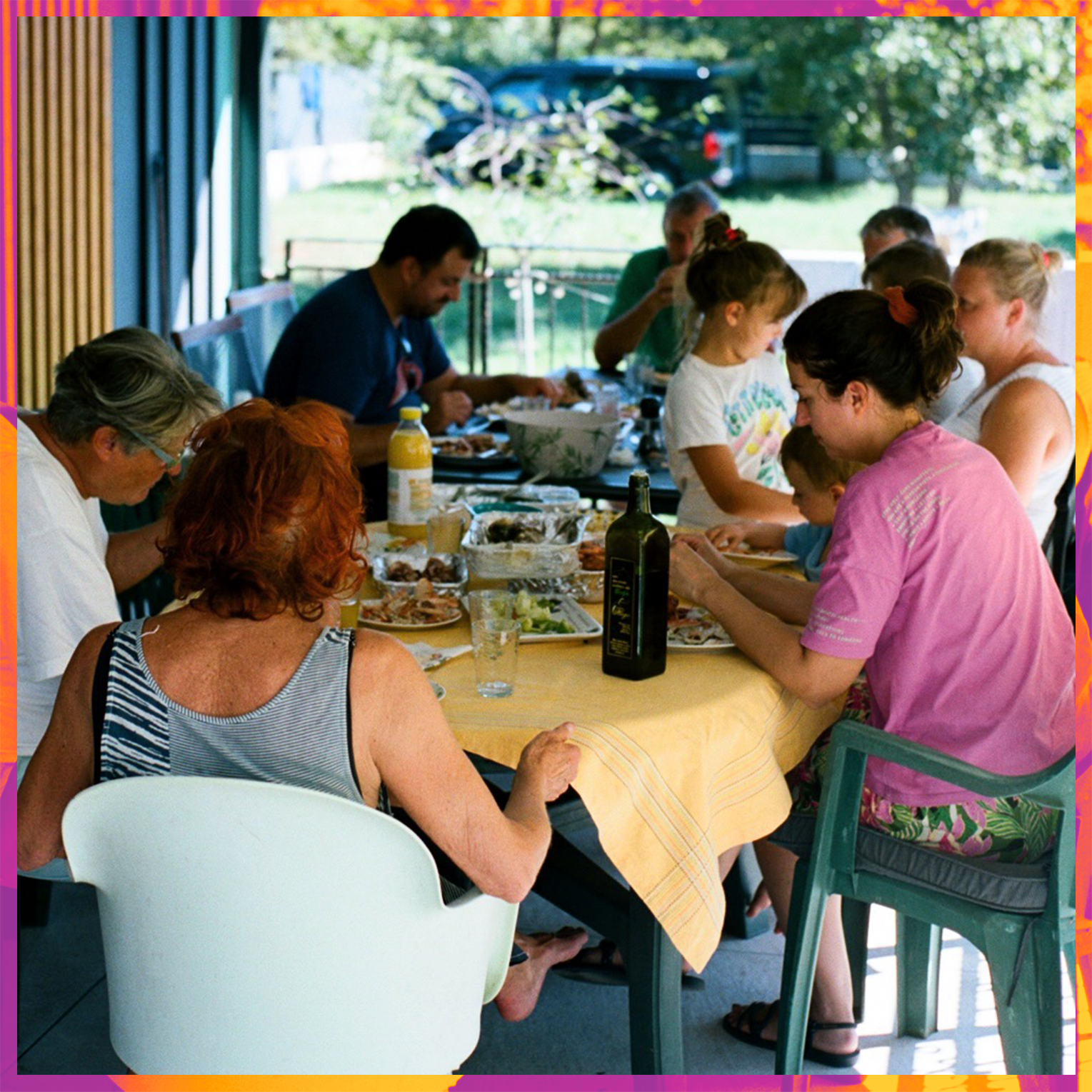
I remember these massive summer parties with endless food, from my childhood. Twenty families going on a beach holiday, boots full of punjene paprike (stuffed peppers) and pohano meso (breaded meat). My mum on the phone with her sisters, organising who was cooking what — God forbid we had two of the same delicacies! Palačinke (thin pancakes) on tap, Nutella dripping.
For my 7th birthday, my mum made 15 different types of kolači. Fifteen. The sweet smell of dough overtook our house, my mum sweating even though it was early November. Even though 15 is a massive number, it took my mum a bit more than a day (and half a night) to make them. Most of them were a surprise. I remember waking up on my birthday, and seeing our dining table overtaken by platters of kolači, every colour and shape. When one gets married in Istra, you know where these will be coming from. All those ladies whose kids’ weddings your mum baked for are going to return the favour.
Back to 1986: the year my mum, Mirjana, got married. She was 21, a nurse everyone in town knew, who wanted to study medicine but was told by her father to stop dreaming. And get to work. So my mum became a housewife instead. She’s glad she built the family she built. My dad has been a good partner.
Mirjana opened the first apartments in my hometown in 2001, when there was no tourist in sight. She was so ahead of the curve, and still owns the domain for “Motovun Apartments”, in a town where now every family rents. Patriarchal scissors had already clipped her wings once, but bright and sharp as she was, she persevered.
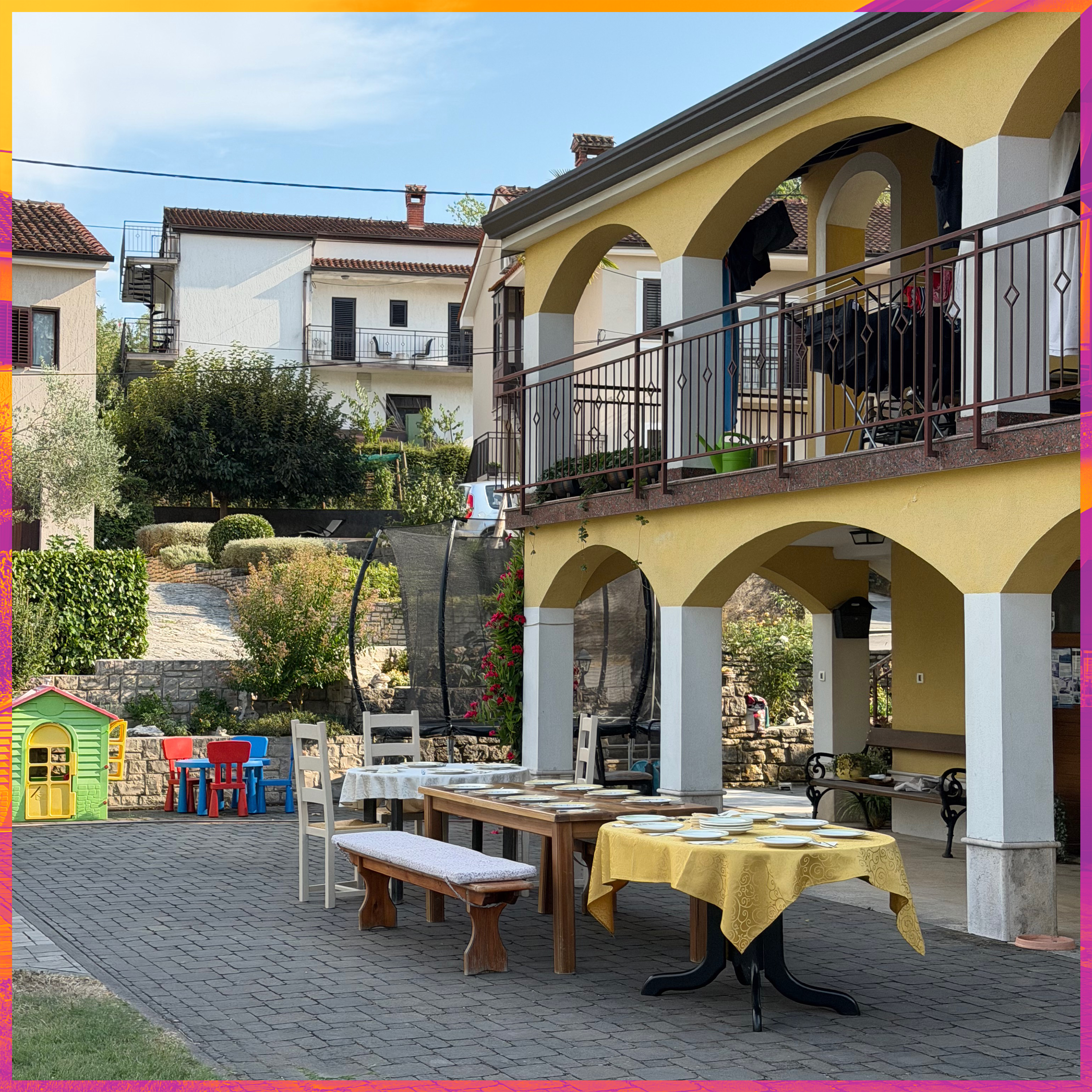
Earlier this summer, on a scorching Tuesday, I went to my uncle’s beach house party: a dozen unsupervised children tearing around on a quad bike, a guy playing accordion, eight men seated round a table in the heat, bellies out, in their speedos, drinking whiskey, the words of well-known songs slurring above tables full of food. I made my round, shook the hands, kissed the cheeks. “Pa vi se samo zajebavate,” I say, the only thing you lot do is take the piss and party. “Pa zato smo se i borili,” an older man winks, “that’s exactly what we fought for.”
Croatia has always prided itself on being hospitable. But that hospitality has been living on the back of the women. Women making 15 types of kolači. Awake at 3 am. Not enjoying the party but making the palačinke in the corner. Raising kids. Making beds. Opening their homes and ovens to strangers so a family could be good hosts. Women who are still victims of domestic violence in Croatia, in horrendous numbers. Women telling me not to sit on cold stones after a swim, to cover my kidneys, not to leave the house with wet hair. Women laughing into the late hours of the night: capable, strong, entrepreneurial. Half of my grandmothers were widows before turning 25. And still they cooked, they served, they laughed, they lived. They found a way.
In the hottest room of the house, with air thick enough to lean on, women built the warmth my country so proudly stands on, with their tired hands, writing the recipes in their little black books, adding the cake baker’s name so she shall not be forgotten.
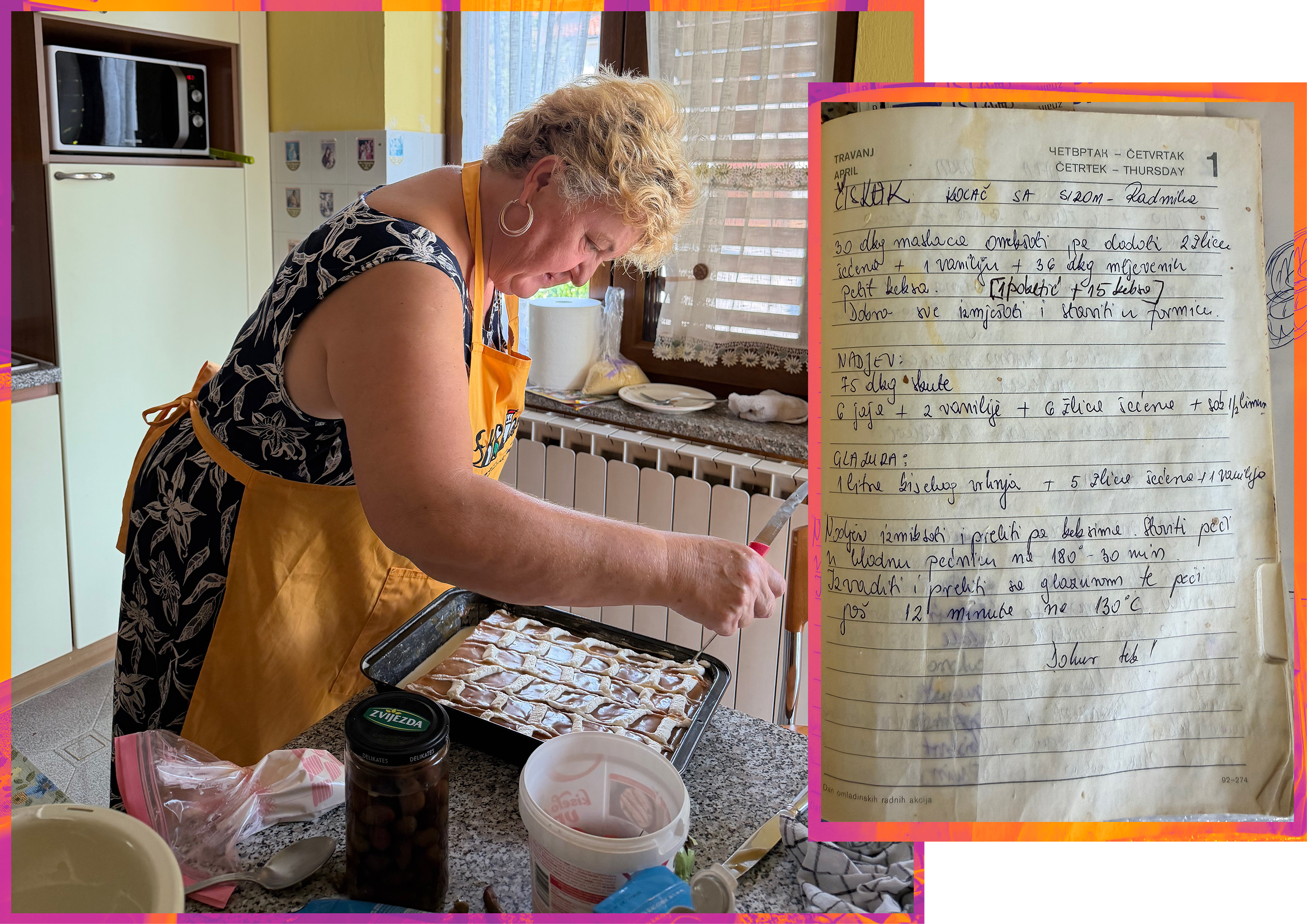
It’s the ultimate disappearing act: a woman becomes what she feeds the people, until you can’t have the kolač without saying her name. They’ve mastered the art of surviving in a culture built to oppress them, and the science of keeping a crumbling country together. Through this naming, they show resistance through joy. An act of quiet revolution.
I was up until 4am that night, on the phone to my mum while Kings Cross slept around me, trying to get Edina torta right, in a country that doesn’t know what a kolač is. Where sour cream is sold in the wrong size, with the wrong name — not the thing my whole childhood was made of.
In that basement kitchen, without quite meaning to, I felt like I’d become one more name in a very long line of them. Up all night so that in the morning there would be a version of home on the table, and nobody would ask what this hospitality cost.
My friends loved Deanina torta, but they were a bit confused. It tasted nothing like British cake. Which is good — it wasn’t meant to. Eda left me her legacy. And it became mine. My take on that iconic, disappearing act.
Comments
Nothing yet. Say the first thing.
Sign in to join the conversation.