
Growing up in London, sound has always felt like something to be managed. The city directs you to contain your life inside walls — an unspoken agreement that what happens on your side of the brick stays on your side. Except in summer, when the heat tears up that agreement entirely.
For most of the year, loud music here is kept in underground rooms and shut off at 2am, a release valve for those who wish it was a way of life. But then the heat comes, and the city bursts open. People flood the parks, cars drive around with their windows down and day parties erupt into every available green and outdoor space. And on the right day in July, when that particular smell hits you off the pavement, warm concrete and humid open air, it takes me somewhere else entirely. That’s when Beirut comes back. Because in Beirut, it’s just how the city exists.
I grew up the daughter of Iraqi parents, raised in London, and the summers my family spent in Lebanon fulfilled me in a way that London never quite could. My grandparents had settled there after leaving Iraq in the early 80s, my mum’s childhood friends were there, and every summer it was where everyone came together. Cousins, second cousins, and in typical Arab fashion, “cousins” who weren’t really related to us but were treated as such.
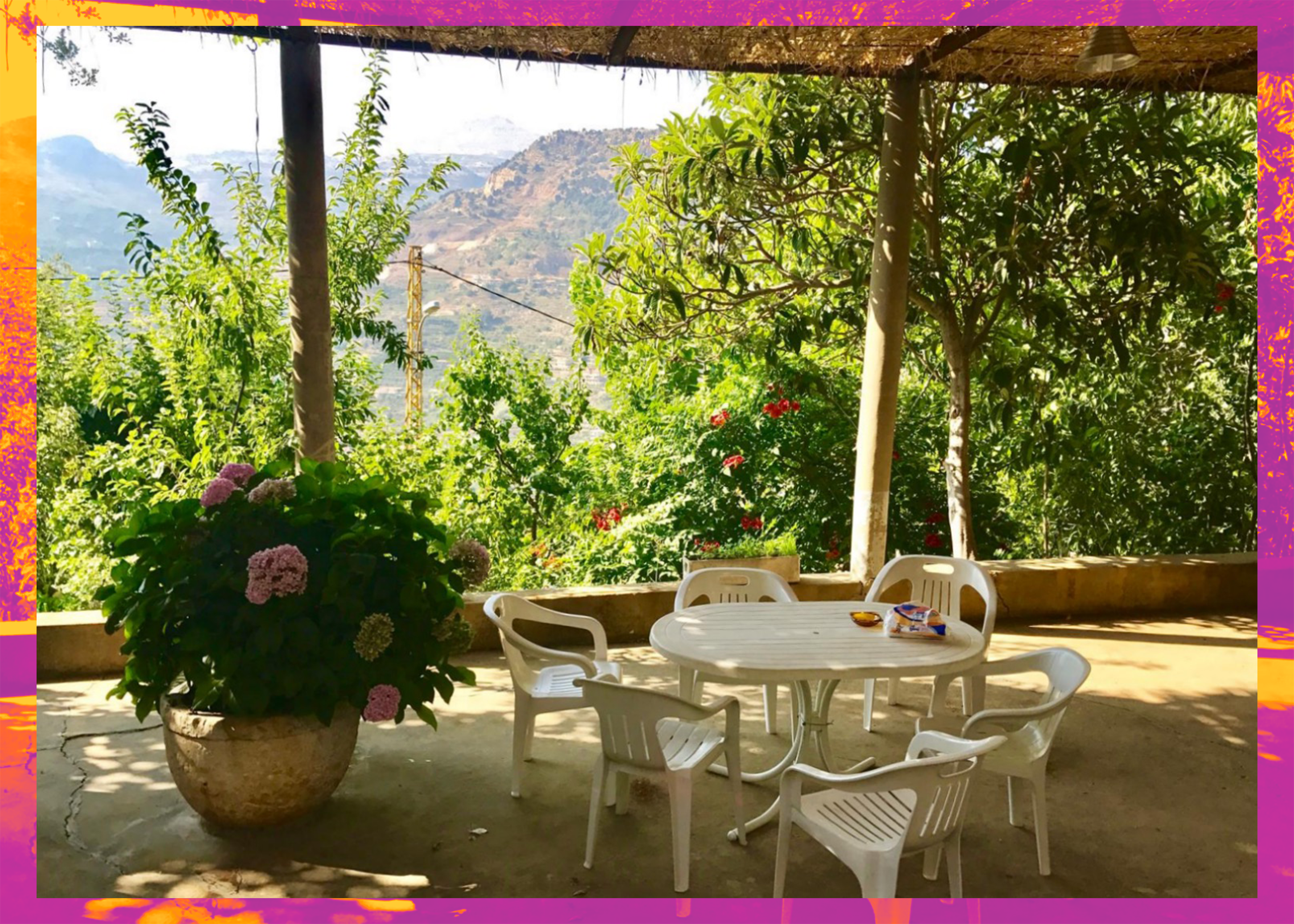
In Beirut, we would surrender to the heat and predictable power cuts that knocked out the air conditioning by keeping shutters and windows open. The living room and street would blur into one soundscape, and people migrated onto the balcony. The city became porous, and the sound was how you felt it: conversations from cafés drifting across the pavement, the sharp clacking of heels on tarmac, the gentle trill of crickets in the night. Cars would move through the neighbourhood in the humidity, windows down, music caught in the slipstream. Sometimes Lebanese pop. Sometimes something archival and entirely unplaceable. None of it felt like an intrusion, just an invitation to absorb the city outside.
In the mornings, before she’d properly woken up, my mum would blast El Wawa, a Haifa Wehbe favourite, to get us up. On quieter mornings it would be Fairuz’s Ya Ana Ya Ana on repeat while she hung washing on the lines outside, softly singing along. I knew most of the lyrics without ever having listened to the songs myself. Those tunes would move through our rooms before the sun hit its peak, layering with the bells from the Christian churches further up the hill.
In my grandparents’ apartment we’d listen to Iraqi music, over the stereo and out of the CRT TVs, like Nazem Al Ghazali. This was music I’d grown up hearing inside the quiet of our London house, where it always felt slightly out of place, like it was being kept safe rather than lived in. Here it sounded completely different, like the music was actually moving through a space it belonged to.
As a child, I spent many nights on the balcony playing cards with my Teta (grandma). Even before I had the language to describe it, I knew that being there touched something in me that felt more natural than anywhere else. The city and its rhythm spoke to me. My mother and aunties felt it too: on hearing the beat of a stranger’s car in the street, they would stop their conversation, fingers snapping, hips moving — a reflexive movement that to me feels entirely hereditary.
Time feels like it moves more slowly in the heat. My Teta never made me feel like there was something more important to her than my presence. This was our time, sitting on the balcony drinking chai nana (black tea with fresh mint) and dozing off as the sun sank.
Going back to London at the end of summer was always a shock to the system. The silence behind the closed windows felt heavy and deliberate, the insulation less like comfort and more like being cut off from something vital. Those summers gave me an understanding I couldn't have arrived at otherwise. An understanding that heat and sound move the same way — through a city and through people whether invited or not, absorbed into the body before the mind has caught up. The hotter a place runs, the more its soundscape refuses to stay contained. Beirut never let me forget that.
Comments
Nothing yet. Say the first thing.
Sign in to join the conversation.