
The piece of shit stared at me on the edge of the poolside. My two cousins looked at each other trying to figure out where it came from. One of them mentioned it was the Iranian child who’d had an ‘accident’. We giggled as the hotel staff cleaned it up and the mother carried away the child. This was one of many memories I have from Lara, Antalya during the early 2000s, when my cousins and I would sweet-talk our way into local hotels and pretend we were guests for the day. We had many encounters with tourists during our pool-hopping adventures, and this was one of our first encounters with Iranian people. It was, for lack of a better word, a shitty one. Later that same summer, a group of Russian boys kept throwing water at us, interrupting our very important game of mermaid and sharks. “Niyet!” we shouted, one of the few Russian words my older cousin had picked up from the influx of Russian tourists.
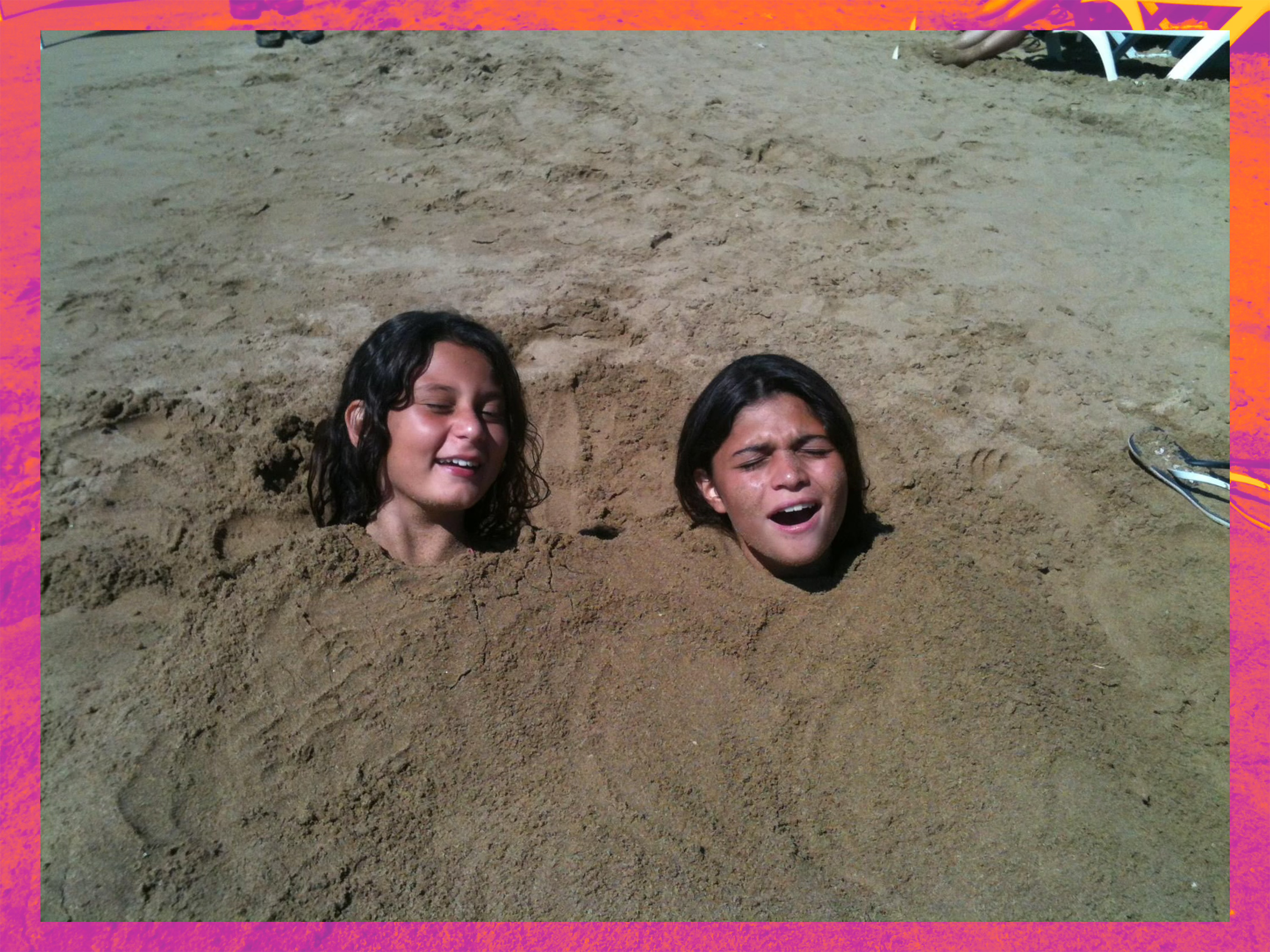
I would return to Antalya religiously every summer to spend nearly two months with family scattered across the city. Most of my time was spent in Örnekköy, a coastal working-class neighbourhood on the edge of Lara. When my mother was growing up, Lara was made up of dirt roads, farms, empty plots of land and a few stone houses. Today it’s a completely different place, carrying almost no trace of its past. The Örnekköy I grew up knowing is the kind of place where pomegranate trees cling to the few gardens that remain. Where apartment balconies double as storage rooms, full of late-night gossip over sunflower seeds, and somehow everyone seems to know each other’s business. Many local families make their living through seasonal tourism and service work, with wealth concentrated in the bigger hotels across the area.
As a child of the Turkish diaspora, it’s natural to feel not quite local nor quite foreigner. I was neither fluent in English entitlement nor Turkish belonging. My fluency occupied the space in between. My identity often felt like sitting between two stools, never quite settled on either. From that in-between state, I learnt to notice things from both perspectives. Not only the tourist gaze, but the gaze from locals to tourists, which led me to wonder: what do locals learn about the world, from that specific theatre of a Mediterranean summer holiday?
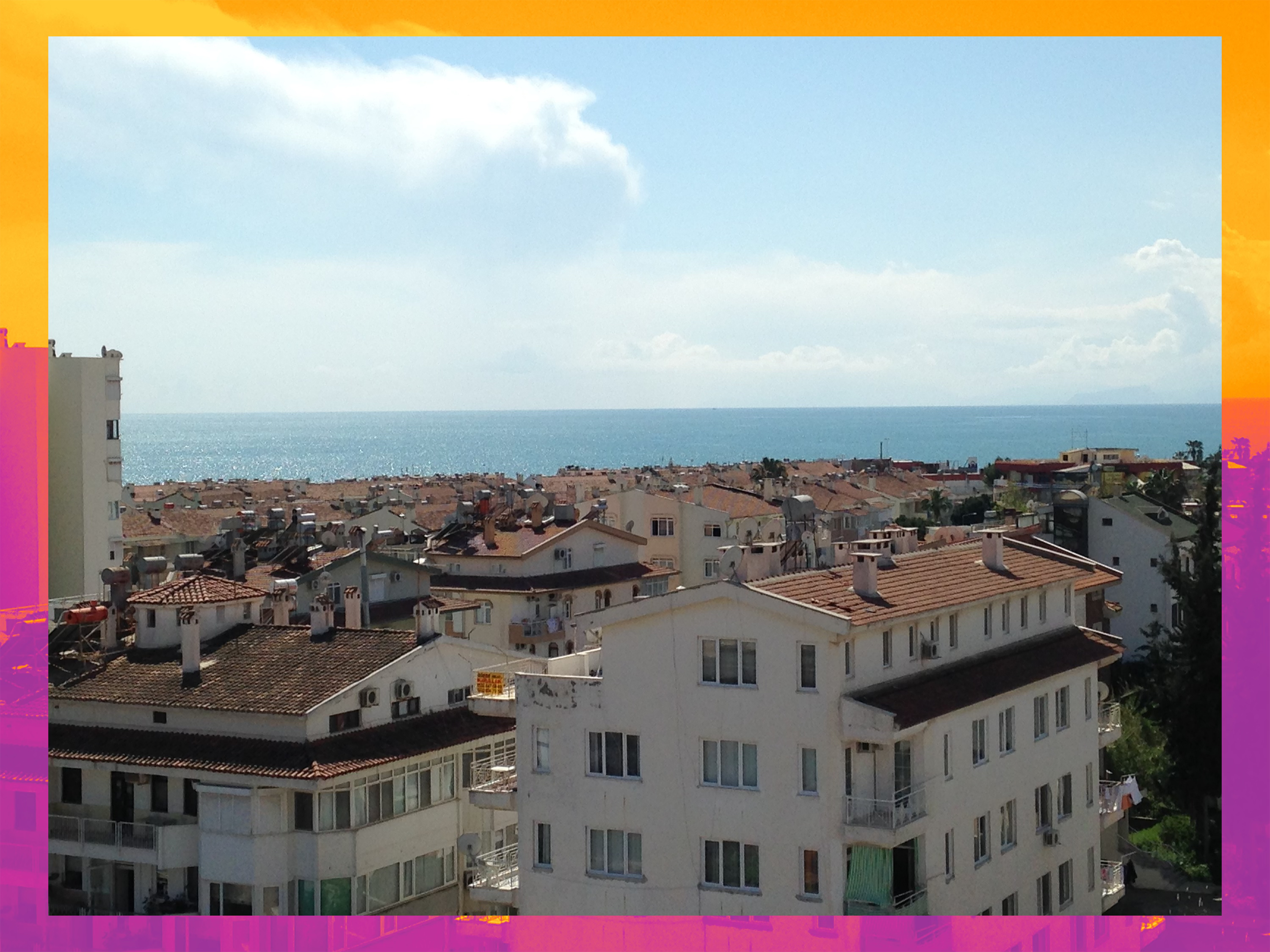
My mother’s side of the family put down roots across generations in Lara and most of the family still live there. My auntie-technically-cousin, Hatice (Ha-tee-jeh), worked at Antalya Airport as a cleaner and later a manager for over two decades. Her apartment directly overlooks the pool of our relatives’ small hotel. My cousins and I spent hours on that balcony over the years, sleeping, talking and watching tourists move through the space below like figures in a diorama. Hatice watched the world walk through her city’s airport without ever boarding a plane. Airports are often described as a place of waiting, transition and limbo. For someone who works at one, it’s the world arriving at your front door, wearing sunscreen and pulling wheelie suitcases.
Unlike Bodrum or Kaş, whose appeal is tied to their boutique charm and walkable old towns, Antalya is a city first and a large one. It often attracts tourists seeking out its resorts rather than the city itself, which is held at a comfortable distance. It’s a place where it’s easy to document what the tourist economy does to its surroundings: coastlines getting carved up, grandiose hotels multiplying, and local businesses trading authenticity for accessibility.
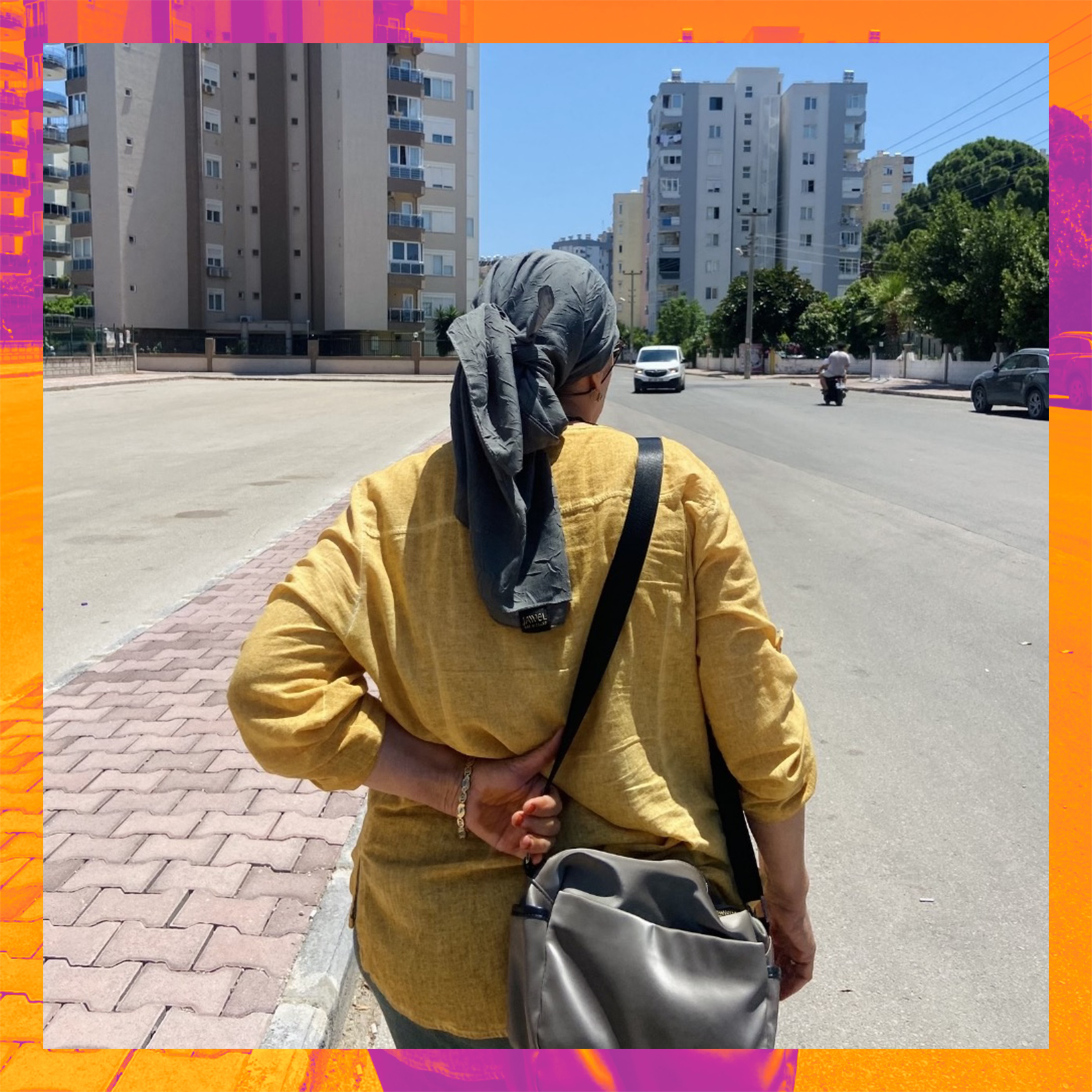
The local gaze is formed under conditions of unequal looking, an asymmetry of power and mobility. For Antalya’s locals, the tourist is not a romantic figure of novels, on some Anatolian version of Eat, Pray, Love, but someone to be politely observed, served and seen off back home. I was, and still am, subject to a version of this other gaze. Every summer I would return; cousins, aunties and uncles watched what England had made of me. I became a kind of local foreigner, arriving with a British passport in one hand and a Turkish ID card in the other, my native tongue eroding a little more with each visit.
Close to thirty summers in Antalya have taught me that locals, too, are searching for relief, pleasure, connection, escape. They deserve to be more than just scenery for someone else’s journey. It’s this other gaze I’d love to get to know better, across different cultures and the voices within them.
Comments
Nothing yet. Say the first thing.
Sign in to join the conversation.