
I remember my childhood summers in Provence, where the relentless hum of cicadas made the hills around the highway vibrate and the pines come alive, unmistakably marking the entrance to another world. One built around heat. The cicadas were its greeting — the voice of the sun. Since those days dreaming under the Sainte-Victoire mountain, that sound has grown strangely faint. It’s been swallowed by the heat itself, now so oppressive that even the cicadas seem burnt out.
The archetypal Marseille grandfather, with his gravelly drawl layered over the cicadas, was once a thriving Mediterranean species. Every vacant square at the edge of a street became an impromptu pétanque court. Nearby, a pine or cypress would offer just enough shade for a game to stretch through the afternoon, like public infrastructure. The sharp metallic crack of boules used to echo through the alleys, but now that percussion is rarely heard in summertime. Ice cubes dropped into a cloudy glass of Pastis nearly melt away before the first sip. The limestone cliffs in L’Estaque, where generations of teenagers have tested their courage against the sea, now share the horizon with the memory of wildfires. Words reserved for occasional circumstances became ordinary markers of French Mediterranean summer: fading, melting, burning. Aspirational language has been replaced with a lexicon of threat.
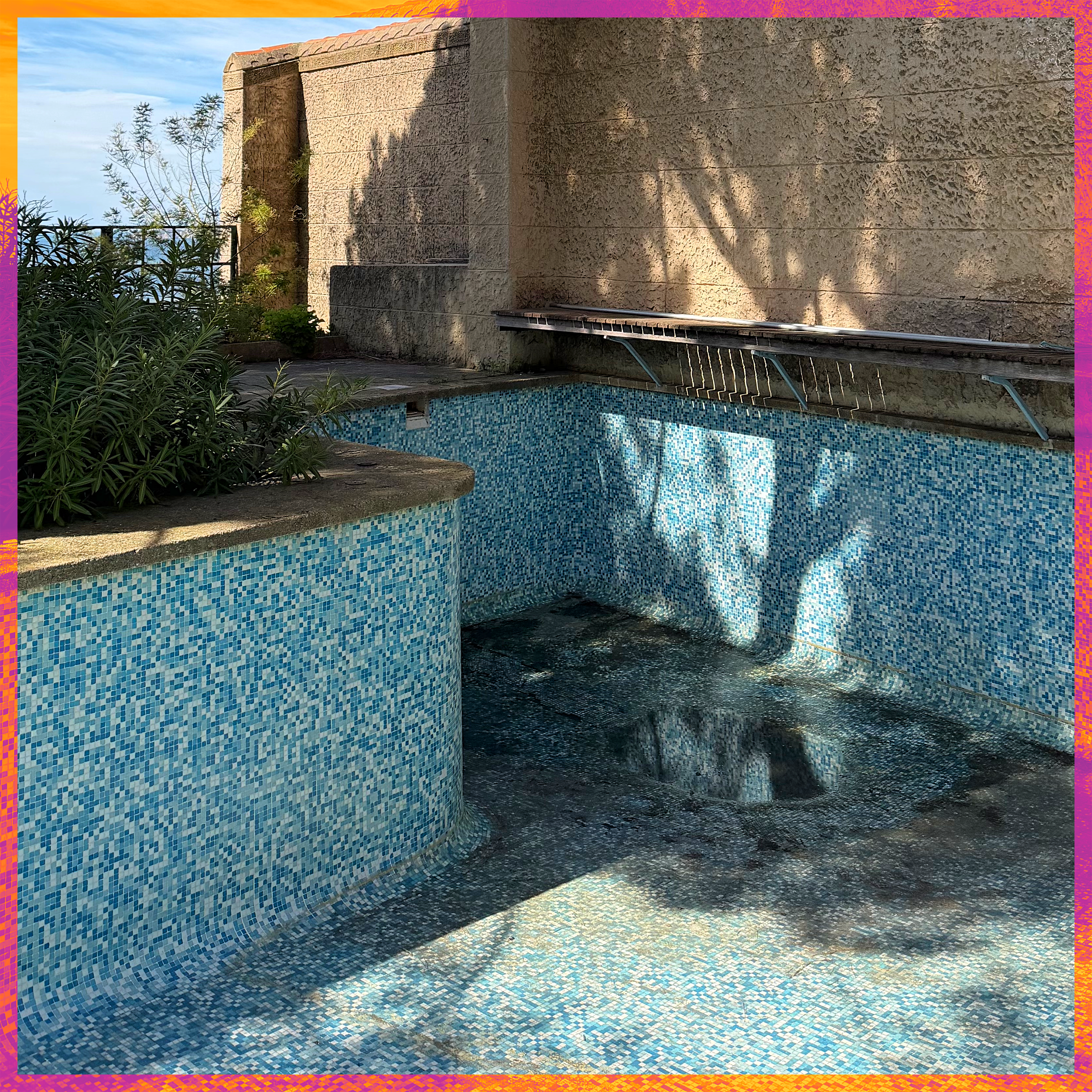
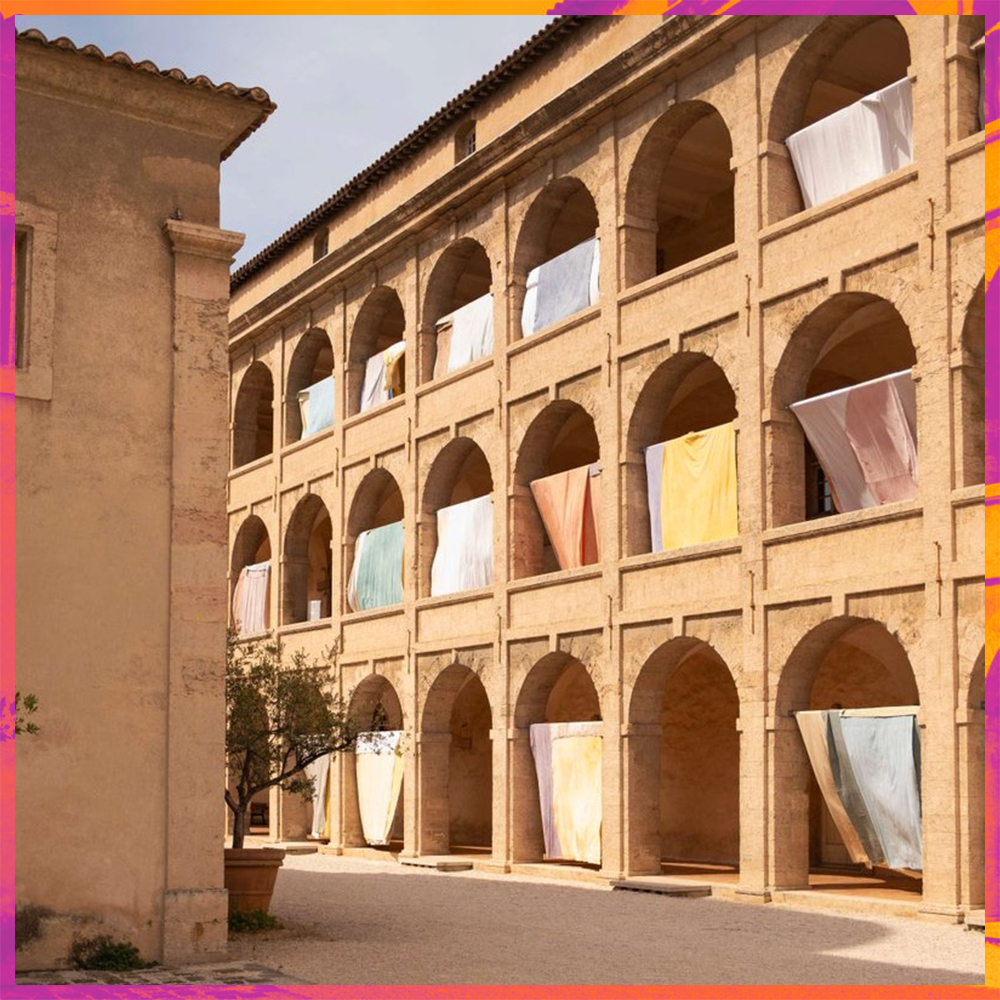
Perhaps this is why I found myself lingering so long inside Adrien Vescovi’s Dormir comme un soleil exhibition at the Vieille Charité. I have long been drawn to the way Vescovi treats fabric: as a surface capable of absorbing time, light and landscape. Here, however, his poetic language takes on a more contemporary urgency. Through textiles exposed to the elements, natural pigments and traces left by the sun itself, the exhibition invites visitors to reconsider their relationship with this omnipotent celestial body. What unfolds across the installation is an attempt to remain attentive to the intimate, almost sensual relationship with it at the precise moment when that relationship is being renegotiated. It awakens a peculiar nostalgia for something that is still there, but no longer feels the way it once did.
The sun still shines over Marseille. Yet increasingly, it feels as though the city is searching for another reason to be loved. In some ways, it has already begun to find one.
The Vieille Charité, formerly a place to concentrate the poor and the unwanted, has become a space for contemplation, exchange and creativity. It’s one of many examples that tell a bigger story, of catalysing pressure into something meaningful. La vie climatique, currently on view at Marseille’s Museum of Contemporary Art, offers precisely such a lens, imagining the museum as a stable atmosphere, protected from the disorder unfolding outside. And perhaps this is a reflection of a wider shift: culture beginning to absorb what climate can no longer hold.
In a city whose natural atmosphere is becoming harder to inhabit, cultural life is gradually taking over a role once played by the climate itself. For decades, people came here chasing a particular atmosphere: the promise of light, heat, slowness, a certain way of inhabiting the day. As those conditions become destabilised, the city seems to be rewriting the terms of its attraction, and in effect its mythology. It’s mutating from a city whose identity was built around the sun to one increasingly defined by the cultures that have learned to live with it.
As the old rituals of this Mediterranean corner recede, another inheritance persists: a tendency to build culture from the margins. Everything is already there in the naming. Hors d’Atteinte (the independent publisher whose name literally means “beyond reach”) was where I first encountered a distinctly Marseillais lineage of feminist thought. It’s one less concerned with institutional legitimacy than with urgency and transmission. The Instagram account Marseille Mondial makes this kind of gesture but through food, mapping the city through diasporic groceries, family-run canteens and overlooked tables. Its guide offers me an escape route from the algorithmic geography of viral openings and endless queues.
Even the internationally celebrated radicalism of the dance collective (LA)HORDE feels less like choreography than a bodily response to overstimulation. I still remember watching one of their performances in Paris on the eve of the Covid lockdown, only to find years later, on the Vieux-Port, that their work had become inseparable from my understanding of Marseille itself: restless, excessive and impossible to contain. And perhaps that same overheated condition runs through Margaux Fournier’s short film Au Bain des Dames, where a beach I’ve returned to countless times becomes the setting for conversations around womanhood, desire, ageing and resilience.
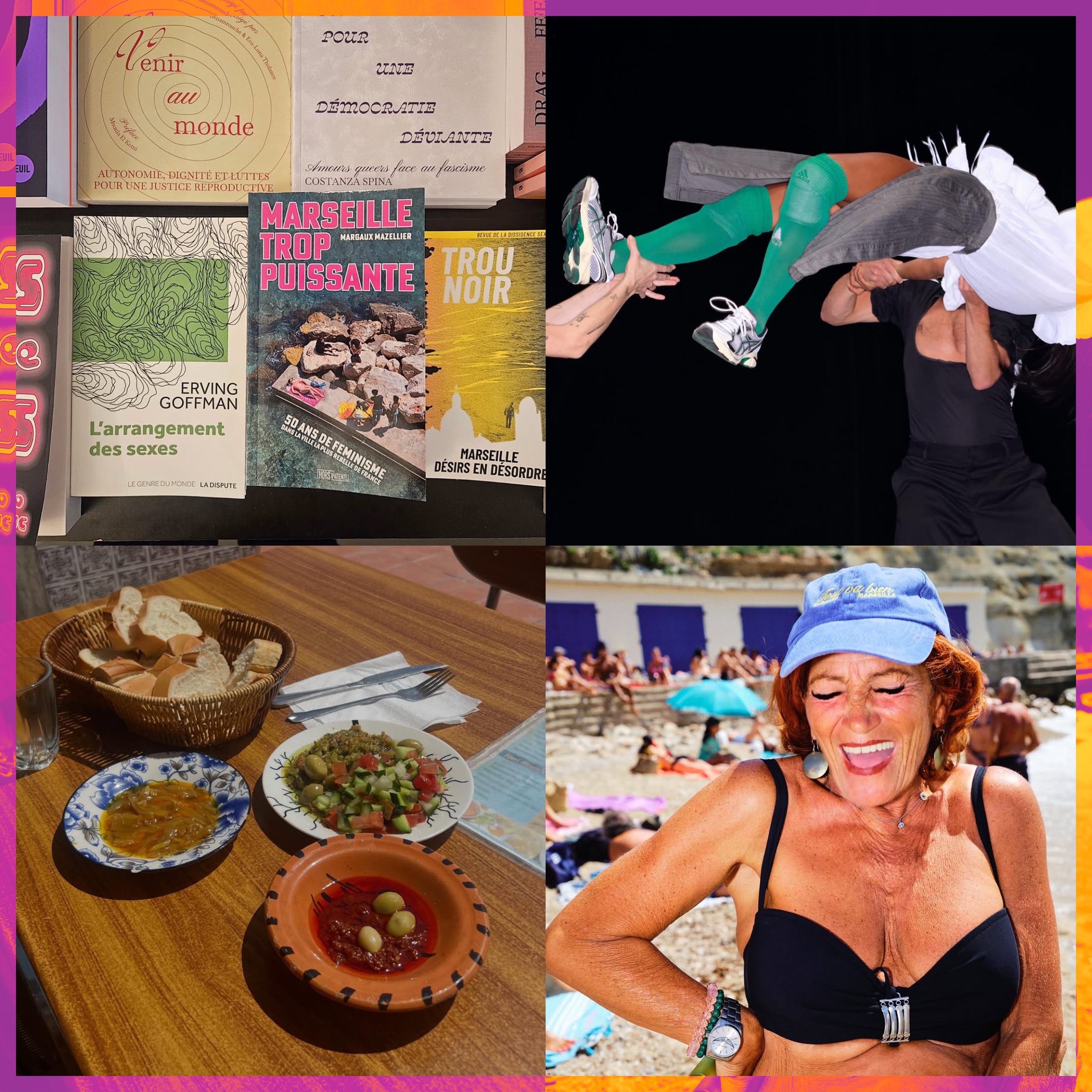
The city’s most compelling initiatives often appear less as institutions than as fleeting states of matter. Affair materialises around an imaginary theme before dissolving again into a constellation of artists, objects and encounters. It brings a cultural intensity without reproducing the social performance I often associate with (and seek to avoid in) Parisian creative circles. KRM is one of the places where I most enjoy working, precisly because it does not resemble a workspace. Instead I’m met with the scent of mint tea and orange blossom drifting between photography exhibitions, Japanese garments and conversations unfolding across different diasporas.
At night, Double Zéro and Nido offer a similar euphoria. I often end up there with friends, drawn less by the idea of rapturous gathering than the possibility of lingering — of listening, talking and allowing an evening to unfold without urgency. Then there is Fueguito, whose mobile parrilla, a handful of sausages and a temporary gathering of strangers remind me of something Marseille understands better than most cities: that collective life does not require sophistication to feel meaningful. Here, culture is no longer an institution. It behaves like weather: diffuse, embodied and impossible to contain.
This rewriting of Marseille’s mythology was inevitable. If the city can no longer rely on the old promise of the idealised Mediterranean summer, it may simply be returning to what it has always been: less a place than a collective temperament. In his crime novel Total Khéops, Jean-Claude Izzo writes:
Marseille is not a city for tourists. There is nothing to see. Its beauty cannot be photographed. It has to be shared. Here, you must take sides. You must care. You must be for it or against it. You must feel it violently. Only then does what is worth seeing reveal itself.
The cicadas may no longer saturate the afternoon air as they once did. But while the sound of the sun fades, the city is learning to sing in a new register.
Comments
Nothing yet. Say the first thing.
Sign in to join the conversation.