
Your “made with avocado oil” chips are probably not made with avocado oil.
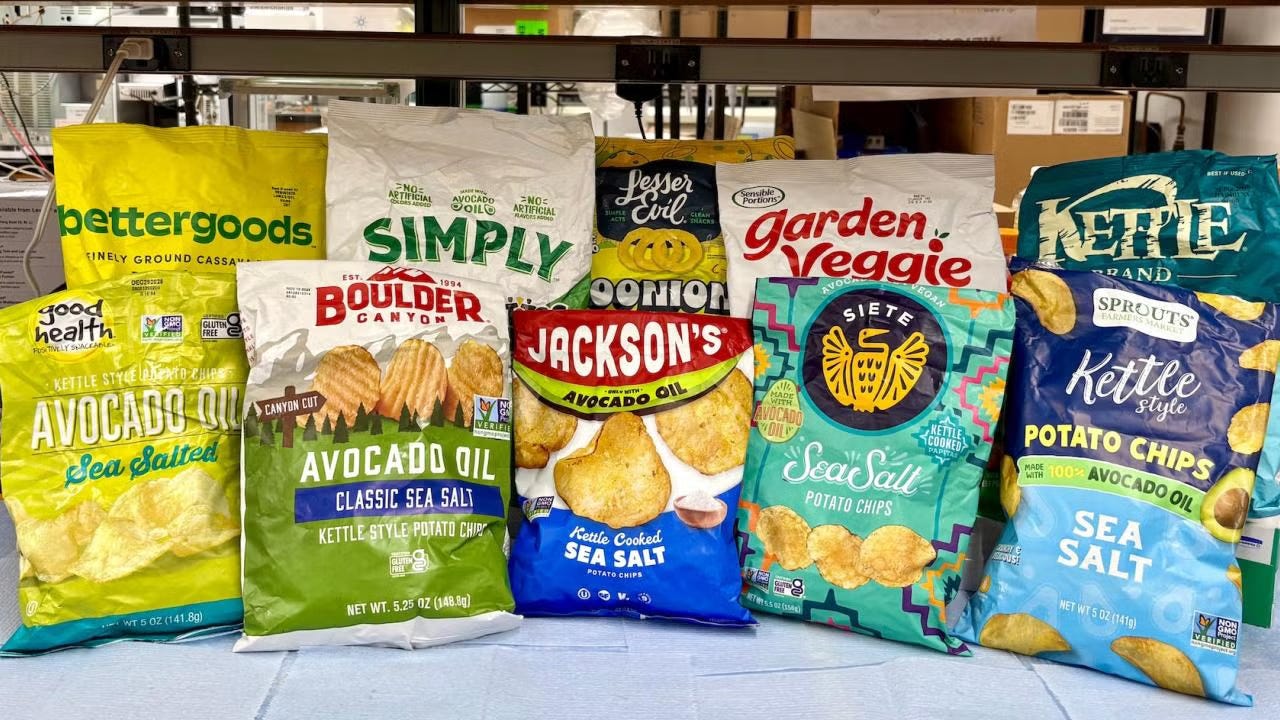
UC Davis just published a study testing 54 processed foods labeled as containing avocado oil as the only oil ingredient: chips, mayo, and salad dressings, bought from stores and online retailers in 2025 and 2026. Researchers extracted oil from each product and compared its fatty acid and sterol fingerprint against real avocado oil (they made their own in the lab from actual avocados so they’d know exactly what the pure version looks like), giving every sample a generous 10% margin for natural variation between avocado types and growing regions.
48 of 54 failed. That’s 89%.
Broken down: 93% of the chips failed. 71% of the mayonnaises failed, and every single U.S.-made mayo in the study failed. 100% of the salad dressings failed. At least one sample tested as almost entirely soybean oil, with essentially no real avocado oil detectable. And this wasn’t a case of frying or emulsifying scrambling the results: the researchers ran their own frying and emulsification experiments, and the authenticity markers held steady. The cheaper oil was already in the bottle before the chip ever hit the fryer.
For context, when they ran the same test on 20 olive oil products as a comparison group, only one lot of one product failed. Olive oil, which has an actual legal definition, held up. Avocado oil, which does not, didn’t.

I’ve never fully trusted the avocado oil category, and this isn’t hindsight talking. Two reasons.
There’s no standard of identity. Olive oil has a legal definition the FDA can enforce against. Avocado oil doesn’t. There’s no baseline for what has to actually be in the bottle for a company to call it avocado oil, which means there’s nothing specific for a regulator to hold anyone to. That’s not a small technicality. It’s a large part of why this keeps happening.
Even legitimate avocado oil isn’t the fat I reach for first. Pure avocado oil is mostly monounsaturated, similar to olive oil, and that’s a genuine part of its appeal. But it still carries a meaningful share of linoleic acid, the same polyunsaturated fat I try to keep low across the board. “Less PUFA than soybean oil” is not the same bar as “low PUFA,” and the marketing around avocado oil tends to blur that line. Add in that most of it is industrially refined rather than simply pressed, and the appeal starts to look more like branding than substance.
This also isn’t the first time the category has been caught. UC Davis ran the same kind of test on bottled avocado oil back in 2020 and found 82% of it was either rancid or cut with cheaper oils, including three bottles labeled “pure” or “extra virgin” that were nearly indistinguishable from straight soybean oil. So if you see the claim floating around that this is the first time anyone’s caught fake avocado oil, that’s not accurate. This is at least round three.
That said, I’m still angry because I have been recommending products like Siete's avocado oil chips for a few years now (and I wonder now if things have changed since they

Potato chips and tortilla chips were never health food to begin with. They’re processed snacks. An avocado oil label was never going to turn a chip into a superfood. What makes this maddening isn’t that a chip is “just a chip.” It’s that we paid a premium and specifically chose these bags over the cheaper ones next to them because we were told we’d be avoiding the inflammatory oils. That’s the part that stings. We didn’t get what we paid for, and the exact thing we paid to avoid is what we got anyway. But, y’all… we need to get real on how much processed foods we’re eating anyway — made with avocado, olive, canola, or mystery oil… I love chips. So much. But they’re an occasional fun snack, not for every day nourishment.

For cooking oil itself, not the processed food category, I only recommend one brand: Marianne’s Regenerative Organic Avocado Oil. It was one of only two brands that tested pure and unoxidized in the original 2020 UC Davis study, and it’s the benchmark oil researchers used to build their purity reference in this new 2026 study. It’s water-extracted and then refined, made from avocados grown in Mexico, and non-GMO verified. It’s the one in my own kitchen (although, I use EVOO more often).
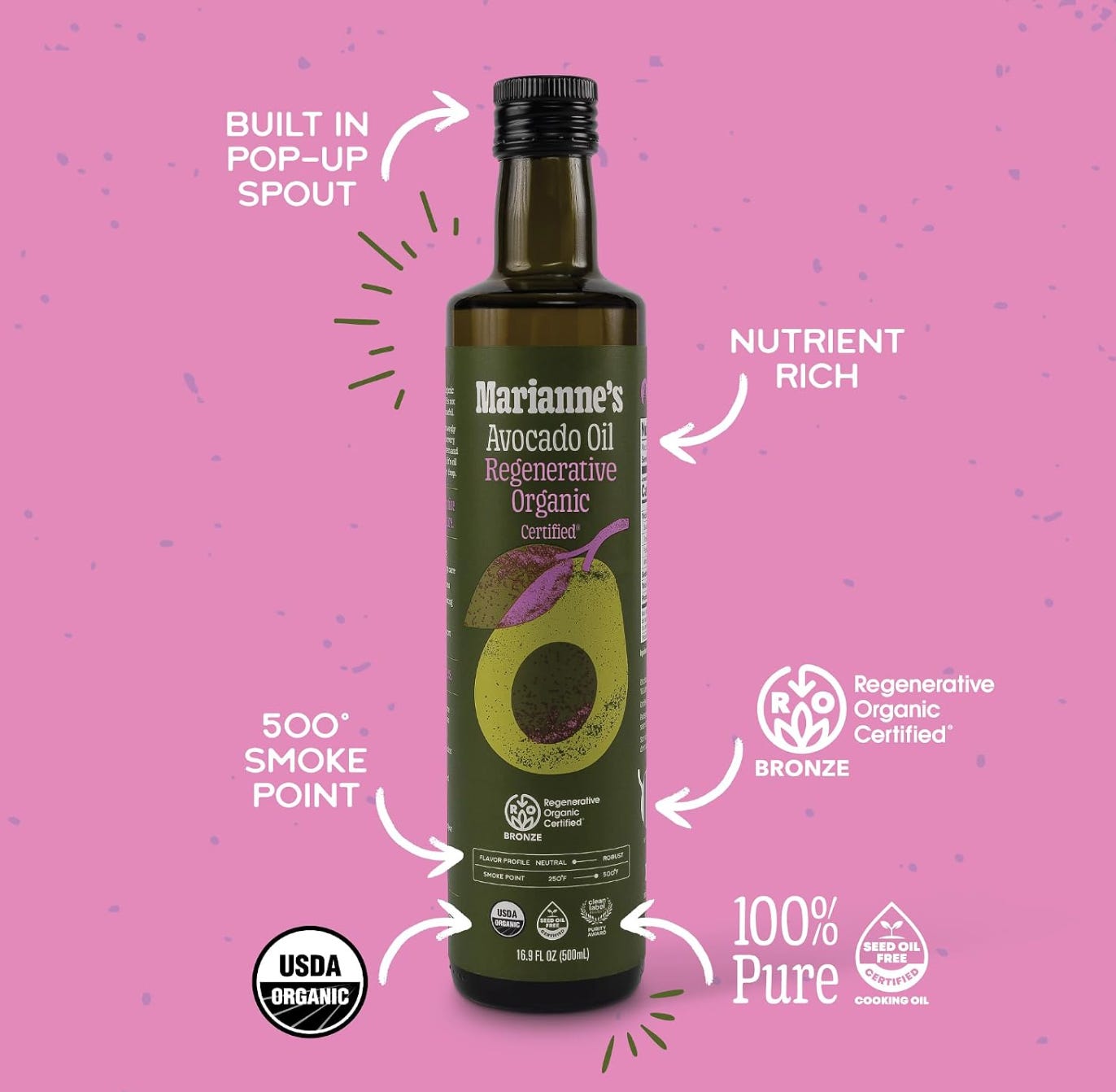
One thing worth knowing: Chosen Foods was the other brand that tested pure back in 2020, but in this new study, Chosen Foods’ own mayo and dressing products failed both lots. That’s not necessarily a contradiction. A brand’s bottled oil and a brand’s processed food line can be sourced from entirely different supply chains, and a good track record in one doesn’t guarantee the other. That’s exactly why I try to keep my oil consumption as close to the source as possible.

On the avocado oil side, only one brand passed clean across both lots tested: Grove AvoYeah! Mayo Sauce and Garlic Aioli. Out of everything tested in the avocado category, that’s it.
On the olive oil side, more held up: Torres Extra Virgin Olive Oil chips, Trader Joe’s Kettle Cooked Olive Oil chips, and Lay’s Baked BBQ Potato Crisps with Olive Oil all passed both lots. On the dressing side, Bella Sun Luci, Bragg, and California Olive Ranch also passed clean. If you want a processed food where the oil is what the label claims, olive oil is currently the safer category, not avocado oil.

If you’re looking to replace what’s in your pantry:
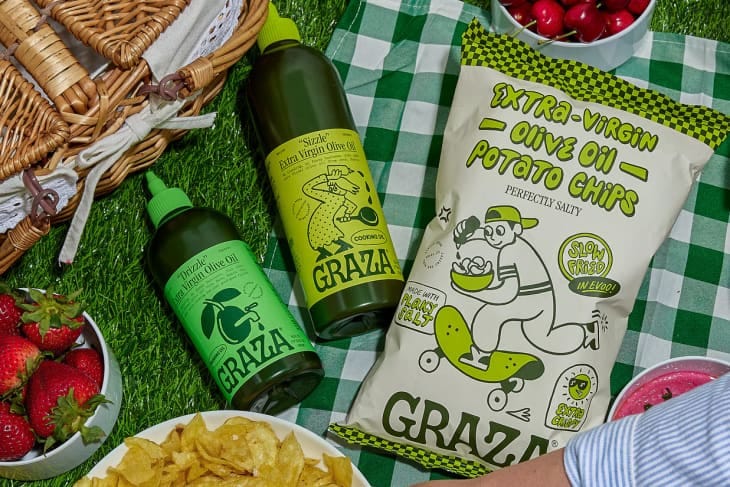
Graza now makes potato chips slow-fried in their extra virgin olive oil, and they passed the study clean. Torres, the Spanish potato chip brand that’s been frying chips in olive oil for decades, also passed. Both are genuinely good, not “acceptable substitute” good.
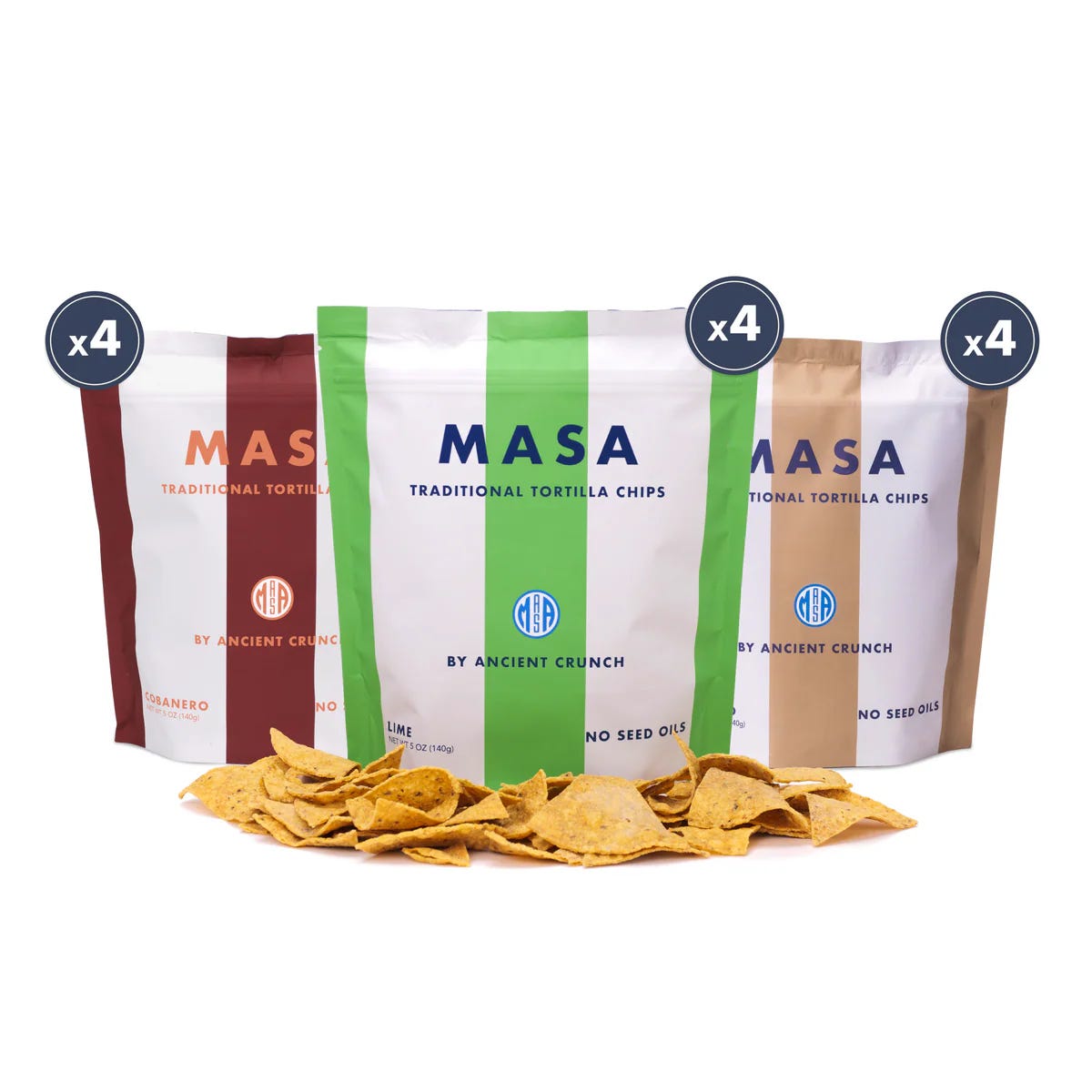
For something outside the oil-authenticity problem entirely, Masa and Vandy both make chips cooked in grass-fed beef tallow instead of any liquid oil. Masa does corn tortilla chips, Vandy does potato chips. There’s no oil supply chain to question in the first place, because the fat isn’t a liquid pressed from a fruit and shipped through several unnamed suppliers. It’s tallow, and you know what tallow is.

The instinct here is anger, and it’s a fair one. We did the research, read the labels, and paid more, sometimes a lot more, specifically to avoid the exact thing we ended up eating anyway. That’s exhausting, and it’s allowed to be exhausting.
But don’t let this push you into fear of every label and every trip to the grocery store. That’s not sustainable, and it’s not the goal. The goal is doing the best you can with the information you currently have, adjusting when better information shows up, and not white-knuckling every snack decision in the aisle.
Where you can, make it yourself. A batch of chips or fries in tallow or a trusted avocado oil at home costs you fifteen minutes and gives you full control over what’s actually in the pan. And more broadly: the fewer processed foods in the rotation, whatever the oil claim on the front of the bag says, the less any of this can catch you off guard.
Sources: UC Davis, “Most Avocado Oil Chips and Dressings Are Adulterated, Study Finds”; Wang et al., “Authenticity of avocado and olive oils used as ingredients in commercially processed foods,” Applied Food Research, July 2026; UC Davis, “Study Finds 82 Percent of Avocado Oil Rancid or Mixed With Other Oils” (2020).

Comments
Nothing yet. Say the first thing.
Sign in to join the conversation.