
When he’s not using James Joyce to justify his support for genocide, or leaking documents about how front of house staff don’t want to work with him, Phelim McAleer is a screenwriter. Right wing money has flooded independent film in the last decade or so as media companies like Breitbart, Daily Wire and Angel Studios all try to astroturf a pseudo-culture for their cruel agendas. This is how filmmakers looking for work and cancelled actors end up attached to nakedly fascist projects like Citizen Vigilante and how Ben Shapiro ends his business by sinking money into a pointedly all-white Game of Thrones knock-off.
So in this context McAleer, who once made a pro-mining documentary paid for by a mining company, is ideally placed for the big times. His last production was the Hunter Biden biopic My Son Hunter. McAleer and his wife crowd funded the $2.5 million budget (or “crowd funded” it – right-wing funding models are famously opaque) and he has a “story by” and a producer credit. Brian Godawa, who wrote ObamaGate: The Movie with McAleer about Peter Strzok and Lisa Page’s texting scandal, is credited with the screenplay.
And because I make bad decisions in my life, I watched it.
Hunter Biden is, to be fair to the project, a genuinely compelling figure of late-Empire. His family history is operatic in its tragedy. He was in a brutal car crash when he was two years old, losing his sister and mother. His father became a senator while he and his brother recovered in hospital. He limped through law school and was given various poorly defined six and seven figure salary positions due to his family connection.
His addictions and failures were consistently covered up as his father became vice-president and his upright brother, literally named Beau, became the clear-eyed Kennedy-esque heir to the family’s ambitions. Then Beau died of a brain tumour, Hunter’s addiction spiralled and he had an affair with Beau’s widow. He spent years in a drug and sex haze, working as a bag man for post-Cold War American corruption in Ukraine and China. He has at least one disputed paternity case.
Then he became a national figure because he forgot to pick up a laptop from a repair shop. Amongst many other sextapes found on the computer, there was a video he recorded on his front facing camera from a sensory deprivation tank. In it he listens to music, smokes crack and masturbates. By all reports, it seems that the deprivation tank was in a rehab facility.
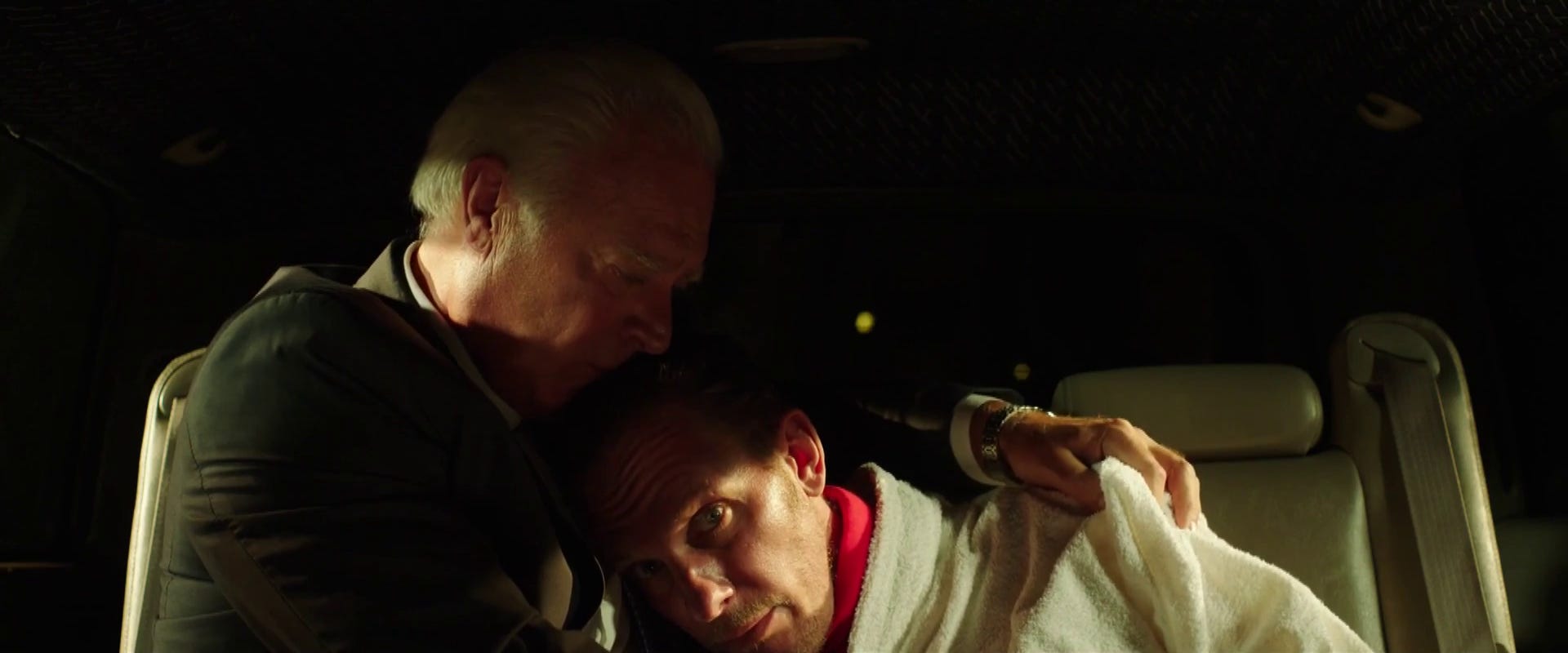
Hunter leads the kind of life that makes for Mountain Goats songs. His existence is the kind of unstoppable car crash that is both totally his own fault and yet also the inevitable output of his traumatic inheritance. And it offers a window into the genuine moral decay at the heart of liberal American power, the compromised nature of these great dynasties that claim to represent equality yet allow themselves to feed on and abuse the people they see below them. It could make for a pretty good movie!
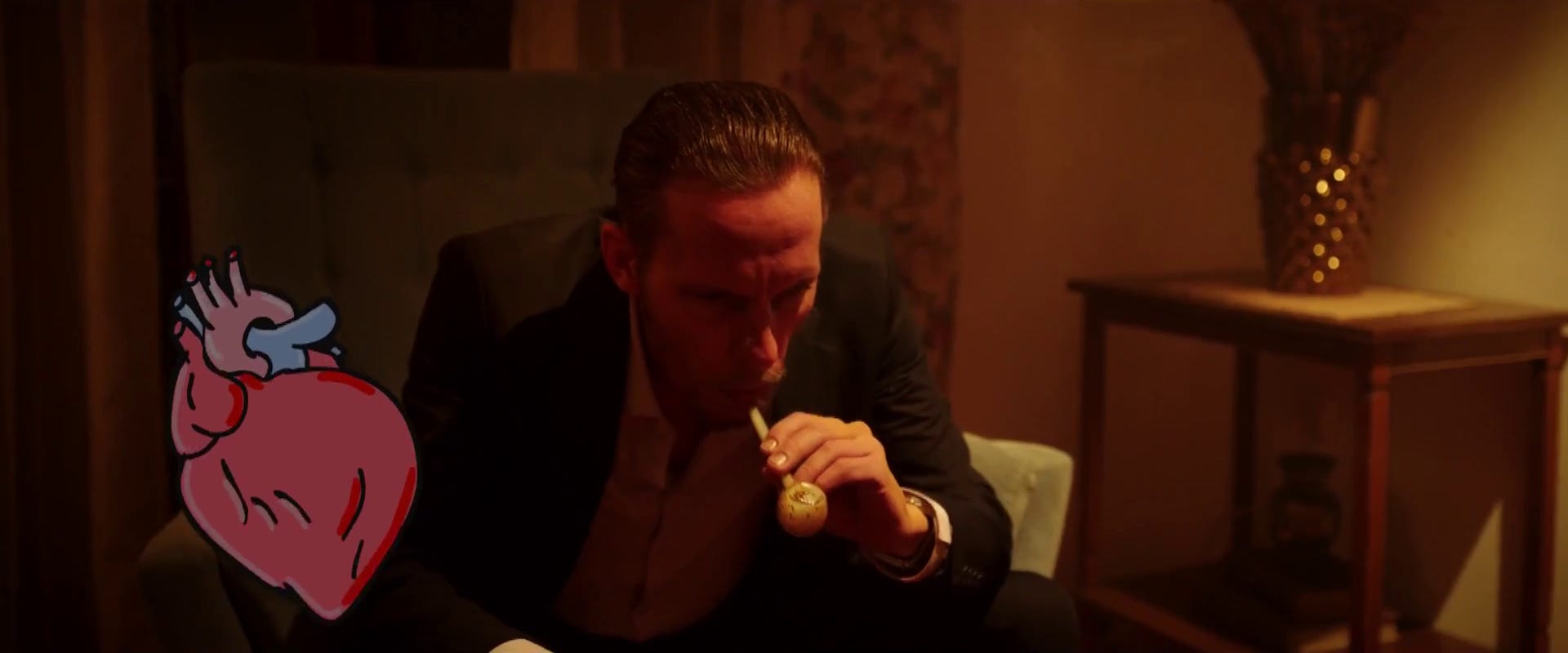
My Son Hunter is, unfortunately, very very bad. The tone is psychedelically uneven, and the performances occasionally rise to D-tier. After the obligatory libeling of the George Floyd uprising, it opens with a faux-Scorsese Money, Strippers and Drugs!! montage that’s shot reasonably well. But it’s interrupted by cartoon drawings of Hunter’s heart, which apparently calms down when he smokes crack. Characters directly address the camera to explain Fox News esoterica in a kind of dark mirror of post Big Short Adam McCay. Hunter’s actor Laurence Fox is considerably less handsome and charismatic than the actual Hunter Biden and Dynasty veteran John James struggles to translate some of Joe Biden’s late dementia warblings into the intimate interpersonal scenes. Fox doesn’t even commit to the obligatory Biden hair sniffing.
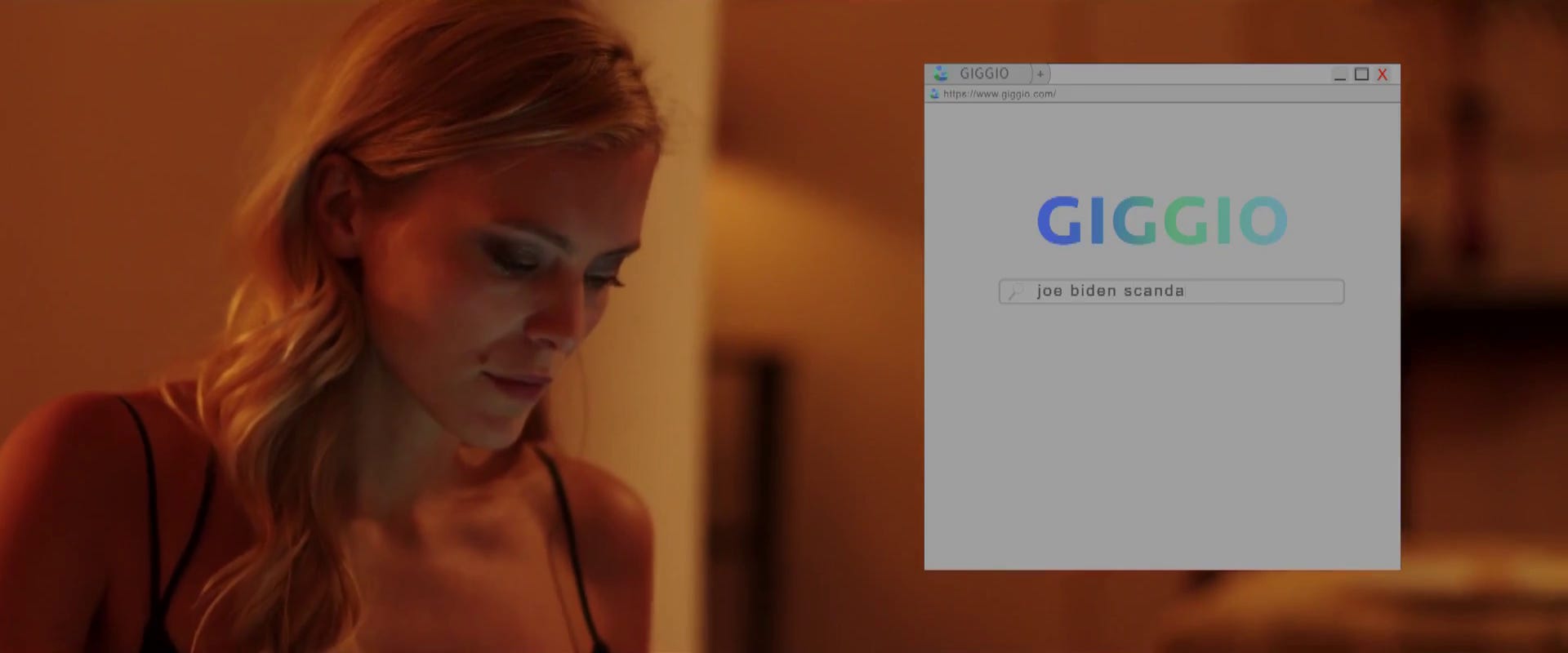
The emotional core of the movie is supposed to be a Trump hating stripper slowly realising that she has to become a whistle-blower for Hunter’s crimes, but these scenes were mostly annoying. The real sex workers who’s services Hunter purchased during this time actually speak about him fondly enough, there’s one oddly endearing story of him smoking crack with a stripper while listening to Fleet Foxes on his phone. Any screenwriter who doesn’t include this scene should have been immediately fired.
But ultimately the film seems unclear on why Hunter is bad and what made him this way, two questions that any writer has to at least attempt to answer in a character study. The crimes that were allegedly revealed by the laptop were all too vaguely defined, they seemed to be mostly bad because business with China involves deep compromises with the CCP and because the Ukrainian oligarchy is scummy. This is true, of course, but doesn’t differentiate Hunter with every other American business person who knows what the interior of a private jet looks like. Hunter’s debauchery is certainly extensively presented, but a film with this many lingering shots of strippers’ body parts can feel pretty equivocal in its moralism here.
The people who Hunter likely caused the most harm to – his children, their mothers and the many other women he exploited – go unrepresented on screen. The liberal hypocrisy around sexual violence is gestured at, father and son discuss their circling MeToo allegations but assure each other that it’s nothing in comparison to Trump’s Access Hollywood scandal. But a real reckoning with the pain that women and children are left with in the wake of men like the Bidens would be unlikely to receive distribution from Breitbart News.
According to McAleer and Godawa then, Hunter’s fatal character flaw seems to be the fact that he let down his father. This is odd, considering the film’s hatred of Biden senior. But this hatred seems to submit to the greater law of filial supplication. Hunter is bad because he threatened his father’s ambitions, Joe is weak because his heir has failed, and the world is bad because it lets this degeneracy continue.
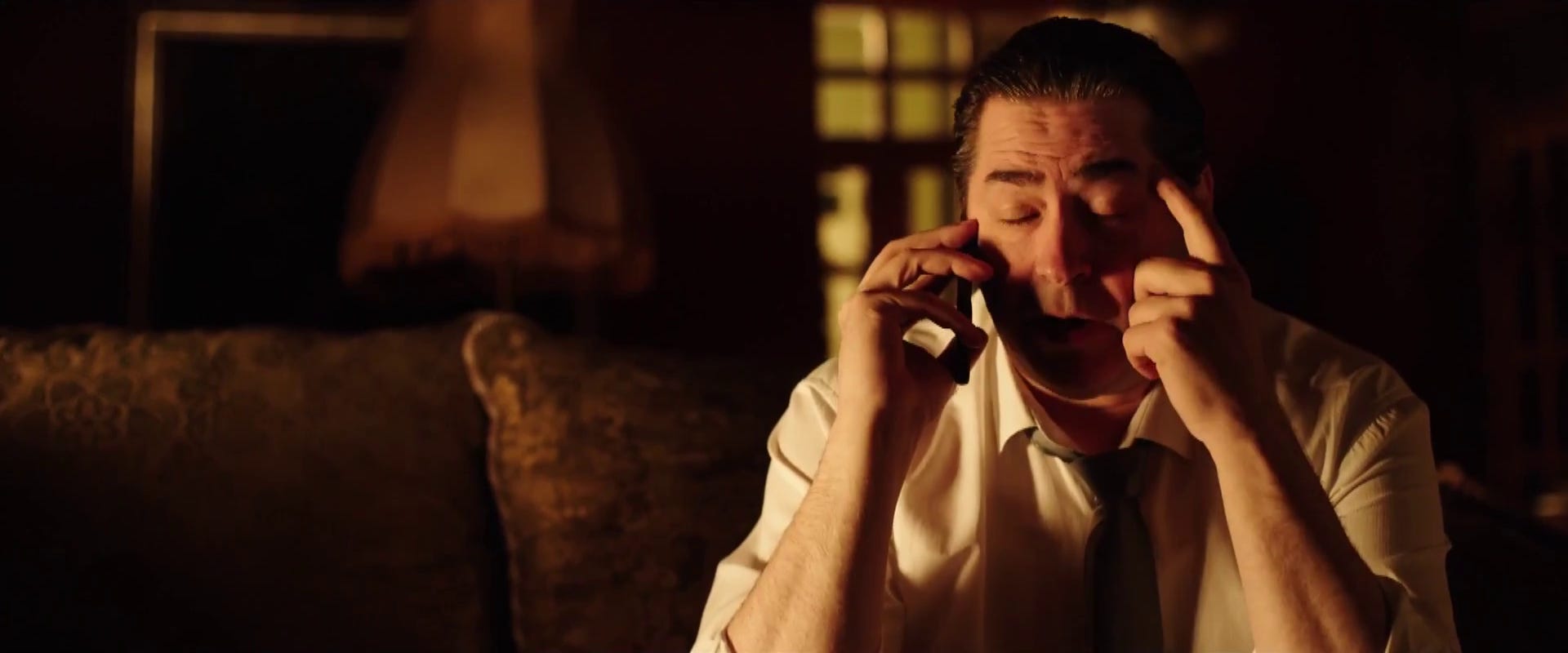
The film climaxes when the stripper turned whistle-blower calls her own father, who she’s been insulting to Hunter throughout the film, and asks his advice. He appears as the Lacanian voice of Law and Order, a literal lawyer who tells her she must sell Hunter out. Because the Hunter Biden laptop story did not in fact bring down the Biden campaign, the film has to wrap up with a vague montage about the media cover-up. But emotionally, we end with a clear purging of weak fathers and failsons, Daddy’s Home and we know what to do now.
We live in deeply Freudian times. Our psychic dramas play out explosively as increasingly frail yet all-devouring fathers amass more and more, feeding on their offspring. Biden was, at least symbolically, elected as the “mourner-in-chief”, the kindly patriarch who understood tragedy and would put it all to right. He ended up as a kind of necrotic emperor, denying the blood we saw seeping from his shaking hands.
Likewise Trump’s return was, for the right, the opportunity to finally drain the swamp (a vulgar Freudian image of arrested anal stage development if there ever was one) of our murky attachments and secrets. But the catharsis never arrived. What dates the film most is a moment where Gina Carano’s character turns to camera and says that “Epstein didn’t kill himself”. Media projects like My Son Hunter will now struggle to find an audience as the right’s populist base and it’s moneyed backers split over Israel and Epstein.
There is a vague hint in the film, almost immediately dismissed, that maybe Hunter leaked his laptop on purpose in an attempt to end his father’s evil reign. Perhaps in years to come, liberal America will write fanfiction about Barron Trump leaking the Epstein list. Until then, in the words of the Succession writer’s room, “Has anyone ever told you that you talk about your dad, like, a lot?”
Comments
Nothing yet. Say the first thing.
Sign in to join the conversation.