
Two days before this year’s Bloomsday – the annual James Joyce celebration that takes place on the date given for Ulysses’ single day – the Wall Street Journal published an article about the book, about Ireland and about antisemitism. It was written by Phelim McAleer, an Irish journalist who lives in the U.S. and makes (with his wife, which is nice!) climate change documentaries on the side of climate change.
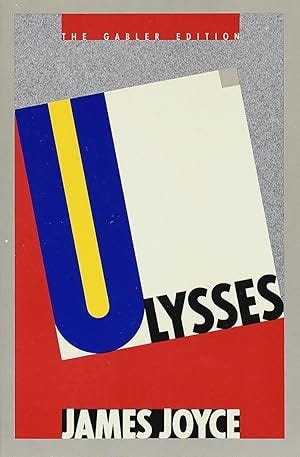
His reading of the modernist novel is serviceable, but I have some notes. He describes Leopold Bloom as “a lower-middle-class Dubliner” which doesn’t seem quite right. In “Ithaca”, the penultimate episode of the novel, Bloom is revealed to have a life assurance policy of £500, plus accumulated interest, for his daughter Milly which would come out at about €100,000 in 2026 money at a time of pretty abject poverty in Dublin. The Bloom’s experienced financial difficulty before June 16th 1904, Bloom was unemployed for a period and (according to Molly’s sensuous stream of conscious in “Penelope”) asked his wife to “pose for a picture naked to some rich fellow in Holles street”.1 But the Blooms are pretty comfortable when we meet them, and Leopold certainly doesn’t seem “stalled in his career” as McAleer would have it.
McAleer’s proposition that Bloom is “trapped in an unhappy marriage” also hits my ear a little wrong. Their marriage is certainly complicated, filled with secrets and tacit understandings, but McAleer seems overly dismissive of it here. While Molly’s infidelity is a major source of pain (and occasional pleasure) for Bloom, his sexuality is remarkably free2 and he eventually returns to Molly, like his Homeric analogue, with real tenderness. For Molly’s part, she can sound frustrated and belittling of Bloom but also thinks beautiful little lines about him like “what a madman nobody understands his cracked ideas but me”.
This is all to say that Ulysses is a complicated book. Any statements that you can make about it have been debated by generations of readers. It is, for better and for worse, not a place to turn to for clarity.
But of course McAleer’s piece is not primarily about litigating a more than 100 year old fictional character’s marriage or finances. He is more focused on Bloom’s ethnicity, religion, and the way that his fellow Dubliners react to it. He claims that he thought Joyce’s choice of protagonist was “oddly prosaic” for years, until he realised that “Joyce chose perfectly. Bloom is an Irish Jew. As he moves through the city, he endures not only the private pain of his wife’s unfaithfulness but the casual, corrosive antisemitism of his fellow citizens.”
Again, we can nitpick much of this. Bloom’s father was a Hungarian Jewish immigrant but, at least publicly, he converted to Protestantism. Bloom’s mother was Catholic and, for many Jewish traditions, Judaism is matrilineal. Bloom received Christian baptism three times; once to Protestantism, once as a childhood joke, and once as a Catholic in order to marry Molly.
And yet, he is absolutely a victim of near constant antisemitism. His attempts to help a recently dead friend’s widow with her insurance paperwork is denounced as Jewish scheming. And he does seem to derive some intimate comfort from the shadow and trace of his Jewish heritage: the vision of his dead son Rudy sees him read right to left like he’s studying Hebrew.
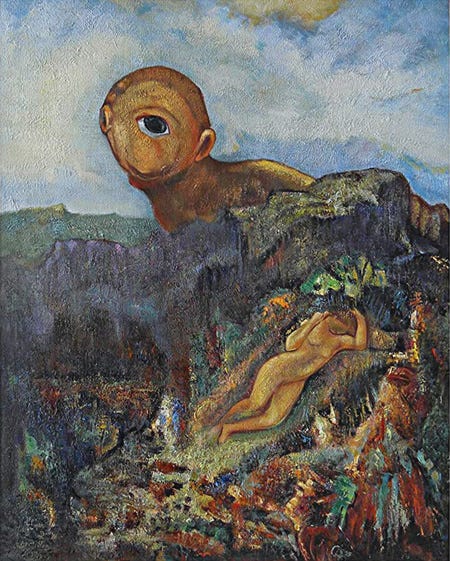
Antisemitism – both casual and pointed, chronic and acute – is all over Ulysses’ Dublin. McAleer cites “Cyclops” where “the citizen”, Joyce’s embodiment of chauvinistic Irish nationalism, calls Bloom a “bloody jewman” and throws a biscuit tin at him. There is also Stephen Dedalus’ Unionist boss Deasy, who makes Stephen squirm through an involved (and obviously ahistorical) racist joke about how Ireland “has the honour of being the only country which never persecuted the jews” because “[s]he never let them in”. Even Stephen makes Bloom sit through a weird song about a young Jewish woman chopping off a boy’s head.
McAleer says that “[g]rowing up in late-20th-century Ireland, [he] saw no such prejudice and assumed Joyce had exaggerated the past for dramatic effect.” I saw some criticism of the article that seemed to tacitly support this idea, implying that Joyce was really writing about mainland European antisemitism from his time in Trieste. But much of Joyce’s generation was incredibly antisemetic. Oliver St. John Gogarty, the model for Stephen’s best frenemy Buck Mulligan, lost a libel case for writing an ugly parody of Dublin Jewish art dealer Harry Sinclair and his recently deceased twin3. Maud Gonne, the revolutionary nationalist and suffragist, was a committed antisemite, propagating conspiracy theories about the Irish famine as a Jewish plot.
For those of us on the Irish left, these facts should be read as important wrinkles in the Irish nationalist story. The revolutionary generation are often cited as our de-colonial creation myth, the Plough and the Stars flag flies proudly at every Palestine, housing or anti-racism protest in contemporary Dublin. But the aristocrats, aesthetes and mad-men who contributed to the contradictory project of Irish Cultural Nationalism often had some rancid ideas about the world. Unfortunately, these ideas are our heritage too.
McAleer is obviously a right-wing Zionist who uses scare quotes when talking about the State of Palestine. He implicitly denies the genocide of the Palestinian people while complaining that the Abbey wouldn’t stage his play “OCTOBER 7”. His use of Joyce is in service of his tangential argument that the relatively mainstream support for the Palestinian people in Ireland has “spiralled” into antisemitism.
But it would be dishonest to suggest that there have been no cases of Irish Palestine activists falling, either accidentally or wilfully, into blaming Jewish people as a race for the crimes of the Israeli state. I would hope that these are mostly isolated cases, followed by swift and clear pushback from these activists’ comrades. But these are very bad days. Irish innocence is not a useful story to tell any more.
James Joyce the man seems to me to have been a perpetual social and political outsider. He had one of the biggest egos in the history of the written word and he would not wholly submit that ego to any ideological project. He dabbled in Catholicism in his youth, Irish Nationalism in his adolescence, and Internationalist Socialism in his years in Trieste but he was committed to nothing except perhaps the literary endeavors of James Joyce. Zionism even gets a characteristically ambiguous reference in Ulysses, Bloom picks up a leaflet for the Palestine Land Development Company at his local butchers, but uses it to hold bloody pork sausages.
We are under no obligation to be so prevaricating. We can at least try to make clear and honest moral statements about the world.
The Israeli genocide of the Palestinian people, and their expansionist Greater Israel project, is a monstrous crime against humanity that must end and must be punished. The Jewish People are not to blame for these crimes. Antisemitism has a long and horrible history, in Ireland as much as anywhere else in Europe. We should know that history and be very mindful of it.
But we also can’t use it as an excuse to do nothing. If history is in fact a nightmare from which we might wake, the crimes of the last century cannot blind us to the crimes of today. No matter what James Joyce might or might not have written, the mass graves of the last century can’t be used to hide the mass graves of this one.
Careful readers of Bloom may suspect that this proposition might have had more to do with his sexual taste than how serious their financial straits were.
McAleer fails to mention the “Circe” episode of the novel where a sex worker dominates Bloom, swaps pronouns with her, and fists her newly acquired vulva.
Samuel Beckett, his nephew through marriage, testified in defence of Harry Sinclair. He also fell in love with Sinclair’s daughter Peggy, his first cousin. You didn’t need to know that. But I know that and now you know that.
Comments
Nothing yet. Say the first thing.
Sign in to join the conversation.