
AI gets discussed as though every coach needs to become a technologist. For coaches, writers, healers, and spiritual entrepreneurs, that can create a strange kind of pressure. Suddenly it feels like you are supposed to understand prompting, automation, agents, dashboards, integrations, and coding on top of serving clients, creating content, running a business, and doing the work you actually came here to do.
That is probably the wrong goal.
A much more useful question is this: What repetitive work could technology remove from your day so you have more energy for the work only you can do? That question sat at the heart of a recent Monetize Your Mission Mastermind conversation with identity coach Bo McCoy, MBA DMc
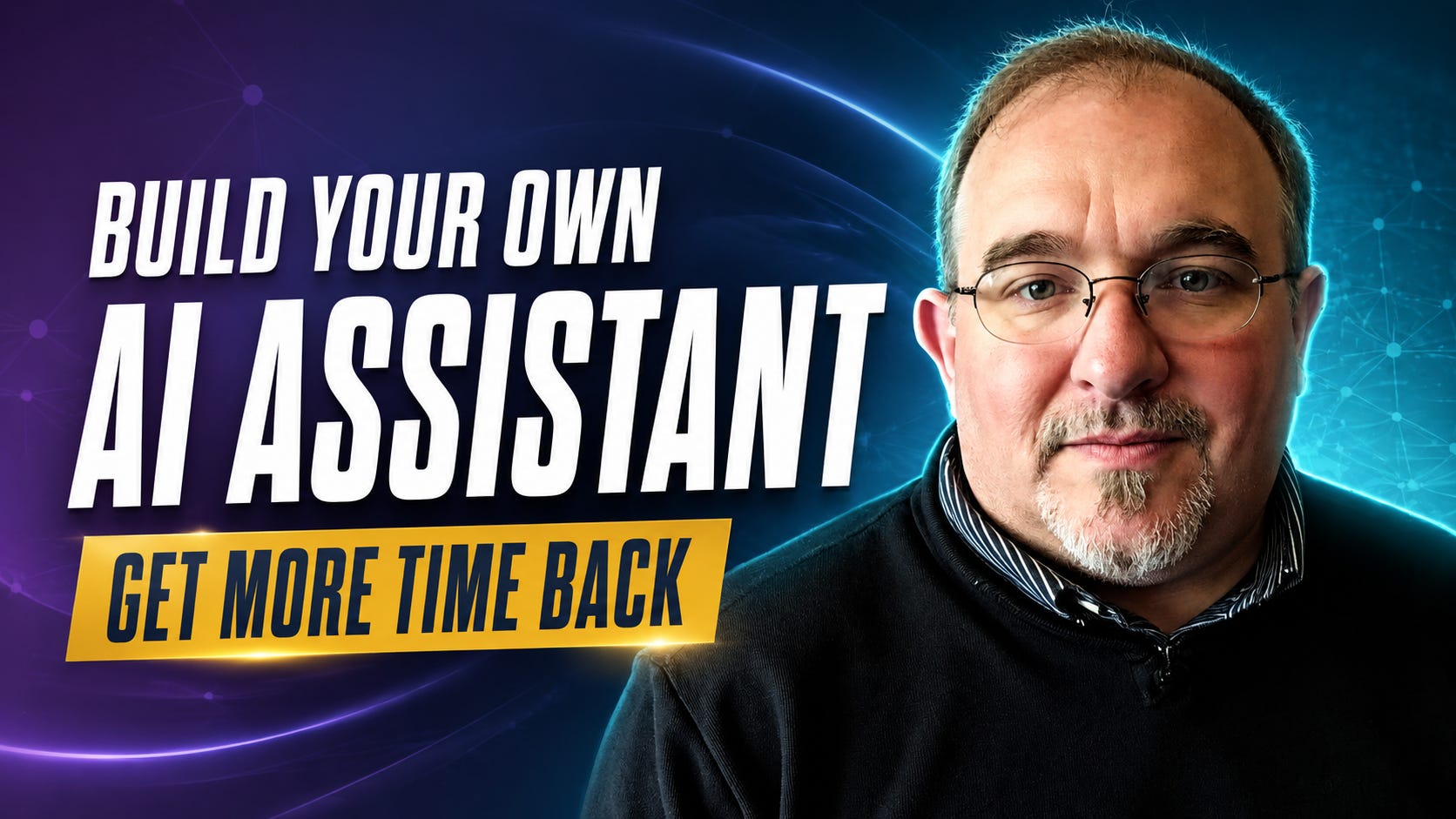
Bo did not simply talk about AI in theory. He opened ChatGPT and Claude and started building. During the session, he demonstrated how coaches can take their existing knowledge, marketing ideas, books, websites, and intellectual property and turn them into simple tools that support visibility, save time, and reduce the friction of everyday business tasks.
The deeper lesson was not really about Chrome extensions or automation. It was about using technology in service of your purpose instead of allowing technology to become one more thing competing for your attention.
One of the biggest concerns coaches have about AI is that everything will begin to sound the same. That concern makes sense, especially for transformational coaches and spiritual entrepreneurs whose perspective, lived experience, language, and methodology are central to the value they provide.
The goal should not be to ask AI to manufacture a new personality for your business. A better use is to give AI access to the ideas you have already developed and let it help you organize, retrieve, repurpose, and apply them more efficiently.
During the training, Bo demonstrated this with a participant who works as a coach, writer, and speaker. ( Ali Xenia Davidson ) He first used ChatGPT to generate a large collection of marketing statements around her work. Then he took those ideas into Claude and asked Claude to turn them into a simple Chrome extension.
The impressive part was not that AI could create 150 statements. The breakthrough was that those ideas could then live inside a tool she could access whenever she needed content. Instead of returning to a blank page and wondering what to say, she could begin with material already connected to her work and shape it from there.
That is an important distinction. AI does not have to replace creativity. It can remove the friction that keeps creativity from happening consistently.
Another useful point came up during the conversation around familiarity and context. Many coaches have already spent months or years working with ChatGPT. Over time, that account may hold a surprising amount of information about their voice, offers, audience, philosophy, business, and preferences.
Starting from zero in a different tool can feel inefficient, and in many cases it is. Instead, use the tool that already understands your business to help develop the strategy, content, and instructions. Then use another tool if it is better suited to the next step.
That was essentially the workflow demonstrated during the session. ChatGPT supplied the context and ideas, while Claude turned those instructions into a functioning tool. The bigger lesson is that you do not need to be loyal to one platform. The more useful question is which tool is best suited to the job in front of you.
That shift in thinking matters. Rather than forcing one AI system to do everything, you can let different tools handle different parts of the process and focus on the outcome you actually want.
One of the most interesting parts of Bo’s demonstration came when the conversation moved beyond creating new content. He described taking material from his websites and books and using AI to pull useful ideas from what he had already written.
That matters because many coaches are sitting on years of intellectual property without realizing how much value is already there. Your best ideas may be hiding in old newsletters, podcast interviews, books, workshop recordings, client exercises, blog posts, frameworks, speaking notes, courses, social posts, and Substack essays.
The problem may not be that you need more ideas. The problem may simply be that the ideas you already have are scattered across too many places. You created them once, used them once, and then moved on.
AI can help bring those ideas back into circulation. It can help identify themes, extract useful concepts, reorganize material, and make older work easier to access when you need it. Instead of constantly asking yourself to invent something new, you can build a system that helps you rediscover and reuse what you already know.
For a coach trying to remain visible without spending the entire day creating content, that changes the equation. Visibility does not require endless originality. It requires clarity, consistency, relevance, and a willingness to keep communicating what you know in ways your audience can understand.
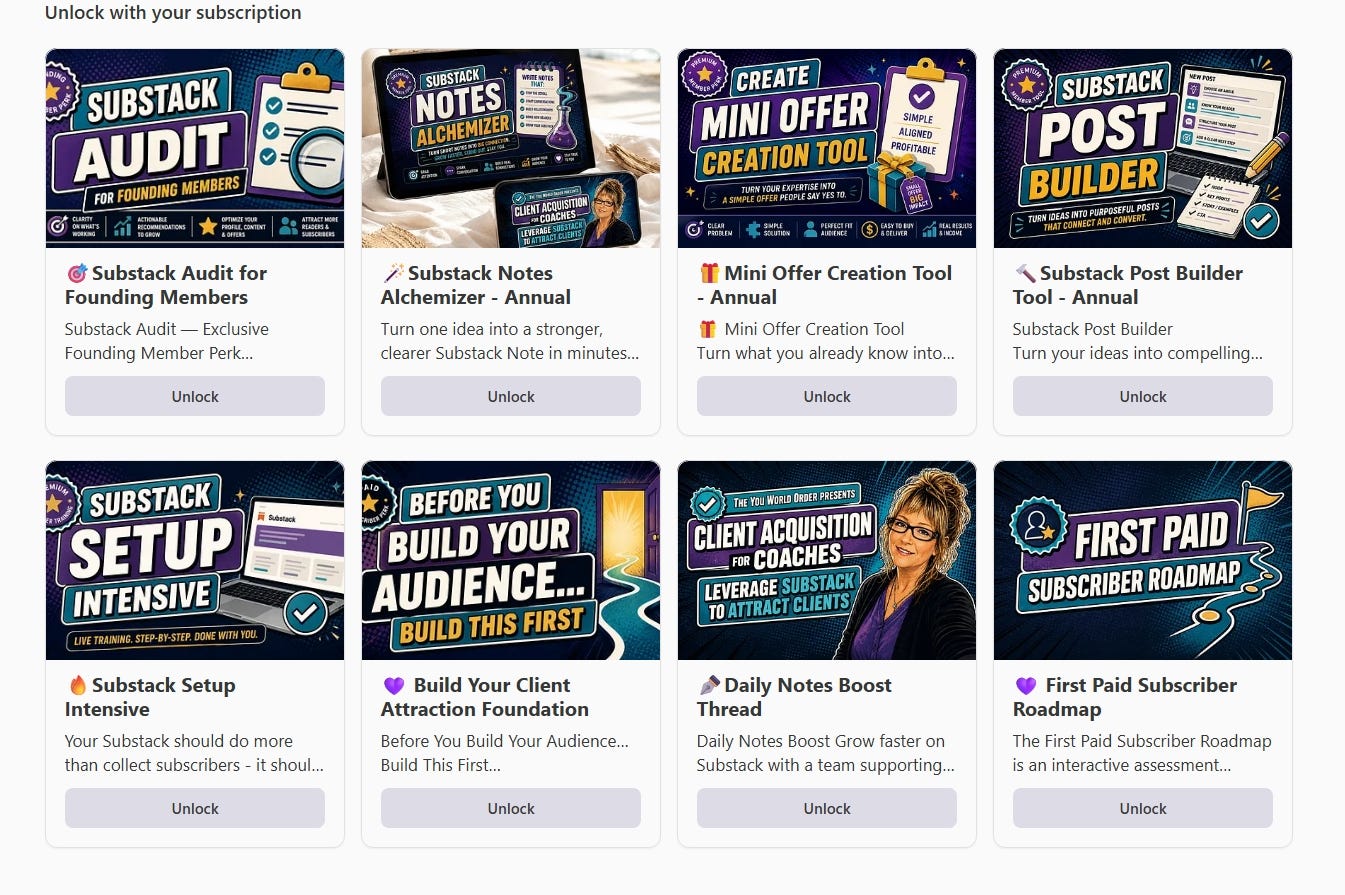
Explore the Perks of Subscription
There is a lot of hidden exhaustion in repeatedly starting from scratch. Opening a blank document, trying to think of a post, searching for an old quote, looking for a link, trying to remember what you wanted to promote, or recreating something you know you wrote before but cannot find may not seem like major problems individually.
But together, they create friction.
Bo’s extension was useful because it turned scattered ideas into something accessible. He could open it and quickly find content that had already been prepared and organized. That meant less time wondering what to say and more time deciding what was actually worth saying.
The technology did not eliminate his judgment. He still chose what fit, what sounded right, and what was worth publishing. The system simply reduced the unnecessary steps between having an idea and acting on it.
That is a much more grounded way to think about AI. The goal is not to remove yourself from the process. The goal is to remove the parts of the process that do not require you in the first place.
At first, it is easy to see Bo’s demonstration as a content-marketing trick. Create some posts, put them in an extension, and save a little time. But the bigger idea is much more useful than that.
The real opportunity is repetition.
Think about the things you do every day or every week without questioning them. You may copy and paste the same information, reopen the same websites, look up the same links, rewrite similar messages, collect the same information before meetings, move information from one tool to another, or publish similar kinds of content on a predictable schedule.
Any one of those tasks may take only a few minutes, which is exactly why they are easy to ignore. But five minutes repeated several times a day becomes hours over the course of a month.
Those hours have to come from somewhere. They come from creative work, client work, reflection, rest, relationship building, and the deeper thinking your business actually depends on.
Automation becomes valuable when it gives some of that time back.
As the conversation continued, Bo showed how the same thinking could expand beyond a single Chrome extension into something more like a personal business dashboard. The point was not to build a complicated technology stack for the sake of having one. It was to create a central place where frequently used information could live.
That dashboard might include contacts, calendar information, email, marketing links, content ideas, daily tasks, scheduled outputs, research, and resources. The exact contents would depend on the person using it.
What makes this useful is not the dashboard itself. It is the reduction in unnecessary movement.
Many entrepreneurs lose time because their attention is constantly being fragmented. Open the CRM. Check the calendar. Find the email. Look for the document. Open the social platform. Find the draft. Go back to the notes. Search for the link. Return to the calendar.
None of those steps is particularly difficult, but together they drain energy.
A good system can make work feel lighter by reducing the number of places you have to go to get something done. The important question is not, “How do I copy someone else’s dashboard?” It is, “What would make my own work easier to access and easier to move through?”
That is a much better starting point.
The most meaningful part of the conversation may have had very little to do with software.
Bo shared that he had become very good at building things. He could build websites, tools, agents, extensions, and systems, and because he could build them, he kept finding more things to build.
Eventually, he realized that his ability to build was starting to pull him away from the work he actually cared about. His deeper work was identity. Building was something he could do, but it was not necessarily the thing he wanted to center his life around.
That distinction matters for mission-driven entrepreneurs because there will always be another platform, another AI tool, another funnel, another automation, another tactic, another offer, and another business model waiting for your attention.
Being capable of doing something does not automatically make it aligned.
Technology becomes valuable when it gives you more capacity for the work that matters. It becomes expensive when the technology itself becomes another place to hide, procrastinate, overcomplicate, or chase something that was never truly part of your mission.
For transformational coaches and spiritual entrepreneurs, the most valuable parts of the business are often the least automatable.
Your value is in listening deeply, seeing patterns, asking the question that changes the conversation, holding space while someone sees themselves differently, teaching from lived experience, creating trust, and helping someone move from confusion into clarity.
Those things depend on the human being doing the work.
That is exactly why repetitive administrative work deserves scrutiny. Every hour spent doing something a simple system could handle is an hour that cannot be spent doing the parts of the work that depend on your presence, wisdom, intuition, and experience.
AI can support your work, but it cannot become you. The healthiest use of technology may be to protect the human parts of your business by reducing the amount of time spent on everything surrounding them.
There is a temptation with AI to immediately think bigger. If one automation is useful, maybe you need five agents. If one dashboard works, maybe everything should be connected. If one system saves time, maybe the whole business should be automated.
That can become its own form of procrastination.
You do not need an enormous AI ecosystem. You need one useful improvement.
Start by noticing one thing you do repeatedly that takes more effort than it should. Maybe it is finding content ideas, organizing notes, preparing recurring messages, collecting links, repurposing long-form content, or managing something entirely unrelated to marketing.
Then ask your AI, “How could I make this easier?”
Explain the process you currently use. Explain the result you want. Ask for the simplest possible solution. If ChatGPT already understands your business, use that context. If another tool is better suited to building the solution, let the tools work together.
You do not need to understand every technical layer before you begin, and you do not need to become a programmer. You only need a clear problem worth solving.
The goal is not to become better at using AI. The goal is not to keep up with everyone else or build the most impressive automation system.
The goal is to create more space for the work you actually want to do.
For coaches and mission-driven entrepreneurs, that means protecting the energy required to serve people well. It means making room for thought, connection, creativity, meaningful conversations, and the work that creates real transformation.
It also means making room for the visibility and authority that help aligned clients discover that work in the first place.
The best technology does not make you less human. It gives you more time to be human where it matters most.
So before you build another funnel, learn another platform, or chase another AI tool, ask yourself one question:
What am I doing repeatedly that I no longer need to do manually?
Start there.
You may find that the smartest use of AI is not asking it to do more.
It is asking it to give you some of your time back.
Join The You World Order community:
https://skool.com/you-world-order
Here’s the Link for the pdf to create your own
With love & clarity,
Jill Hart💜The Coach’s Alchemist

Amplify Your Voice • Monetize Your Mission • Get Visible
Hi, I’m Jill Hart, The Coach’s Alchemist. I help spiritual entrepreneurs and coaches amplify their voice, attract aligned clients, and monetize their mission through Substack and podcasting.
If you’ve been creating content but not seeing it turn into conversations, clients, or consistent income, Client Acquisition For Coaches is for you.
It’s where we simplify visibility, build authority, and create a clear path from your content to your offers without chasing algorithms or trying to be everywhere.
Comments
Nothing yet. Say the first thing.
Sign in to join the conversation.