
Topics worth your time: how persistence (and a little institutional disobedience) produced the blue LED, how pack design made lithium iron phosphate batteries competitive, sixteen years of electronics tribal knowledge, and the case for selling hardware by subscription.
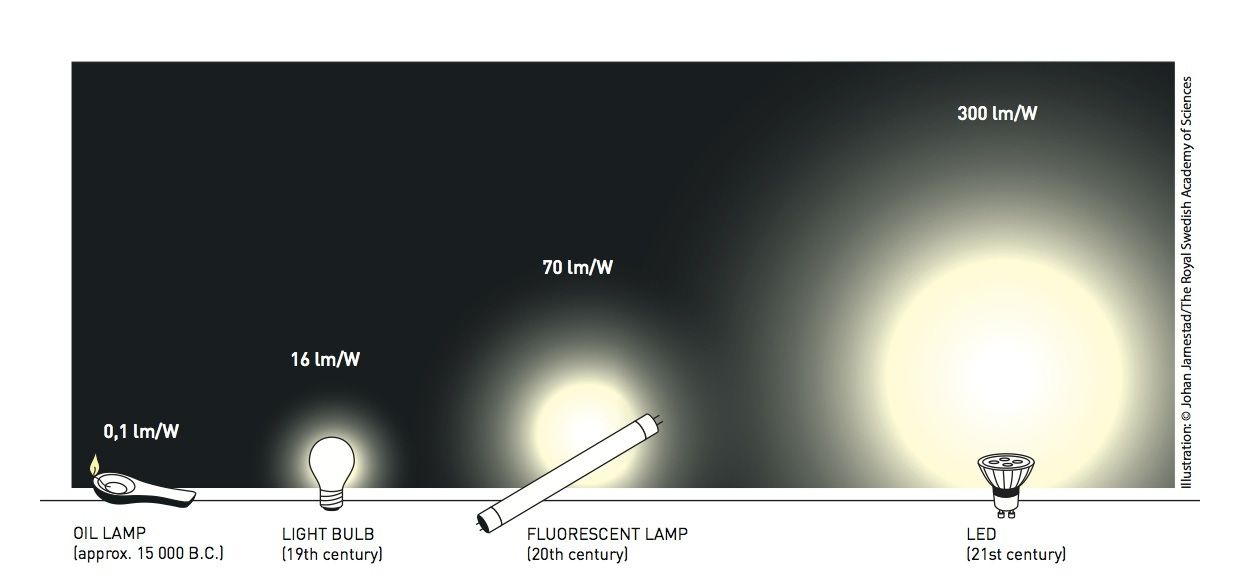
From Shuji Nakamura, one of three recipients of the 2014 Nobel Prize in Physics, comes a great interview on the true ethos of the engineer. It’s easy to take LEDs for granted now, but the blue LED was a decades-old unsolved materials problem. Two semiconductors dominated the search: zinc selenide, favored by most of the field, and gallium nitride, which Nakamura pursued. Solving it would complete LED RGB displays and enable today’s phosphor-converted white LEDs. In fact, the IEA estimated that indoor lighting would consume ~70% more electricity if buildings still relied on older lighting technologies! The rest of the story is a personal account of what his work looked like: years of tinkering and failure, the occasional explosion, and a bit of institutional disobedience after management concluded that gallium nitride was a dead end. He calls it “invention by anger”: an idea pursued, in part, because others had dismissed it.
A good reminder that even when engineering is your job, some of the best work emerges from curiosity, contrarianism, and a willingness to explore supposed dead ends!
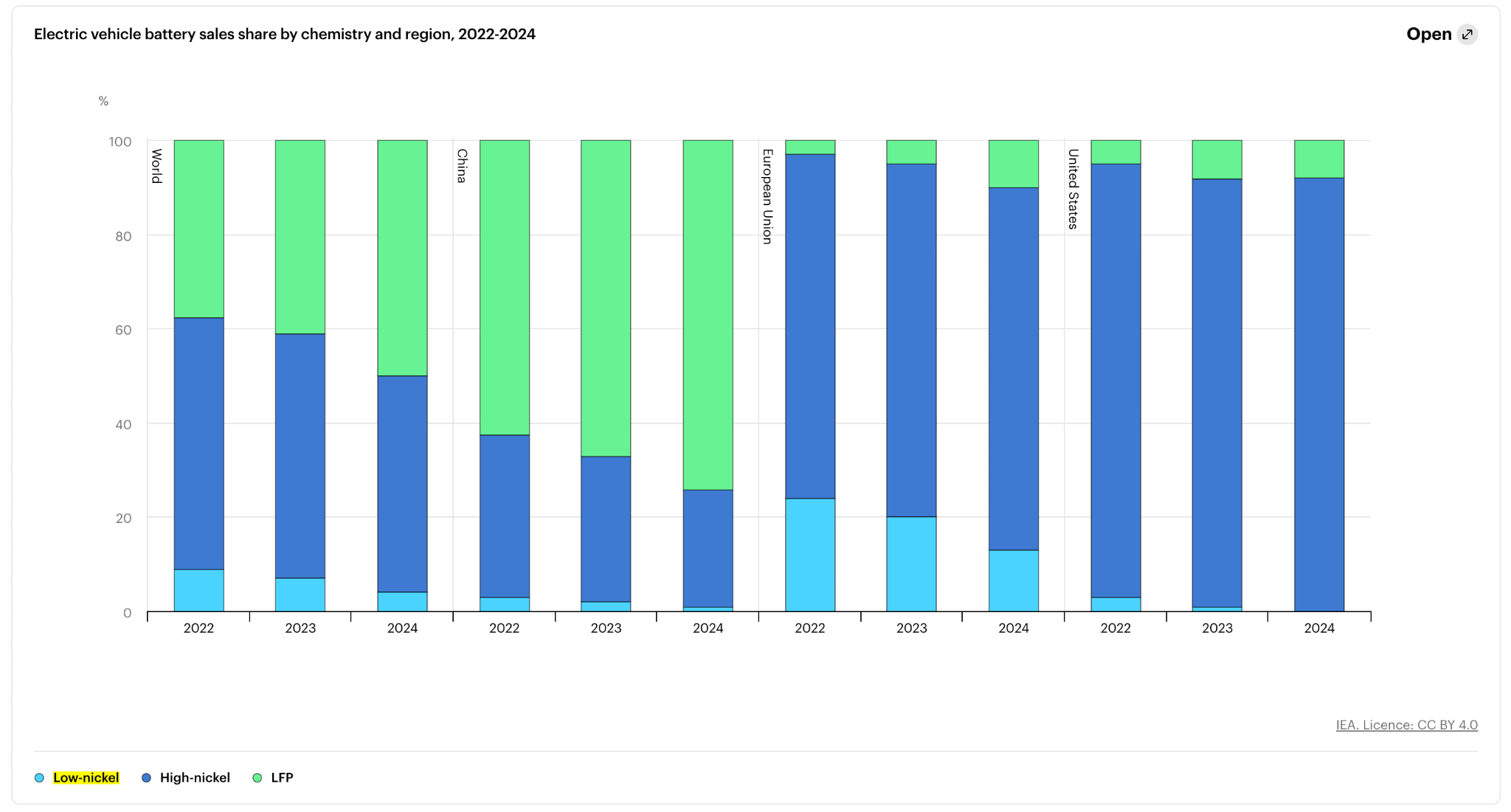
The battery race isn’t won by the best chemistry available, and no battery demonstrates that better than lithium iron phosphate (LFP). Compared on baseline metrics, nickel and cobalt chemistries appear to be first-principles winners - both have greater gravimetric and volumetric energy density and higher voltages. And yet, as the IEA documents in its Global EV Outlook 2025, LFP continues to gain market share pushed by innovations from Chinese companies like BYD and CATL. Battery assembly traditionally follows: cells → modules → pack, with additional controls and cooling hardware. While LFP doesn’t appear to be the best on paper, its safety and thermal stability let designers eliminate the module layer and simplify cooling. This can increase the share of the pack occupied by the battery itself from ~60–70% to 85–90%. As a result, LFP has enjoyed enormous gains in pack-level energy density through better packaging. LFP also depends on fewer geographically concentrated metals, which means fewer supply-chain bottlenecks and a more resilient cost structure for manufacturers building an EV fleet. In spite of this, the US market has been slower to accept a satisfactory battery (LFP), instead opting for the “best” battery (nickel-manganese-cobalt).
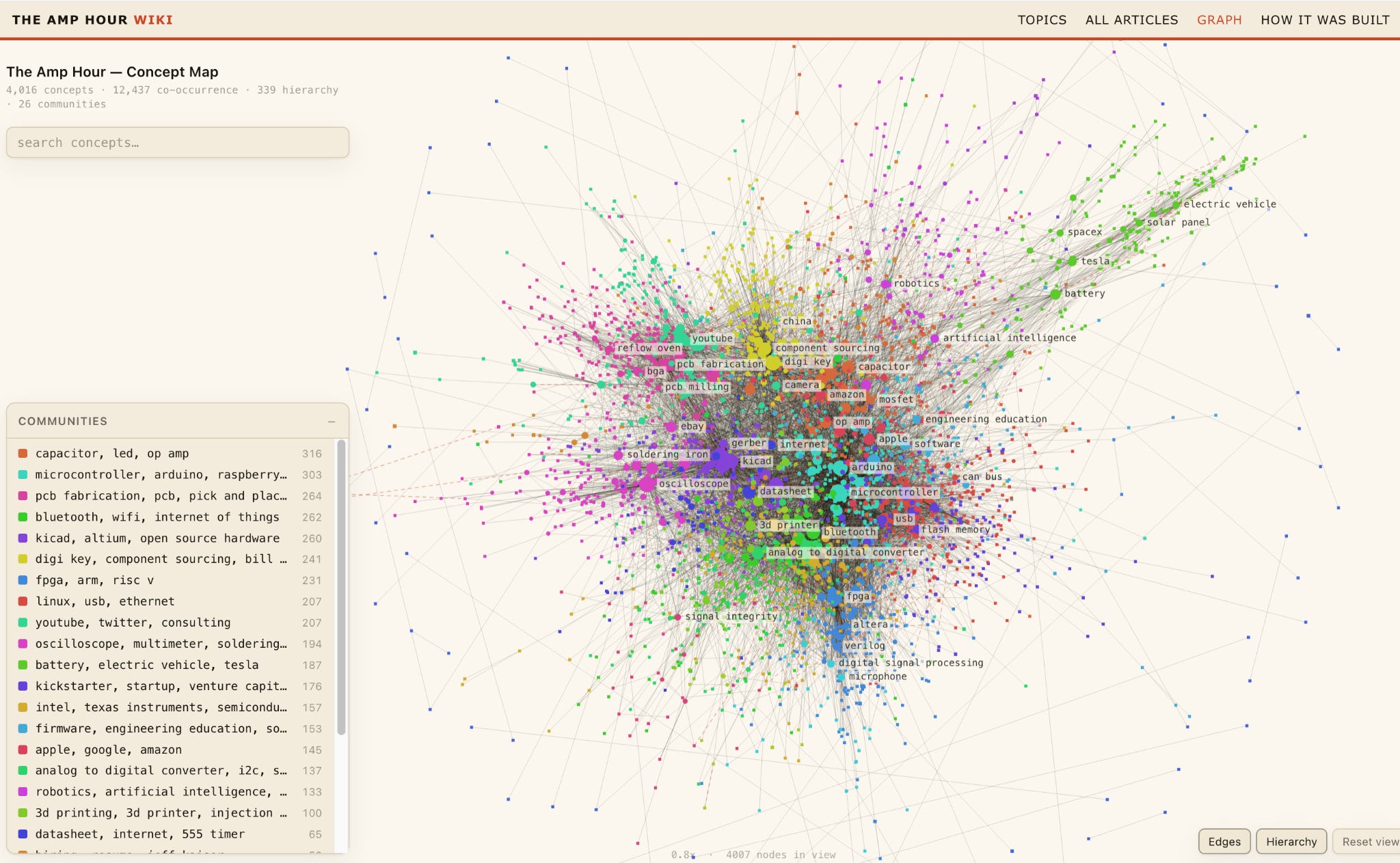
The Amp Hour Wiki is sixteen years of engineering conversations, captured and organized into a searchable reference for electronics engineering. It’s base off the The Amp Hour from Chris Gammell and Dave Jones of EEVblog, long one of the best sources of practical knowledge for hobbyists and working engineers. Like most technical fields, electronics has a layer of tribal knowledge accumulated through experience and passed along through conversation and shared practice. Unfortunately, much of that knowledge is never formally recorded and disappears when the people who hold it leave the field or retire; it’s one of several reasons why manufacturing capabilities are so difficult to rebuild once the expertise is lost. This project just happens to capture that tribal knowledge of two experts, and the result is a fascinating concept map of more than 4,000 ideas and the connections between them.
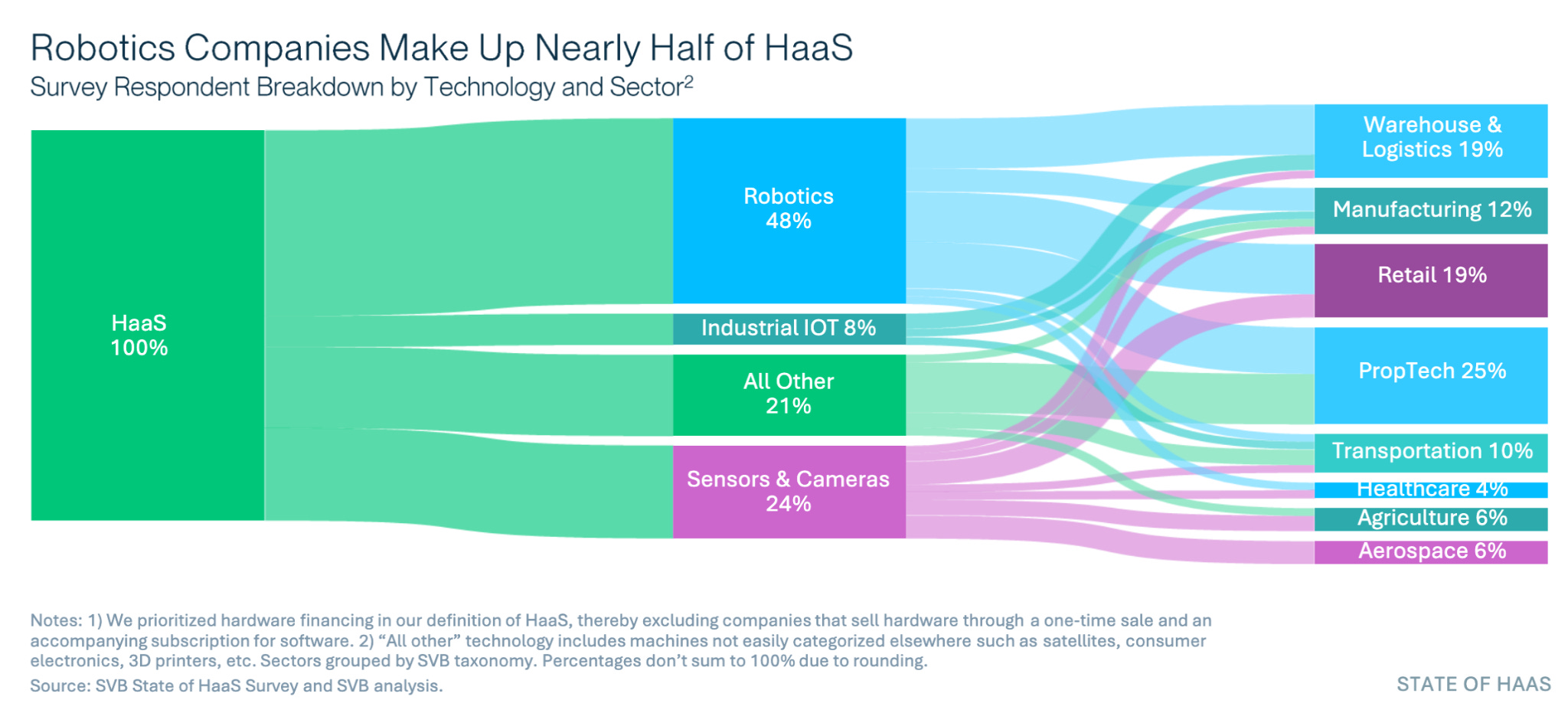
AI fatigue, subscription fatigue - oh, we’re all feeling the fatigue. Even so, SVB’s 2024 report on The State of Hardware-as-a-Service suggests hardware subscriptions may have merit provided you sell to enterprises rather than consumers. The enterprise case is fairly intuitive. The customer swaps a large upfront purchase for an operating expense, while the startup finances the equipment in exchange for recurring revenue (assuming the hardware pays for itself during the initial term and leaves enough margin). Consumer HaaS (not to be confused with Haas, the machine tool manufacturer) is a bit less convincing when fast followers can undercut on price or features. For example, WHOOP now faces the Fitbit Air, which appears to deliver much of the same utility without the same monthly commitment.
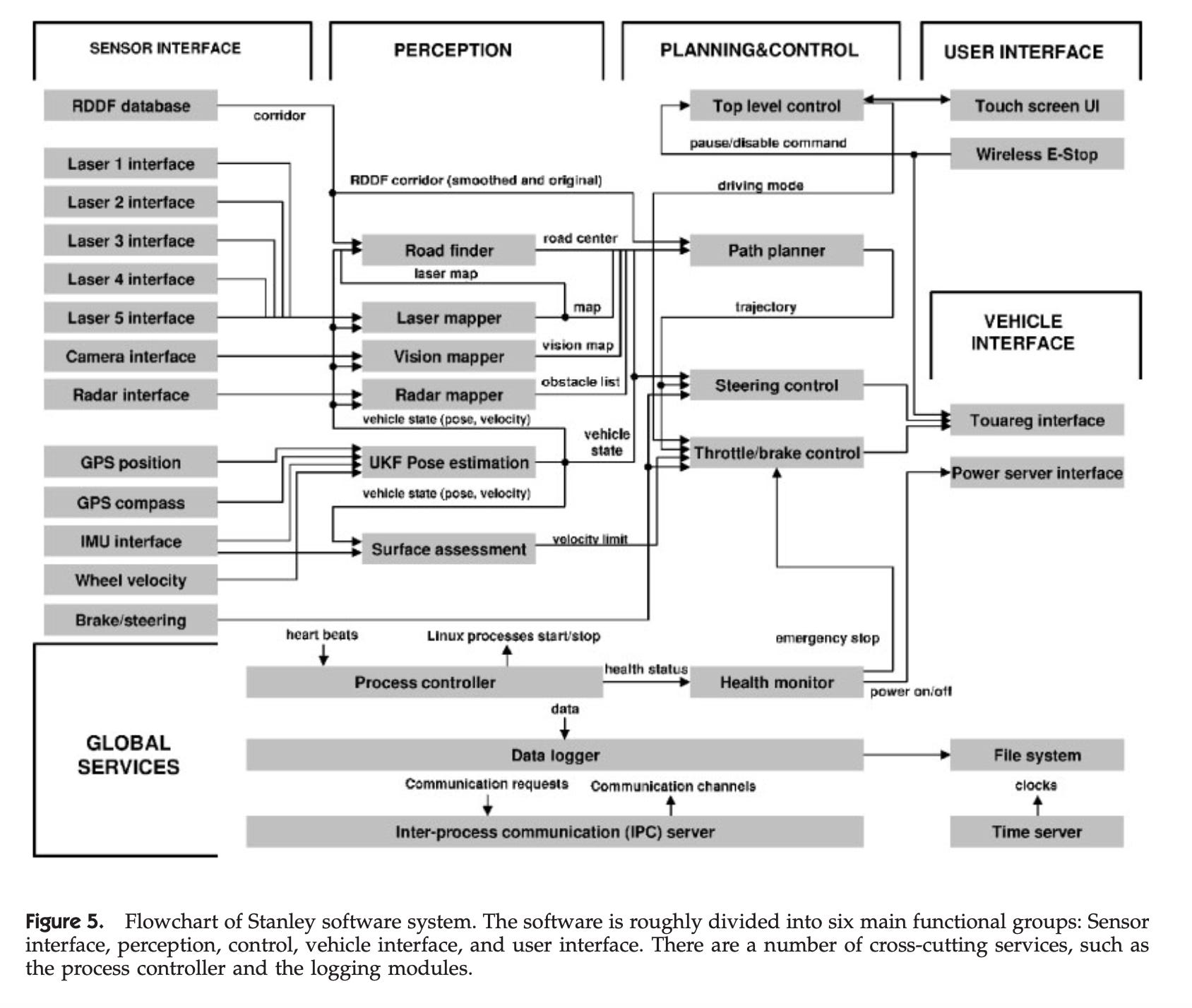
In honor of the DARPA Lift Challenge finishing this weekend, here’s the original paper on Stanley, the autonomous Volkswagen that won DARPA’s 2005 Grand Challenge and shaped the first iterations of commercial self-driving cars.
And a couple fun links to round out the week:
IKEA assembly instructions turned into an interactive build guide.
Your hardware tech stack starts here. Duro Design PLM is AI-native, API-first, and fully programmable—built to meet the present and leap into the future. Duro centralizes part data, manages change orders, and connects your stack so your team can focus on innovation, not administration.
From out-of-the-box CAD integrations to seamless connections with ERP and MES, make sure your data is accurate at every stage of the product development lifecycle. Whether it’s Altium 365 or Solidworks, Duro’s integrations make integrating PLM into your workflow easy.
Take a tour of Duro for free and see if our PLM solution is right for you. 👇
Hadrian raised a $1.37B Series D at a $7.87B valuation to build more automated U.S. factories and expand its headcount. The company uses a factory-as-a-service model, combining software and robotics to manufacture parts and complete systems for aerospace and defense companies.
Archer Aviation acquired Wisk Aero and two other Boeing subsidiaries in exchange for shares that will give Boeing a ~16.5% stake in Archer. Wisk, which grew out of Kitty Hawk’s Cora aircraft program, develops autonomous air taxis; the two subsidiaries build air traffic management software and drones. Archer and Wisk were previously rivals and settled a trade-secret lawsuit in 2023.
Tesla and SpaceX will invest an initial $16.8B to build Terafab, a semiconductor factory outside Houston, TX. The 100 million sq. ft facility will manufacture, package, and test chips for Tesla’s robots and self-driving vehicles as well as SpaceX’s space-based data centers. The companies expect the factory to employ at least 3,000 people.
Cambridge Aerospace raised a $300M Series C to develop lower-cost air defense systems. The company is building interceptors for drones, cruise missiles, and ballistic missiles, along with its own radar system. The round was led by DFJ Growth.
Lumilens raised a $700M Series C to expand its engineering and manufacturing operations for optical interconnects. The company builds optical interconnects that move data between GPUs using light instead of copper, and is currently shipping products to a hyperscaler under a multi-billion dollar agreement. The round was co-led by Atreides Management, Bain Capital Ventures, among others.
More jobs added weekly on our job board. If you’re hiring, promote your open role here.
Early Career:
Varda Space Industries is looking for a Supply Chain Internship (Spring 2027) in El Segundo, CA
General Matter is looking for a Mechanical Engineer (New Grad) in Los Angeles, CA
Mid-Level:
OpenAI is looking for a PCBA Manufacturing Engineer (Remote, $209-365K)
Array Labs is looking for a Radar Algorithms Engineer in Redwood City, CA
Senior to Staff:
Carbon is looking for a Director, Hardware Engineering in Sunnyvale, CA ($278-416K)
Lambda is looking for a Principal Product Manager – Hardware (Remote, $338-394K)
Design & Simulation
Duro — AI-native PLM that centralizes part data, manages change orders, and connects the whole stack so your team can focus on execution, not administration.
nTop – Computational design to accelerate product development.
Onshape for Startups – Free access to Onshape Professional or Onshape Government (compliant with ITAR/EAR) for hardware startups and entrepreneurs.
Manufacturing
Loombotic – Instant-quote custom wire harnesses. Upload drawings or design online, fast turnaround.
Xometry — Instant quoting on custom parts, from R&D prototypes to high-volume production runs.
Blitzpanel – Custom control panels made fast and easy. Design online for instant pricing or let us design for you.
Express Manufacturing, Inc. – Southern California’s largest EMS provider with 40+ years of end-to-end electronics manufacturing expertise.
Fictiv – On-demand custom manufacturing from prototype to production.
Refer three friends to Hardware FYI and unlock our full archive.
Missed an issue? Hunting for that one link? Every tool, guide, and article we’ve ever shared is in here.
P.S. If you find something interesting—an article, tool, funding round, project, really anything—send it our way.
P.P.S. 20,000+ engineers, founders, and operators read this newsletter. If you want to reach them, get in touch.
Comments
Nothing yet. Say the first thing.
Sign in to join the conversation.