
Topics worth your time: Google’s development of liquid-cooled compute at gigawatt scale, a visual guide to control theory, and the history of Taiwan’s power electronics giant. A slightly shorter read this weekend with a few good threads to explore!

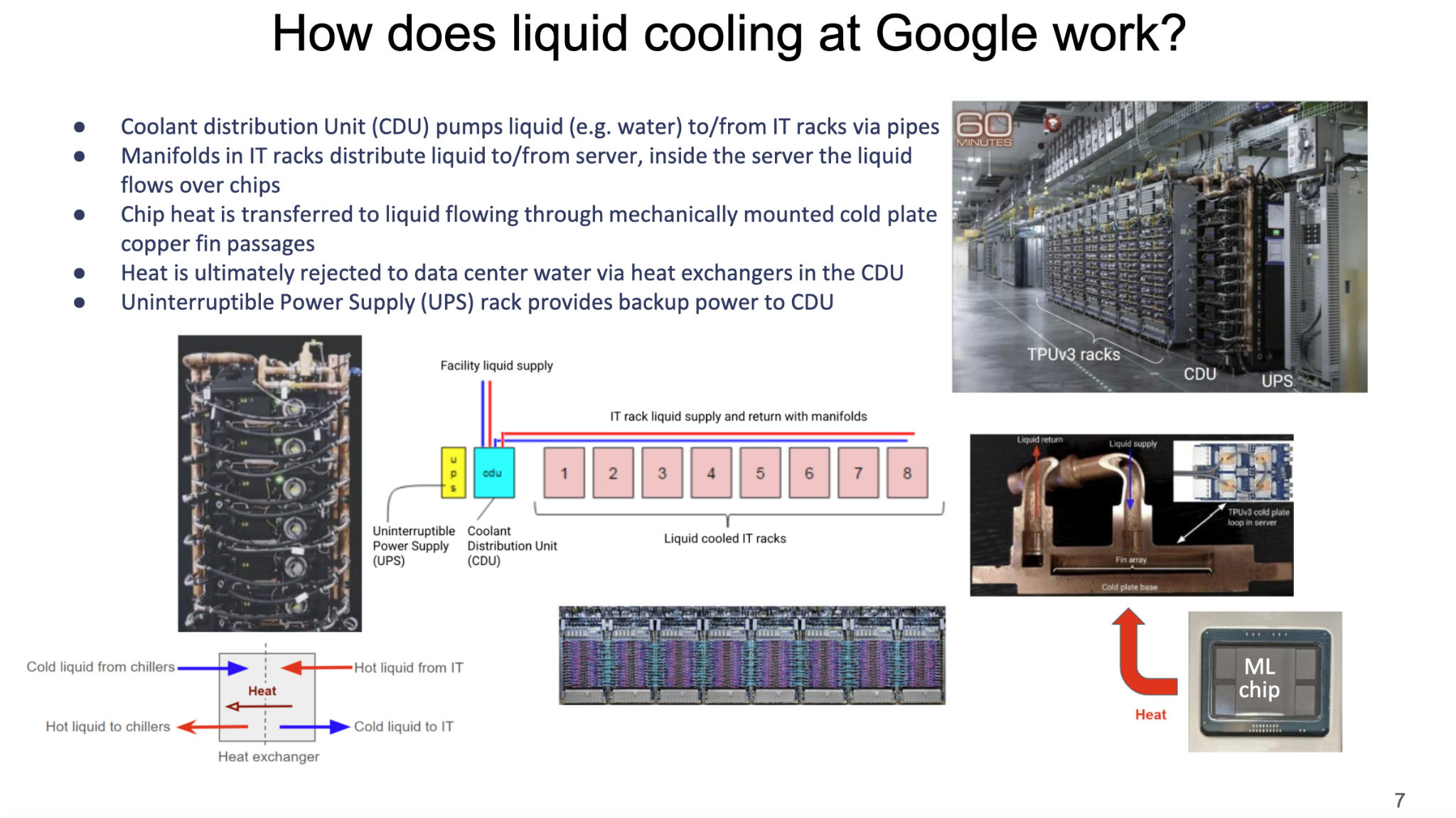
Jorge Padilla at Google has a great presentation on the development of liquid cooling for Google’s compute infrastructure, tracing the company’s progress from early prototypes to more than 1 GW of deployed liquid-cooled capacity. A useful way to frame the shift is through power-density requirements. Passively cooled devices (think phones, tablets) generally operate at 5–10 W, actively cooled laptops around 15–35 W, and modern high-performance compute chips at more than 1,000 W - well beyond traditional limits of air-cooled systems.
Google’s approach, and more broadly across the industry, uses direct-to-chip cooling. This means:
A coolant distribution unit (CDU) sends liquid through the rack manifold and onward to each server.
There, sealed cold plates sit on the processors and pick up their heat.
The coolant returns to the CDU, where a heat exchanger passes that heat into the building’s water system; the coolant and facility water never mix.
One useful, though slightly informal way to map the broader design space is to ask: how much of the machine are you willing to put in liquid? Phase one cools only the chip, using the cold-plate setup described above for Google’s TPU infrastructure. Phase two puts an entire group of components in a dielectric bath; startups like Iceotope seal coolant inside the server chassis and circulate it across the electronics before transferring the heat to a secondary water loop. Phase three expands immersion to the full rack, and phase four draws the boundary around the data center itself; Microsoft’s Project Natick is probably the best-known example.
Each step is more aggressive about removing heat from the system, but also changes how the infrastructure is deployed and maintained. Phases two through four are relatively new approaches with varying stages of R&D; for reference, Google’s liquid-cooled fleet has been running at ‘five nines’ uptime (99.999%) since 2020.
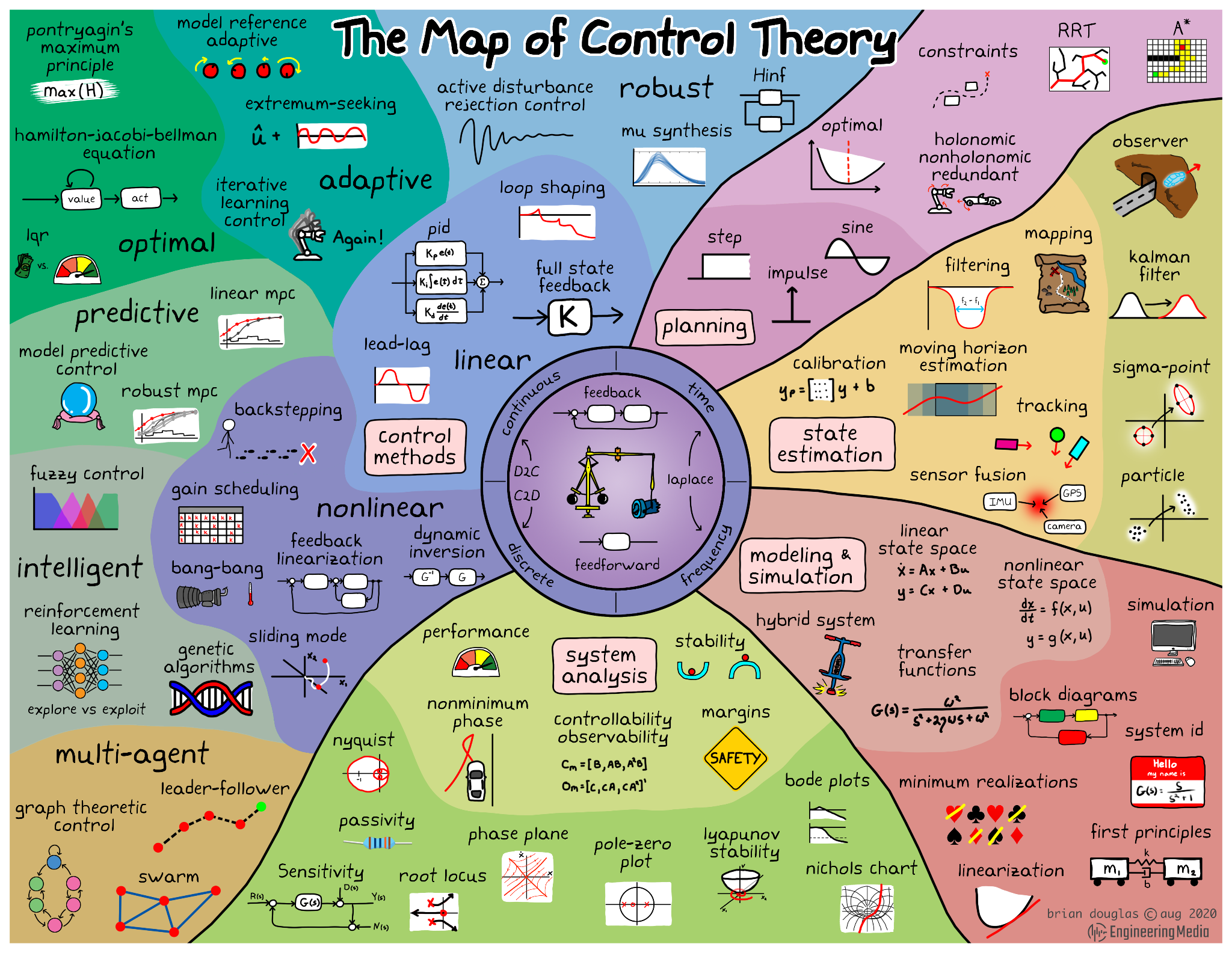
Brian Douglas’s Map of Control Theory. The self-balancing inverted pendulum is an especially cool example of linear control.
Source custom parts with direct access to the manufacturers making them. No middleman, no black box. Jiga gives you a vetted network and one accountable partner standing behind every order. You know who's building your parts and communicate with them directly. AI-assisted operations handle supplier matching, quoting, quality verification, and production tracking, so the relationships stay human while the operations run at speed.

Asianometry’s history of Delta Electronics,Taiwan’s power electronics giant behind everyday electronics.
Uplift launched with $7M in seed funding to build homes on automotive-style production lines, starting with its first deployments over the next year.
Sila received a conditional $1.4B DoW loan commitment to expand silicon-carbon anode production in Washington and build lithium-ion cells for drones and other specialty applications.
Recast Systems launched from stealth with cloud-seeding operations in Texas and New Mexico.
Heron Power is turning a former warehouse in Morgan Hill, CA into a factory for 5 MW grid converters, targeting production in late 2027.
Aris Machina Protos – Design & validate anything, with the AI-native workspace for industrial science and hardware R&D.
Jiga – Custom parts at digital speed, with trusted shop access.
SolidWorks for Startups – Full access to SolidWorks’ product development tools, free for early-stage startups.
Zoo – AI-native CAD with a modern geometry engine, readable code, and editable feature trees for precise, editable models.
Refer three friends to Hardware FYI and unlock our full archive.
Missed an issue? Hunting for that one link? Every tool, guide, and article we’ve ever shared is in here.
P.S. If you find something interesting—an article, tool, funding round, project, really anything—send it our way!
P.P.S. 20,000+ engineers, founders, and operators read this newsletter. If you want to reach them, get in touch.
Comments
Nothing yet. Say the first thing.
Sign in to join the conversation.