
Topics worth your time: exploring whether ‘Physical AI’ could make automated assembly truly reusable across factory lines, a first-principles guide to photochemical etching, why China’s industrial strategy has struggled to produce jet engines, and a research report on a bicycle bell engineered to evade active noise cancellation.

A few issues ago, we shared a plain-English definition of Physical AI that states it as non-deterministic software running in the control loop of a machine. Instead of following a fixed sequence, the system can sense what is happening, take an action, and adjust based on the result. WattFactory takes this idea further into assembly with The Variety Trap, asking whether equipment that adapts to the task at hand can also be reused as the product changes. Automated assembly is far from new, but what has remained elusive is reuse. Manufacturers can automate individual processes, but many of those solutions only work for the specific product they were designed around. Apple, in fact, came to the same conclusion after years of experimenting with robotics across its production lines; a robot built to polish the 2013 Mac Pro could not be adapted to the first Apple Watch (which was ironically polished by hand instead). Glen’s thesis is that this changes only when assembly is built on a standardized architecture, allowing the same hardware and software blocks to be reconfigured instead of rebuilding the line around each new product.
Matter’s company manifesto (where the author works) is useful contextual reading, framing it as a move from flexible part production to flexible assembly production. It’s also a much harder problem that involves coordinating many more machines, tools, fixtures, and processes.
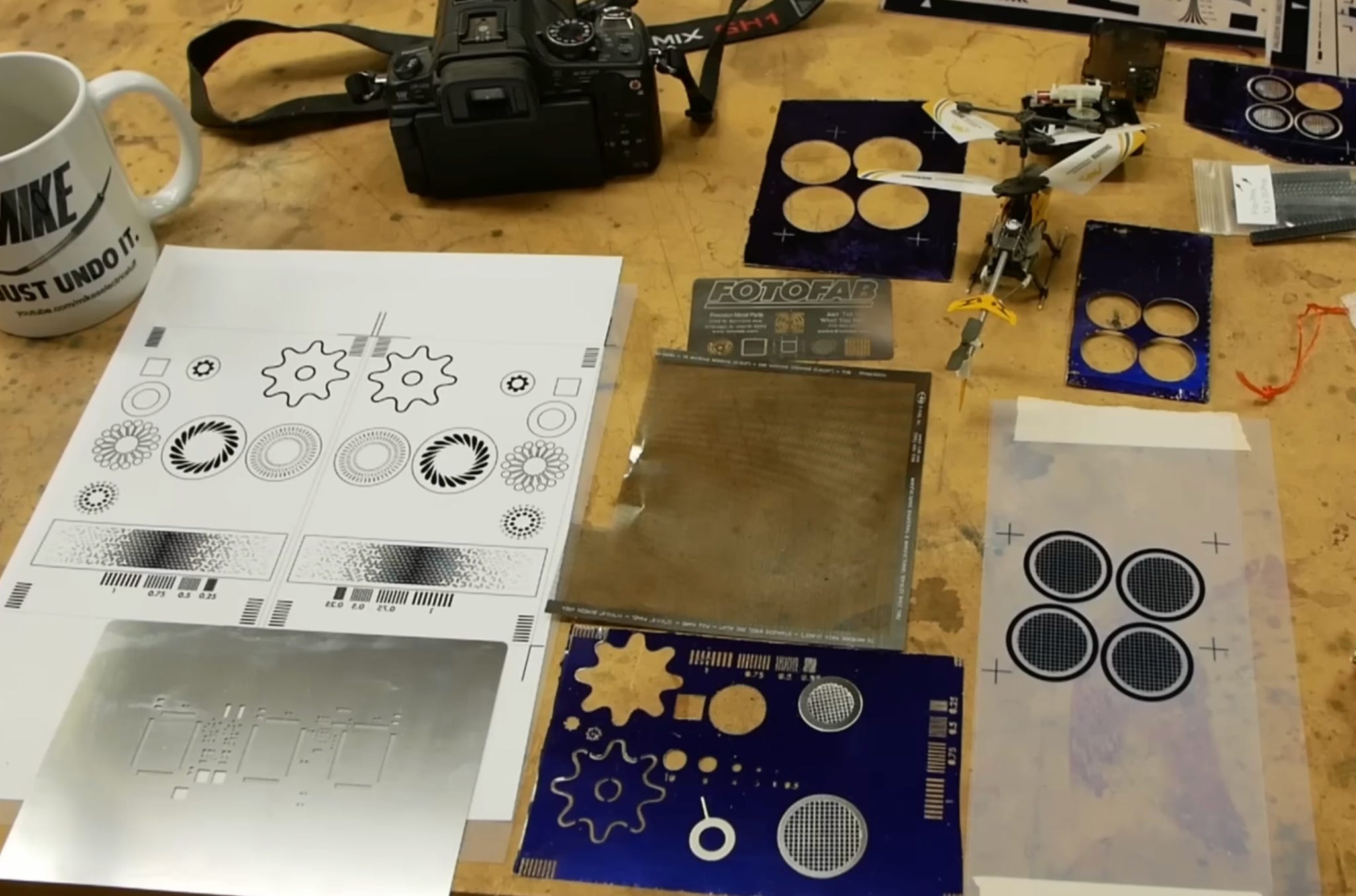
Photo-etching reduced to first principles, showing how to make finely featured sheet metal parts through photochemical machining. We typically think of sheet metal manufacturing as a purely mechanical process (think stamping, laser cutting, or waterjetting), but these methods become less practical as features shrink below ~0.5 mm, especially when a part contains many fine features. Ben Krasnow of Applied Science deconstructs photo-etching to its exact process steps, walking through surface prep, photoresist lamination, UV exposure, spray etching, and resist removal. You could quite literally follow the process step by step with the same equipment he uses; there’s a nice on-demand business here if you’re willing to vibe-code an online quoting and ordering workflow around his prototype process.
On the topic of project builds, a recent Reddit thread produced an excellent list of engineering channels on YouTube that are worth watching and have only continued to grow in technical depth. We’ve previously written about (and learned a ton) from Stuff Made Here, Breaking Taps, and Applied Science.
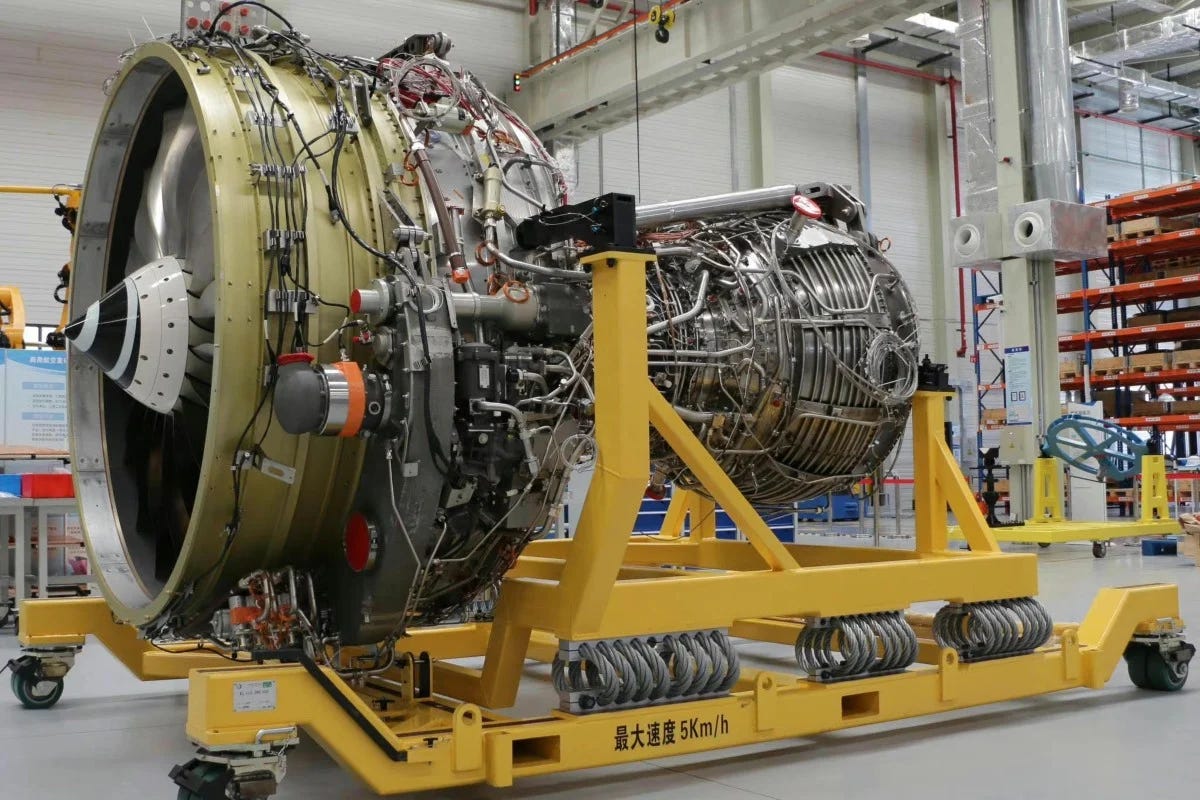
Jet engines, specifically Why Jet Engines Aren’t “Made In China”, can tell us a lot about the strengths and weaknesses of China’s top down industry strategy. Batteries are a useful counterexample: researchers can run a few cycles, then combine the data with historical curves and use ML to predict how a cell will age; jet engines have no equivalent shortcut. Single-crystal casting and superalloy chemistry are public knowledge, but the tacit information truly required cannot be accelerated by brute force, and simulation buys limited information for such extreme systems. The typical supply chain advantage also doesn’t help because the bottleneck is a special breed of firm specialization: a handful of companies that pour superalloy, a couple that make ceramic cores, only four that build furnaces. Even when these industries become targets of policy from the top down, the nuance of manufacturing and design can only be gained through testing. The CJ-1000A engine is the result: targeted for 2015, flight-tested in 2023, and domestic certification no earlier than 2027. While Made in China 2025 has smashed a huge number of its goals in semiconductors, EVs, solar, and other industries, jet engines are trailing.
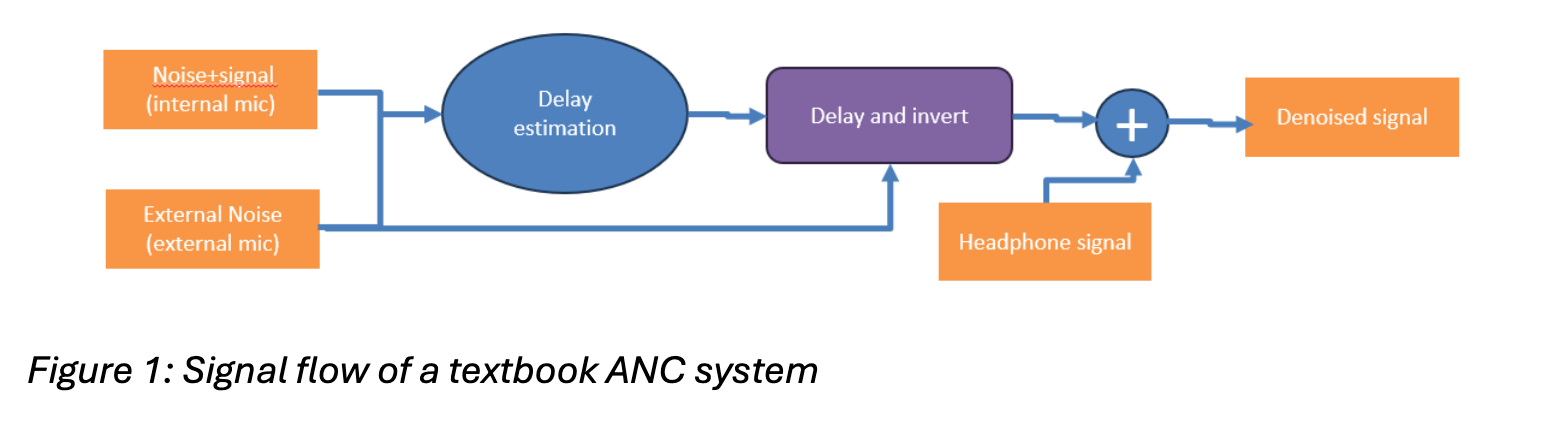
Škoda’s DuoBell is a mechanical bicycle bell designed to alert pedestrians wearing noise-cancelling headphones in time to avoid a collision, paired with a full research report on its test methodology and engineering design guidelines around developing safety sounds for ANC. Active Noise Cancellation (ANC) works by sampling ambient sound and playing an inverted waveform back to cancel it, but suppression isn't uniform across the spectrum. Working with acousticians, Škoda tested 256 signal configurations across six popular headphone models and found that tonal energy around 750 Hz was suppressed less effectively by the digital signal processors. The DuoBell uses a mechanical resonator tuned to that frequency with a second resonator above 2 kHz, preserving the high-frequency ring that identifies the sound as a bicycle bell. The interesting question is how long the blind spot stays blind - once a gap like this gets published, lots of actors who want into the frequency band will exploit it.
And a couple more links to round out the week:
Jim Belosic shared hard lessons from scaling a manufacturing business to 600 employees. We are fighting laws of thermodynamics lol. Everything wants to dissolve into disorder and chaos.
In defense of traditional tooling versus 3D printing — injection molding still wins for mass production.
A good book list for hardware startups.
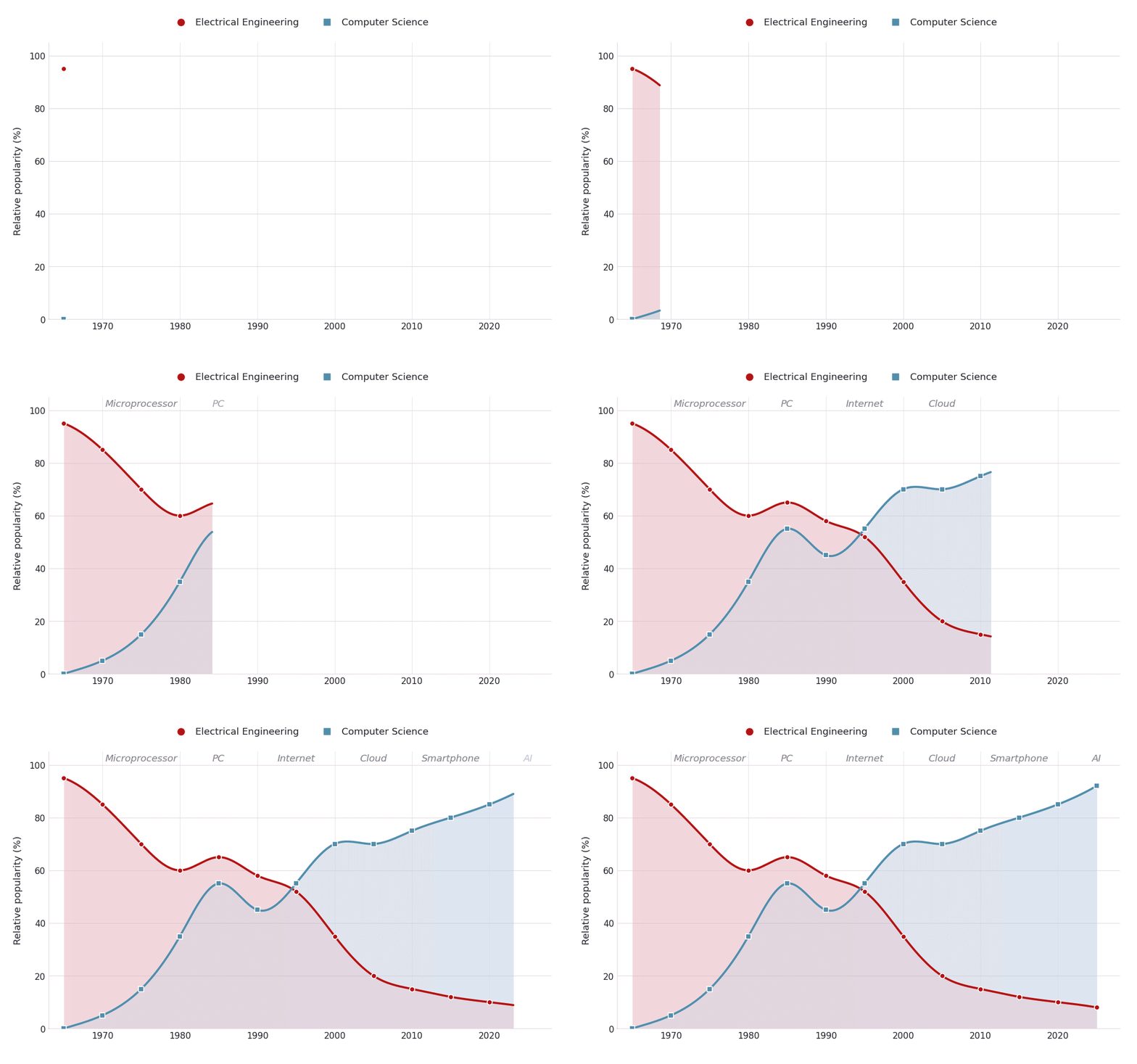
US electrical engineering enrollment has fallen roughly 90% relative to computer science since the 1980s, while nearly half of practicing US engineers are over 50. Meanwhile, the industries that depend on custom electronics like data centers, defense, automotive, and aerospace are all competing for the same finite pool of talent. For many companies, the viable answer is to expand the capacity of the team they already have through automation.
Quilter does that by using physics-driven AI to automate PCB placement and routing.
Form Energy raised a $750M Series G to scale manufacturing at its West Virginia factory and accelerate commercial deployments of its iron-air battery systems. The company builds lower-cost batteries designed to store electricity for multiple days and has grown its project backlog from roughly 20 GWh to 80 GWh this year. The round was led by T. Rowe Price.
Neros Technologies raised a $250M Series C at a $2.5B valuation to develop and scale production of its autonomous and interceptor drones. The company is building a FPV drone with autonomous navigation and targeting features, and an interceptor designed to counter larger drone threats. The round was co-led by Sequoia Capital and the American Strategic Technology Fund.
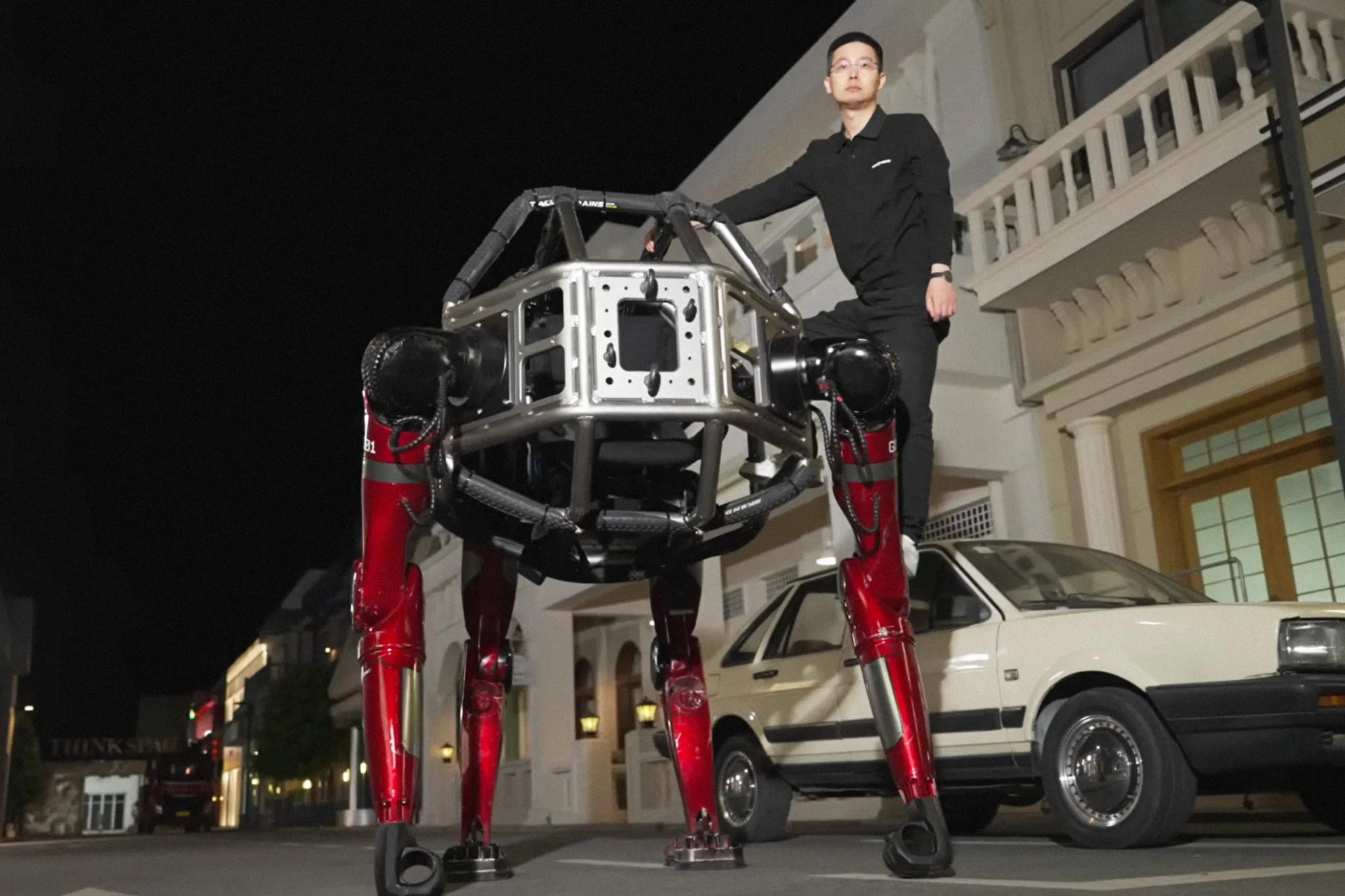
In preparation for Unitree Robotics’ IPO, an in-depth primer on the company’s business, financials, and competitive position in the humanoid robotics market. The company sold 5,215 humanoids last year, primarily to universities and research institutions. Unitree plans to spend most of the proceeds on R&D, including $300M to develop its own AI models and expand into industrial applications.
Sonic Fire Tech raised $15M in funding to continue development and complete the testing required for regulatory approval of its fire-protection systems. The company’s system uses a generator to send infrasonic waves at ~20 Hz through PVC pipes, disrupting the airflow around a flame and separating it from the oxygen needed to sustain combustion, without using water or chemical suppressants. The round was led by The O.H.I.O. Fund with participation from Khosla Ventures.
Heaviside Industries raised a $60M Series B to scale production of its autonomous precision munitions. The company also partnered with Nammo to supply warheads for its platforms.
More jobs added weekly on our job board. If you’re hiring, promote your open role here.
Sponsored:
Red Metals is looking for an Electrical Engineer in Charleston, SC
Early Career:
Layup Parts is looking for an Electrical Engineering Intern & Manufacturing Engineer Intern in Huntington Beach, CA
Mid-Level:
Apple is looking for a Test & Instrumentation Development Engineer in Cupertino, CA
Formlabs is looking for a Product Manager, Hardware in Somerville, MA
Senior to Staff:
ŌURA is looking for a Staff Product Design Engineer in San Francisco, CA
Zipline is looking for a Head of Weather Systems in South San Francisco, CA
Design & Simulation
Duro — AI-native PLM that centralizes part data, manages change orders, and connects the whole stack so your team can focus on execution, not administration.
nTop – Computational design to accelerate product development.
Onshape for Startups – Free access to Onshape Professional or Onshape Government (compliant with ITAR/EAR) for hardware startups and entrepreneurs.
Manufacturing
Loombotic – Instant-quote custom wire harnesses. Upload drawings or design online, fast turnaround.
Xometry — Instant quoting on custom parts, from R&D prototypes to high-volume production runs.
Blitzpanel – Custom control panels made fast and easy. Design online for instant pricing or let us design for you.
Express Manufacturing, Inc. – Southern California’s largest EMS provider with 40+ years of end-to-end electronics manufacturing expertise.
Fictiv – On-demand custom manufacturing from prototype to production.
Refer three friends to Hardware FYI and unlock our full archive.
Missed an issue? Hunting for that one link? Every tool, guide, and article we’ve ever shared is in here.
P.S. If you find something interesting—an article, tool, funding round, project, really anything—send it our way.
P.P.S. 20,000+ engineers, founders, and operators read this newsletter. If you want to reach them, get in touch.
Comments
Nothing yet. Say the first thing.
Sign in to join the conversation.