
Ah, getting close to the magic number! (100 issues?!) Yes, it’s been quite a ride with all of you and the robots around us, complete with some ups and downs (mostly from the robots 😉). But before we hit that milestone, here is some news from this week!
I’m in NY this week checking out what’s happening, because the NY Robotics community is doing amazing work bringing the hardtech ecosystem together. Robotics hit the public markets, industrial deployment started separating the true winners from the demos, and the physical infrastructure underneath AI became impossible to ignore!
👉 Add your company to the next issue of HardTech Reads
🤖 Humanoids keep pushing toward the real world: Figure 03 climbs a ladder autonomously, Unitree prices its Shanghai IPO at ~$9B, and Agile Robots is on track to roughly double revenue after hitting €300M in 2025.
🚛 Autonomous machines are scaling beyond pilots: Atlas is expanding its Kodiak AI fleet from 28 to 100 trucks, Serve passes 2,000 deployed robots, and Matternet becomes the first publicly reporting pure-play U.S. drone-delivery company.
🏗️ Physical AI is moving into harder environments: construction robots are learning to “improvise,” while new startups tackle waste, AI infrastructure, sensing, robot-training data, and hardware marketplaces.
💰 Capital keeps flowing into the physical world: Walden Robotics raises $300M, LimX Dynamics $200M, TerraFirma $115M, Senra Systems $65M, Auger $50M, and Gritt $32.4M.
📈 The bigger signal: robotics is getting a real scoreboard—revenue, repeat orders, utilization, manufacturing scale, and commercial deployments are beginning to matter as much as impressive demos.
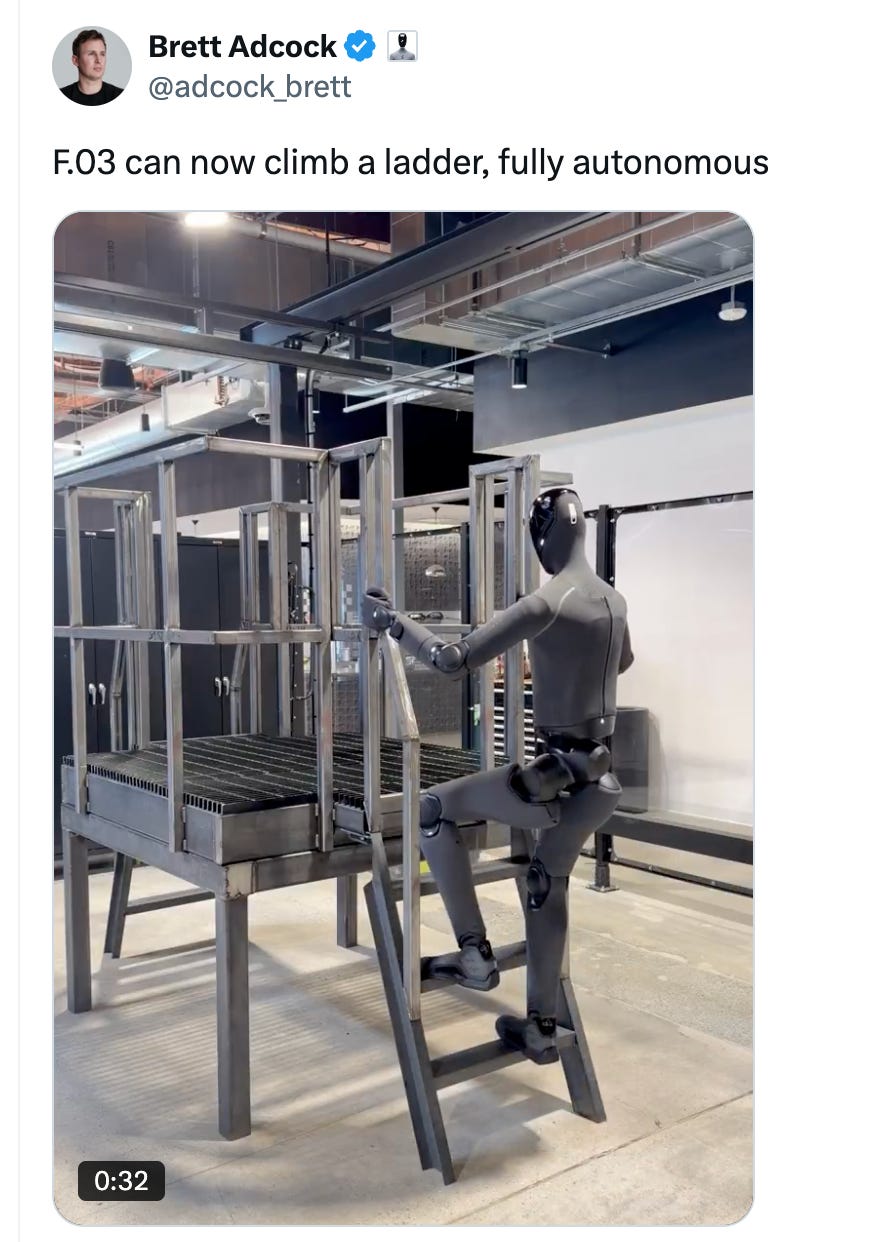
Figure never disappoints! The team works incredibly hard and constantly delivers amazing breakthroughs. Check out the full video below! Impressive work!

Brett Adcock@adcock_brett
F.03 can now climb a ladder, fully autonomous
3:30 PM · Aug 1, 2026 · 664K Views
633 Replies · 626 Reposts · 6.84K Likes
The compact two-wheeled robot records in 4K, tracks subjects on-device, avoids obstacles, jumps, and rights itself after falling. Consumer robotics has struggled to move beyond cleaning, but Beni offers a refreshingly clear job-to-be-done: becoming a mobile camera operator rather than a generic household assistant.
Drone delivery has spent years moving through regulatory approvals, constrained pilots, and difficult unit economics, so the public listing creates an unusually transparent test of whether autonomous aerial logistics can become a durable standalone business.
👉 Learn more
The true promise of robotics lies in developing assistive technology that helps people live more independent and connected lives, rather than simply creating machines that imitate human motion. By focusing on practical needs, assistive robots can address the growing global demand for caregiving and enable individuals with disabilities to actively participate in family life. Achieving this vision requires the robotics industry to prioritize inherent safety for unpredictable home environments and to co-design solutions directly with the users who need them. Ultimately, the success of physical AI will be measured not by viral acrobatic demonstrations, but by the tangible ways these tools empower and serve humans every day.
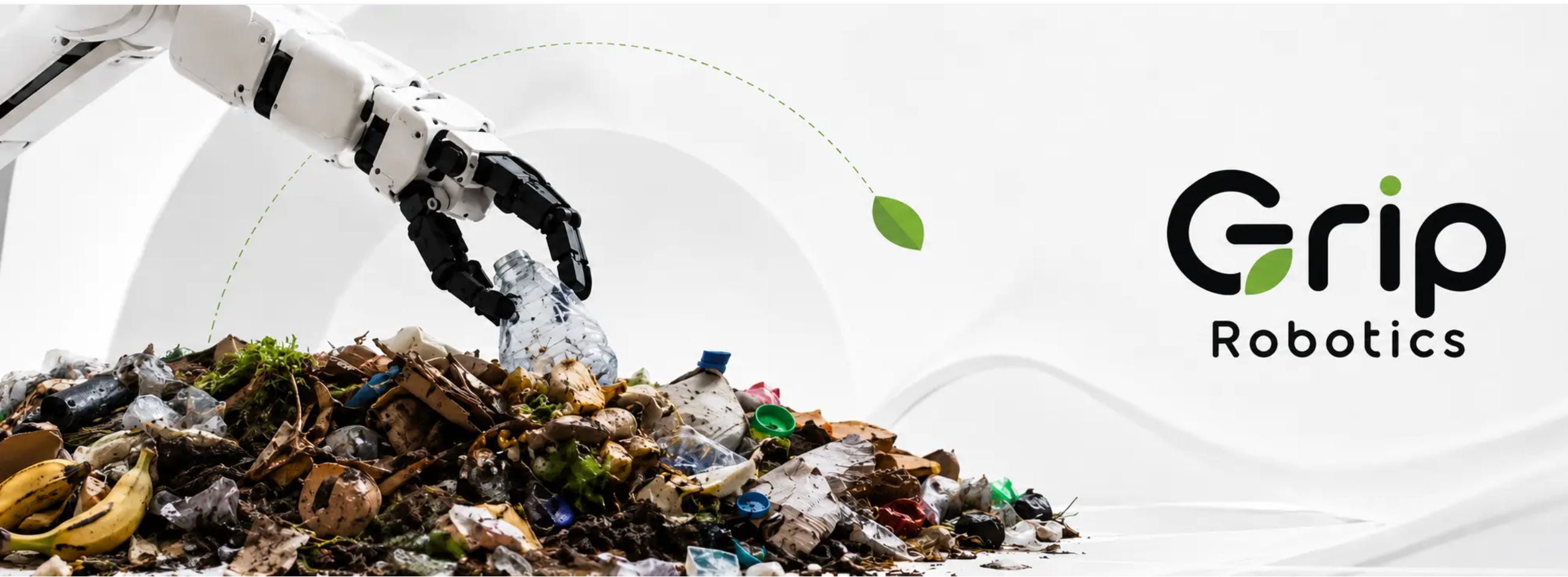
Founded by engineers with backgrounds in autonomous excavators, reinforcement-learning simulators, quadrupeds, and robotic perception, the company is targeting one of the least glamorous—but operationally enormous—markets in robotics. Waste handling offers repetitive workflows, labor scarcity, and measurable economics, which is often a far better commercialization setup than a flashy general-purpose demo.
👉 Learn more
The company is applying robotics to the construction, operation, and maintenance of AI infrastructure, with a founding team spanning manipulation, manufacturing, computer vision, controls, and underwater robotics. As data-center investment accelerates, the labor and deployment layer around compute could become a major robotics category of its own.
👉 Learn more
The founding team includes veterans of Apple, Nest, Humane, semiconductor imaging, electromagnetics, and RF systems. It is still early, but a compact system capable of perceiving through physical barriers could have significant applications across industrial inspection, search and rescue, construction, defense, and robotics.
👉 Learn more
The company aims to create a more efficient market for the compute equipment and physical infrastructure underpinning AI development. As GPUs, accelerators, power systems, and data-center components become strategic assets, the transaction and liquidity layer around hardware could become nearly as important as the models running on it.
👉 Learn more
The company is raising roughly $900 million, while 2025 revenue reportedly grew more than 4× to RMB 1.7 billion—with humanoids already generating more revenue than its quadrupeds. That last number is the one I find most interesting. We’ve spent years asking when humanoids become a real market; public-market investors are about to start putting a price on the answer.
👉 Learn more
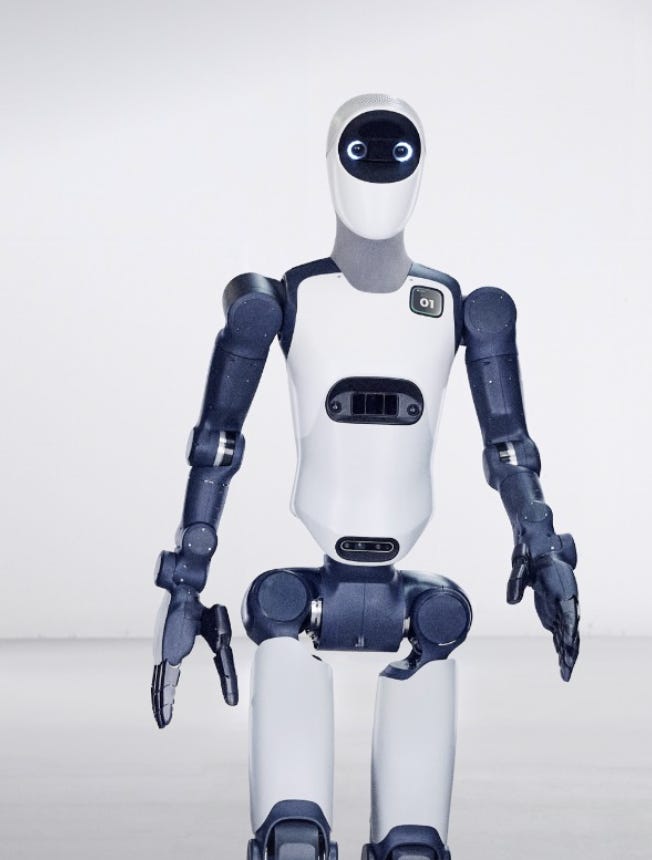
The German robotics company is taking a decidedly pragmatic route to Physical AI: deep factory integration, acquisitions, and actual industrial automation alongside its humanoid ambitions. It is also working with Google DeepMind to bring Gemini Robotics models into its systems. I love this because the humanoid race may ultimately be won not by whoever has the best demo, but whoever understands factories well enough to make robots economically useful inside them.
👉 Learn more
Even more important, the fleet is expected to graduate from private Permian Basin roads onto public roads in early 2027. Autonomous trucking has accumulated plenty of abandoned companies and delayed promises; a customer ordering materially more trucks after operating them is a much stronger signal than another autonomous-driving demo.
👉 Learn more
Serve Robotics has now deployed more than 2,000 autonomous robots across the U.S.
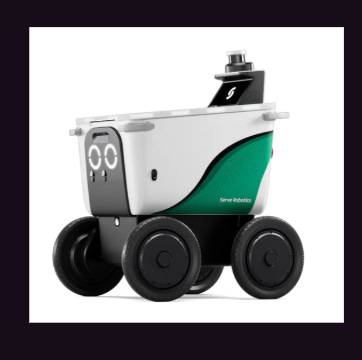
It reached roughly three million people and supported more than 4,000 restaurants. Following its acquisition of Diligent Robotics, Serve is also moving beyond sidewalk delivery into hospital service robots. I find the strategy surprisingly interesting: rather than betting everything on one robotic form factor, Serve is beginning to look like an operating platform for fleets of autonomous machines working in human environments.
👉 Learn more
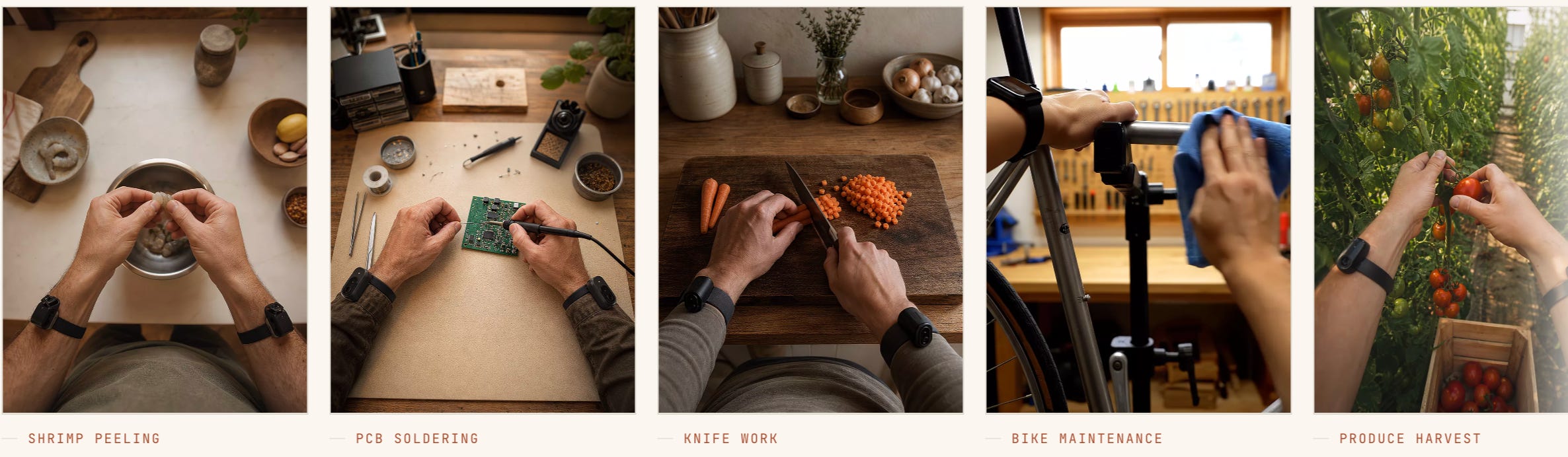
The company is preparing an egocentric data-capture operation in Sofia designed to collect around eight hours of human task demonstrations per operator per day, with distribution channels into humanoid OEMs. Everyone talks about foundation models, but high-quality, legally usable physical-world data remains scarce. I continue to think the picks-and-shovels businesses around robot learning may become much bigger than expected.
👉 Learn more

Its DOT Bots Challenge is seeking robotic systems that can improve transportation safety, infrastructure operations and worker protection, with finalists receiving development funding before a working-prototype competition. I like seeing government procurement experiments move toward actual machines solving physical problems rather than another innovation workshop.
👉 Learn more
A review of more than 200 papers found that most construction robots still operate at relatively low levels of adaptability, while truly collaborative systems would need to reason through changing environments alongside humans. I love this framing. Construction may be one of Physical AI’s ultimate tests precisely because the world refuses to stay structured for the robot.
👉 Learn more
AI infrastructure is increasingly becoming a robotics story too. The explosion in data centers is creating demand not only for chips and power but for construction, maintenance, inspection and skilled physical labor. That is why I’m watching robots aimed at data-center construction and operation particularly closely: AI may end up creating one of robotics’ largest new labor markets before robots ever enter most homes.
And perhaps the biggest signal of the week: capital markets are beginning to distinguish between “robotics” and businesses that can actually industrialize robotics. Unitree is entering the public markets, Agile Robots is talking hundreds of millions in revenue, Kodiak customers are expanding fleets, and established industrial suppliers are entering robotics through commercial contracts. Physical AI is moving into a phase where revenue, utilization, reliability and manufacturing capacity matter increasingly as much as benchmark performance.
👉 Add your company to the next issue of HardTech Reads
➡️ Walden Robotics raised a $300 million venture round at a reported $1.1 billion valuation, co-led by Toyota and Deviation Capital, with participation from Nvidia, Boeing, Samsung Ventures, CoreWeave Ventures, Calibrate Ventures, Menlo Ventures and others. The company is developing general-purpose robotic systems. Cambridge, Massachusetts, USA.
➡️ LimX Dynamics raised $200 million in a growth financing round at a reported $2.2 billion valuation, with investors including Stone Venture, GGG and Redstone VC. LimX develops humanoids, quadrupeds and other embodied-intelligence platforms for industrial and commercial environments. Shenzhen, China.
➡️ TerraFirma raised $115 million, including a $100 million Series A led by Kleiner Perkins, with participation from Bain Capital Ventures, Glade Brook Capital Partners, BANNER VC, Saga Ventures, Trust Ventures, Definition, PEAK6, Magnetar Capital and Ravelin Capital. The company is developing autonomous construction and infrastructure systems intended for Earth and future off-world environments. Austin, Texas, USA.
➡️ Senra Systems raised a $65 million Series B, co-led by Interlagos and Lowercarbon Capital, with participation from Alumni Ventures, Andreessen Horowitz, Founders Fund and General Catalyst. Senra is modernizing the design and manufacturing of wire harnesses used across aerospace, defense, mobility and industrial systems. Redondo Beach, California, USA.
➡️ Auger raised a $50 million Series B led by Eclipse, with returning participation from Oak HC/FT. The company is building an AI-native operating and orchestration platform for complex supply chains. Bellevue, Washington, USA.
➡️ Gritt announced $32.4 million across pre-seed and Series A financing, with the Series A led by Obvious Ventures and participation from Union Square Ventures, Active Impact Investments, First Round Capital, Climactic, Congruent Ventures and VSC Ventures. Gritt develops autonomous machines for repetitive and dangerous construction work. San Francisco, California, USA.
➡️ Cytronic raised a $13.5 million seed round led by Slow Ventures, joined by Geek Ventures, Failup Ventures, Alumni Ventures, Spacecadet Ventures, Weekend Fund, Mana Ventures, Rice Capital and Script Capital. Cytronic is developing automated fulfillment infrastructure for warehouses and commerce operations. San Francisco, California, USA.
➡️ GreenVibe raised a $12 million seed round from Insight Partners, Tidhar Construction, Israel-Canada and Shikun & Binui. The company uses sensing and software to monitor concrete quality and improve decision-making during construction. Israel.
➡️ Piq Energy raised a $5 million seed round led by Active Impact Investments, with participation from Cisco Foundation, Mobilize AI × Energy Ventures, New Climate Ventures, Ascent Energy Ventures, Umami Capital, CLAI Ventures and 9Zero. Piq is building an agentic planning platform for electric grids and energy infrastructure. San Francisco, California, USA.
➡️ Guthrie AI raised a $4 million seed round led by Chicago Ventures. The company develops AI software that helps contractors analyze opportunities and prepare construction bids. Philadelphia, Pennsylvania, USA.
Kodiak AI × Atlas Energy Solutions — Atlas plans to expand its driverless fleet from 28 to 100 trucks, one of the clearest examples yet of a customer scaling autonomous heavy vehicles after real-world operation rather than stopping after a pilot.
Agile Robots × Google DeepMind — Gemini Robotics foundation models are being integrated into Agile’s robotics stack as the company combines frontier models with its existing industrial deployment footprint.
Aptiv × Robotics & Drone OEMs — three robotics partnerships, one already reaching a meaningful commercial agreement, plus a drone program expected to generate more than $500 million of lifetime revenue.
1. Robotics is entering its public-market era. Unitree’s IPO gives investors a rare opportunity to price a scaled humanoid manufacturer using revenue and earnings rather than venture-marked valuations.
2. Revenue is becoming the new robotics benchmark. Agile Robots potentially approaching €600 million of annual revenue is much harder to dismiss than another dexterity video.
3. Repeat orders matter more than pilots. Atlas expanding Kodiak from 28 to 100 vehicles is exactly the commercial signal I want to see.
4. Automotive technology is escaping the car. Sensors, perception stacks, compute and autonomy developed for vehicles are increasingly flowing into drones and robots.
5. The Physical AI bottleneck is moving upstream. Data, semiconductors, sensing, power, manufacturing capacity and training infrastructure may capture as much value as the robot OEMs themselves.
Viral video shows Qualcomm-powered humanoid robot collapsing during live keynote
Share HardTech Reads: AI & Robotics Revolution
Foundation’s new robotic hand catches baseball mid-air with human-like precision
Actuate 2026 — August 18–19, Fort Mason, San Francisco. The robotics developer conference, with speakers from Physical Intelligence, Wayve, Zipline, Shield AI, Google DeepMind, and NVIDIA. Two weeks away! - See you there!
🌍 Global Hard Tech Events: hardtechnews.com
If you are interested in AI, Robotics & HardTech, check my previous posts:
→ Rebuilding the American Arsenal: A Strategic Roadmap for a U.S. Manufacturing Renaissance
→ The Physical AI Revolution: Mapping the $60 Trillion Transformation
→ Why 2026 Will Be the Year Space Becomes Big Business 🤔
→ 19 Robotic Hands Startups to Watch
→ The world doesn’t fix itself. These startups are trying / Top 100 HardTech Startups → Will we have a chatGPT moment for Robots?
→ The Art and Science of Venture Capital Investing
→ Deep Thinkers & Builders in Tech, Science and Bio
🤝 Passionate about HardTech? Have comments, want to share some thoughts or ask about sponsorships? Let’s connect!
👉 Want to feature your company in HardTech Reads? Apply Here
👉 Want to schedule a meeting directly, check my schedule on Intro: intro.co/paulinaszyzdek
#AI #Robotics #Humanoids #HardTechReads #Startups #DeepTech #Automation #PhysicalAI
No posts
Comments
Nothing yet. Say the first thing.
Sign in to join the conversation.