
Happy Sunday everyone! I spent an amazing morning with my friend discussing all the recent news and had an absolutely delicious coffee at Hedge Coffee today! So what’s happened in the HardTech World this week? he US just banned Chinese humanoid robots. Not tariffed. Banned. The FCC put new Chinese humanoids and robot dogs on its national security Covered List this week, and the whole industry is now arguing about what comes next. The timing is wild: AgiBot kicked off its Hong Kong IPO days before the ban, Google DeepMind shipped Gemini Robotics 2, and the robotaxi map got redrawn with Waymo planning its Uber exit and Zoox cleared to charge for rides. Add $1.5B for Shield AI and another $1B for fusion, and you get one of the busiest weeks of the year. I wrote more about the ban below, because I think we’ll be feeling this one for a decade. Let’s get into it 🚀
🚫 The FCC bans new Chinese humanoid and quadruped robots plus power inverters, with Unitree named directly
🧠 Google DeepMind ships Gemini Robotics 2: whole-body control, dexterity, and multi-robot teamwork
📈 AgiBot starts its Hong Kong IPO at a $5–6.4B target valuation, with 15,000 robots already shipped
🩺 J&J’s Ottava wins FDA authorization, ending Intuitive’s two-decade run as the only game in soft-tissue surgical robotics
🚕 Robotaxi shake-up: Waymo plans its own app in Austin and Atlanta, while Zoox clears the last federal hurdle to paid rides
🦾 Midea unveils a six-armed humanoid built for throughput, not human imitation
🛡️ Shield AI lands $1.5B at a $12.7B valuation, one of the largest defense tech rounds ever
⚛️ Commonwealth Fusion Systems adds $1B, the biggest fusion round since its own 2021 raise
👉 Add your company to the next issue of HardTech Reads
➡️ The FCC Bans New Chinese Humanoid Robots. Not Tariffed. Banned.
The FCC placed new Chinese humanoid and quadruped robots on its national security Covered List, together with connected power inverters, effective immediately. The ban covers new models only (robots already sold in the US stay put), and Unitree is named directly, with just under a fifth of the global humanoid market. The security case is real: researchers documented UniPwn, a Bluetooth exploit giving root-level access to Unitree’s Go2, B2, G1 and H1, robots already deployed at MIT, Princeton and Carnegie Mellon. Of the roughly 15,000 humanoids shipped globally in 2025, Unitree and AgiBot each shipped more than 5,000, while US players shipped a few hundred at most. Beijing has already called it protectionism.
My take: the ban is a pause button. Everything under $20K ships from China, a $1,400 humanoid was about to become a Christmas gift, and we still can’t produce a $2,000 humanoid domestically. No import rule changes that. Protectionism buys time, and the open questions are where US research labs buy affordable platforms now, and what Beijing restricts in return 🤔.
➡️ Google DeepMind Ships Gemini Robotics 2: Whole-Body Intelligence for Humanoids
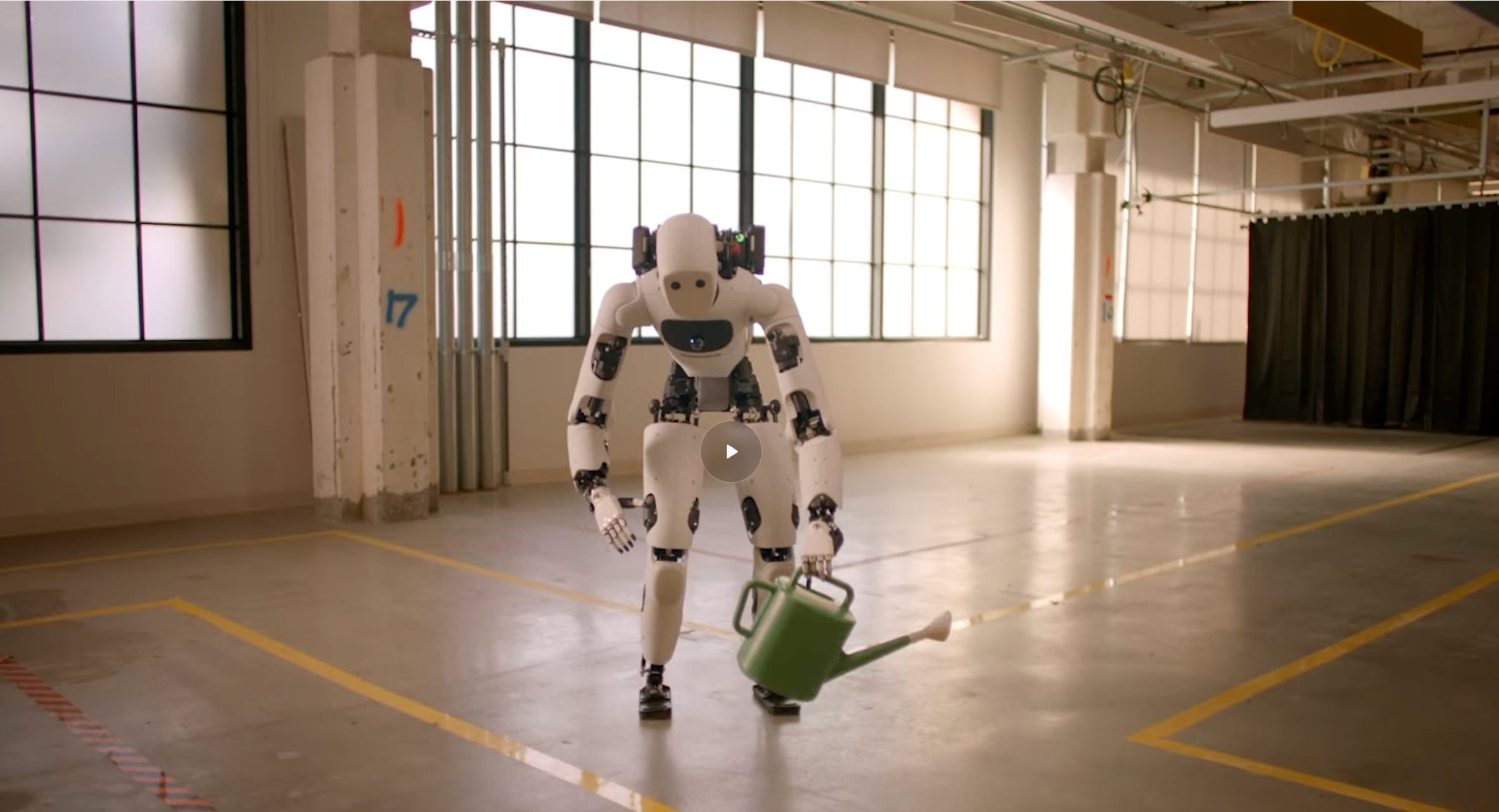
Google DeepMind released Gemini Robotics 2, a family of three physical AI models covering whole-body control, advanced dexterity, and multi-robot collaboration. The headline model, Gemini Robotics ER 2, reasons and acts at the same time instead of pausing to think between actions, tracks task progress in real time, and can coordinate several robots working together. Unlike earlier versions that mostly controlled hands, the new models command a humanoid’s entire body, managing balance and center of gravity to cut fall risk, and adapt to new robot bodies in hours. Apptronik demonstrated the whole-body stack live on its Apollo humanoid.
Foundation models are quietly becoming the real platform layer of this industry, and whoever wins the robot brain may matter more than who wins the robot body. I look forward to seeing how the labs respond.
➡️ AgiBot Kicks Off Its Hong Kong IPO With 15,000 Robots Already Shipped
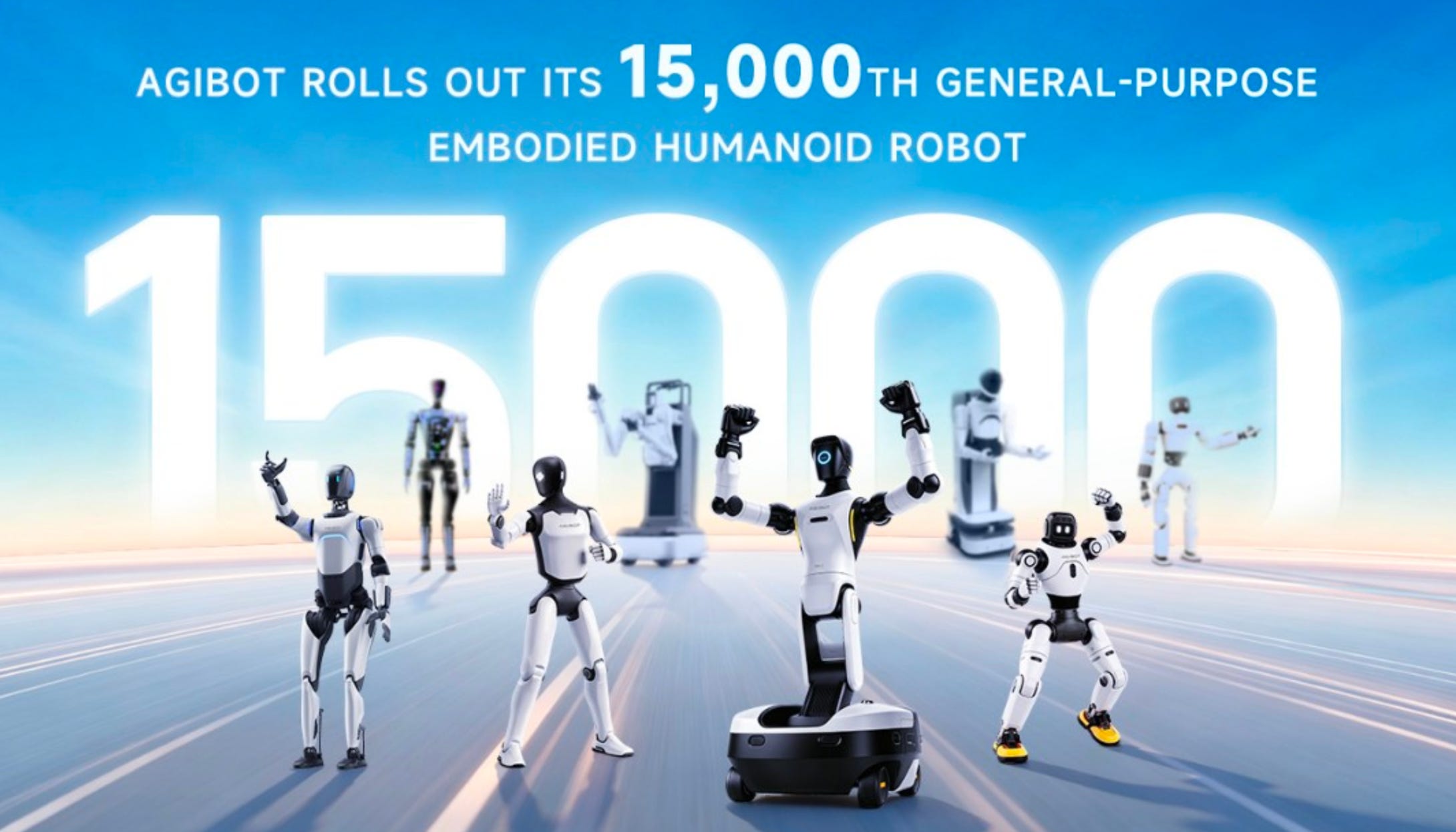
Shanghai-based AgiBot officially started its Hong Kong IPO process, targeting a valuation between HK$40B and HK$50B (roughly $5.1B to $6.4B), with Citic Securities, CICC, and Morgan Stanley as joint sponsors. The company, founded in 2023 by ex-Huawei “genius youth” Peng Zhihui, crossed 15,000 cumulative robot units shipped in June 2026, with machines already running in consumer electronics and industrial production lines. Backers include Tencent, Hillhouse, and BYD. After Unitree’s STAR Market approval earlier this summer, the two largest humanoid makers by shipments are both heading to public markets within months of being locked out of the US.
➡️ J&J’s Ottava Gets FDA Authorization, Taking On da Vinci’s Monopoly
Johnson & Johnson received FDA de novo marketing authorization for Ottava, the world’s first table-integrated soft-tissue robotic surgical system, clearing it for a range of general surgery procedures including gastric bypass, cholecystectomy, and hernia repair. Ottava’s four robotic arms fold directly into the operating table, occupying 30–50% less space than boom- and cart-mounted systems, which could open robotic surgery to hospitals that never had the room for it. The authorization ends Intuitive Surgical’s long run as the dominant player in soft-tissue surgical robotics, and it sets up the most interesting medtech rivalry of the decade.
➡️ Waymo Is Planning Its Uber Exit in Austin and Atlanta
Waymo told Uber it intends to offer robotaxis through its own app in Austin and Atlanta starting January 2028, alongside the existing Uber arrangement, after the FT reported it was exploring a way out of the partnership entirely. The current contract runs to May 2028, so riders won’t notice a change yet, but the era of Uber-exclusive distribution in those cities is ending. The two companies already wound down their Phoenix arrangement in June. Fleet control, rider data, and unit economics were always going to make this marriage complicated, and both sides are now openly planning for life after it.
➡️ Zoox Clears the Last Federal Hurdle to Charge for Robotaxi Rides
Amazon-owned Zoox cleared the final federal requirement standing between its purpose-built robotaxi and paid passenger service. The vehicle, designed from scratch without a steering wheel or pedals, needed a federal exemption process that took years longer than rivals who simply retrofitted existing cars. With the approval in hand, Zoox can start converting its free rides in Las Vegas and San Francisco into a real commercial service. Three robotaxi operators charging for rides in US cities was science fiction five years ago. Now it’s a pricing war waiting to happen.
➡️ Midea’s Six-Armed Humanoid Bets Against Human Anatomy
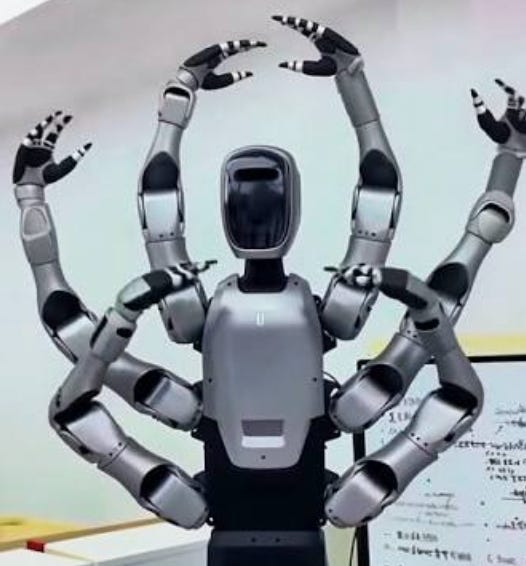
Chinese appliance giant Midea unveiled a factory humanoid with six arms instead of two, and the division of labor is the interesting part. Lower limbs handle heavy components while upper limbs do fine assembly, with 360-degree rotation, stable vertical lifting, and rapid tool swapping in between, so one machine covers workstation transitions that normally need multiple workers or separate equipment. Most humanoid designs default to two arms because that’s the human reference point; Midea’s bet is that form factor doesn’t need to mirror anatomy if the goal is throughput. The open question is economics: more actuators mean more failure points and more maintenance cost.
➡️ China’s Explosion-Proof Centaur Robot Is Built for the Jobs That Get People Killed
Shanghai-based Run Robotics debuted a centaur-style robot at WAIC 2026, pairing a four-wheel all-terrain chassis with a humanoid upper body in one of the most unusual designs of the year. It carries up to 265 pounds, handles rugged terrain, and is engineered to explosion-proof requirements for work in steel mills, oil fields, and nuclear facilities. More than 95% of its core components are domestically produced, and the company says it has commercial orders in hand with an automated assembly line coming in Q4 2026. Sometimes the right answer isn’t legs or wheels. It’s both.
➡️ Foundation Wins a $24M Pentagon Contract and Plans to Arm Its Humanoid
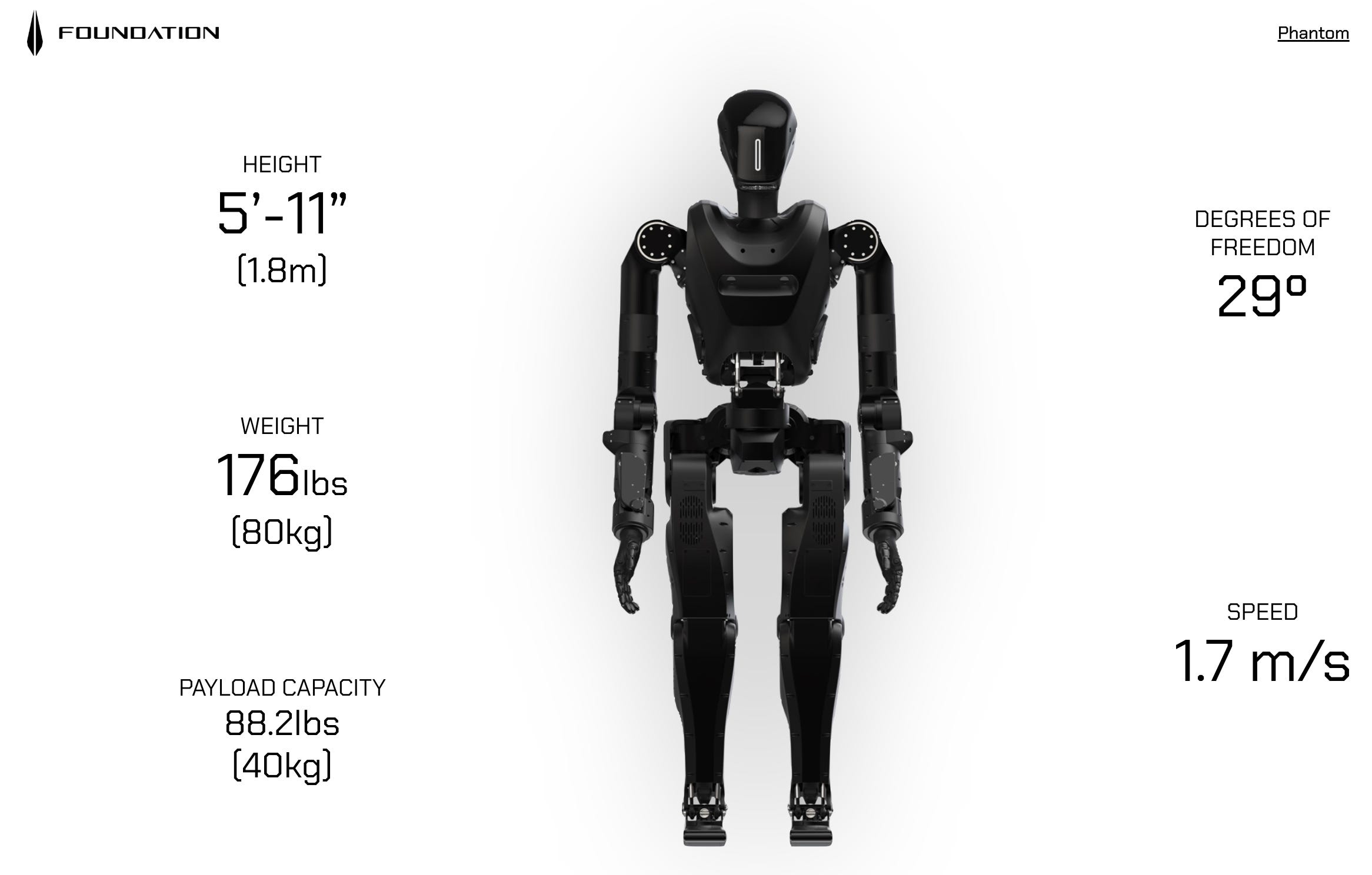
Foundation Future Industries, the robotics startup with Eric Trump as chief strategy adviser and investor, secured a $24M Pentagon contract for its Phantom humanoids, designed to breach enemy sites in place of human soldiers. The Phantom MK1 walks at 1.7 m/s, carries a 44-pound payload, and runs on eight cameras with no LiDAR, and the company has already tested it with Ukrainian forces. CEO Sankaet Pathak says lethal capabilities will be unveiled in the coming months, while robotics experts counter that reliable autonomous combat robots remain at least a decade away. Senator Warren called the deal “corruption in plain sight,” so the political fight is arriving as fast as the technical one.
➡️ Tesla’s App Is Quietly Getting Ready for Optimus in Your Living Room
A decompile of Tesla’s latest mobile app revealed the company is preparing home support for Optimus, including a dedicated consent screen asking owners to share video and spatial data while the robot operates in their house. The approach mirrors how FSD uses shadow data from customer cars to train the neural net, this time applied to vacuuming, dishes, and everything else a home robot needs to learn. Supply chain reports point to Optimus mass production starting around now, with limited B2B sales in late 2026 and consumer sales possibly from 2027. The home data land grab is starting before the first robot ships.
➡️ An Estonian Startup Built a Security Robot That Patrols on One Wheel
Rollo Robotics unveiled 1ROLLO, a self-balancing monowheel security robot that patrols autonomously for up to eight hours on a single 60cm wheel, stabilized by a high-speed gyroscopic flywheel. It combines 360-degree computer vision, RTK GNSS navigation, license plate recognition, and hazardous gas monitoring, with alerts streamed to remote operators over 4G, 5G, or Wi-Fi. At around 45kg and up to 30 km/h, it slips through corridors that four-wheeled security robots can’t. The Estonian team raised a €3.7M pre-seed earlier this year to mature the monowheel platform.
👉 Feature your company in HardTech Reads
➡️ Commonwealth Fusion Systems — builds SPARC, a compact tokamak using high-temperature superconducting magnets, with its ARC commercial plant planned in Virginia. Raised $1B in equity funding, the largest fusion round since its own $1.8B raise in 2021, from institutional investors including pension funds, sovereign wealth funds, and industrial partners, bringing total funding to $4B. Location: Devens, USA.
➡️ Antora Energy — thermal batteries that store cheap electricity as heat in solid carbon blocks and deliver it around the clock to factories, steelmakers, and data centers. Raised $550M in Series C, co-led by G2 Venture Partners and Eclipse, with Breakthrough Energy Ventures, Lowercarbon Capital, John Doerr, Salesforce Ventures, and others. Location: San Jose, USA.
➡️ K2 Space — manufactures large, high-power satellites for commercial and defense customers, betting that launch costs have fallen enough to make big spacecraft the winning play. Raised $500M in Series D. Location: Torrance, USA.
➡️ Antares — develops small modular nuclear reactors built to power US military bases. Raised $470M in Series C. Location: Los Angeles, USA.
➡️ Sila — makes Titan Silicon, a silicon-carbon anode material that boosts battery energy density, now expanding its Moses Lake plant toward 250 GWh capacity. Raised $300M in private funding, led by Atreides Management and Sutter Hill Ventures, with 8VC, Bessemer Venture Partners, Matrix Partners, and T. Rowe Price. Location: Alameda, USA.
➡️ Enigma — robotics research lab building intuitive human-robot interaction interfaces and foundational AI models, aiming to make operating a robot as easy as adjusting the volume. Raised $71M in seed funding. Location: USA.
➡️ Senra Systems — founded by SpaceX veterans to automate wire-harness manufacturing, compressing months-long workflows into weeks, with a third factory now planned. Raised $65M in Series B, co-led by Interlagos and Lowercarbon, with a16z, Founders Fund, General Catalyst, and Alumni Ventures. Location: USA.
➡️ Gritt — physical AI robotic arms that attach to existing jobsite machines and have already placed tens of thousands of solar panels autonomously with zero breakages. Raised $32.4M in pre-seed and Series A, the A led by Obvious Ventures, with Union Square Ventures, Active Impact Investments, First Round Capital, Climactic, Congruent Ventures, and VSC Ventures. Location: San Francisco, USA.
➡️ Arrakis — builds autonomous AI agents for non-desk workflows in aerospace, energy, logistics, and manufacturing, live with NYSE-listed customers at 99%+ reported accuracy. Raised $30M in Series A, led by Blossom Capital, with Accel (which led its earlier $7.5M seed), six months after founding. Location: London, UK.
➡️ Cytronic — automated fulfillment network for e-commerce brands, founded by Shyp’s Kevin Gibbon, with its first robotic facility live in Chicago and Dallas next. Raised $13.5M in seed funding, led by Slow Ventures, with Geek Ventures, Alumni Ventures, Weekend Fund, and Script Capital. Location: San Francisco, USA.
➡️ Argon Mechatronics — takes the contrarian path through the humanoid boom with Argon One, an engineering-oriented humanoid built on twin SCARA arms delivering 0.1mm accuracy with 15+ interchangeable tool heads, founded by SparkCognition’s Amir Husain and Zaib Husain. Raised a seed round (amount undisclosed), led by Moneta Ventures. Location: Austin, USA.
Inside LA’s Secretive Tech Community
Are Brain Waves the Next Unlock for Physical AI? — TechCrunch’s look at the researchers and startups betting that EEG signals, not just camera feeds and teleoperation, are the missing data layer for training robots. A good companion to the BrainCo demo from last week’s issue, and a useful frame for anyone evaluating where the next proprietary robotics datasets will come from.
Actuate 2026 — August 18–19, Fort Mason, San Francisco. The robotics developer conference, with speakers from Physical Intelligence, Wayve, Zipline, Shield AI, Google DeepMind, and NVIDIA. Two weeks away! - See you there!
🌍 Global Hard Tech Events: hardtechnews.com
If you are interested in AI, Robotics & HardTech, check my previous posts:
→ Rebuilding the American Arsenal: A Strategic Roadmap for a U.S. Manufacturing Renaissance
→ The Physical AI Revolution: Mapping the $60 Trillion Transformation
→ Why 2026 Will Be the Year Space Becomes Big Business 🤔
→ 19 Robotic Hands Startups to Watch
→ The world doesn’t fix itself. These startups are trying / Top 100 HardTech Startups → Will we have a chatGPT moment for Robots?
→ The Art and Science of Venture Capital Investing
→ Deep Thinkers & Builders in Tech, Science and Bio
🤝 Passionate about HardTech? Have comments, want to share some thoughts or ask about sponsorships? Let’s connect!
👉 Want to feature your company in HardTech Reads? Apply Here
👉 Want to schedule a meeting directly, check my schedule on Intro: intro.co/paulinaszyzdek
#AI #Robotics #Humanoids #HardTechReads #Startups #DeepTech #Automation #PhysicalAI
No posts
Comments
Nothing yet. Say the first thing.
Sign in to join the conversation.