
Men are terrified of losing their hair.
So they avoid anything that touches 5-alpha-reductase. Finasteride, dutasteride, saw palmetto. Anything that even sounds like it lowers DHT gets filed under “protects the hairline,” and anything that raises it gets treated like a threat.
That’s the wrong frame. And it’s costing people more than they realize.
5AR isn’t just “the hair loss enzyme.” It’s the enzyme that converts progesterone into allopregnanolone, one of the most powerful calming, GABA-boosting compounds your brain makes. It’s what deactivates cortisol into its cleared metabolites. It’s what makes THDOC, another neurosteroid tied to stress resilience. It’s what makes androsterone and 3α-diol, both of which carry their own downstream neurosteroid and androgenic roles.
Block 5AR, and you’re not just changing your hairline. You’re touching your entire neurosteroid pool → mood, stress buffering, sleep, GABAergic tone, all of it. This is well documented in post-finasteride syndrome patients, who show measurably collapsed neurosteroids in their spinal fluid, not just lower DHT.
So when something gets marketed as a “natural DHT booster,” most guys either avoid it out of fear, or take it and hope for the best without understanding what it’s actually doing.
Here’s what almost nobody talks about: even if PEA did increase 5AR in humans, it’s more likely to improve hair growth and quality due to better blood flow, lower stress hormones, better stress resiliency, lower inflammation, etc.
But here’s the real reason I ran this experiment, and it has nothing to do with hair.
I’m tired of watching supplement “gurus” post a single in vitro study and act like the science is settled. There is exactly one study showing PEA can increase 5AR activity and allopregnanolone… in glial cells, in a dish, via PPARα. That’s it.
Nobody knows if this holds up in an actual living human. Nobody knows if it touches the androgen pathway in vivo at all. And yet people are out there recommending PEA as a proven DHT booster, without ever running a single test.
That’s not confidence. That’s close to fraud.
So instead of repeating a claim I couldn’t back up, I tested it on myself.
I ran the same protocol I always run: a 4-point urine hormone panel. No guessing, no “I feel different.” Actual metabolite data, before and after.
This is my 4th HuMap test. HuMap is a urinary hormone panel → four collection points across the day, so you get both the daily rhythm and the total 24-hour output, not just a single snapshot. I've already run this same test on three other protocols before PEA, which means this isn't one isolated data point. I'm comparing PEA against my own prior results, so we can actually track a trend, not just react to a number that could be noise.
I wasn’t expecting what happened next. Not just on the hormone panel. On how I felt.
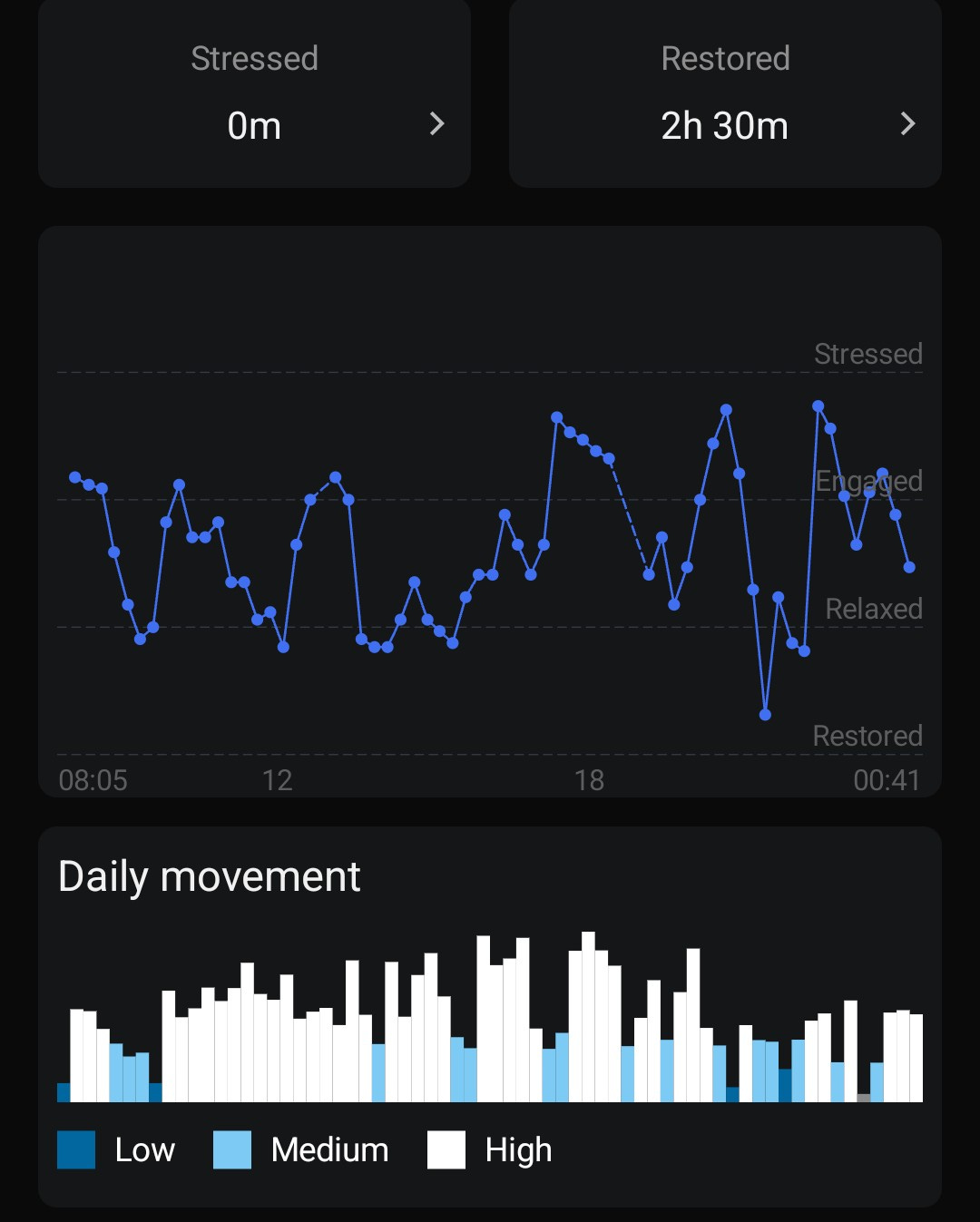
Calmer. Less reactive. The kind of easy-going state that’s hard to fake. My NexRing resting score that week hit 2 hours and 30 minutes. The highest it’s ever recorded. For context: on a normal day, without PEA, I’m lucky to break 15 minutes of resting score.
But before we get into my numbers, you need to understand what PEA actually is, because most of what’s said about it online barely scratches the surface. It’s not just a pain compound. It’s not just an anti-inflammatory. It’s a molecule your own cells are already making, on demand, every time you’re under stress and it touches almost every system relevant to how you feel, recover, and age.
Some of what PEA does, independent of anything to do with androgens:
Calms an overactive immune response by stabilizing mast cells before they flood you with histamine and inflammatory cytokines
Shifts brain immune cells (microglia) out of an inflammatory, neurotoxic state and into a repair-and-cleanup state
Activates PPAR-α, a genetic switch that turns down NF-κB, TNF-α, IL-1β, and IL-6 (the core drivers of chronic low-grade inflammation)
Strengthens the gut lining, reducing how much endotoxin (LPS) leaks into circulation and drives systemic inflammation
Preserves your body’s own natural calming chemical, anandamide, by slowing the enzyme that breaks it down
Increases neurosteroid production in the brain, including allopregnanolone
Improves how your gut handles serotonin, keeping it in the calming pathway instead of shunting it into an inflammatory, anxiety-linked one
Does all of this without being a stimulant or a sedative. It’s a buffer, not a drug
That’s the backdrop almost nobody talks about. Now here’s what actually happened when I ran the numbers. Not a theory, not a dish full of glial cells, an actual human hormone panel.
The rest of this article is for premium members. I’ll walk through:
What actually happened to my 5AR:DHT pathway and whether the direction matched the one in vitro study everyone's been citing
What happened to my cortisol and neurosteroid markers that I wasn't even testing for
Whether PEA's effect looks like real enzyme activity, or just substrate noise — the difference matters more than people realize
My exact protocol, dosing, and stack, and who should be cautious with it
The broader question this raises: how much should anyone trust a single in vitro study before it's been tested on an actual human
Comments
Nothing yet. Say the first thing.
Sign in to join the conversation.