
I’ve been circling one pattern for a while now. Every technology takes something that used to live inside us and moves it outside. Writing took memory. The calculator took arithmetic. GPS took our sense of direction. I called this the long outward movement, and for three thousand years it has run the same way: a capacity moves out into a tool, the tool hands us more of it than we could ever hold ourselves, and the inside version quietly withers because nothing requires it anymore.
Each round took something from the periphery. Navigation, spelling, mental math. Useful to have, no tragedy to lose. You handed it over, you got a more capable civilization back, and the person who remained was still recognizably a person.
AI and robotics are not aimed at the periphery. They reach the core: judgment, taste, conversation, problem-solving, the physical competence to do a thing with your own hands. The parts we don’t experience as skills but as ourselves.
The earlier rounds atrophied something that had first been built. A literate adult once had years of trained penmanship that then decayed into a scrawl. The capacity was real before the tool let it fade. This round threatens something stranger. The capacity is never built at all. A child who hands every essay, every calculation, every small decision to a machine from the start doesn’t lose a muscle. The muscle never forms. The inside is empty not because something was removed but because nothing was ever put there.
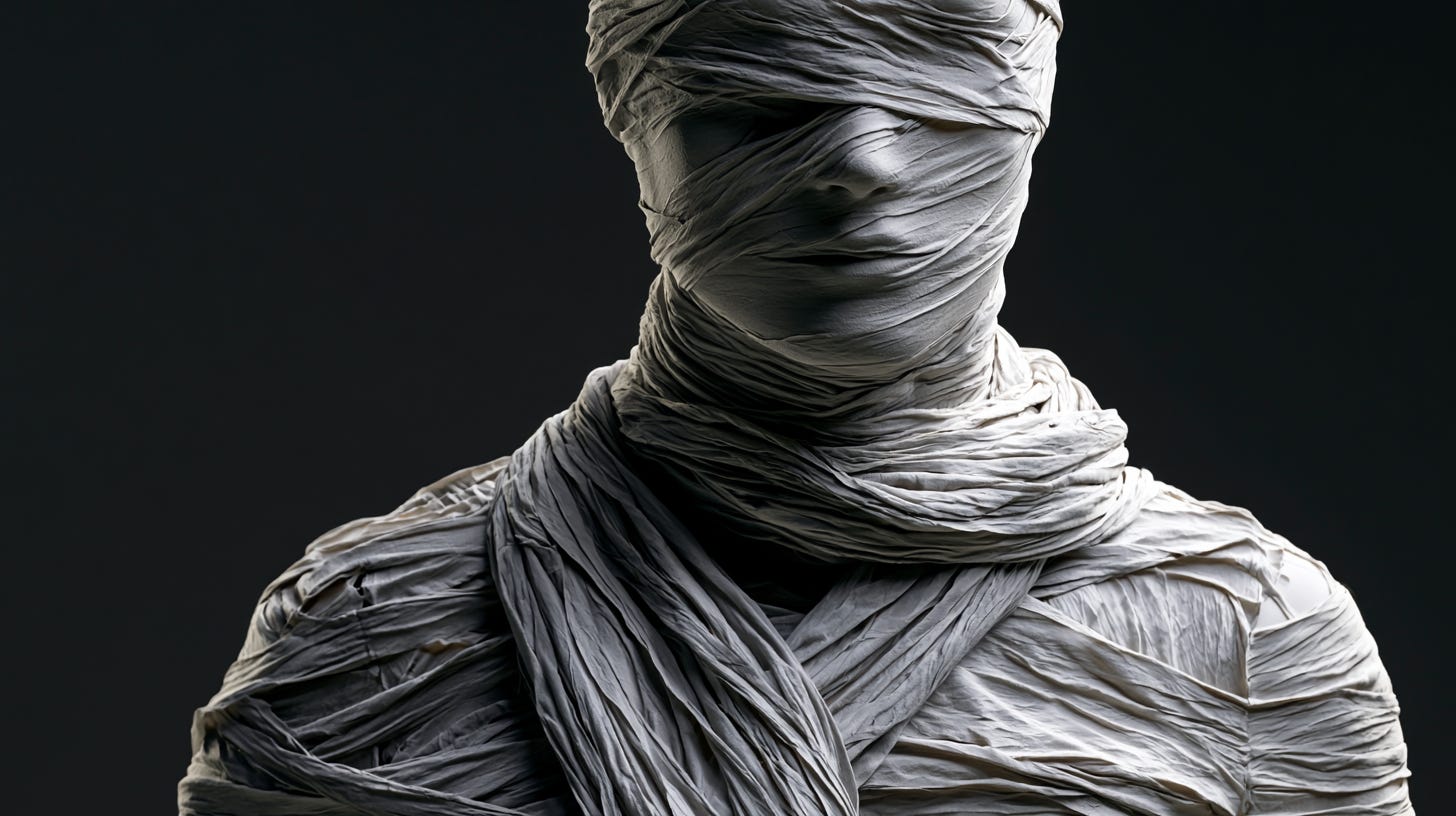
That is the Inverted Primate: a human-shaped organism whose capacities have all moved outside, with nothing cultivated within. Every previous round of externalization still left a person standing. This one is on track to leave only the shape of one.
The choice was always optional, and it still is. What changed is the cost of drifting. In earlier rounds, drifting produced a normal modern adult who couldn’t do long division. In this round, drifting produces the inverted primate. Same passivity, different result, because the tools now reach the parts that used to do the building.
No one is going to draw the line for you. There are no laws or guidelines for this, and the companies shipping the tools are moving too fast to ask what they’re hollowing out. The line is yours to draw. Here is where I’d start.
Pick a few capacities to keep inside, on purpose. Not everything. Writing, cooking, an instrument, a language, navigation, a craft. The specific choices matter less than the act of choosing. A capacity you’ve decided to keep is no longer at the mercy of the next convenient tool.
Notice the handoff. Before you reach for a tool, notice what you’re about to hand over. Sometimes the handoff is fine, the grunt work, the part you were glad to be rid of. Sometimes it’s the thinking itself. The awareness is most of the discipline.
Keep the hard parts. The drudgery is fine to externalize. The part that feels like thinking, deciding, or making is the part that builds you. Hand that over and there’s nothing left to build.
Train the body. Robotics will eventually offer to move for you. Physical competence isn’t a peripheral feature; it’s the ground the rest of you stands on.
Keep one analog channel. A paper book, a paper map, a handwritten notebook, a physical instrument. Something that doesn’t route through a screen keeps a different part of you alive.
Do some things slowly. Speed is what the tools are selling. Certain things only exist at slower speeds, and those tend to be the ones worth having.
In The Long Outward Movement I admired Taiwan for keeping the abacus in its schools while making the most advanced chips on earth, a culture that knows what’s worth keeping. But tradition won’t do the work I was crediting it with. Tradition is inherited and collective; it can carry a whole society across generations, but it won’t carry you. Sitting in a country that keeps the abacus does nothing for the person who has externalized everything else. The abacus survives because a culture chose it long ago. The line I’m describing is one each person has to draw alone, now, against the strongest convenience ever built.
The tools will keep getting better at the things we used to do ourselves. That’s not in question. The only open question is what stays built on the inside while everything else moves out. That part isn’t decided by the technology. It’s decided by you, one handoff at a time, and the decisions are easiest to make now, while the inside is still yours to keep.
No posts
Comments
Nothing yet. Say the first thing.
Sign in to join the conversation.