

A reel stopped me in my tracks the other day.
It listed three “horror movies” for gardeners, and one of them read:
“Gardeners in North America thinking sweet alyssum is good for companion planting.”
My first reaction?
“Wait... what?”
If you’ve followed me for any length of time, you already know I love sweet alyssum.
I’ve edged flower beds with it. I’ve tucked it around vegetables. I’ve intentionally planted it because I adore the soft white clouds of flowers that seem to bloom forever.
So naturally, I had to ask the question.
Have I been getting this wrong?
Sometimes that’s the best place to start. Not by defending what we’ve always done, but by asking if there’s something we don’t know.
So I started digging.
Gardening rarely gives us one. You’ll often hear things like:
“Always plant this.”
“Never grow that.”
“This flower is the best.”
“That flower is invasive.”
The reality is that plants don’t behave the same everywhere. A plant that behaves beautifully in Ontario might become a nuisance in California. A plant that’s impossible to grow in Arizona may reseed effortlessly in the Pacific Northwest.
Climate changes everything.
That’s why I think we have to be careful about taking regional advice and turning it into universal gardening rules.
But is sweet alyssum invasive?
The answer surprised me.
Not necessarily.
Sweet alyssum (Lobularia maritima) isn’t native to North America. It originated around the Mediterranean.
But non-native and invasive are not the same thing.
An invasive plant is one that escapes cultivation, spreads into natural ecosystems, outcompetes native plants and causes ecological harm.
Sweet alyssum can self-seed.
Those are two very different conversations.
In parts of North America with mild winters, especially along the west coast, sweet alyssum can reseed readily and establish itself year after year.
That understandably frustrates some gardeners but here in Ontario, my own experience has looked completely different. For years, I used sweet alyssum as the front border of my flower beds.
Yes.
It self-seeded but here’s what happened: Almost nothing. A few seedlings appeared. Some survived. MANY didn’t.
The conditions in those beds, the competition from neighbouring plants, weeding and our winters meant it never became this unstoppable carpet of flowers.
It simply became another volunteer that occasionally showed up.
That experience matters. My garden doesn't represent everyone’s but it does reminds us that plants don’t read internet comments.
They respond to our gardens.
This is where I think social media has made things confusing.
For years we’ve been told that sweet alyssum is one of the best companion plants you can grow.
People claim it:
repels pests
protects vegetables
boosts harvests
keeps aphids away
The science doesn’t really support those claims. What research does support is something slightly different.
Sweet alyssum produces huge amounts of nectar.
That nectar attracts:
hoverflies
tiny parasitic wasps
native bees
honeybees
other beneficial insects
Hoverfly larvae, in particular, are excellent aphid predators.
Notice the difference?
Sweet alyssum isn’t protecting your tomatoes like some magical security guard. It’s providing food for insects that may help create a healthier garden ecosystem. That’s a much more realistic expectation.
… and I think that’s even cooler.
I grow them because I want to love walking through my garden. Sometimes I think gardeners feel guilty admitting that.
Beauty matters.
When I picture my garden, I don’t just imagine harvests.
I imagine movement.
Texture.
Layers.
Flowers spilling over pathways.
The way different plants soften one another. Sweet alyssum does something very few flowers can. It creates a living cloud. One of my new favourite places now to use it is underneath my sun-chokes.
As the sun- chokes rocket upwards through summer, the lower leaves naturally begin to fade and fall away. Instead of looking at bare stems and exposed soil, the base becomes surrounded by this soft white blanket of flowers.
It looks intentional.
Finished. Almost like nature designed it that way.
Could I replace it?
Maybe.
Would it give me exactly the same effect?
Probably not.
For the cost of one garden centre impulse buy, you’ll unlock the full Growing With Beccalynne experience — garden downloads, practical mini guides, essays, and access full of resources designed to help you grow a more abundant, low-effort garden without overcomplicating it.
That question led me somewhere I didn’t expect. As I researched sweet alyssum, I also started looking into native alternatives. There are some incredible native plants.
Mountain mint (which I have) absolutely buzzes with pollinators.
Wild strawberry makes a wonderful living groundcover.
Native asters provide late-season nectar when many other flowers are finished. I’ve watched them in the wild and noticed aphids LOVE them.
Blue-eyed grass is beautiful in a formal border.
The more I learned, the more excited I became about adding more native species but something else happened. I stopped thinking in absolutes.
Instead of asking:
“Should I remove every non-native plant?”
I started asking: “Can I add more natives while still growing the plants I genuinely love?”
Those are completely different questions.
It’s edible.
It’s ornamental.
It’s full of pollinator plants.
It’s full of perennial vegetables.
There are fruit trees.
Blackberries.
Lavender.
Echinacea.
Blazing star.
Herbs.
Roses.
Annual flowers.
Perennials.
Some are native.
Many aren’t.
Together, they create a garden that’s alive from spring until frost. That’s the balance I’m personally striving for.
Not perfection.
Thoughtfulness.
Maybe that’s the real lesson. That reel made me question something I never thought twice about and I’m actually grateful it did because asking questions is how we become better gardeners.
But asking questions doesn’t always lead us to throwing everything out.
Sometimes it simply gives us better context.
Today, I’m still planting sweet alyssum.
I’m also excited to experiment with more native species.
Those two ideas don’t have to compete.
Gardening doesn’t have to become an argument where one side wins.
It can simply become a lifelong experiment and I think that’s one of the most beautiful parts of gardening.
Every season gives us another chance to learn, observe and change our minds if the evidence in our own gardens points us in a different direction.
This year, sweet alyssum will still be blooming beneath my sunchokes. But besides it, there may just be a few more native flowers than there were last season.
I think that’s a pretty good place to be.
Your Canadian Gardener
Beccalynne🌻
Meet The Author.
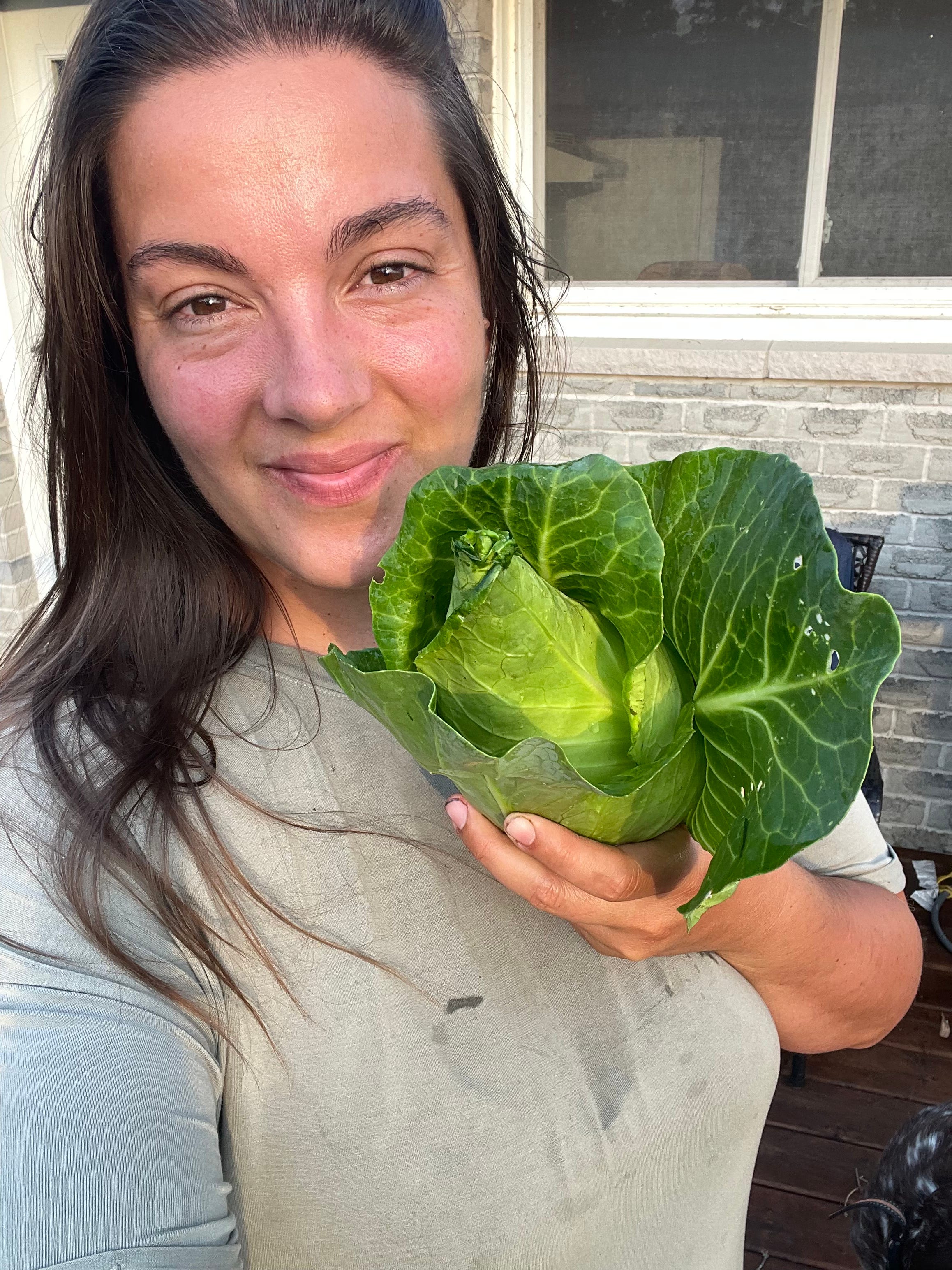
Hi there! I’m Becca, the heart behind Growing With Beccalynne.
From Eastern Ontario Canada, gardening has been apart of me my whole life starting with my great grandpa when I was little. I’ve been building and educating through my own garden since 2018. By day, I run my business as a virtual assistant and creating content for you (@growingwithbeccalynne on all platforms). Here, I pour my love for soil science, creating gardens, growing plants and the joys of creating a low effort garden to love long term.
Ways To Keep Growing With Me:
Become a Paid Subscriber: For the cost of a monthly garden centre impulse buy, you can unlock the full Growing With Beccalynne experience — weekly downloads, private essays, seasonal workbooks, and access to the growing Growers Vault of resources designed to help you build a healthier, lower-effort garden.
Explore the Garden Resources I Share : Seasonal notes, how-to guides, soil-building methods, herb-bed layouts, and the real process of growing a backyard garden with ease. These tools are here to help you grow more confidently without overwhelm.
Follow Along on Instagram - Come hang out with me on Instagram for real-time garden updates, photos from the backyard, short-form videos, seasonal reminders, plant rambles, garden experiments, and the honest in-between moments that don’t always make it into a full post.
💬 Feel free to like or comment on this newsletter so more Substack users can find it!
Comments
Nothing yet. Say the first thing.
Sign in to join the conversation.