
This is Part Two of my paid series about turning sunchokes into a small garden-income crop. If you missed the beginning you can read Part One - Why I Chose Sunchokes as a Crop to Sell here before continuing:

Once I decided I wanted to grow sunchokes more intentionally, the next question was not which variety to buy or how much I might eventually charge.
It was much more basic than that.
Where, exactly, was I going to put them?
Sunchokes are not a crop I can casually tuck into an empty corner and forget about. They grow tall, create a large amount of top growth and produce their harvest underground. They also have a well-earned reputation for returning from even the smallest tuber left behind.
That can be a wonderful trait when the goal is resilience.
It can be a frustrating one when the goal is control.
If I was going to treat sunchokes as a crop rather than simply another garden experiment, I needed a growing system that made sense for harvesting, replanting, watering and keeping varieties separate.
I also needed it to look like it belonged in my garden. I wasn’t interested in creating an awkward production zone that I would hate looking at for most of the year.
The growing system needed to be practical, contained and still feel beautiful.
That is where the cedar beds came in.

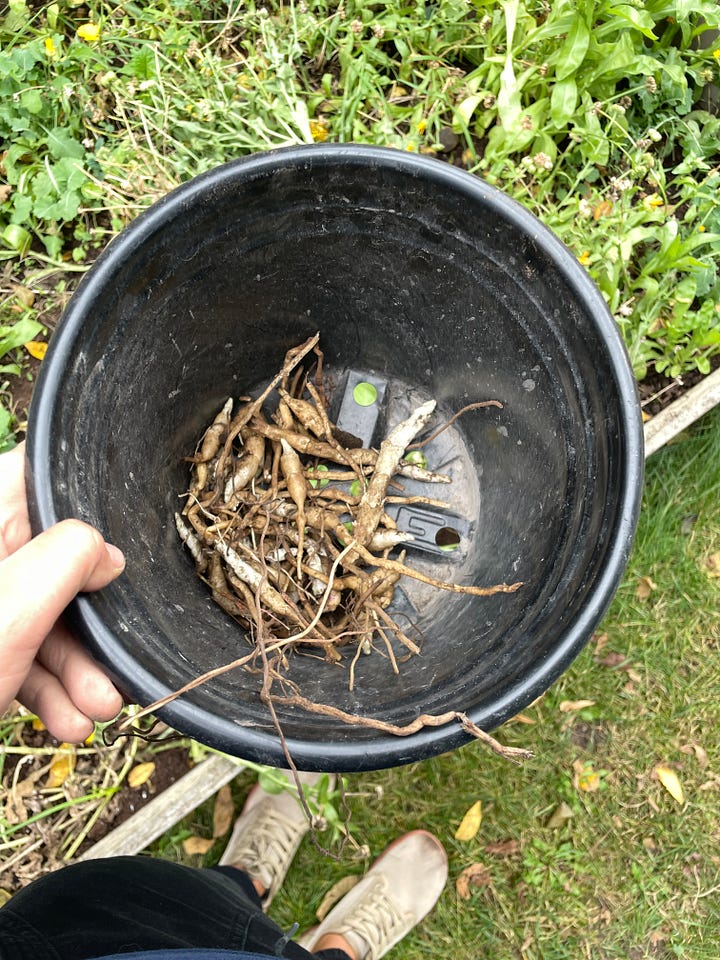
Before we get into this I want to share how I learned this lesson the hard way after planting one variety directly in the ground that I absolutely should not have. I didn’t know anything about them or the growth habit. It became a little chaotic, a little scary and yes, I cried while removing them because I was convinced I would be digging sunchokes out of that spot forever. After my full crash-out and all the digging I could manage that fall - I changed my approach.
This year, I treated the remaining shoots like weeds. I gently pulled what I could and used a hand shovel for the deeper ones that were likely to snap if I tugged too hard. You would never know now that I had ever planted them there. It was a dramatic lesson, but it also taught me that containment matters and that even a mistake like that does not necessarily mean the plant owns the space forever. This is exactly how They ended up in pot the last two years.
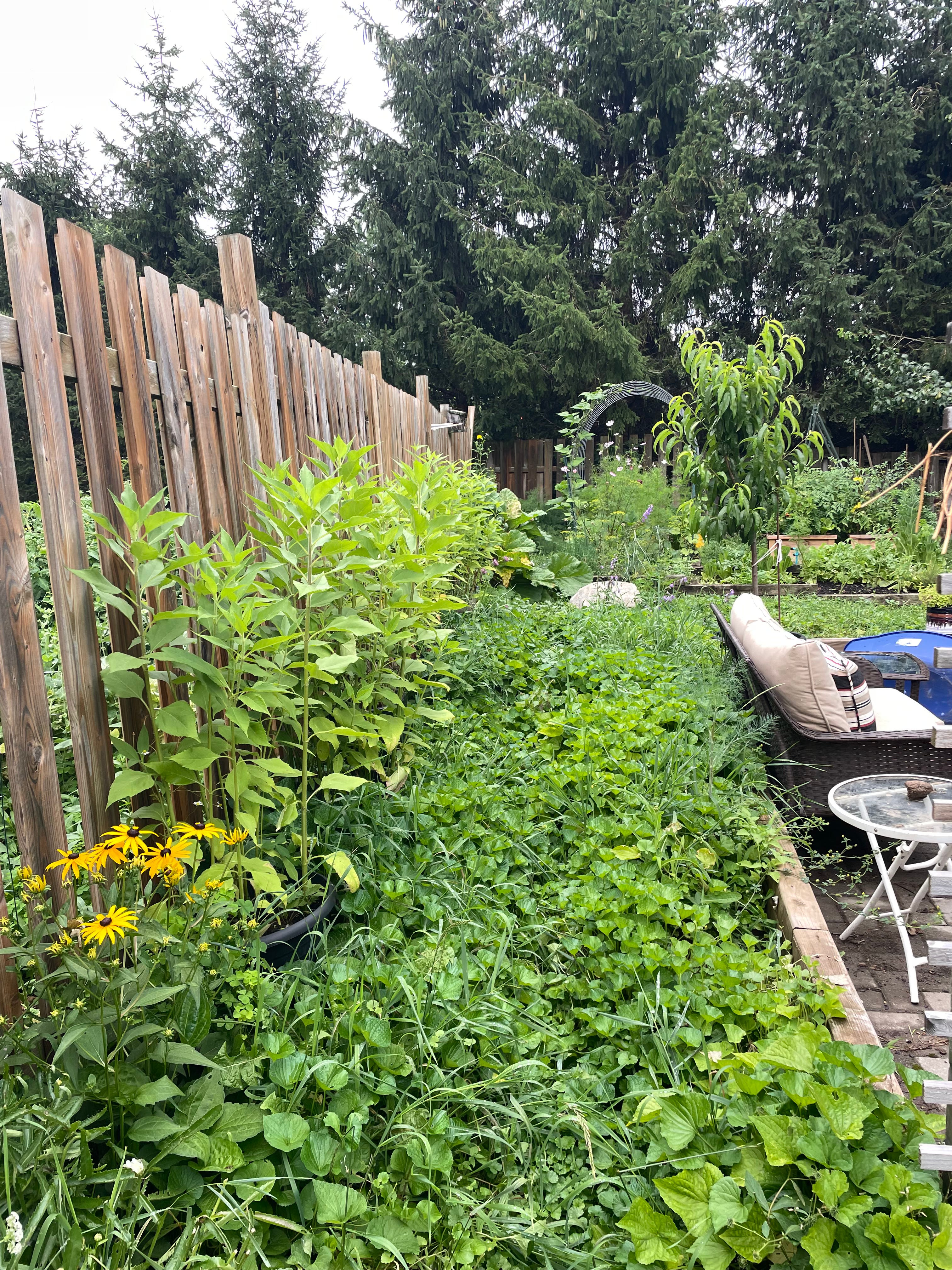
I’ve been growing sunchokes in pots and the pots served an important purpose.
They allowed me to keep the plants contained while I learned more about how they grew. I could observe the tubers, move the containers if needed and avoid committing them to an open garden bed before I fully understood what I was dealing with.
For experimenting, the pots were useful.
For expanding, they were not ideal.
The biggest problem was water.
Large containers can dry out surprisingly quickly, especially during stretches of hot summer weather. Sunchokes are tough plants, but they still perform better when they are not repeatedly moving between soaking wet and extremely dry conditions.
Keeping multiple pots evenly watered became more demanding than I wanted.
The pots also limited the amount of soil available to each plant. That may be useful for controlling growth, but if I want a reliable harvest, I also need to give the tubers enough space to develop.
The more containers I added, the more scattered the whole system became.
Instead of one organized growing area, I had individual pots that each needed attention.
That may work for a few plants.
It becomes much less appealing when the goal is to build enough stock to sell.
There is an important difference between containing sunchokes and starving them of space. I don’t want them escaping into the garden.
I also don’t want them packed into tiny containers where the tubers become crowded, difficult to sort or unnecessarily small. The ideal system needed to give the roots and tubers room to grow while keeping the entire crop inside a defined area.
Raised beds felt like the best middle ground.
They offer more soil volume than individual pots but they still create clear boundaries. I can dedicate each bed to a specific variety or group of plants, which should make harvesting and labelling much easier.
I will know where each crop begins and ends.
That matters now that I am thinking beyond my own kitchen.
If I eventually sell named varieties, I need to be confident that the tubers are what I say they are. Mixing them together underground would create confusion very quickly.
Separate beds give me a better chance of keeping the planting stock organised from the beginning.
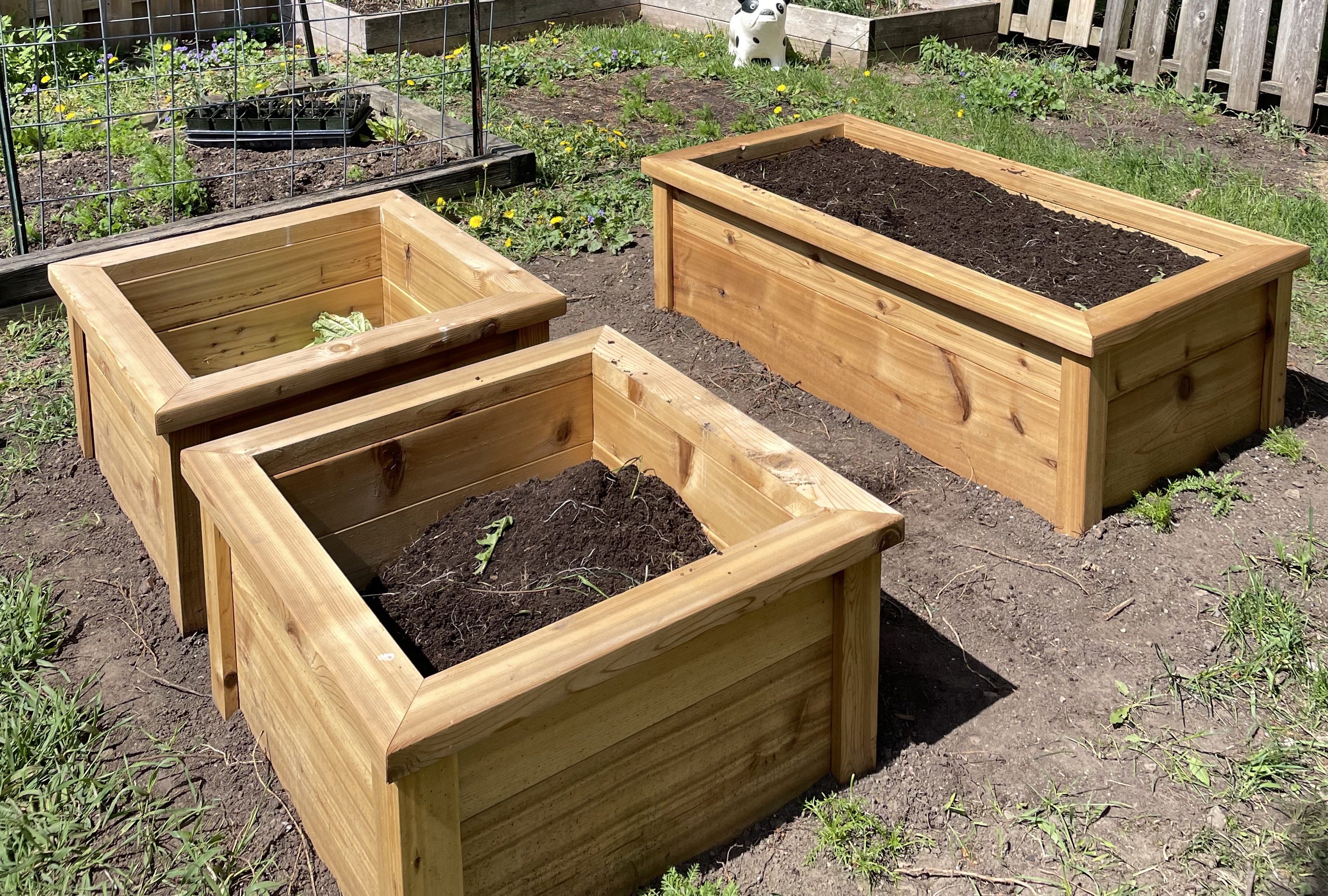
My current plan is to build four cedar beds along the fence. Each bed will be approximately six feet long, two feet wide and eighteen inches high.
Six feet gives me enough length to grow a useful number of plants without creating one enormous bed that is difficult to manage.
Two feet wide means I can reach across the bed without stepping into it or compacting the soil.
The eighteen-inch height should provide enough depth for a substantial growing area while also making harvesting easier on my back.
That last part matters more than it sounds.
Harvesting sunchokes is not like picking beans or cutting lettuce. The crop is underground. I need to loosen the soil, search through it and remove the tubers without damaging too many of them.
A raised working height should make that process much more manageable. The beds will be spaced evenly along the fence rather than joined into one continuous row. That gives each bed a visual break and creates walking space between them.
It also means one bed can be worked on without disturbing the others.
If I need to empty, amend or repair one section, the entire system does not have to come apart.
There are several reasons I prefer four beds over one long bed.
The first is organisation.
Each bed can have a specific purpose.
One may hold a named variety I want to expand. Another may hold a variety I am still testing. A third could become my main production bed. The fourth could give me room for comparison, propagation or future additions.
I don’t need to make every decision immediately.
The structure gives me flexibility.
The second reason is disease and pest management.
If something goes wrong in one bed, I may be able to isolate the problem more easily than if every plant is growing in the same long stretch of soil.
The third reason is harvesting.
I may not want to dig every bed at once.
Sunchokes can often be harvested gradually, especially when the soil is workable. Separate beds give me the option to process one area at a time rather than facing one enormous harvest all at once.
That is especially helpful if I am cleaning, weighing, sorting and packaging tubers.
A small garden crop can still become overwhelming if everything becomes ready at the same time.
Comments
Nothing yet. Say the first thing.
Sign in to join the conversation.