
You do not need a large property or a permanent orchard to grow your own fruit.
Many fruit trees can live happily in large containers when they are given enough soil, proper drainage, regular feeding and a little extra protection during the winter. Growing fruit trees in pots can be especially useful for renters, patio gardeners, people with limited space and gardeners who want to grow a tree that may need more winter protection than their climate can naturally provide.
It is also a great option for anyone who is not quite ready to choose a permanent location.
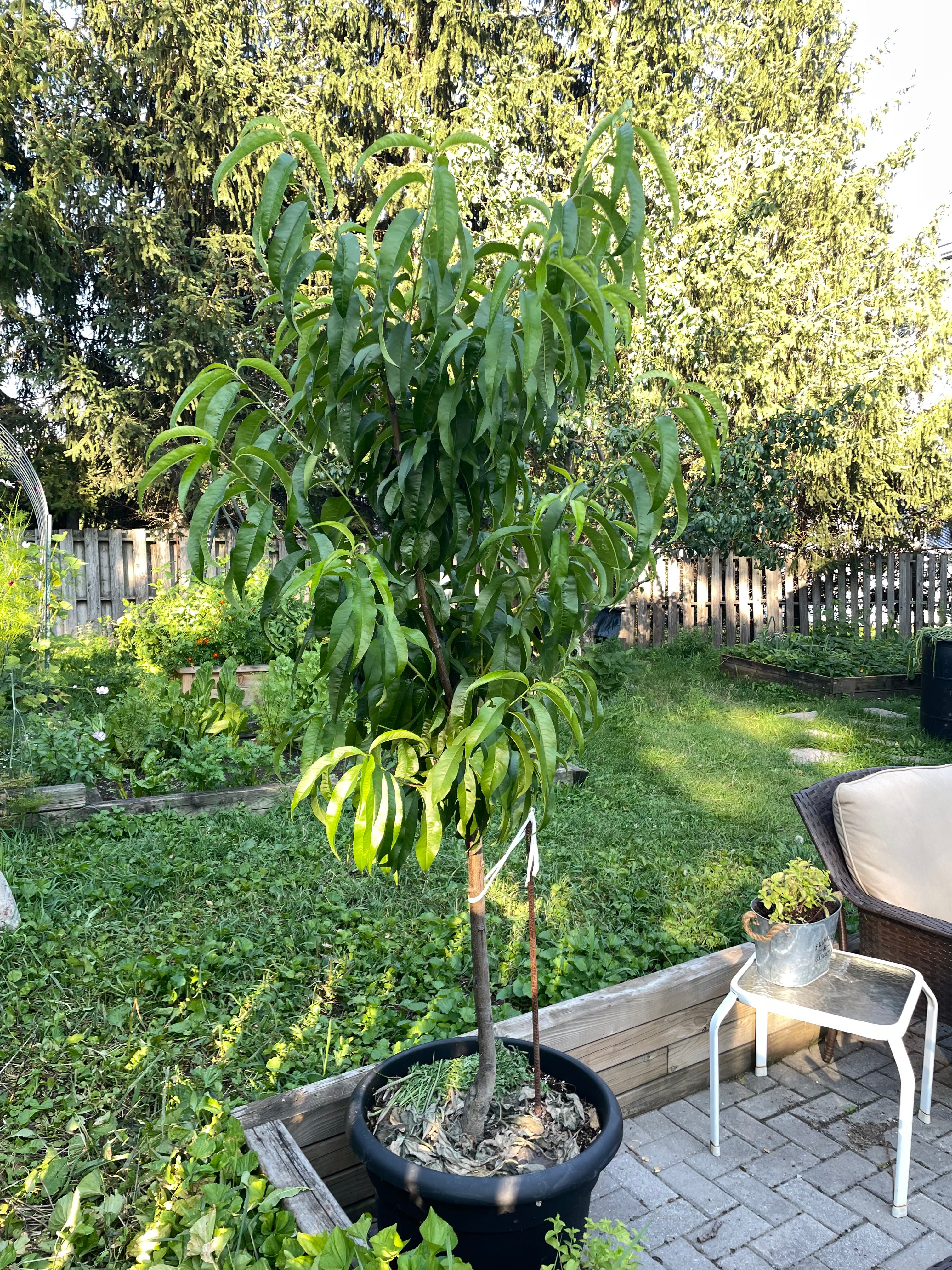
That was part of the appeal when I decided to grow my peach tree in a pot. My peach is a ‘Veteran’, and instead of planting it directly into the ground, I placed it in a large container that I can move into the garage for winter.
Growing a fruit tree in a pot does require more attention than planting one in the ground, but it also gives you much more control.
You can control the soil, drainage, feeding, pruning, location and winter protection. You can move the tree into better sunlight, shelter it from severe weather and avoid committing it to a permanent place before you understand how it grows.
YES - many fruit trees can grow and produce fruit in containers.
The important part is choosing the right tree and providing a container that is large enough to support its roots. A tree growing in a pot has access to less soil, water and nutrients than a tree planted in the ground, so its care needs will be slightly different.
Container fruit trees are usually kept smaller through a combination of:
Naturally compact growth
Dwarfing or semi-dwarfing rootstock
Root restriction
Pruning
Controlled feeding
The tree may never become as large as the same variety planted in the ground but it can still produce a worthwhile harvest.
The goal is not necessarily to grow a full-sized orchard tree inside a pot. The goal is to create a healthy, manageable tree that fits your space and produces fruit.
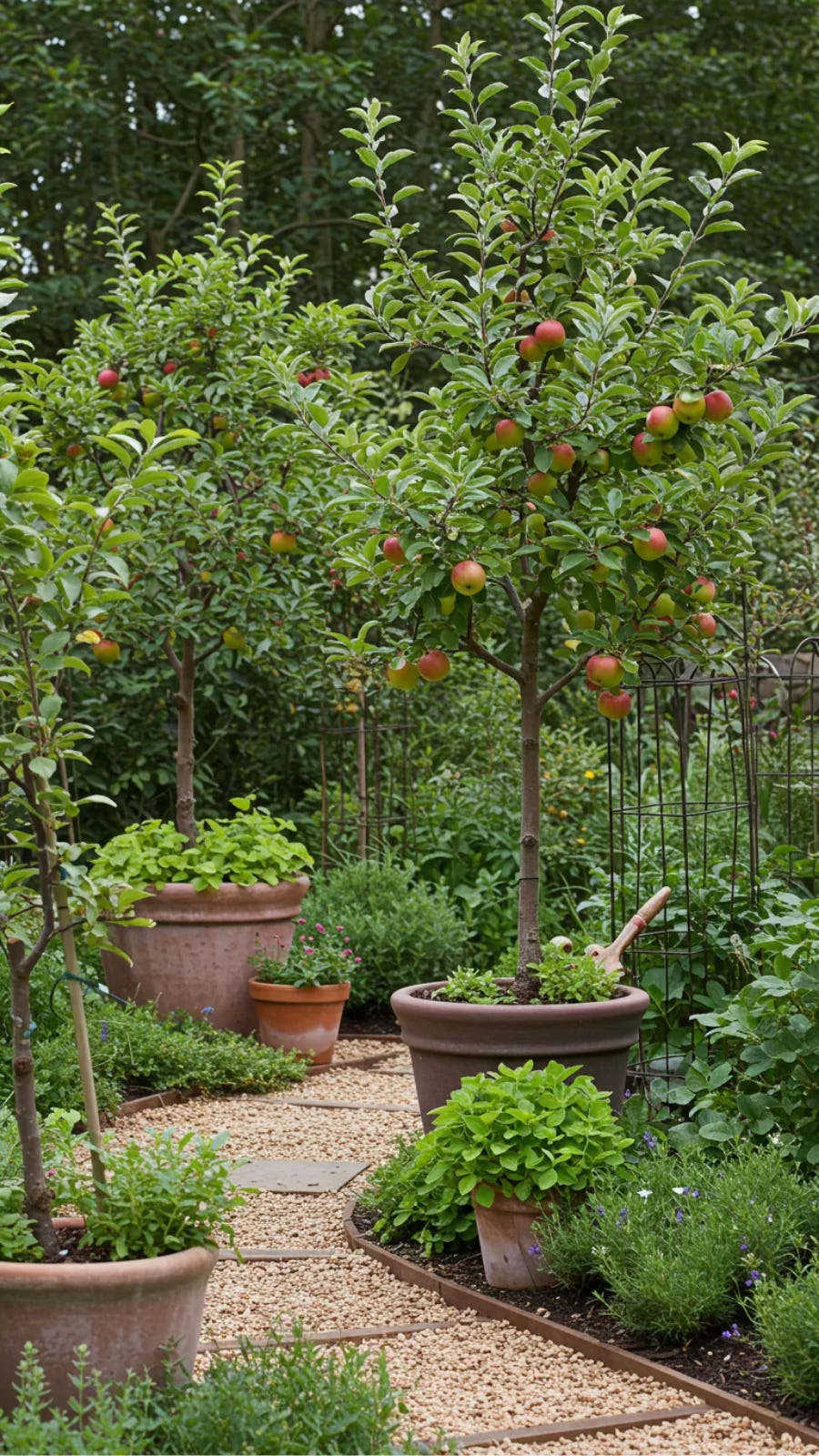
Some fruit trees adapt to container growing more easily than others.
Good options include:
Peaches
Nectarines
Apples
Pears
Plums
Cherries
Figs
Citrus
Pomegranates
Mulberries
Figs and citrus are commonly grown in pots because they can be moved indoors or into protected spaces during cold winters. Dwarf apples and compact peaches are also popular choices.
Before purchasing a tree, look at both the named fruit variety and the rootstock.
The rootstock affects the tree’s mature size, vigour, cold hardiness and overall growth habit. A naturally compact or dwarfing tree will usually be easier to maintain in a container than a vigorous standard-sized tree.
That does not mean every container-grown tree must be labelled as a patio tree. A larger-growing variety may still be grown in a pot, but it will usually require more pruning, a larger container and closer attention to watering and feeding.
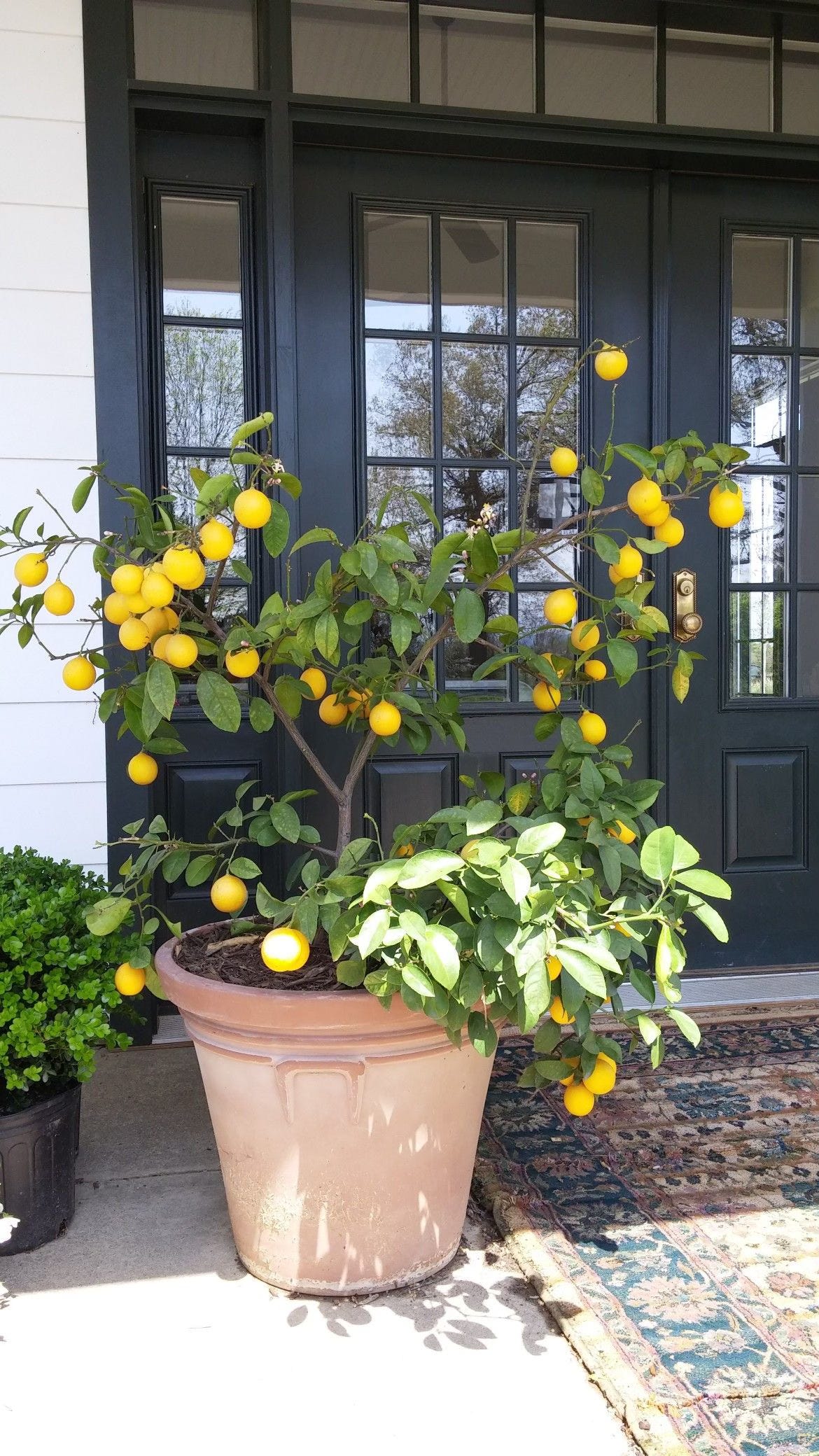
Fruit trees need substantially more room than annual flowers, herbs or vegetables.
A newly purchased young tree may begin in a container around 15 to 20 gallons, but many trees will eventually be more comfortable in a container closer to 25 or 30 gallons.
Larger containers provide:
More space for root growth
More stable soil temperatures
Better moisture retention
More nutrients
A heavier base that is less likely to tip over
A large tree in a lightweight pot can become top-heavy, especially when it is covered in leaves or fruit. Wind can easily knock over a poorly balanced container.
The final container should be wide enough to support the root system and deep enough to prevent the roots from becoming tightly compressed.
It must also have drainage holes.
Fruit tree roots need oxygen. A beautiful container without proper drainage can quickly become a waterlogged bucket, leading to stressed or rotting roots.
If the decorative pot you love does not have drainage holes, either add them or place the tree in a separate nursery pot that can sit inside the decorative container.
Do Not Put Gravel in the Bottom - It is still common to hear that adding gravel, rocks or broken pottery to the bottom of a container improves drainage.
It does not create better drainage inside the soil. It simply reduces the amount of usable growing mix available to the roots.
Use a well-draining potting mixture throughout the container and make sure excess water can freely leave through the drainage holes.
A small piece of mesh can be placed over large holes if you are concerned about soil washing out, but the holes should never be sealed.

Garden soil is usually too dense for container growing.
Soil taken directly from the garden can compact inside a pot, restrict airflow and drain poorly. Fruit trees need a mixture that holds moisture while still allowing excess water to escape.
A good container mixture may include:
High-quality potting soil
Finished compost or well-aged manure
Perlite, pumice or another aeration material
Fine pine bark or a soil-conditioning bark product
For my potted peach tree - I used a mixture of potting soil and aged horse manure.
The potting soil provides the main growing medium, the aged manure adds organic matter and nutrients, and the perlite helps keep the mixture lighter and better aerated.
The exact mixture does not need to be overly complicated. The most important qualities are that it drains well, holds some moisture and does not collapse into a dense mass.
Avoid filling the entire container with compost or manure. These materials are useful additions, but they can retain too much water or contain more nutrients than a young tree needs when used alone.
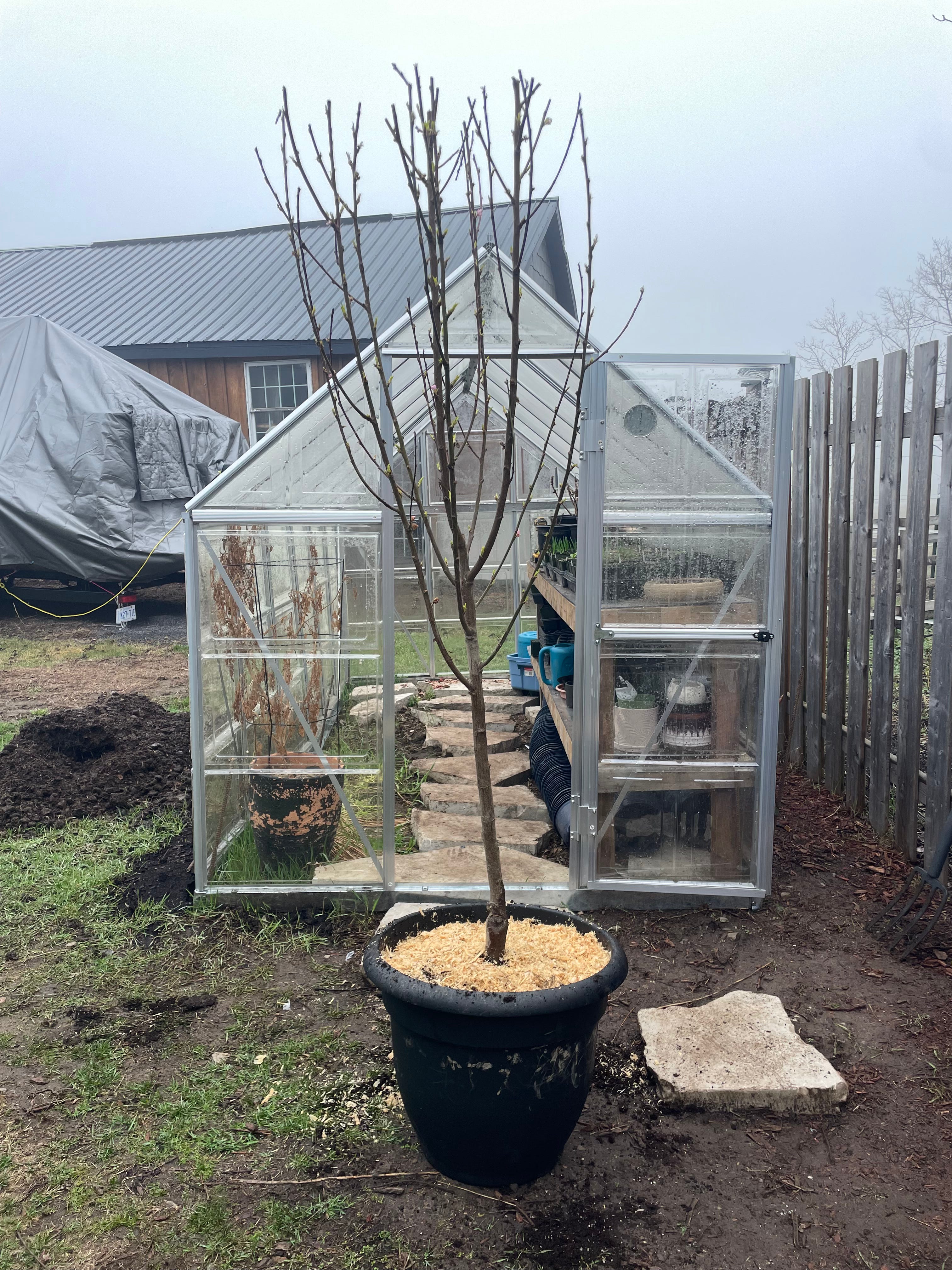
Before planting, water the tree in its original nursery container. A hydrated root ball is easier to work with and less likely to become stressed during transplanting.
Add enough potting mixture to the bottom of the new container so the tree will sit at the correct height.
The top of the root ball should remain close to the final soil level. Do not bury the trunk deeply.
If the tree has a visible graft union, keep it above the soil. The graft union is often a slightly swollen, bent or raised section near the lower trunk where the fruiting variety was joined to the rootstock.
Gently remove the tree from its nursery pot and inspect the roots.
If the roots are tightly circling the outside of the root ball, loosen them carefully with your fingers. Severe circling roots may need to be teased apart or lightly trimmed so they are encouraged to grow outward into the new soil.
Place the tree in the centre of the container and fill around the roots with potting mix.
Firm the soil gently with your hands, but do not pack it down heavily. Water thoroughly after planting to settle the soil around the roots and remove large air pockets.
Leave a few centimetres of space between the top of the soil and the rim of the pot. This creates room for watering without having soil and water spill over the edge.
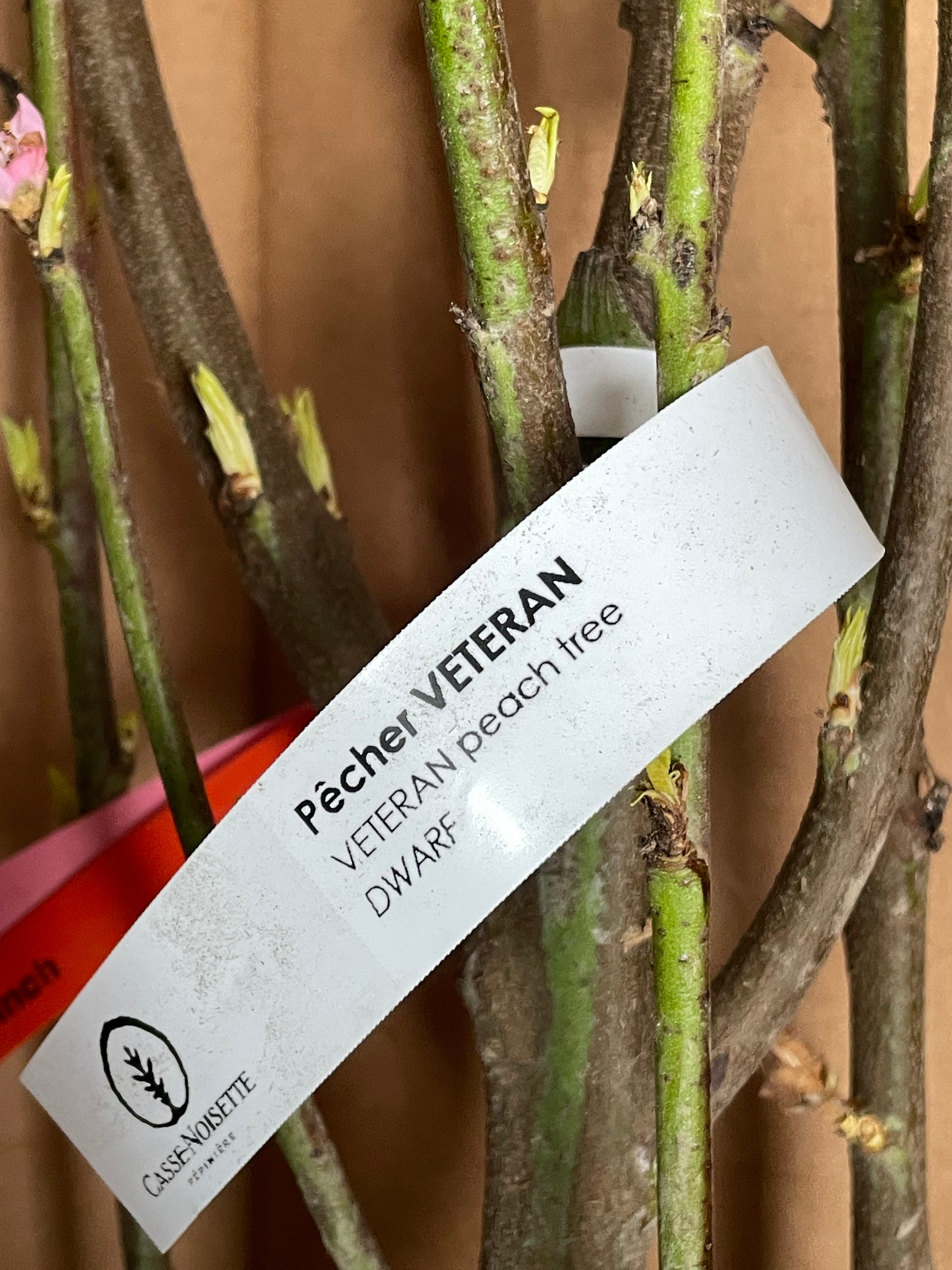
Bare-root fruit trees are sold without soil around their roots and should be planted as soon as possible after purchase, ideally while they are still dormant. Before planting, soak the roots in a bucket of water for 1–2 hours to rehydrate them and reduce transplant shock.
While the roots are soaking, prepare the pot by filling it partway with fresh potting mix, forming a small mound in the centre to help spread the roots evenly.
Trim any broken or damaged roots with clean, sharp pruners, but avoid heavy pruning of healthy roots.
Position the tree in the container so the roots can be spread naturally over the mound, ensuring the trunk sits upright and at the correct height. As with potted trees, keep the graft union above the soil line.
Backfill with potting mix, gently working it in between the roots to eliminate air pockets. Lightly firm the soil as you go, but avoid compacting it too tightly.
Water thoroughly after planting to help settle the soil and ensure good root-to-soil contact. Top up with additional mix if the soil level drops after watering.
Finish by leaving a small gap between the soil surface and the rim of the pot to make watering easier and prevent overflow.
Most fruit trees need full sun to flower and produce well.
Aim for at least six hours of direct sunlight, although many fruit trees will perform better with eight or more hours.
A warm, protected location can be useful for peaches, nectarines, figs and other heat-loving fruit. A south-facing patio, driveway or sheltered area near a wall may provide additional warmth.
However, containers can become extremely hot during summer.
Dark-coloured pots placed on pavement can heat the root zone much more quickly than trees planted in the ground. During hot weather, monitor the soil closely and consider protecting the pot from intense afternoon heat while leaving the tree canopy in full sun.
You can also place the container on pot feet, wooden blocks or a rolling plant platform to improve airflow and drainage underneath it.
A rolling base is especially helpful if the tree will need to be moved for winter.
For the cost of one garden centre impulse buy, you’ll unlock the full Growing With Beccalynne experience — garden downloads, practical mini guides, essays, and access full of resources designed to help you grow a more abundant, low-effort garden without overcomplicating it.
Watering is one of the biggest differences between growing a fruit tree in the ground and growing one in a container.
The limited amount of soil inside a pot can dry much faster than garden soil, especially during hot, windy weather.
Do not rely only on a fixed watering schedule.
Check the soil by placing your finger several centimetres below the surface. If the soil feels dry at that depth, water the tree deeply.
Water slowly until moisture drains from the bottom of the container. This encourages the entire root ball to become evenly hydrated.
A small splash of water on the surface is not enough. Shallow watering can leave the lower portion of the container dry and encourage roots to remain close to the surface.
During cool spring weather, the tree may not need frequent watering. During summer heat, it may need water daily or every couple of days, depending on the container size, tree size, weather and soil mixture.
Mulching the surface with shredded bark, leaves or another light organic material can help reduce evaporation. Keep the mulch slightly away from the trunk so moisture is not constantly held against the bark.
Nutrients gradually wash out of container soil whenever the tree is watered.
Fruit trees in pots therefore need regular feeding but more fertilizer is not always better. Too much nitrogen can produce excessive leafy growth at the expense of flowers, fruit and winter hardiness.
A balanced slow-release fertilizer can be added in spring according to the product directions. Compost or well-aged manure may also be applied as a light top-dressing.
Some gardeners use a liquid fertilizer during the active growing season, particularly when the tree is flowering or developing fruit.
Stop applying strong nitrogen-rich fertilizer later in the season. The tree needs time to slow its growth and prepare for winter rather than continuing to produce tender new shoots.
The appearance of the tree can provide clues about its nutrition.
Pale leaves, weak growth or unusually small foliage may suggest a nutrient problem, but these symptoms can also be caused by overwatering, compacted soil, root damage or an unsuitable soil pH.
Before adding more fertilizer, check the basic growing conditions.
Not every fruit tree can produce a full crop on its own.
Some trees are self-fertile - which means one tree can produce fruit without a second compatible variety nearby. Others need pollen from another variety that flowers at the same time.
Even self-fertile trees may produce more fruit when another compatible tree is growing nearby.
Before purchasing a fruit tree check whether it requires a pollination partner.
Peaches are often self-fertile which makes them convenient for small-space and container gardeners. Many apples, pears, plums and cherries have more specific pollination requirements.
Pollinators such as bees still need access to the flowers. If the tree is kept inside a greenhouse, garage or enclosed porch while blooming, it may need to be moved outside or hand-pollinated.
It can be very tempting to let a newly planted tree keep every flower and developing fruit.
I removed the first blossoms from my peach tree.
A young tree has a limited amount of energy. It must establish roots, grow branches, produce leaves and adjust to its new container. Producing fruit requires additional energy and can place stress on a tree that is still becoming established.
Removing flowers or tiny fruit during the first season can help the tree focus on root and branch growth.
Once the tree is established, thinning fruit may still be necessary.
A small container-grown tree can sometimes set more fruit than its branches can safely support. Removing some of the developing fruit allows the remaining fruit to grow larger and reduces the chance of branches bending or breaking.
Pruning helps keep a container-grown fruit tree manageable.
The exact pruning method depends on the type of fruit. Peaches are often trained to an open-centred shape, while apples and pears may be trained with a central leader or another compact framework.
Container trees may need pruning to:
Remove dead or damaged branches
Improve airflow
Prevent branches from crossing
Maintain a balanced shape
Keep the tree at a practical height
Encourage productive fruiting wood
Avoid removing large amounts of growth without understanding how that particular fruit tree produces fruit.
Some trees bear fruit on older spurs, while others produce heavily on newer growth. Poorly timed or overly aggressive pruning can remove the branches that would have produced the next crop.
Pruning roots and branches at the same time can also place considerable stress on a tree. Major root work is best done carefully and only when needed.
A fruit tree cannot remain in the same potting mix forever.
Over time, the soil breaks down, drainage becomes poorer and the roots fill the available space.
Signs that a tree may need repotting include:
Water immediately running around the edge of the root ball
Roots growing heavily from the drainage holes
The tree drying out unusually quickly
Slowed growth
A tightly packed root mass
The tree becoming unstable in the pot
Younger trees may be moved into a larger container as they grow.
Once the tree is already in its largest practical container, it can sometimes be maintained through root pruning.
Root pruning involves removing the tree from the pot, trimming back a portion of the outer roots and replacing some of the old soil with fresh growing mix. The tree is then returned to the same container.
This is best done while the tree is dormant or just before active growth begins, rather than during hot weather or while it is carrying fruit.
Root pruning is not something that must happen every year. It is a maintenance technique used when the root system has filled the container and moving to a larger pot is no longer practical.
Winter protection is one of the most important considerations for container fruit trees.
A fruit tree planted in the ground benefits from the insulating effect of the surrounding soil. A container is exposed to cold air on every side, which means the roots may experience colder temperatures than they would in the garden.
A tree that is considered hardy in your growing zone may still need protection when grown in a pot.
There are several ways to overwinter a potted fruit tree:
Move it into an unheated garage or shed
Place it in a protected location beside a building
Group it with other containers
Insulate the pot with leaves, straw or another protective material
Bury or partially sink the pot into the ground
Move the container into an unheated greenhouse
The goal is not necessarily to keep a cold-hardy deciduous tree warm.
Most temperate fruit trees need a winter dormancy period. They should remain cold enough to stay dormant, but the roots need protection from repeated deep freezing, thawing and severe temperature swings.
My peach tree will be overwintered in the garage. An unheated garage can provide protection from wind and extreme cold while still allowing the tree to remain dormant.
Check the soil occasionally during winter. Dormant trees use very little water, but the root ball should not become completely dry for months at a time.
Do not keep a dormant temperate fruit tree inside a heated house. Warm indoor temperatures may cause it to break dormancy too early, and indoor light is usually too weak to support healthy growth.
In spring, move the tree back outside gradually. Tender new growth and swelling buds may be damaged by sudden exposure to cold, wind or intense sunlight.
Peaches, apricots, nectarines and some other fruit trees can bloom early in spring. The tree itself may survive cold weather while its open blossoms are damaged by frost.
Container growing provides an advantage because the tree can sometimes be moved into a garage, greenhouse or sheltered location during a cold night.
This does not mean the tree should remain indoors for long periods once it is actively growing. It still needs sunlight, airflow and access to pollinators.
Being able to move the tree temporarily, however, can protect an entire season’s potential harvest.
The Soil Dries Too Quickly - The container may be too small, the growing mix may contain too little moisture-retaining material or the tree may have become root-bound.
A larger pot, fresh soil and surface mulch may help.
The Soil Stays Wet - The drainage holes may be blocked, the soil mixture may be too dense or the container may be sitting in standing water.
Improve drainage and avoid allowing the pot to remain in a saucer filled with water.
The tree may still be young, it may need another pollination partner, the blossoms may have been damaged by frost or the tree may be receiving too much nitrogen.
Insufficient sunlight can also reduce flowering and fruit production.
The Tree Keeps Falling Over - The canopy may be too large for the container, or the pot may be too narrow and lightweight.
Move the tree into a wider, heavier container and prune carefully to improve balance.
Leaves Are Yellowing - Yellow leaves can be caused by overwatering, under watering, nutrient deficiencies, root problems or soil pH issues.
Look at the whole growing situation before automatically adding fertilizer.
The Tree Produces Small Fruit - Small fruit may be caused by insufficient water, too many fruits on the tree, limited nutrients, poor sunlight or an immature tree.
Thin crowded fruit and maintain consistent watering while the crop develops.
Growing fruit trees in containers is not only a compromise for gardeners without space.
It can be a deliberate growing method with several advantages.
A potted tree can be moved.
It can be protected from harsh winter weather, late frosts, strong winds and severe storms. It can follow the sunlight as conditions change. It can move with you if you rent or relocate.
Containers also allow gardeners to grow fruit in areas with poor, contaminated, compacted or unsuitable soil.
You have control over the growing mix instead of trying to permanently change the ground.
A potted fruit tree can also become part of a patio, deck, driveway or small garden design. It provides spring blossoms, summer foliage and eventually a harvest without requiring a permanent orchard.
In some ways, yes.
Container trees need closer attention to watering, feeding and winter protection. They cannot send their roots deep into the ground to find moisture during a dry period.
However, growing in a pot can make other parts of tree care easier.
You can control its size, move it when needed, protect it during extreme weather and avoid planting it in the wrong location.
For me, growing my peach tree in a container is a way to learn how it grows before making any permanent decisions.
It gives me the freedom to move it, protect it and adjust its care as I gain experience.
In writing all of this because of my research and experience so far with my dwarf peach tree thriving in a pot- you do not need the perfect property, a large orchard or even permanent garden space to grow fruit.
A large container, healthy soil, good drainage, full sun and consistent care can support a productive fruit tree for years.
Start with one tree.
Choose a variety that suits your climate, check its pollination needs and give it a container large enough to grow into. Pay attention to water during summer and decide how you will protect the roots before winter arrives.
Growing fruit trees in pots may require more hands-on care, but that care comes with flexibility.
Sometimes it is helpful to know exactly where a tree will live for the next twenty years.
Sometimes it is even better to put it in a pot and figure things out together.
Now go put that fruit tree you’ve always want in a pot!
See you in the next one.
Beccalynne🌻
If growing fruit trees in pots has you thinking about what else you can grow in containers, I’ve got you. Container gardening can go far beyond a few herbs on the patio. Here are a few more posts to help you grow food, flowers and perennials in pots, even when space is limited.

Meet The Author.
Hi there! I’m Becca, the heart behind Growing With Beccalynne.
From Eastern Ontario Canada, gardening has been apart of me my whole life starting with my great grandpa when I was little. I’ve been building and educating through my own garden since 2018. By day, I run my business as a virtual assistant and creating content for you (@growingwithbeccalynne on all platforms). Here, I pour my love for soil science, creating gardens, growing plants and the joys of creating a low effort garden to love long term.
Ways To Keep Growing With Me:
Become a Paid Subscriber: For the cost of a monthly garden centre impulse buy, you can unlock the full Growing With Beccalynne experience — downloads, private essays, seasonal workbooks, and access to the growing Growers Vault of resources designed to help you build a healthier, lower-effort garden.
Explore the Garden Resources I Share : Seasonal notes, how-to guides, soil-building methods, herb-bed layouts, and the real process of growing a backyard garden with ease. These tools are here to help you grow more confidently without overwhelm.
Follow Along on Instagram - Come hang out with me on Instagram for real-time garden updates, photos from the backyard, short-form videos, seasonal reminders, plant rambles, garden experiments, and the honest in-between moments that don’t always make it into a full post.
Watch on YouTube — Follow along with longer garden chats, seasonal walkthroughs, backyard projects, soil-building experiments, plant updates, and the real process of growing a lower-effort garden over time. It’s where I share the slower, more detailed side of the garden that doesn’t always fit into a short post or quick update.
💬 Feel free to like or comment on this newsletter so more Substack users can find it!
Comments
Nothing yet. Say the first thing.
Sign in to join the conversation.