
Christopher Nolan has come to supplant Steven Spielberg for guaranteed spectacle. I don’t mean that in any way as a slight against Spielberg, who I will always cling to as my favorite filmmaker of all time. I've devoted many, many hours and words to him and to that argument!
But earlier this year I found myself much more excited, and much more confident, in The Odyssey than I was in Disclosure Day, which made it very clear to me that Nolan has taken the reins that Spielberg once held. Not that he’s a better director than Spielberg—they have different strengths and styles, and Spielberg’s body of work speaks for itself—but over the past 20 years, really ever since Batman Begins, the age of Spielberg has slowly passed and we are now firmly in the Age of Nolan.
And like Spielberg, Nolan loves the power of music. It just takes a different form.
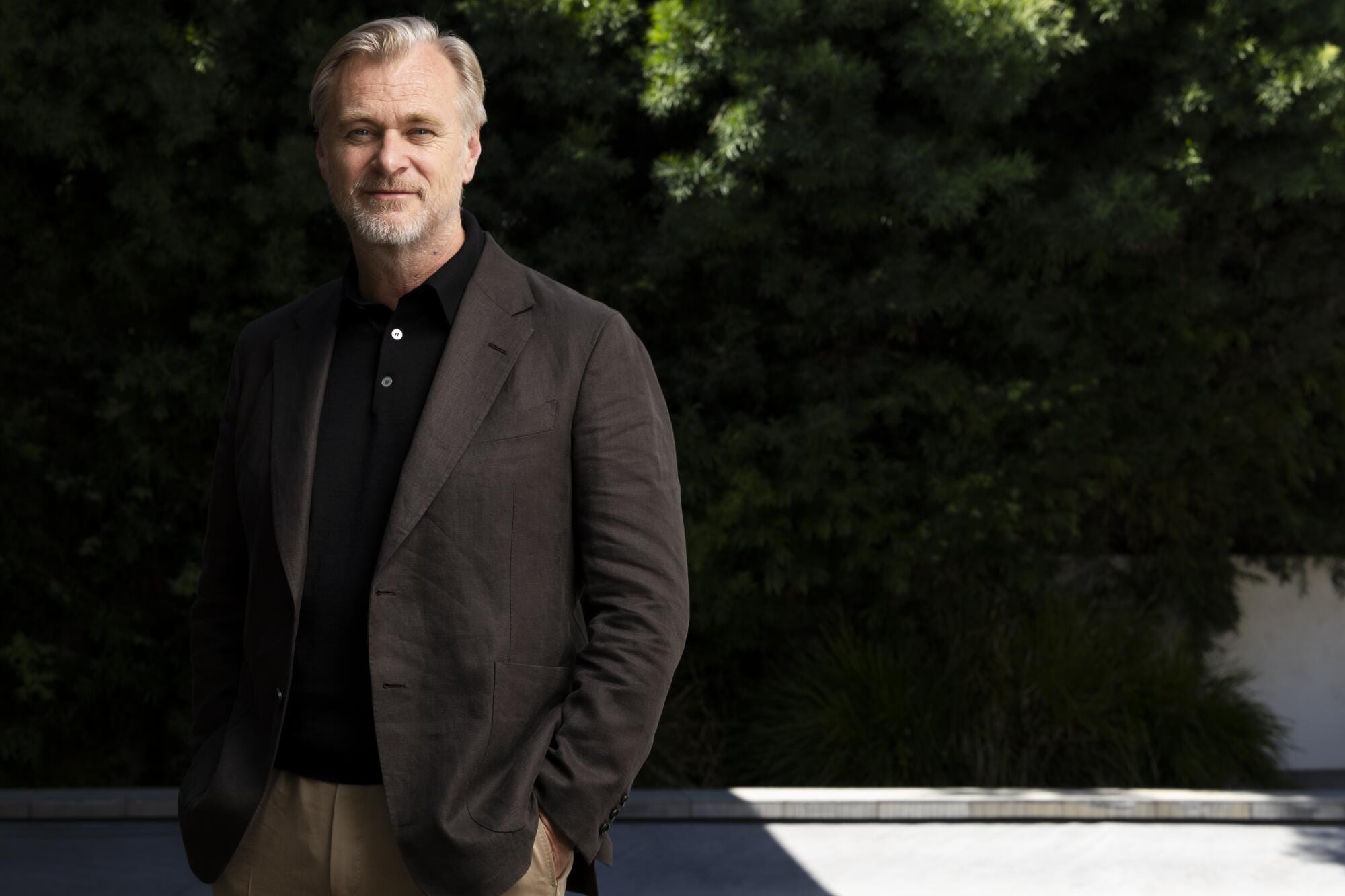
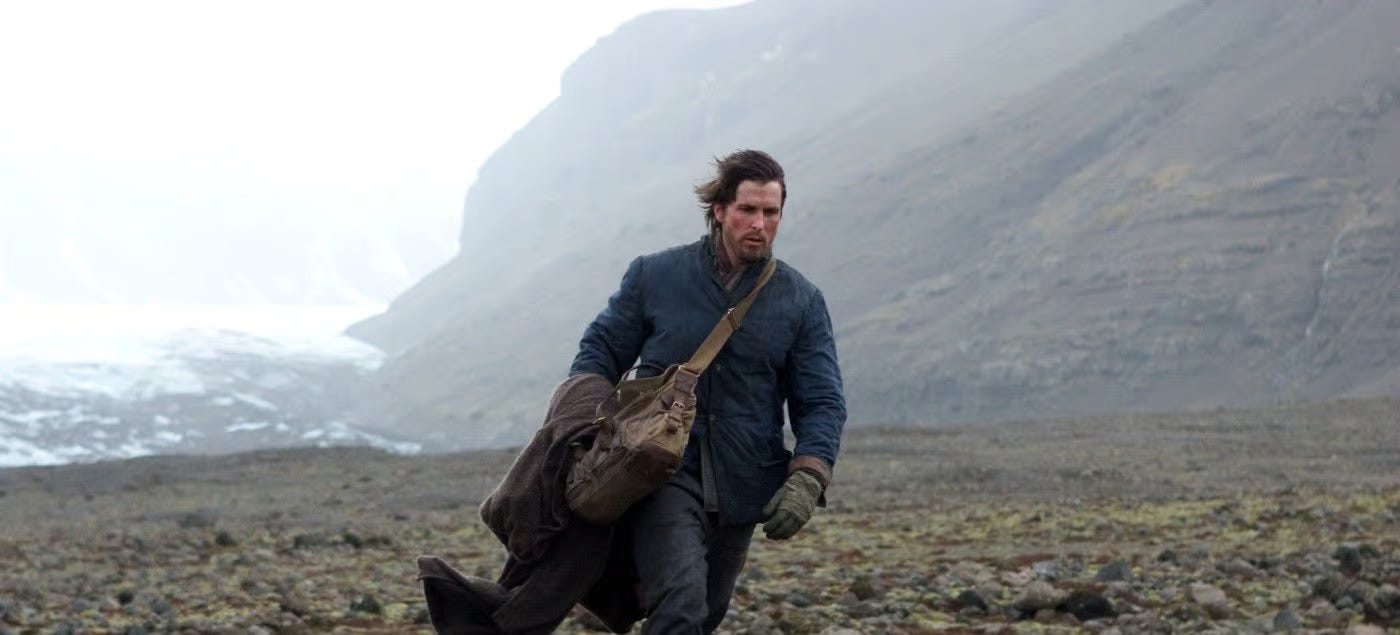
I remember seeing Batman Begins in theaters in the summer of 2005. I didn’t care about Batman or about superhero / comic book movies (I still don’t), but in 2005 we weren’t drowning in a glut of such things and I was excited because I loved Christian Bale and the movie looked good. And it was—and remains—very, very good. The thing that Nolan cracked with that film was that he didn’t treat the material like a comic book; he treated it like real literature, like real drama. Just as Spielberg did with Jaws and Ridley Scott with Alien and Francis Ford Coppola with The Godfather, Nolan approached “genre”—and what is often dismissed as lowbrow or kid-fare genre—as a serious auteur. And in doing so, he made a grounded human story about tragedy and rebirth, about striving for justice against corruption, about suffering and good and evil. He turned the story of a guy who dresses like a bat to fight crime into a beautifully moving morality tale that, like a great symphony, developed from quiet moments of intimacy to operatic spectacle and back again.
Nolan was heavily inspired by Terrence Malick, and The Thin Red Line in particular, in his visual language and in his more elliptical, cascading style of editing on Batman Begins. This was another way in which he elevated genre and made his comic book movie something more akin to grand art, while still never losing touch with the kinetic and entertaining joys of a popcorn blockbuster. He also sought out The Thin Red Line’s composer, Hans Zimmer, to bring some of the same minimalistic, mood-setting aesthetic.
“The way Chris Nolan and I work is actually a more efficient but very similar style to the way Terry and I worked,” Zimmer once told me, “[where] the piece of music would exist autonomously and independently of the film, and somehow the two would merge and then become a whole. I would write story, and I would write colors of the images, but I wouldn't stick tightly to the cut; there will be an autonomous rhythm in the music that was different from the other thing that was going on.”
(Zimmer also, boldly, suggested collaborating with another superstar composer, James Newton Howard—giving Batman Begins, like Batman / Bruce Wayne, a dualistic but complementary personality. Howard handled the “emotional” human side, and Zimmer the wing-flapping action.)
For me, speaking as a diehard John Williams zealot, I love the style and use of music that Zimmer created for Batman Begins—which could not be any more unlike the Williams style and approach. That endlessly chugging minor-third ostinato, which resolves into a major chord at dramatic moments, is just a perfect and powerful engine for Bruce Wayne’s heroic odyssey from exile in the wilderness to his ascent as Gotham’s crusader. The Nolan/Zimmer aesthetic is like a buttery, turbo-charged version of Malick’s cinema, where images and music flow by like a rushing river and the score isn’t trying to silhouette the contours of the story so much as create a hypnotic dream state.
See, Christopher Nolan loves music as much as Steven Spielberg. He just loves a different kind of music, and he applies it in a totally different way. Spielberg is a classicist; his philosophy of music is informed by the John Ford and William Wyler and Walt Disney tradition, where score is fundamentally romantic and classical and acts as an emotional and dramatic narrator, or as a choreographer to the dance of his images.
Nolan’s Malick-informed philosophy prefers a more minimalist, textural style of composing, of repetitive cells and trancelike, mantric flow. But boy does he love it.
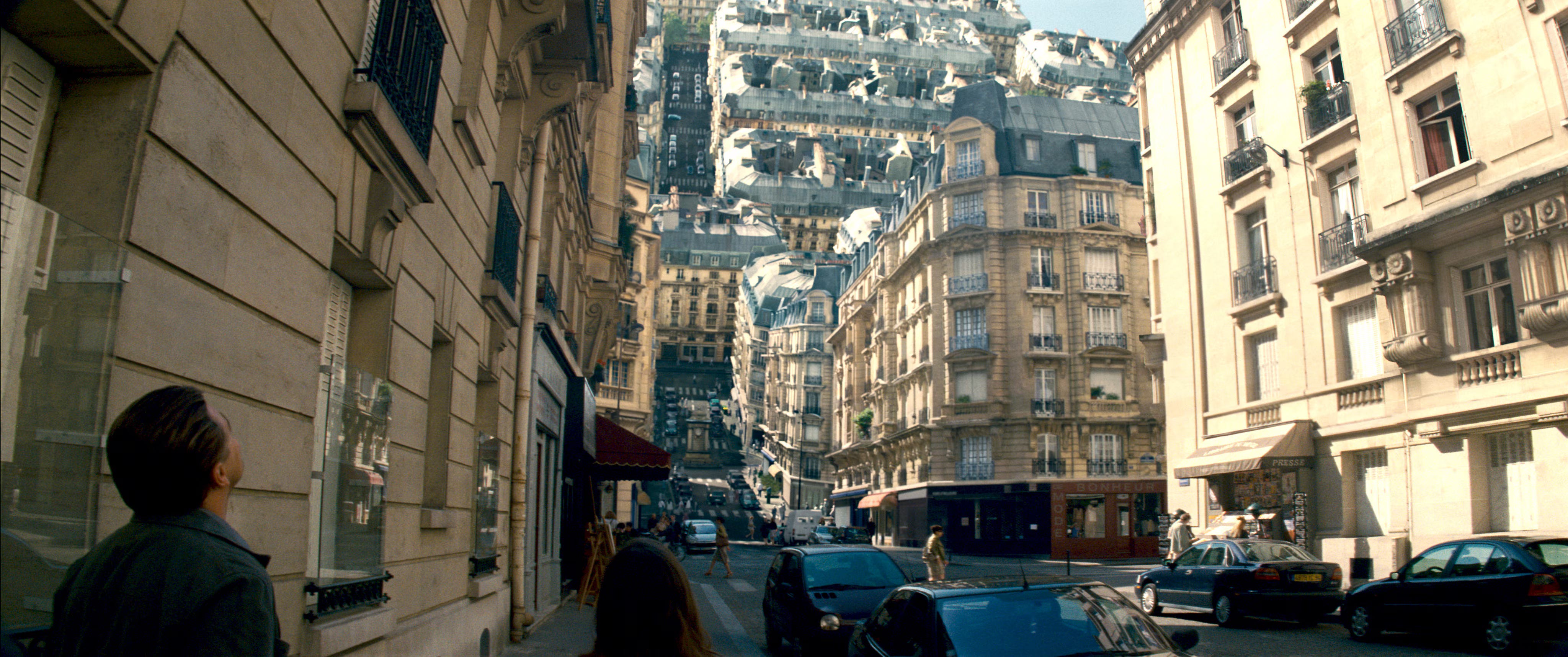
After a slightly strange detour with his old mate David Julyan on The Prestige, Nolan and Zimmer ramped up the Batman Begins ethos with The Dark Knight, Inception, and The Dark Knight Rises. And just as the images grew more epic in size and ambition—stunning IMAX images of Batman standing on top of a skyscraper, or of imagined cities folding on top of themselves—the music grew louder and more omnipresent, though often with the simplest, most elemental ideas. Dark Knight is defined by the long, lone scratching of a violin—Zimmer’s “theme” for the Joker. I’m actually not the biggest fan of that movie or its score, which I know is heresy; it’s simply lacking the emotional punch of Batman Begins for me, and it loses sight of Bruce Wayne by fracturing into a divided story that’s as much about the Joker and Harvey Dent (a weak link in the form of Aaron Eckhart) as it is about the presumed main character. Still, it’s undeniably spectacular cinema with incredible set pieces and indelible imagery, and there are fantastic moments of scoring to boot. (My favorite of the trilogy is actually The Dark Knight Rises, but I’ll save my controversial essay on that film for another day!)
Inception applied the same basic trancelike ethos as Batman Begins, but with a slightly more complex music that mirrored the M.C. Escher-style dream-collapsing-into-dreams visuals of the story. Nolan was always playing with the concept of time—slowing it down, speeding it up, inverting it—and here he asked Zimmer to help him make that potentially cerebral exercise into something visceral and emotional. Everyone jokes about the oft-abused brassy foghorn effect, but it’s totally effective in context and it’s also just one of many delicious ingredients in this Nolan/Zimmer masterwork.
When I interviewed Zimmer about Inception, he explained their evolving ethos like this: “Because it’s a Chris Nolan movie, people tend to use words like ‘intelligent’ or ‘brainy’ or ‘complicated.’ And so I thought really what the score needs to do, it needs to be like you’re putting a little paper boat you’ve built onto a river, and you just let the river take you down on this journey. And you don’t question how you get from point A to point B, but just let yourself be swept along emotionally with it. And I think that’s really very much the function of this score.”
Nolan, as much as Spielberg with Williams, made Zimmer his co-author. More and more, Nolan asked Zimmer to start writing music before the film was even shot, inviting him to respond more abstractly to the core ideas of each film, but also allowing music to then shape the feeling and motion of the film itself. He was trying not only to dazzle us with spectacle but weave trippy dreams, rooted in actual scientific and mathematical ideas, and more and more he wanted Zimmer to help him achieve his increasingly extreme visions. Not only was music a constant and prominent presence throughout, but Nolan loved to blast it! So much so that, by the time of Interstellar, the director was facing a lot of criticism for drowning out dialogue with score.
I asked Nolan about this in 2014, and he said this: “The way I view sound mixing is, I’m not making a radio play. I don’t believe in mixing the sound purely for the dialogue, and I think that when you have music playing as important an emotional partner that it needs to in a film like this, for me I’m looking at giving a balanced mix whereby people hear what they need to hear but they’re also feeling and being swept up in the emotion of what’s going on. So there’s a broader force at work, where everything is not driven forward just by the dialogue. It’s driven forward by the music, by the sound as a whole.”
That to me sums up Nolan’s whole philosophy about music and what he’s attempting to do with his films—sweep us up in the emotion of what’s going.
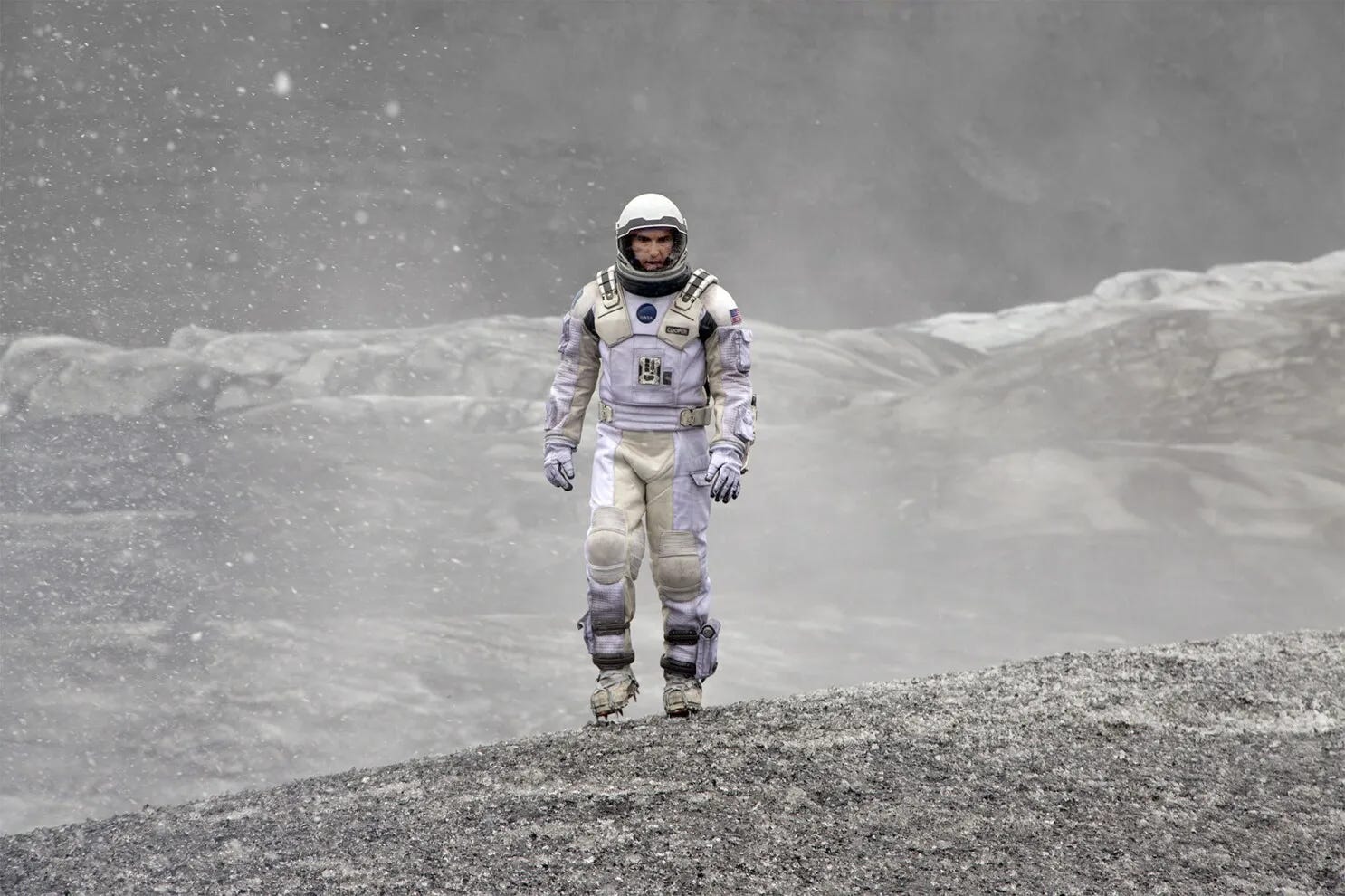
Interstellar is the Nolan/Zimmer masterpiece. It carried forward the hypnotic minimalism dream state project they began in 2005, but took it to unprecedented emotional and spiritual heights. Nolan’s IMAX spectacle—of cosmic voyages, slow-moving mountains of water, a throat-gripping docking sequence—is matched perfectly by Zimmer’s gargantuan cathedral score. It’s huge and propulsive and creates that sense of a river sweeping you along, but it does so in the most intimate and tender moments as well: particularly the sequence when Cooper is driving away from his home and family for the last time and blasting off never to see them again, and in the famous scene when he’s watching a montage (a river if you will) of video messages from his kids revealing just how much time he’s missed on Earth. Interstellar is a grand opera about the love between parents and children and about the fleeting time we have together and about the slipstream of mortality, told through enormous, myth-making images and mesmerizing incantations for pipe organ and orchestra.
Dunkirk brought them back down to earth, and I found it ultimately disappointing. There’s no denying the power of Nolan’s artistry, but I just found it more of a kinetic exercise than a satisfying narrative or emotional experience. And the score is very effective at keeping the tension ever-mounting, but that’s about all it does. Apparently there was some kind of fallout between Nolan and Zimmer during the making of that film, and perhaps the collaboration suffered from their lack of harmony.
And then… Nolan reached out to Ludwig Göransson.
My thoughts on their three-film collaboration—and on The Odyssey—are up next.
No posts
Comments
Nothing yet. Say the first thing.
Sign in to join the conversation.