
Greetings! I, Tim Greiving, am no stranger to your inbox; if you’re reading this on day one, you already subscribe to Behind the Moon, my Substack about John Williams. But you’ll notice something is a wee bit different about the header and title of this here publication…
That’s right; after announcing the finale (for now) of writing weekly about John Williams on Substack, I’m already back with a writerly vengeance! The devil you say? That’s because I love writing about films/music/culture/life, and I still have so much I want to share. You were automatically subscribed to this new column—which I’ve cheekily titled Greiving Process—but please feel free to unsubscribe without shame if you don’t need or want my mutated musings cluttering up your digital house.
I don’t have much of a plan yet for this thing beyond the simple fact that I wanted to write an essay in response to seeing Toy Story 5—and I know I’ll have similar urges to write about all sorts of film and music experiences, old and new, and figured that I already have my own modern printing press… so why not? There is no formal publication schedule, sometimes I’ll go deep, other times not so much—and who knows, maybe I’ll even crack the code on a new podcast concept.
Care to join me as I process things, Greiving style?
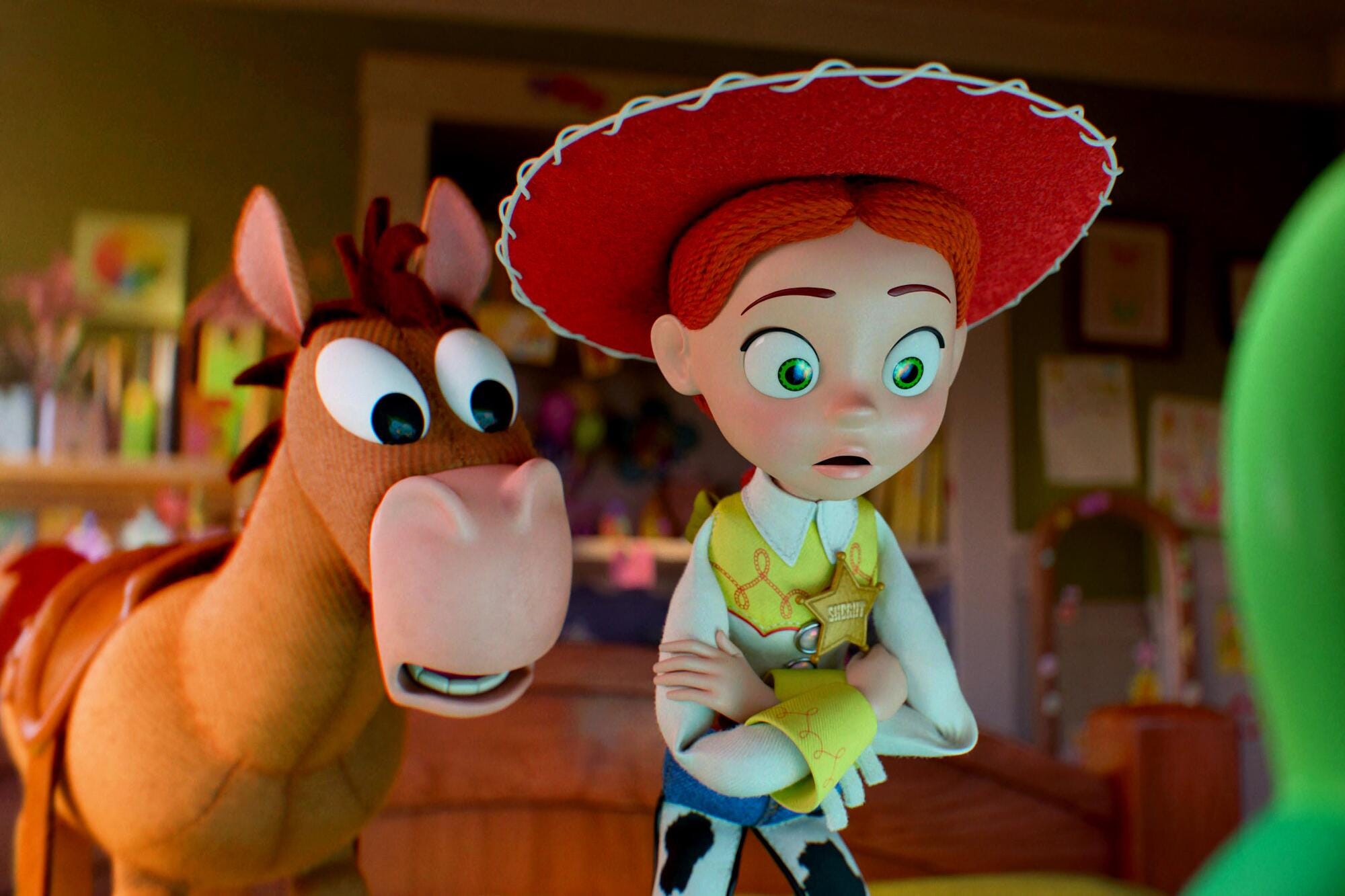
I was ten, just turning eleven, when the original Toy Story was released in the fall of 1995. I’ve literally grown up with Woody, Buzz, and the gang. That first chapter is perfect; hilariously sarcastic, sweet, and touching in equal measure, with an immortal Randy Newman songbook and characters that are deeply woven into our cultural fabric and my own heart. Andy’s bedroom, with its cartoon cloud wallpaper, is one of the most important film worlds of my generation. Four years later, I thought Toy Story 2 was an incredibly funny, moving continuation, only deepening my love for these playthings and giving us one of the great emotional wallops of all time with Jessie’s flashback montage set to “When She Loved Me.” And when Toy Story 3 concluded the trilogy in 2010—the summer I got married—I wept like a man who was saying goodbye to the avatars of his childhood. I contend that those first three Toy Story movies are the crowning achievement of Pixar’s legacy, the best they’ve contributed to cinema and to culture. I adore these characters and their evolving relationship to each other, to existence, to mortality, and to letting go.
When I heard they were making a Toy Story 4, it felt like a huge mistake—but whether it was because I got to do an NPR piece about Randy Newman and attend one of his scoring sessions, or whether it was because it was just a pleasantly melancholy and consistently funny adventure with my old friends, I actually enjoyed it quite a bit. (Annie Potts’ Bo Peep was such a great character to build a movie around!) It didn’t “ruin” the perfect trilogy for me; it just played like a sweet and satisfying epilogue, one last hurrah.
Which is why, despite my bone-deep fatigue of Hollywood’s infernal “intellectual property” strip-mining, I wasn’t mortified to learn there was going to be a Toy Story 5. In some ways, I welcomed it! Written and directed by the great Andrew Stanton (who once told me that he always listened to Randy Newman’s score for Avalon when writing a Toy Story script), and with Randy back in the saddle, I was ready to have my funny bone tickled and my heart torn to shreds by my dear old pals once again. Early reports from critics I like only fanned my optimistic anticipation.
You can probably sense where this is heading. Toy Story 5—while inoffensive and occasionally charming and obviously made with great care and attention to detail—left me cold. So cold.
It started with the voices; these eternally childlike dolls and action figures are now all voiced by geriatrics, and the cognitive clash is both jarring and, frankly, depressing. The key character voices who aren’t croaking with old age are in fact dead and had to be re-cast. That factor alone should have taken this project off the table. Making this Jessie’s movie was narratively clever, but not when Joan Cusack sounds like she left her dentures in a glass of water next to the bed. (The natural effects of time on peoples’ voices is of course no one’s “fault” and not inherently bad at all, but it is a fatal flaw when making a new movie about ageless, high-energy dollies.)
The other major flaw in the movie is that there are too many movies going on inside it. Bonnie’s house and her toys (and the arrival of an iPad) are going on while also Woody and Bo Peep are out on their own adventure while also Jessie and new (old) tech characters are doing their thing at Blaze’s farmhouse (which is also Emily’s old house, but Emily isn’t actually in this movie) while a legion of Buzz Lightyears are migrating from an island to a construction site to a campground (with a new human family). It’s scattershot and messy with no emotional or dramatic focus, so that when the classic Pixar lump-in-throat moments come, they feel shoehorned and quickly abandoned rather than beautifully, cathartically earned. The fact that Emily named her daughter Jessie is touching, I guess, but I still don’t really understand how Jessie figured that out—and the emotion of it is swiftly undercut by the other plots and literally dozens of other characters. Pixar, and Toy Story specifically, used to tell much clearer narratives and exquisitely stick the landing of such revelations and heartbreaks.
Character and story -wise, I just thought Toy Story 5 was a tangled mess. Woody feels utterly irrelevant. Buzz just… is madly in love with Jessie? Rex has two lines. I get that this story is all about Jessie and, to an extent, Conan O’Brien’s potty trainer gadget and the iPad (and the army of newfangled Buzz Lightyears), but there are just so many barnacles stuck to the boat at this point—and it’s (again) depressing when those “barnacles” are cherished characters you grew up with.
The interrogation of screens/technology and the death of imaginative play is a worthy and interesting subject, but there’s just too much else going on for that message to ring with any real clarity (not least because this movie ultimately embraces and redeems the gadgets). All in all, this was just a frustrating and unnecessary zombie of a story that should have been left dead. The voices creak with senescence; they’ve told this story one too many times.
But hey, at least we got a new Randy Newman score! (Pretty cruel of the filmmakers, though, to repeatedly tease his endearing ballad, immaculately performed by Sarah McLachlan in Toy Story 2, only to stiff us with an instantly disposable Taylor Swift song in the end!)
I promise that Greiving Process won’t exclusively be a grumpy old man column, grieving all the movies and culture that disappoint me—although I am something of a curmudgeon. I do want to celebrate the great stuff, both old and new, as well as critique the stuff that doesn’t work. This isn’t strictly a review publication, either; it’s broadly just a home for my writings and musings, and who knows where it might go.
Please do start a friendly argument in the comments if you saw Toy Story 5 and disagree with me!
But let’s end on a positive note.
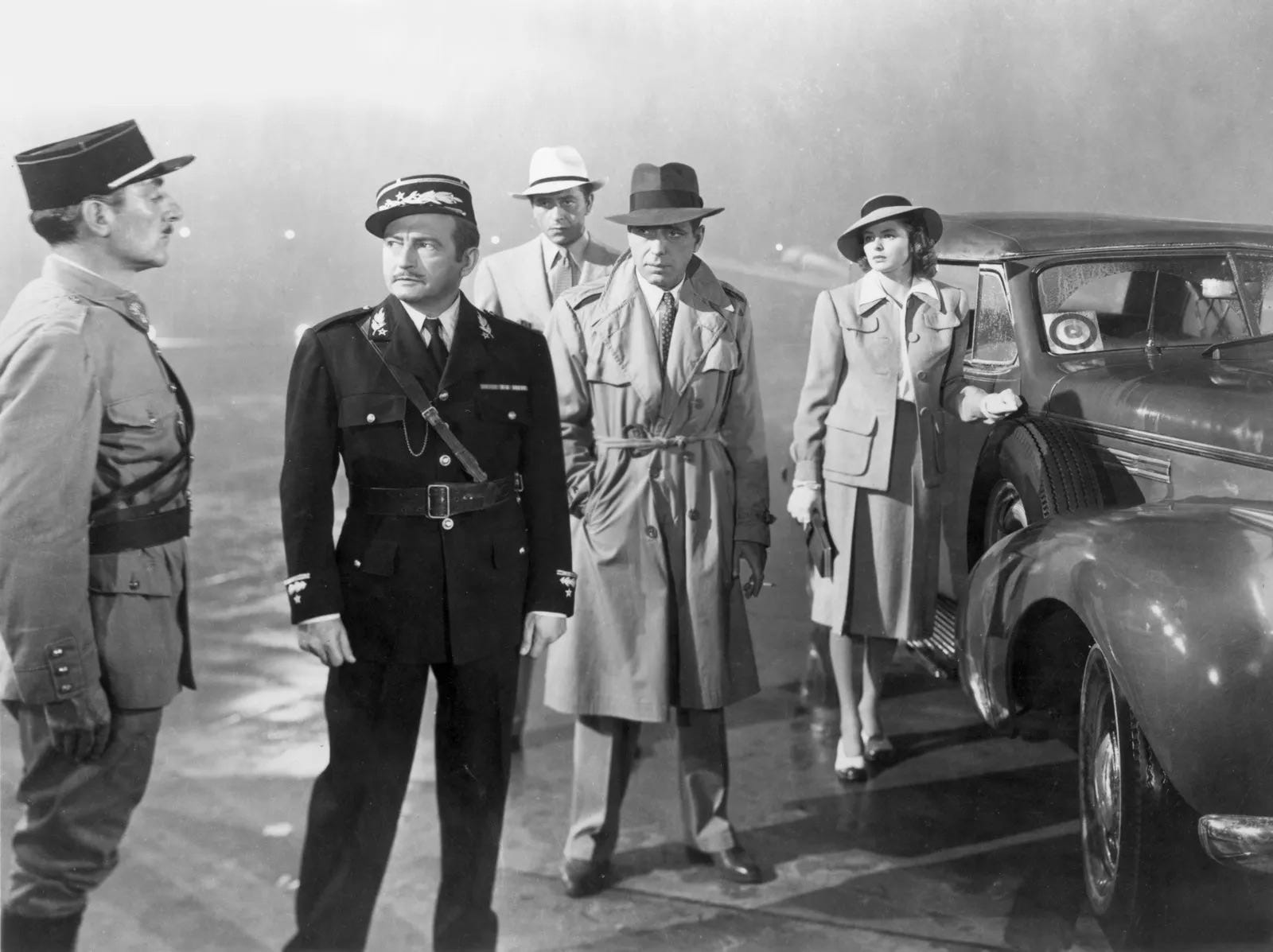
You know what movie holds really up? Casablanca. Every line of dialogue in that movie is better than any line of modern dialogue. Five stars!
No posts
Comments
Nothing yet. Say the first thing.
Sign in to join the conversation.