
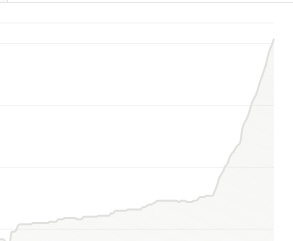
Recently, I posted about why I hate Substack Notes. Clearly, I struck a nerve. Engagement was an order of magnitude greater than any other post I’ve made, and it nearly doubled my subscribers — ironically by being restacked as a note.
You’d think I’d be delighted. I am. Please don’t leave! But, in spite of the joy at seeing the numbers climb, there’s a certain amount of shame in how it happened. I leaned into a rant, and I got rewarded for it.
And it’s tempting to think, “How can I do that again?”
Not the rant. I meant what I said. But the excitement of watching the subscriber count skyrocket is addicting. And you want more. Seeing the notifications. The restacks. The comments. You start to understand how people build their entire publication around this stuff. The feedback loop is immediate, tangible, and addictive in a way that careful long-form writing simply isn’t. There’s a particular thrill when something escapes your own little corner of the internet and starts moving on its own, and I’d be lying if I said I didn’t want more of it.
Nobody sends you a notification that says, “your thoughtful essay compounded nicely this week.” The careful work disappears into the void. You trust it’s doing something out there. But the rant? The rant tells you immediately, loudly, repeatedly that it worked. It’s hard to argue with.
This isn’t a Substack problem. It’s not even a social media problem. The old news adage--if it bleeds, it leads--predates the internet by a century. It predates television. Before Twitter, there was talk radio, before that the tabloids, before that the town square. We’ve always rubbernecked. Everybody slows down at the accident. Strong emotions are the original engagement hack, and no amount of media literacy or civilized self-image is going to switch that off.
We like to think we’re above it. That we consume thoughtfully. That we share things because they’re true and important, not because they made us feel a flash of righteous anger. But the numbers don’t lie. The rant wildly outperformed my careful writing. That’s human nature, doing exactly what it’s always done.
The slow build is hard and painful. I don’t think people talk enough about how difficult it really is.
You write carefully. Do your research. Spend three hours on a piece that gets eleven opens and two likes — one of which is your mom.
There’s an unnerving quiet that follows hitting publish on something you worked hard on. The kind that makes you refresh the page and check back every twenty minutes, watching the number idle. You made something. You thought it was good. The internet has considered the matter and returned its verdict: eleven people, and one of them puts your stick-figure crayon drawings on the fridge.
You tell yourself that readership will compound. It’s exponential. The ones who find you will be the ones who stay--the real ones, who actually read to the end and think about it afterward. You’re building something.
Maybe it’s true. I still believe it. But when you know, if I just push this button....
I don’t want to manufacture outrage. I’m not going to start writing hate pieces about every platform and tool and productivity guru I find annoying — and believe me, the list is long. Not because I’m better than that. I’m clearly not better than that; I did it once and loved the results. I just don’t think I could keep it up. And when does the performative hate and anger consume you? Where does the line start to blur?
And then there’s the audience problem. If I grow by being a person who rants, I’ll have an audience that wants rants. Give people what they want long enough, and it stops being a choice. You’re not feeding the beast anymore — you are the beast.
What I actually want to do is teach. Share things that are useful. Write about ideas that might make someone’s work or life a little bit better, or at least more interesting. It’s hard to do that if you’re constantly pushing on a nerve. But it’s a slower road. It doesn’t generate the same electricity as a well-aimed piece of outrage, and some weeks it feels like shouting into a very polite, very empty room.
The people who are still around from the beginning — the ones who’ve been reading since I had forty subscribers — they didn’t find me through a rant. They found me because I wrote about a problem they actually had, and I tried to help them solve it. And they stayed because they came back the next week and found something else they could use. That’s not glamorous. It doesn’t make a good “how I got 10,000 subscribers” post. But it’s the kind of growth I can live with.
So I’m not going to manufacture outrage. But I’m also not going to pretend the temptation isn’t real, or act like I’m too principled to have felt it. Let’s be honest. The title of the post has its own shock value. I picked it, because I knew it was a scroll stopper. People will click it.
The beast is real, and it’s hungry, and I understand the appeal of feeding it. I’m just trying to build something that doesn’t depend on that.
We’ll see how it goes.
No posts
Comments
Nothing yet. Say the first thing.
Sign in to join the conversation.