
Price is determined by the value society places on something. Which means it’s entirely a manufactured concept. The real question isn’t what does this cost? - But: are we placing value in the right places, for the betterment of people and planet?
A couple of years ago, on a visit to Kandy, I stumbled on a wooden craft centre. Their main product was wood carvings - a plethora of creations, big and small, inspired by both contemporary and traditional designs, worked from teak, coconut, and kithul.
I was just browsing, with no intention to buy anything, until a pair of earrings stopped me.
On the surface: dark brown studs. Understated, almost plain. But when I asked what they were made from and looked a little closer, I discovered they were carved from coconut shell. The kind most Sri Lankan households toss out without a second thought after cooking. Polished so finely that light bounced off the surface - a mirror finish, almost like marble.

Out of curiosity, I asked the price.
3,000 Rupees. My eyes lit up.
I was an intern at the time, and 3,000 bucks felt steep. For a coconut shell? Something you’d throw away?
I said as much to the vendor.
Her response moved me.
“Miss, you are correct, these earrings are made from coconut shell. But the price isn’t decided by the material alone. It’s decided by the time and effort that went into making them. The craftsman who made what you’re holding spent days on this pair - hours carving and shaping the shell into such miniscule, detailed pieces, then days more polishing it to that finish. And it takes decades of training to develop that skill and that level of precision. What you’re holding isn’t just jewellery. It’s a work of art. And that is what you’re paying for.”
If we can appreciate sculptures in galleries and pay for a ticket to admire them, surely we can acknowledge the work and skill behind an object - even one born from something we’d otherwise discard.
That’s where the word value came into focus for me.
Value is also a manufactured concept. Gold is “valuable” because it’s rare. A one-of-a-kind artwork is valuable because it’s irreplaceable. A Hermès bag commands a price twenty times its material cost because of the wait, the exclusivity, the mythology.
The economy has learned to place value on scarcity - to keep us buying more, consuming more; because continuous consumption is what keeps the machine running.
But at what cost?
Waste in landfills and oceans. Forests cleared. Ecosystems collapsed. Communities displaced from the land they call home. Broadly speaking, extraction.
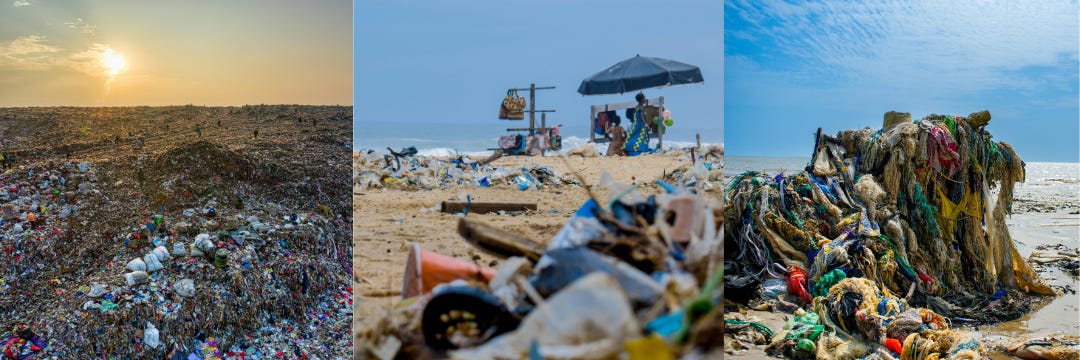
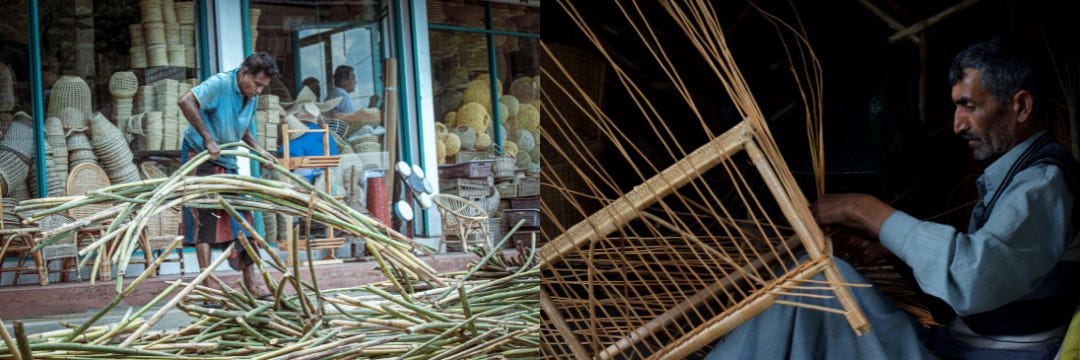
What if we shifted perspective? What if materials destined for waste (those we have in abundance) were taken back and given new life, - and in doing so, also gave a craftsperson a dignified livelihood from their skill?
For contrast, Ralph Lauren sent models down the Paris runway wearing Indian jhumkas - the kind of earrings that have hung from South Asian ears for centuries, shaped by generations of metalworkers who spent lifetimes perfecting that hollow hemisphere, that particular weight and swing. The captions read: “authentic vintage accessories.” No craft tradition named. No artisan credited. The aesthetic travelled to Paris but the story didn’t.
This is the extractive economy applied to culture. Value is captured at the point of consumption, never at the point of origin.
A regenerative approach asks something different.
Not just: can this material or skill be made profitable? But: who holds the story, and are they in the room?
Origin isn’t a footnote in regenerative business - it’s the foundation of value.
When ventures are built to keep craft, community, and cultural knowledge at the centre, the story travels with the product.
It’s possible. But it requires us to collectively reimagine where we place value.
At Good Life X, this is the work.
Building systems that create value for artisans, craftspeople, and communities - without compromising the environment or origin story. With fairness and respect for all.
Because that, to us, is what makes a Good Life.
By Tharindi Rangoda
New here? Good Life X designs regenerative solutions for South Asia’s transition from extractive to thriving systems. We have worked with over 200 businesses and entrepreneurs across food, agriculture, textiles, wellness, technology, and tourism to build models where profit and purpose grow together - like nature intended.
Comments
Nothing yet. Say the first thing.
Sign in to join the conversation.