
Welcome back to the Go Addressable Certification program. For this class, Evan Shapiro is joined by guest lecturer Jose Moreira, Head of Advanced TV Analytics at DISH Media and Alex Belaidi, VP of Data & Category Sales at Spectrum Reach. This session explores the shift from content-focused strategies to audience-focused ones. In the world of addressable TV, we don’t just hope the audience is there; we serve the ad only when we know they are watching.
FOR THE PREVIOUS LESSON CLICK HERE.
After you consume this content, look for the Master Course: Class #2 Quiz at the bottom of the page to test your retention and work toward your Go Addressable Master Certification.
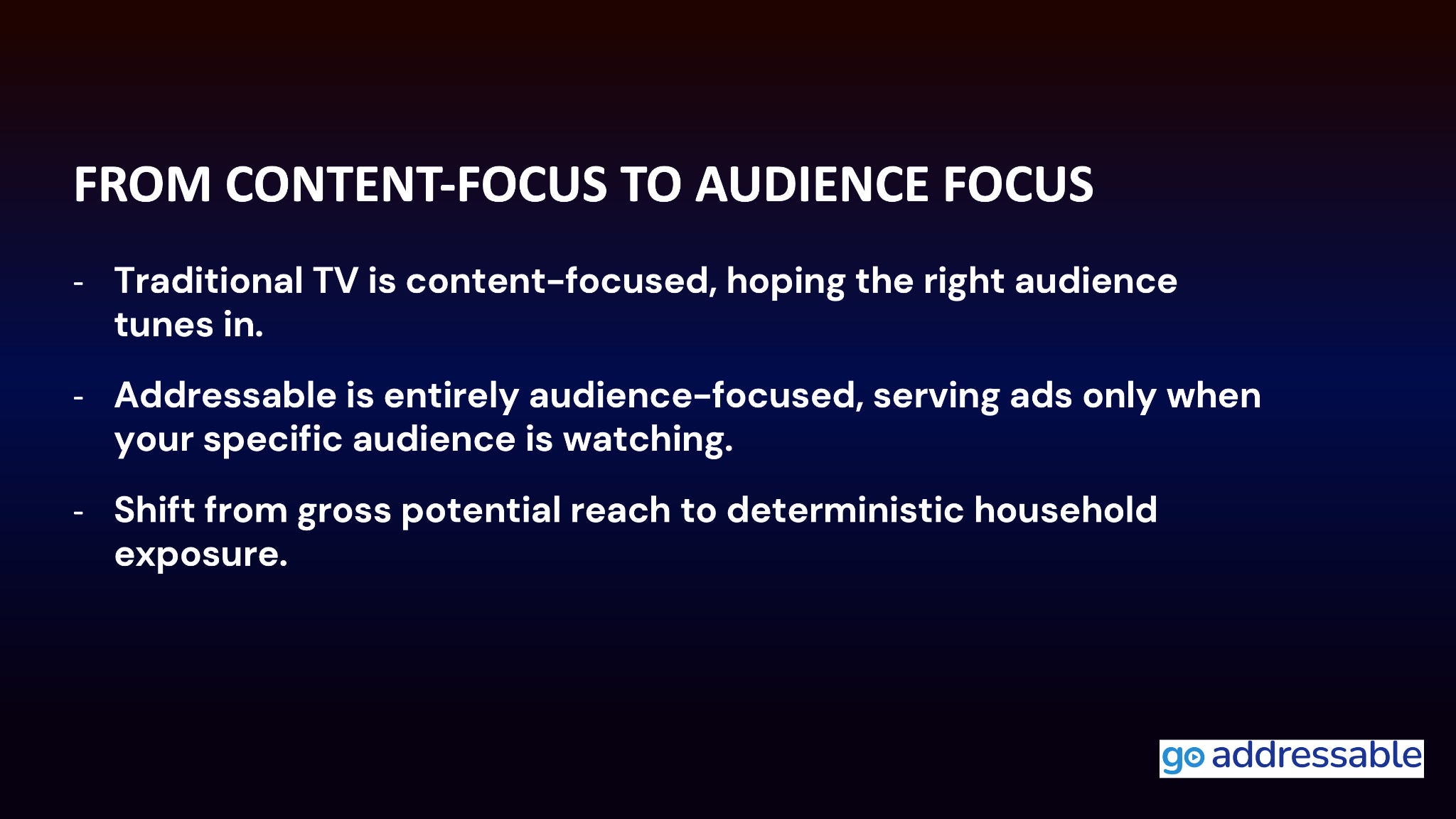
The industry is undergoing a massive shift away from a total obsession with “currency”—those broad, panel-based ratings—toward an outcomes-based approach.
Clients are increasingly willing to pay a premium for addressable precisely because it moves the needle on ROI. It’s no longer just about how many eyeballs you captured; the new priority is whether those eyeballs took an action.
What counts as an outcome? Modern KPIs now include:
Website visits
App downloads
Dealership test drives
Changes in brand perception or awareness
And more….
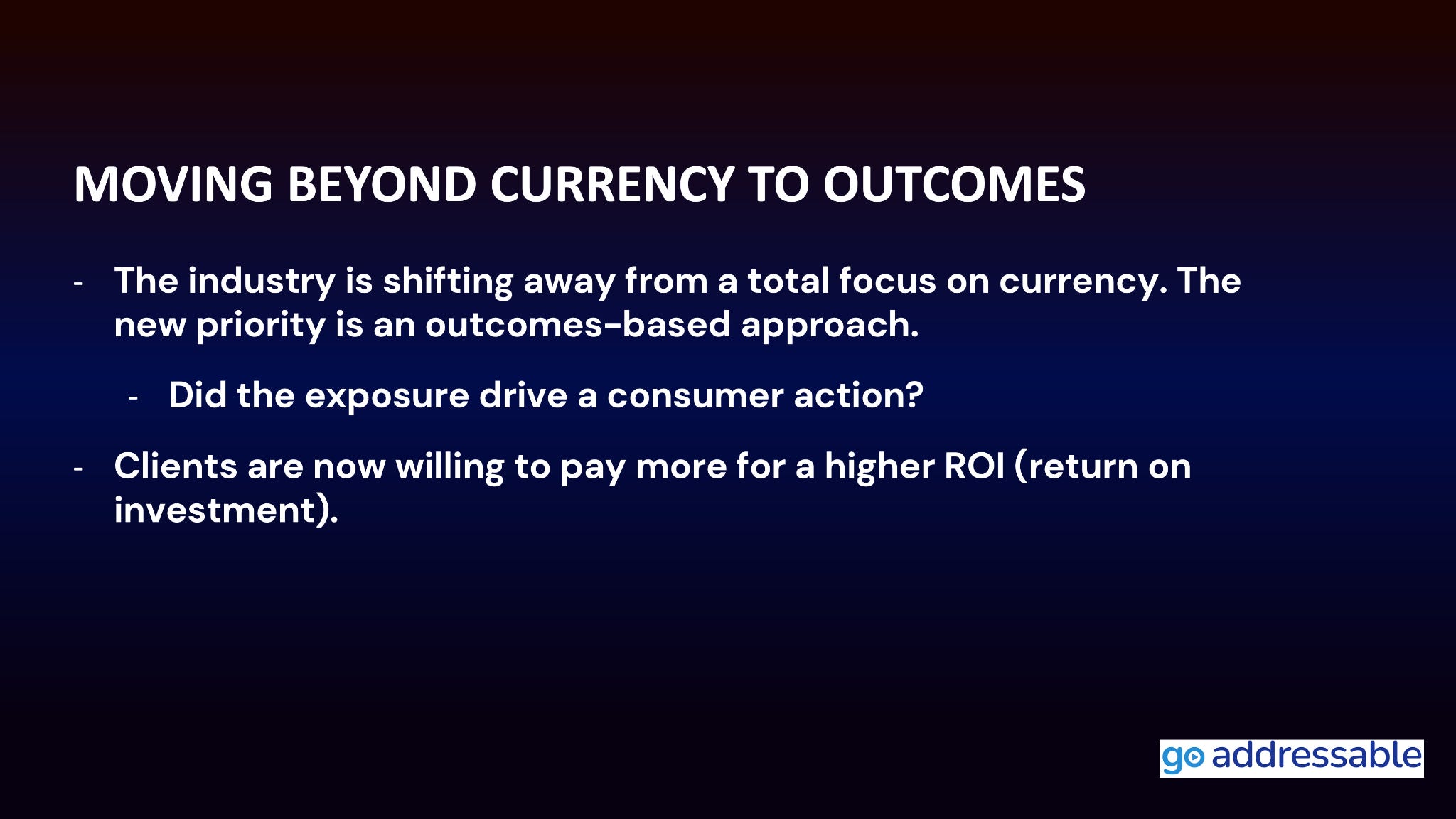
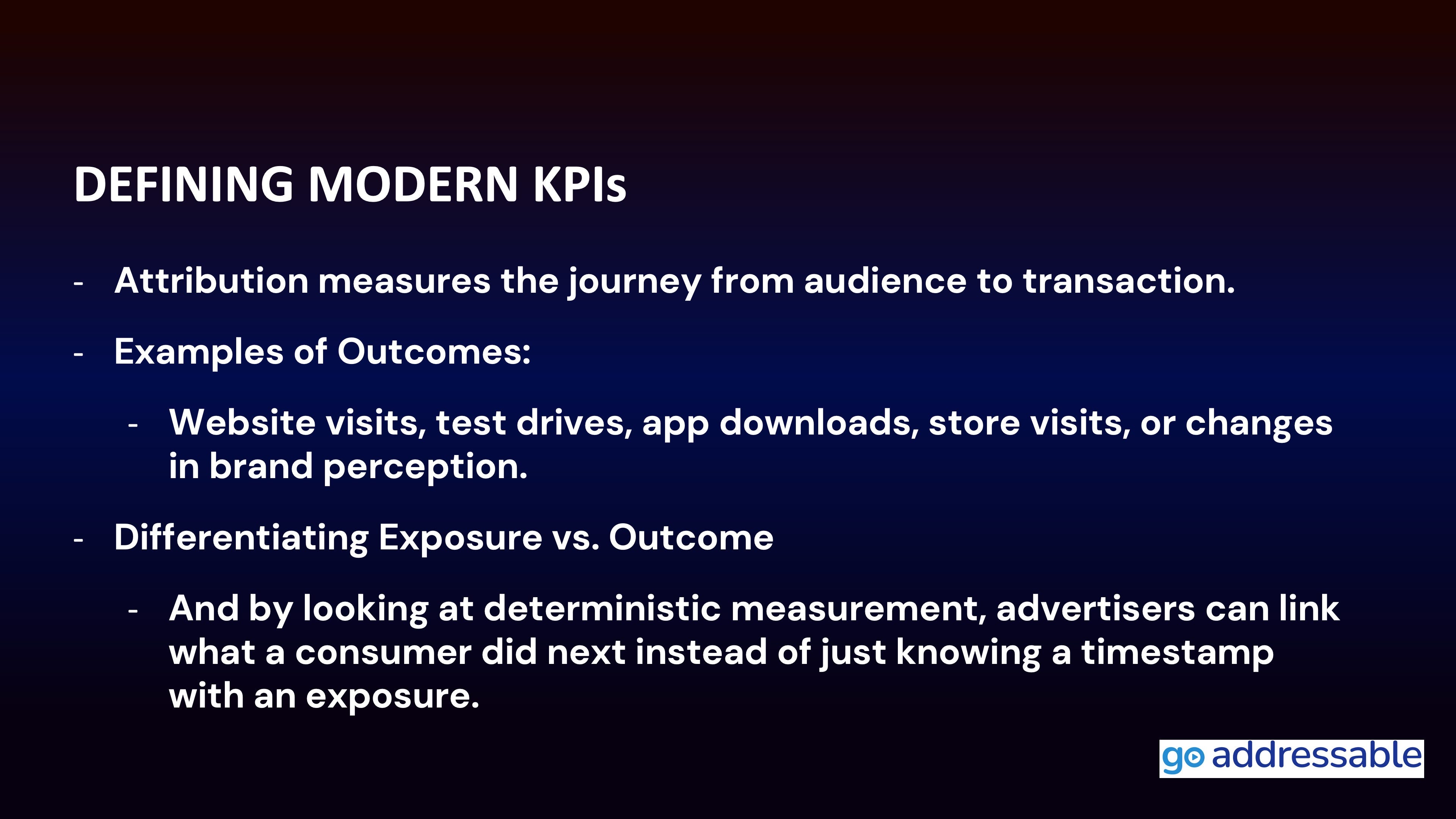
One of the most critical shifts highlighted is the difference between reach and exposure. While reach is a gross potential number, exposure is deterministic. We know the exact timestamp and household identifier. Attribution then measures the specific journey from that identified audience to a transaction.
It is also important to plan your measurement goals and KPIs early for addressable campaigns in order to assure the best attribution and outcomes.
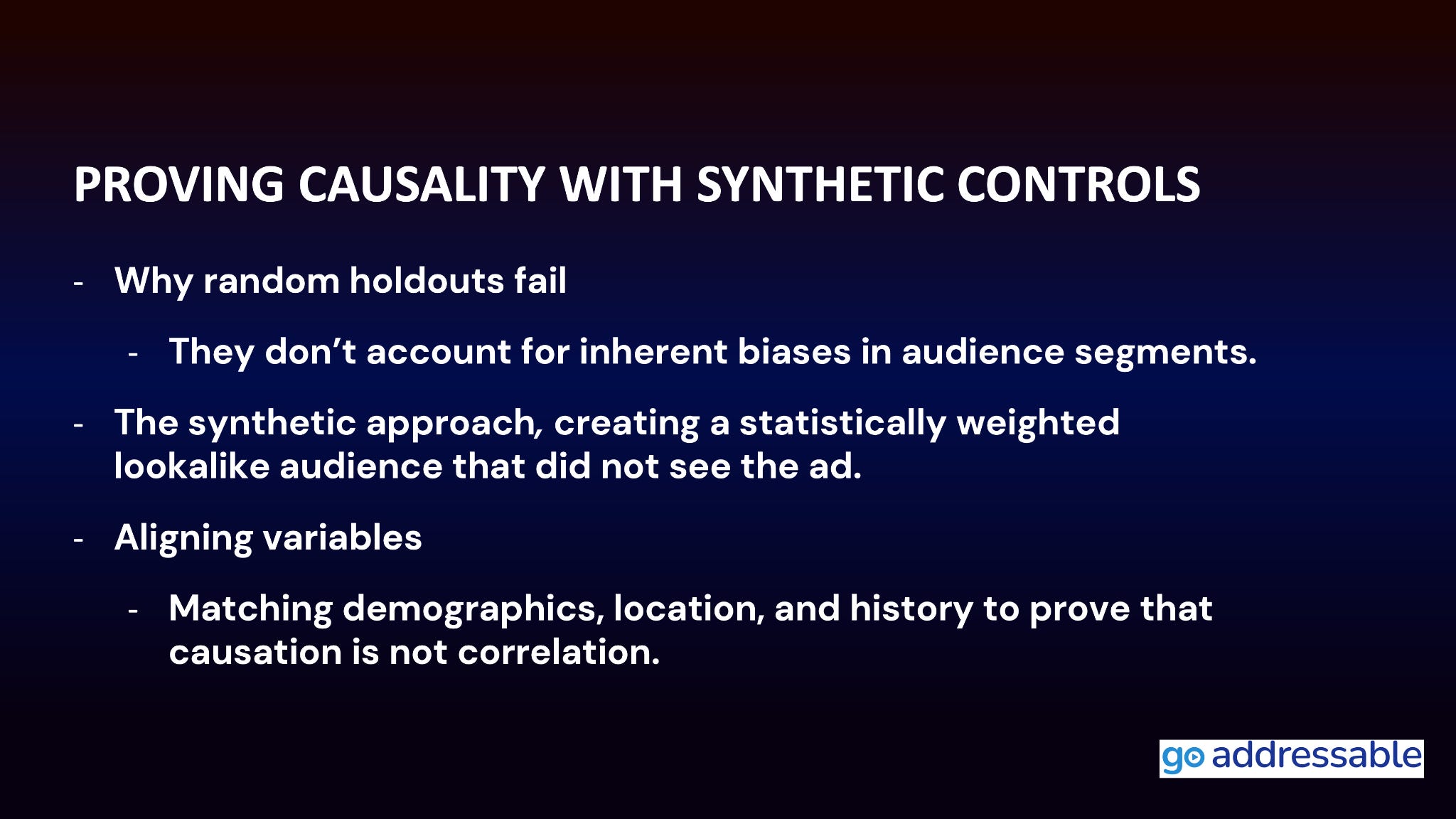
One of the most powerful tools in the addressable toolkit is the ability to prove causation, not just correlation. While random holdout groups are common, they often fail because they don’t account for inherent biases in audience segments.
By creating a statistically weighted “lookalike” audience that didn’t see the ad, matching them on demographics, location, and past history, marketers can establish a true baseline and measure the actual “lift” the campaign provided. This is known as a synthetic control group.
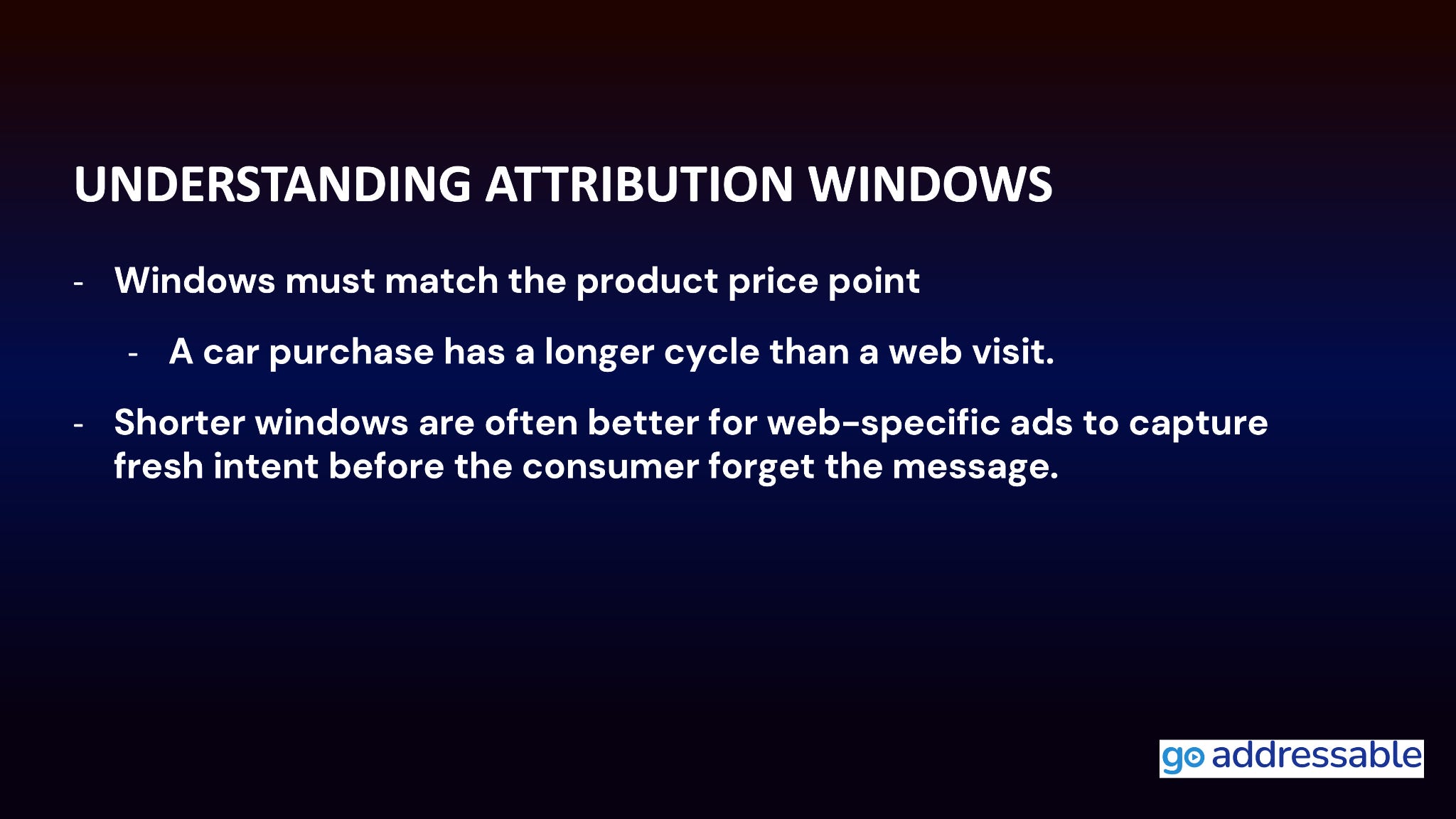
Not all conversion cycles are created equal. Windows must match the product’s price point; a car purchase naturally has a much longer cycle than a web visit. Conversely, shorter windows are often better for web-specific ads to capture fresh intent before the consumer forgets the message.
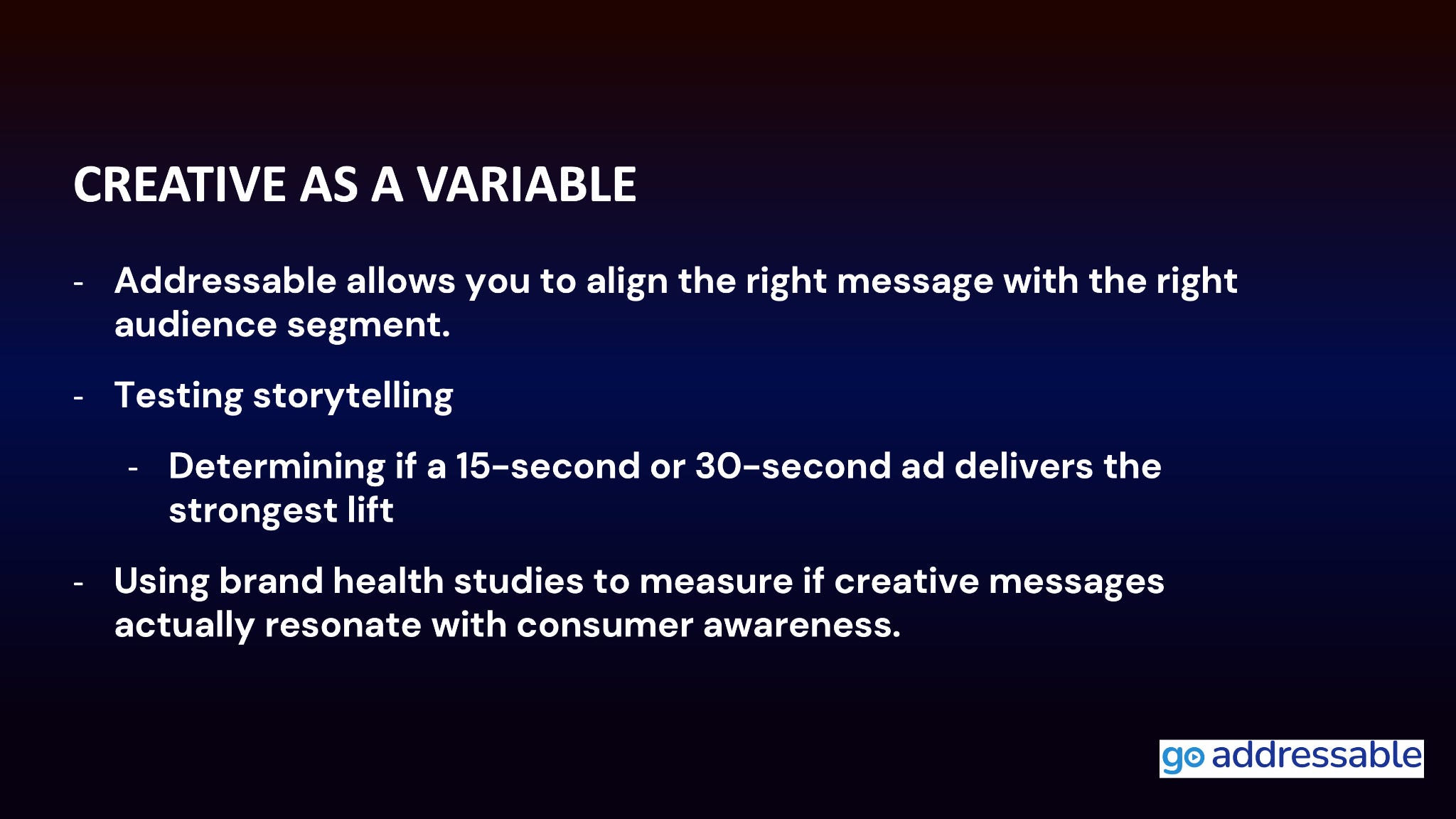
Measurement is often treated as a post-campaign function, but in addressable, measurement starts before the buy. This is especially true for creative.
Addressable allows for A/B testing on the big screen. You can test different storytelling lengths (determining if a 15-second or 30-second spot delivers more lift) and align specific messages with specific audience segments.
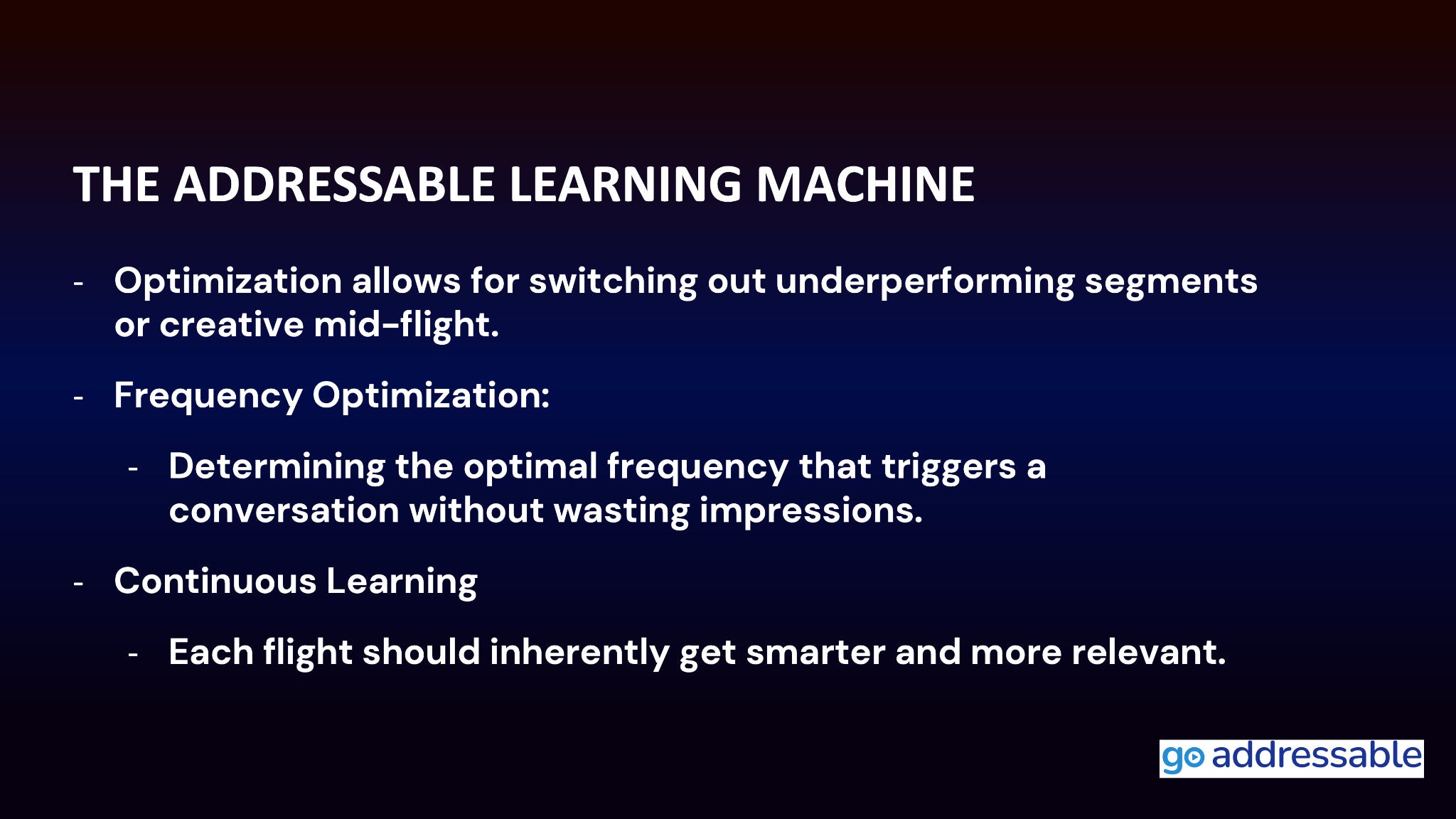
Unlike traditional TV, addressable allows for mid-flight optimization. You can switch out underperforming segments or creative, and optimize for frequency to ensure you are triggering actions without wasting impressions. Each flight should inherently get smarter and more relevant.
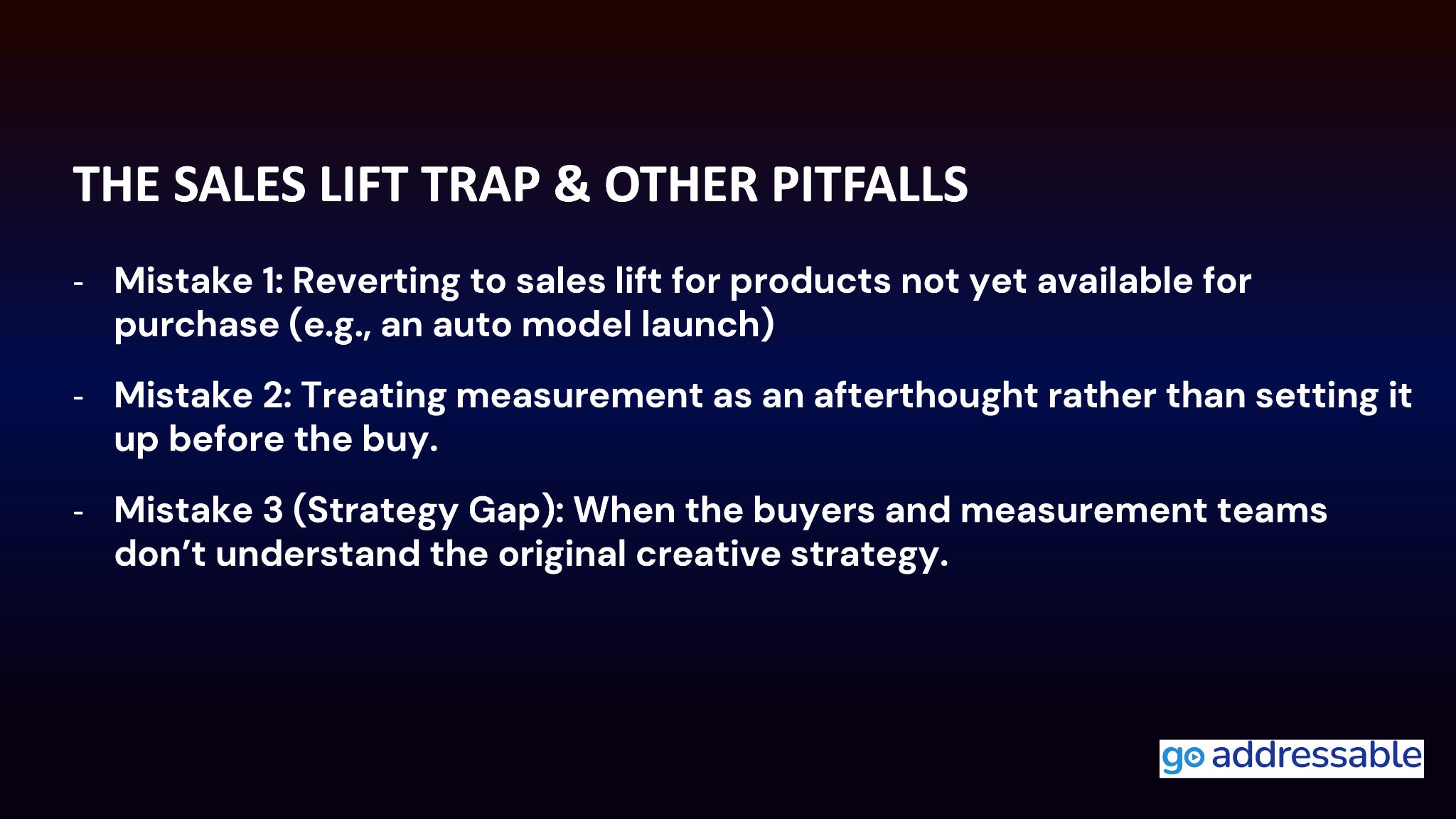
The road to addressable success is paved with data, but there are pitfalls. The biggest mistake? The Sales Lift Trap.
Reverting to sales as the only KPI can be a disaster if the product isn’t even available yet—like an auto model launch where the car hasn’t hit showrooms. Additionally, treating measurement as an afterthought or failing to align the buying and measurement teams with the original creative strategy can derail your results.
To make the learning machine work, we must break down the silos between creative, audience, media, and measurement teams. Success requires coordination; these departments must act in concert to ensure that the strategy set on day one is the one being measured on day thirty.
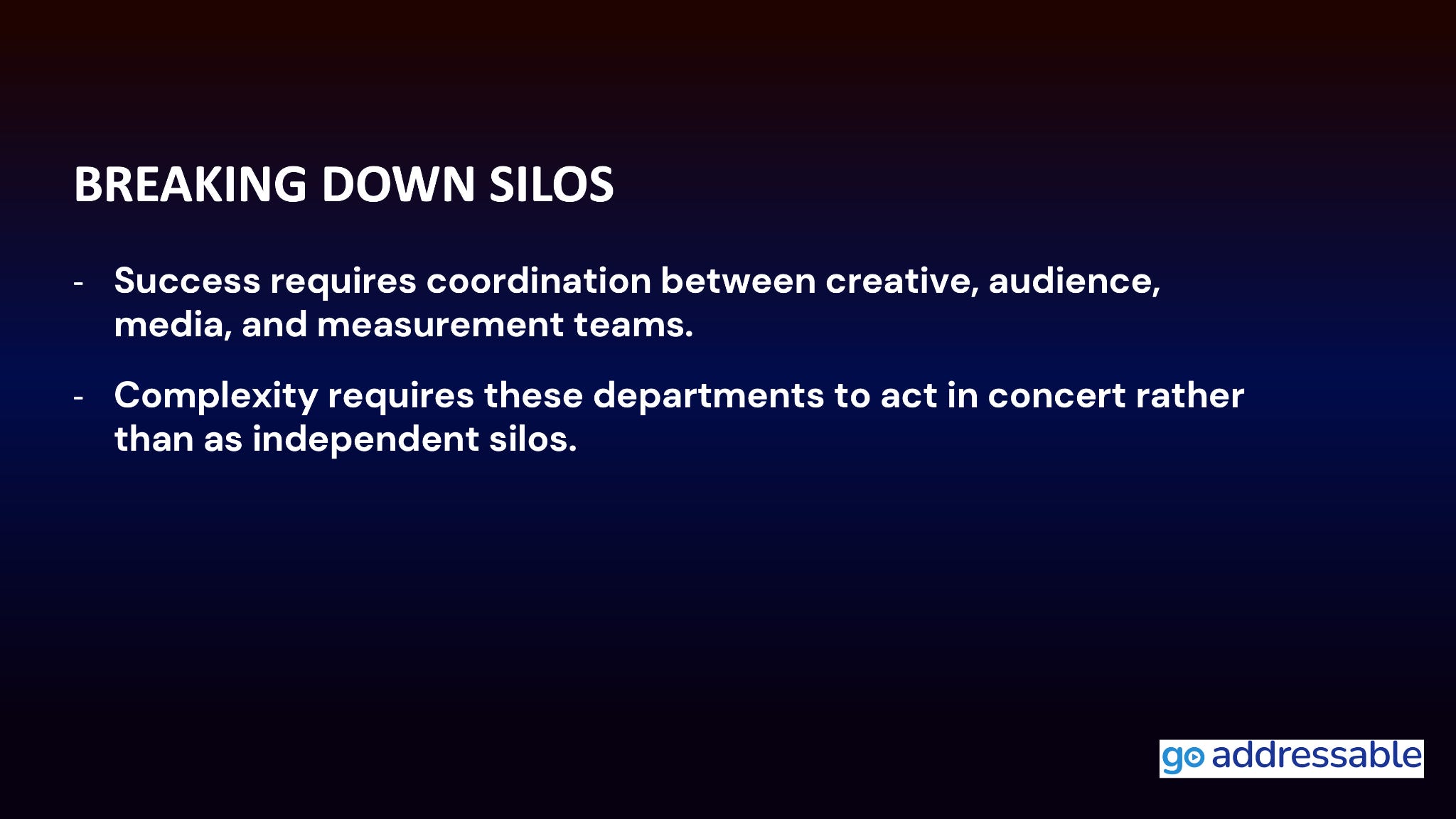
Measurement strategy and KPIs should be considered as early as possible for best outcomes.
Addressable TV has transformed media from a content-focused “guessing game” into an audience-focused precision tool where ads are only served when specific, deterministic households are watching.
The industry is moving beyond broad ratings toward outcomes-based KPIs, such as website visits or dealership test drives, allowing brands to prove that TV exposure truly caused a consumer action.

Test your knowledge with the Quiz below.

Subscribe to be alerted when the next module is published!
Cheers!
TEAM GO ADDRESSABLE
No posts
Comments
Nothing yet. Say the first thing.
Sign in to join the conversation.