
The fireworks celebrating the 250th anniversary of the founding of the United States have faded, but the deconstruction and reflection on the American national narrative continue to intensify. Across every dimension—from founding ideals to institutional practices—American society is locked in a tug-of-war, constantly re-evaluated by groups with sharply divergent ideological positions. This ideological fracture is reshaping the political and social trajectory of the United States in ways that will last for a long time.
On the eve of Independence Day, Guancha.cn spoke with Yu Yaoxiang, a Chinese student currently studying in the United States. As a young observer who has long followed American social issues, he shared his firsthand impressions and reflections on this deep ideological divide.
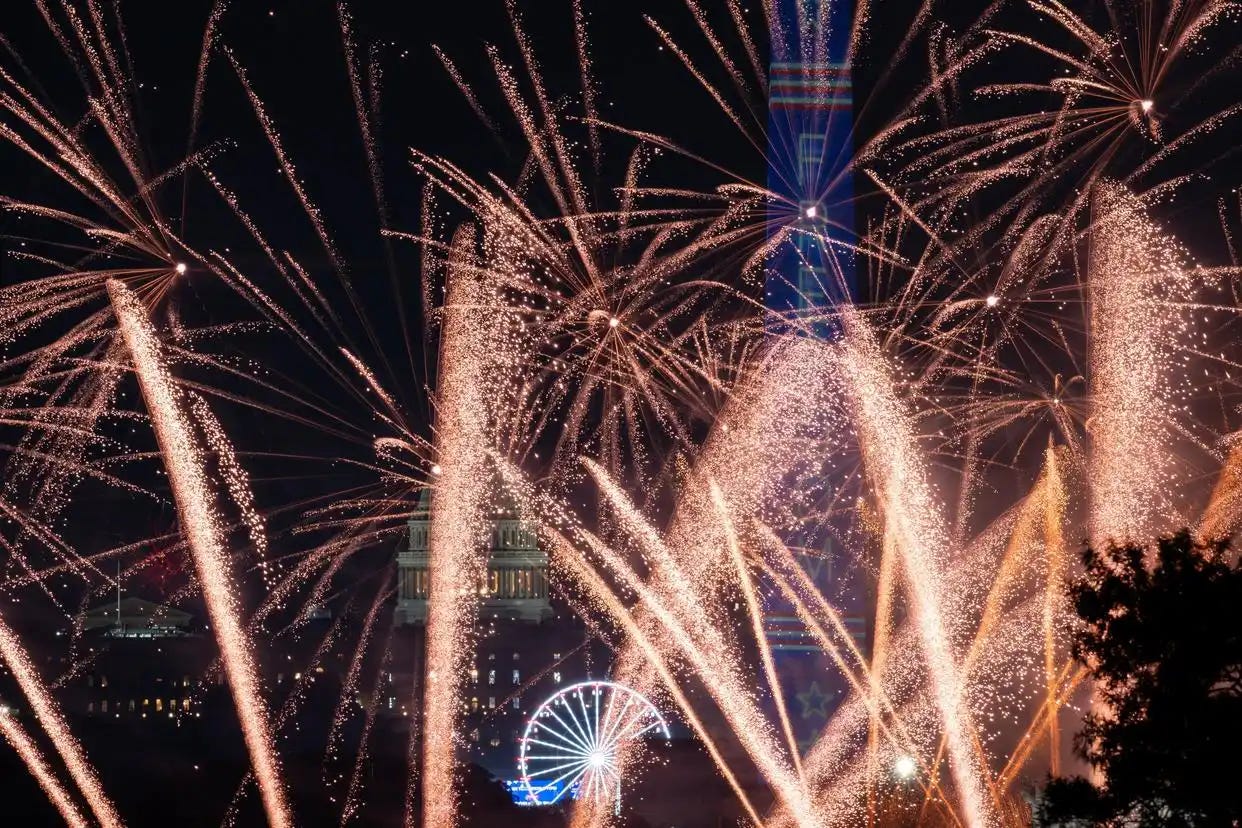
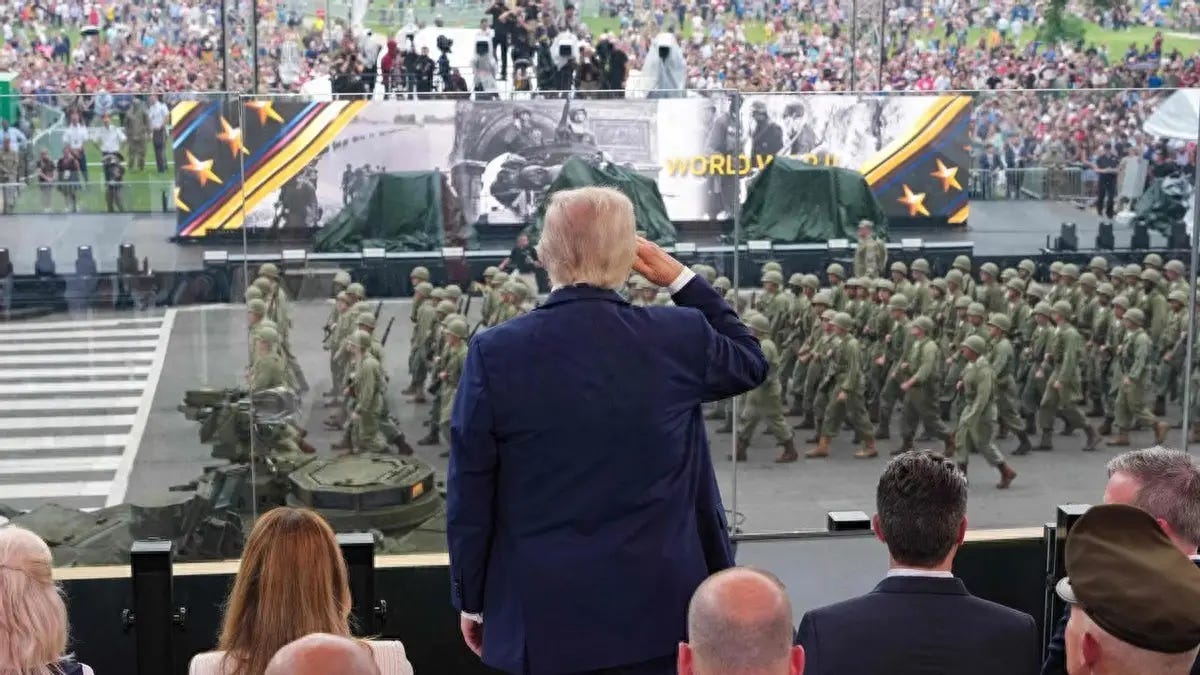
Guancha.cn: This year’s U.S. Independence Day drew global attention because it marked the 250th anniversary of the country’s founding. Within the United States, the “America 250” commission was established as early as 2016. After taking office, Donald Trump naturally launched his own “Freedom 250” initiative, hosting large expos, UFC fights, and even renovating the Lincoln Memorial Reflecting Pool. These two parallel celebratory systems operate simultaneously but refuse to acknowledge each other.
This is a fascinating phenomenon that gives us a new vantage point on the American political ecology: today’s America seems to split almost everything into two opposing camps.Having lived in the U.S. for years, when did you first start feeling this antagonism? Why has it evolved into its current form?
Yu Yaoxiang: I went to the U.S. in 2015. Coincidentally, Trump announced his presidential campaign the very next year. So for me, the experience of polarization began exactly at that moment.
Interestingly, American academics also treat Trump’s candidacy as a landmark in the country’s fracture. After his victory, they widely invoked “populism” as the main frame—a concept with a clear left-liberal undertone that, from an authoritative standpoint, branded the social consensus Trump represented as deviant or heretical. For the right wing, this became proof that the ruling establishment and the mainstream media under its control were hostile to them.
Thanks for reading! Subscribe for free to receive new posts and support my work.
From that point on, a conflict between two worldviews and political ideologies took center stage, each focused on establishing its own legitimacy. It ceased to be a mere difference of political opinion and became two conflicting ontological visions inhabiting the same land. To borrow from Hegel, it is a “life-and-death struggle for recognition.” Today, both sides barely acknowledge each other’s citizenship or extend the basic moral respect modern individuals owe one another.
You described the situation as “tit-for-tat,” but in reality the truth is almost the opposite. Mutual negation and revulsion between the American left and right have reached the point where they are “too lazy to even go tit-for-tat.” That is the truly dangerous scenario—both sides see the other as hopelessly irredeemable, unworthy of engagement, incapable of consensus, and not even worth arguing with.
As a result, both sides have isolated themselves completely. In the public sphere, what remains is either indifference or conflict—and this conflict is not even aimed at defeating the opponent, but at venting emotions and degrading the other. This kind of public opinion environment is not unique to the U.S.; it is a universal feature of the internet and new-media era. But because American public discourse is tightly intertwined with national politics and civic values, the phenomenon manifests with far greater intensity.
Polarization in American society has moved beyond a clash among social groups in a particular era. It has become a fundamental issue about the trajectory of the nation and even of American civilization itself—if we consider it an emerging civilization. The standard academic explanation traces the left–right conflict to wealth inequality generated by 21st‑century globalization and to class tensions triggered by the decline of domestic labor. Political movements led by the American left and the Democratic Party—multiculturalism, progressive egalitarianism, and various human-rights narratives—provoked a backlash from conservative groups. The convergence and eruption of these forces produced the current situation. Yet this remains a relatively narrow explanation, confined to a 21st‑century lens.
More fundamentally, America’s left–right divide reflects a broader problem of historical positioning faced by the West as a whole, with the U.S. as the leading representative of Western civilizational development. After ushering in a global era through technological revolutions, maritime trade, and colonialism, Western civilization as hegemon now oscillates between two identities: an older identity rooted in specific ethnic, racial, religious, and cultural values, and a newer identity that claims to champion universal human values. In the early global era, the West could rely on political, economic, and military superiority to suppress friction between these identities and continue to pose as the exemplar of human civilization.
The United States is the child of this dual identity, the most up-to-date model of Western civilization. On one hand, it exports “universal values” to the world, along with commodities that seem to transcend cultural differences: fast food, Coca‑Cola, sports, pop culture, and individualistic hero narratives. On the other hand, it constantly highlights the Western cultural roots of these exports and asserts the dominance of Western worldviews and philosophy.
However, there is a structural conflict between a restrictive national identity and its antithetical global identity, and this conflict remains unresolved despite constant eruptions. Issues of post‑colonialism, racial discrimination, and ethnic tension inside the United States are direct manifestations of this dual Western identity. Put more bluntly: the United States has constructed a universal national narrative for itself. To sustain that narrative, it can no longer remain a purely white‑centric nation dominated by white ideology. Based on differing fantasies about these two narratives—or civilizational trajectories—the American left and right have plunged into an existential zero‑sum game.
But I want to stress that both sides’ worldviews are anachronistic fantasies. They are utopian visions generated by self‑defense mechanisms when prevailing values come under attack. The underlying interest conflicts driving them, however, are very real. At root, the conflict stems from the development of capitalism, which drives globalization and, in Marx’s words, “destroys all old forms of human life.” Capitalism requires a parallel, dehumanized social order stripped of intrinsic values to serve as its vessel. The United States is now enduring the shockwaves of this remolding by capital. Unable to clearly perceive this reality, the country has thrown itself into a paranoid embrace on the left and a paranoid resistance on the right.
The left misreads this dehumanizing nullification of social values as universal egalitarianism for all humanity. This is why many “political correctness” movements, although nominally left‑wing, have enjoyed strong backing from American capital. The right, lacking a national or civilizational value system that can adapt to the new era, can only retreat into historical religion and traditional values to construct a narrative of resistance—which is why they look so bigoted and obsolete.
Under this domestic left–right schism, the honeymoon between Western civilizational dominance and the globalization unleashed by capitalism is ending. Western civilization, which relied on capitalist development to build itself up, is becoming the first civilizational victim to be strangled by capitalism itself.
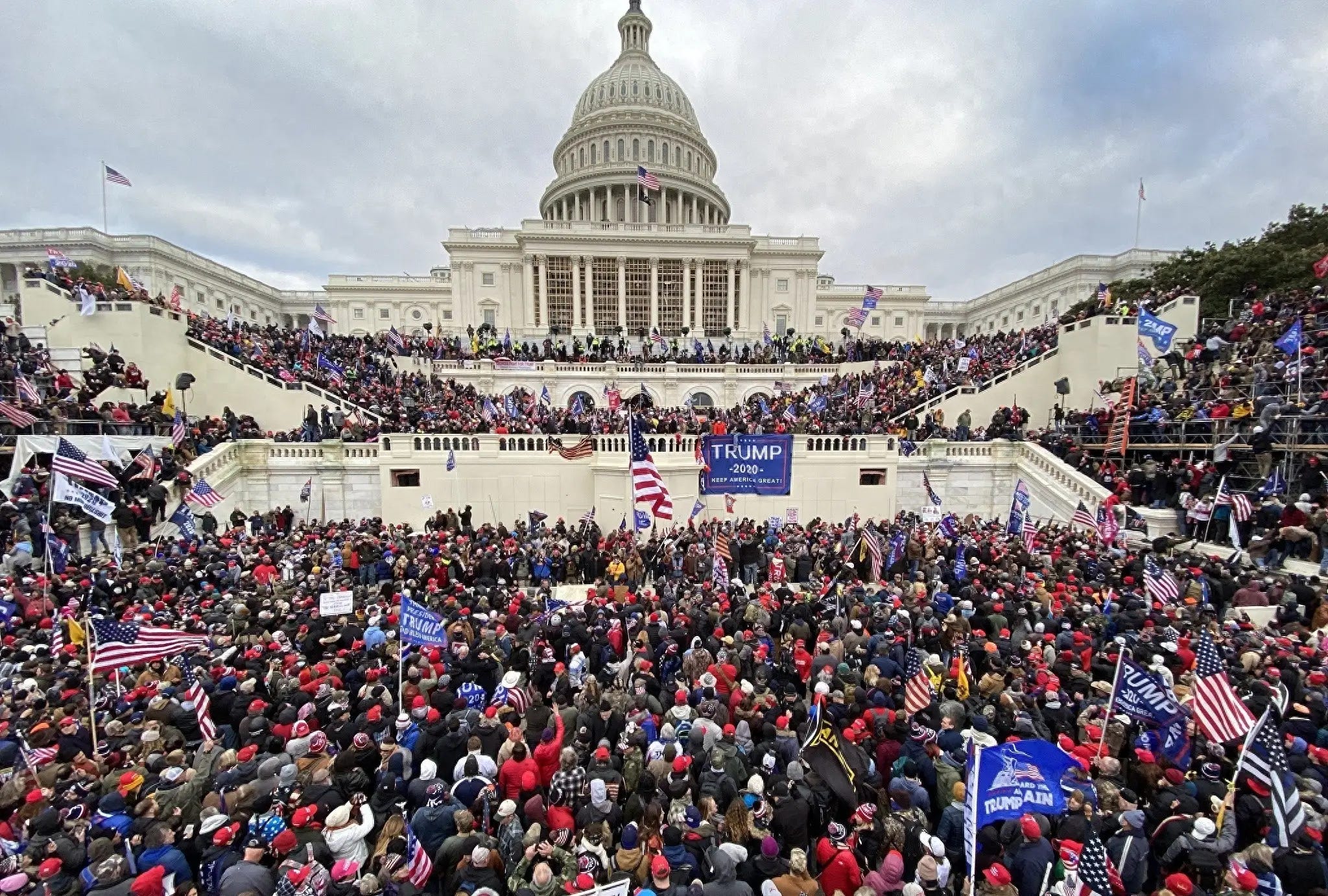
Guancha.cn: Multiple polls(Gallup + Reuters/Ipsos)show that on the eve of Independence Day, American national pride fell to its lowest point in 25 years—only 33% of respondents said they felt “extremely proud”; about 80% believe the signers of the Declaration of Independence would be disappointed in today’s America; and 40% do not even believe the United States will survive another 250 years. One African‑American activist bluntly said, “I look at this country almost in mourning.” Having spent this year in the U.S., how did you perceive the Independence Day atmosphere? What were the sentiments among your classmates, colleagues, and friends? Did attitudes differ across party lines and ethnic groups?
Yu Yaoxiang: The people I interact with, including friends on social media, are mostly young adults. Our social class and educational backgrounds are fairly similar, so I can only speak for that demographic.
It is quite clear that attention to and participation in Independence Day directly correlates with political orientation. My Christian friends on social media, for instance, visibly cared more about the holiday and posted more often. A couple even traveled early to Washington, D.C. to attend concerts and go clubbing. These families generally place more emphasis on traditional values and view the Trump administration more favorably.
At the same time, because we are in California and occupy a relatively affluent socio‑cultural stratum—one that the left largely dominates—I can feel that many of their political views are suppressed. On issues sensitive to Christians, such as gender diversity and sexual orientation, they rarely express their opinions on social media. They tend to compensate for this political absence by leaning into more neutral patriotic themes.
By contrast, most of my social circle consists of young left‑leaning individuals. I completed both my undergraduate and master’s degrees in deep‑blue regions at universities that are progressive strongholds, so I interact more frequently with them. Backed by political correctness, their critiques of Trump and current U.S. policies are much more explicit, and their voices dominate the discourse.
Most of them are completely apathetic toward the 250th anniversary. Their indifference directly reflects their attitude toward the country itself. For young leftists, because American history is saturated with colonialism, systemic racism, and the oppression and control of other peoples and regions, it is simply not a history they can feel proud of.
At the same time, the Trump administration’s agenda clashes entirely with its core values. In their view, the United States no longer represents the “universal values” it claims to uphold. Patriotism has become an outdated concept, fundamentally misaligned with their political identity. Within left‑wing circles, openly expressing patriotism is almost a faux pas—an act of nonconformity that contradicts their ideology. Trump’s sensationalization of the holiday disgusts them even more.
So if you look at their social media feeds, it is as if Independence Day does not exist. You may even see posts using the holiday and American history as a pretext to attack Trump. Naturally, this “unpatriotic” behavior has become one of the main targets of right‑wing criticism.
Guancha.cn: On June 30, the U.S. Office of Government Ethics released Trump’s annual financial disclosure, showing that his total income in 2025 was at least $2.2 billion. This set a record for wealth accumulation by a sitting president in modern U.S. history. Trump attributed his gains to the surging stock market, while the White House stressed that he had placed his businesses in a trust managed by his children and claimed that “there is no conflict of interest whatsoever.” What’s your take on this issue?
Yu Yaoxiang: Trump’s rise began as an eruption of pent‑up right‑wing frustration and as a “freak outcome” fueled by the public appetite for spectacle in 2016, but it has since solidified into a template for a new political model. Amid the current wave of scandals and domestic and international tensions, his public support has taken a hit. But this does not mean the right is weakening or that the Democratic “blue camp” is resurging.
Thanks for reading! Subscribe for free to receive new posts and support my work.
The reason no one seems able to constrain him is that the public sentiment he represents consists of people who question the very legitimacy of the American system and its political structure. They love his posture of bypassing the decayed, bloated, and left‑leaning separation‑of‑powers system to expand executive authority and push through reforms. Even moderate, pan‑right swing voters whose personal enthusiasm for Trump has faded have not abandoned their core goal: suppressing the wave of left‑wing ideology and preserving traditional white social values.
Trump’s brazenness is therefore not just personal abuse of power. Behind him stands a populace exhausted by the prevailing political climate and by the narrative of political correctness. More importantly, behind him stands an emerging cohort of politicians eager to inherit his mantle, using him to accumulate capital and climb the political ladder. That cohort is his real political base.
Emerging right‑wing politicians such as J.D. Vance use Trump’s “unconventionality” to expand their own influence. They reap the dividends and let Trump bear the risks and blame. They too challenge the existing political system. Put bluntly, they want to adopt the “Trump model”: leveraging populist support and intra‑party inheritance—especially Trump’s personal brand—to bypass the traditional promotion ladder. This is exactly the kind of populist route that mainstream academics and the blue establishment criticized in 2016.
But before Trump, wasn’t the left‑ward shift of the American political climate over the past 10–15 years—and the wave of identity‑politics movements that followed—also a kind of populist politics? We might call it a “more civilized populism.” What Trump and the far right are doing is giving them a taste of their own medicine, but in a more ruthless form. The lack of constraints on Trump also reflects public disgust with the Democratic Party. Today, moderate swing voters often express an attitude that might be summarized as: “We would rather have Caesar than the Senate.”
Finally, among Trump’s supporters, we now see emerging factions of capital, including cryptocurrency finance and cutting‑edge tech capital such as artificial intelligence. Observers in China often stress the tensions between tech firms and Trump’s foreign policy. That tension exists, but it is more important to note that under Trump—and in the foreseeable future—these capital forces are becoming even more deeply intertwined with the U.S. government because of the comprehensive U.S.–China confrontation over productive forces. In AI, semiconductors, robotics and beyond, cooperation between U.S. firms and the government has reached unprecedented levels. Conflicts between these firms and Trump are, in essence, transactional business disputes. But business is not capital’s ultimate aim; capital always pursues control over core productive forces and the means of production. On that front, these enterprises are highly aligned with U.S. national interests. That alignment deserves serious attention.
Guancha.cn: We’ve read a lot about the sense of frustration among Americans over the perceived decline of U.S. global influence. Where do you think it stems from? How do the people around you see their current conditions and the country’s future?
Yu Yaoxiang: The young people around me look very similar to young people elsewhere in the world—they feel bewildered and indifferent about their own prospects and about the future of this era. They share a sense of helplessness and resignation as they face rapidly shifting technological paradigms, economic stagnation, and accumulating social contradictions.
For American youth, their greatest frustration probably still stems from the decay of national image and values. Most Americans feel this viscerally. Whatever criteria they use, they share an awareness that the image of a powerful, upward‑striving America has disappeared. Many also realize that this decline is the combined result of an internal spiritual fracture and of the inevitable backlash that comes with global hegemony. They differ in how they judge this morally, but the basic perception is there.
One incident left a deep impression on me. I was working part‑time at Starbucks in college. At the time, the Israeli‑Palestinian conflict had just flared up, and anti‑Israel sentiment in the U.S. was rising. Naturally, we started talking about politics. As an “outsider” and a Chinese national, I was quite cautious at first. My coworkers—also college students—took the initiative and condemned the U.S. military interventions in the Middle East since the turn of the century. Coming from a political‑science background, I knew the events they referenced, but following the Chinese habit of not directly exposing others’ faults, I avoided blunt criticism of U.S. foreign policy.
I said, “It’s true that there is a ruling class in the U.S. that only cares about its own interests, and that recent national strategies have been driven by those people. Essentially, they aren’t serving the country’s interests, but their own.” My coworker didn’t argue. He replied, “We grew up with all sorts of illusions about our country, only to realize now that we are a bad country.”
He said it quietly, almost as an aside, but the disappointment and helplessness behind it were intense. You have to understand: for Americans, who grow up with an innate sense of national pride, admitting that their country is “bad” requires immense resolve. Hearing him say that shocked me, but I felt deep empathy.
Two centuries ago, Chinese people also woke up from a large illusion and realized: “We are actually a backward country.” The situations differ in nature, but the helplessness that individuals feel when they confront their own conscience about the failures of their nation is the same. An old Chinese is saying: “A tree cannot survive without its roots; a river cannot flow without its source.” Civilizational identity forms the root legitimacy of humanity’s largest political organizations. If America loses its spirit and national character and fails to find a new anchor in this era, I fear it will drift toward disintegration in the clash of its own ideas—first ideologically, then materially.
Guancha.cn: Readers in China naturally compare China and the U.S on major topics. As someone living in the U.S., do you often encounter questions that compare the two nations? How do teachers and friends around you view U.S.–China competition? And what are your own thoughts on such comparisons?
Yu Yaoxiang: Because my research focuses on Western philosophy and modern political thought, the academic environments I move in treat explicit U.S.–China comparisons as somewhat taboo. Most people I interact with acknowledge China’s strength and its international status after its rise. Many also show deep interest in Chinese civilization, modern Chinese governance, and Eastern philosophy. But if you ask them directly how they see the future of the U.S.–China confrontation, most adopt a cautious, wait‑and‑see attitude. Personally, I find the topic important and would like to share some reflections.
In reality, competition between nations or civilizations, and the question of whether to compete, rarely depend on relations in any single period. This is especially true for China and the U.S. The two are civilizations with stark yet parallel contrasts. We often contrast China, with its 5,000 years of history, to the U.S., a modern nation only 250 years old. But this overlooks that the U.S.—in politics, economics, military affairs, social culture, and knowledge systems—is a product of Western civilization as a whole, serving as its contemporary culmination. Behind it lies the long shadow of a historic civilization and centuries of philosophical accumulation; Europe, by comparison, looks increasingly waning in influence and cultural vitality. Meanwhile, New China, as a new state that fundamentally broke with the feudal structures of the past 5,000 years in its political logic and governance model, also embodies modern features similar to those of the United States.
Historically, the problems the U.S. faces today are trajectory issues in civilizational self‑construction: how a civilization reconciles, assimilates, and renews itself in relation to its own history and to realities generated by its own development. Over China’s long history, we have faced similar moments more than once. The Shang and Zhou eras, the Spring and Autumn and Warring States periods, and the Qin and Han dynasties were all major epochs whose contradictions shaped the civilization’s core ideas, forms of existence, and developmental logic. Today, China, as an ancient civilization entering the modern world, faces a similar task: to reconcile, assimilate, and renew itself alongside its centuries and millennia of history. This is precisely the meaning of “civilizational rejuvenation.”
In terms of national power and global influence, the rise of China and the relative decline of the U.S. are facts, and this trajectory will likely continue. China is bound to enter an era in which it returns to a position of global leadership. However, conflicts between nations should not obscure what Chinese and Western civilizations jointly face: the first truly global era in human history. When we confront humanity as a whole, or adopt a “planetary” perspective beyond regions and continents, both China and the West find themselves in uncharted territory.
Both China and the U.S. have offered initial answers to this new reality—China’s “Community of Shared Future for Mankind” and the Western theory of “universal values.” But I think we must first ask how nations and states, which have traditionally existed as concrete civilizations, can adapt to this globalized mode of existence, rather than rushing to construct a single global human society. The globalization we face today is largely built and driven by capitalist modernization. The modernity it represents, though born in the West, is fundamentally alien to any civilization; it exerts the same alienating and nihilistic effects on all. I alluded to this at the beginning when discussing the deep causes of America’s domestic contradictions.
So when they face globalization driven by capitalist modernity, China and the U.S. stand on the same plane and in essentially the same position. We cannot ignore the universality of capitalist alienation simply because the U.S. and the West succeeded historically, or because China has succeeded in catching up today. This is not a secondary issue beneath the civilizational clash between China and the U.S., but a universal challenge for all civilizations. At the level of philosophy, gaining the initiative in the next era may depend on who first recognizes this reality clearly and responds actively. In that regard, the U.S. still lags behind China.
Guancha.cn: An NBC poll shows that 78% of respondents believe the “American Dream” is harder to achieve than it was for previous generations. Another poll conducted by AP-NORC shows that about two‑thirds of respondents believe the very concept of the American Dream is no longer valid. As a Chinese student at a top U.S. university—in many ways the very embodiment of the “work hard and you will succeed” believer—how do you view the results of these polls? And how have practical factors such as visas, immigration status, race, and economic pressure shaped your own experience?
Yu Yaoxiang: To be honest, I rarely think about the “American Dream.” My reason for going abroad and studying politics and philosophy is quite simple: first, personal interest; second, the hope of understanding Western thought so I can better grasp the origins and nature of our current era and explore humanity’s future trajectory. If I could contribute even a little to that question, my dream will have been realized.
I’m fully aware that I am fortunate to be able to choose such a path. Secular standards of success are not unique to the United States; they represent a universal dream. Whether the U.S. still has a relative advantage in realizing that dream is unclear to me. If it does, that advantage is shrinking.
We should probably care more about the essence of “success” itself—whether it is a material standard, a social judgment, or a certain way of being. In this era of economic slowdown and increasingly polarized resources, we face a shared absence of an ideal form of life, a lack of passion and intrinsic meaning. The collapse of the American Dream is partly due to intensifying class conflict in the U.S., and partly due to deep confusion among young people about what life is for. Perhaps that very collapse is an opportunity for younger generations to reimagine their ways of living and their aspirations.
As for pressure linked to race and identity, I’ve grown used to it. Since I came to the U.S. a decade ago, especially in the social sciences, discrimination and hostility have been common. I think every international student goes through a psychological journey: from powerlessness, to resistance, to disdain, and finally to indifference. At some point you realize that arguing with such people is pointless, because they embody ideas already in the dustbin of history, waiting to be thrown out. Their original sin is not prejudice but ignorance. Educating them is neither our duty nor a prerequisite for our own success.
I often feel that I have more pressing questions to answer—questions that transcend race, culture, region, and politics. Humanity now faces a reckoning brought on by its own development. We are living at the tipping point of this convergence. Perhaps this way of thinking reflects the influence of Western philosophies of history, and explaining it in full would be complex. But I believe that once we start to face these problems with real seriousness, the prejudices and limits of the old era will gradually melt away as we work through them.
I suppose that, too, is a kind of dream.
No posts
Comments
Nothing yet. Say the first thing.
Sign in to join the conversation.