
By Serdar Yurtcicek
The NATO summit is taking place in Türkiye from July 7 to 8. How exactly did Türkiye become a member of NATO? What is its historical entanglement with China from that era? Today, amid incessant clamor for NATO to adopt a hardline stance against China—and even machinations to forge an “Asia-Pacific NATO”—what profound implications does this history hold for relevant nations?
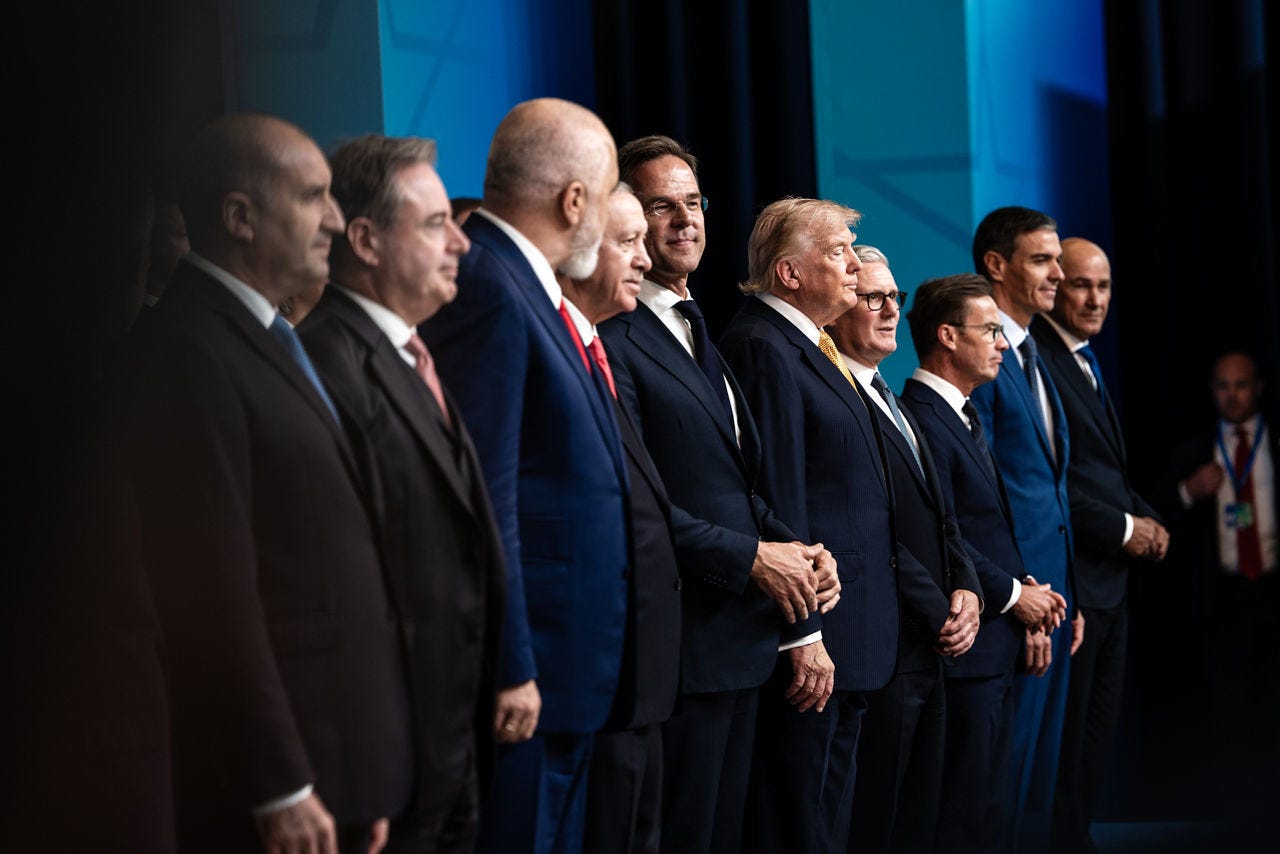
The story begins with a rejection. When NATO was established in April 1949, Türkiye was excluded. For Ankara—which since 1945 had viewed Soviet pressure, specifically its demands regarding the Straits and territorial claims over Kars and Ardahan, as an absolute existential threat—this rejection inflicted a profound strategic trauma.
The fourteen months between this rejection and the outbreak of the Korean War are typically characterized as a “waiting room”. Archival documents, however, present an entirely different picture: this period was not a waiting room, but rather a workshop.
During these fourteen months, Turkish diplomacy meticulously constructed four institutional mechanisms: In August 1949, it officially recognized the South Korean authorities, formulating them as the “only lawful government in the Korean Peninsula with Seoul as its capital”; in October 1949, it secured membership in the United Nations Commission on Korea; it campaigned for a non-permanent seat on the UN Security Council; and it maintained systematic alignment with the U.S. bloc during UN General Assembly votes.
The target of this architecture was not Korea. No one in Ankara foresaw a war there. The true objective was to construct an institutional position that would allow any strategic opportunity emerging in the future to be swiftly exploited. I have termed this behavioral pattern “defensive opportunism”: a state, operating under the perception of an existential threat, leverages a pre-constructed institutional position to transform an unforeseen crisis into strategic capital.
When the war broke out on June 25, 1950, this architecture was immediately activated. Without any treaty obligations or public demand, Ankara decided on July 22—after less than a single day of deliberation—to dispatch a 4,500-strong combat brigade to Korea.
The true intention behind this decision was laid completely bare six days later: in a press statement on July 28, Selim Sarper, the Permanent Representative of Türkiye to the United Nations, publicly demanded inclusion in the Atlantic Pact. Records of Sarper’s meeting with UN Secretary-General Trygve Lie prove that the expectation of a reciprocal reward was unequivocally voiced. The membership that had been rejected fifteen months earlier was now placed back on the table, paid for with blood spilled on the Korean battlefield.
This investment paid off. Archives reveal that the structural decision to integrate Türkiye into the Atlantic security system was actually conveyed to Ankara as early as November 1, 1950. The formal invitation was issued in 1951, and Türkiye became a full member in February 1952.
Strikingly, as Turkish diplomacy made this calculated move, it was fully aware of China’s stance. A telegram dated July 2, 1950, from the Turkish representative office in Hong Kong relayed Beijing’s views to Ankara verbatim: China based its historic rights over the Taiwan region on the Cairo and Potsdam Declarations, and characterized the deployment of the Seventh Fleet to the Taiwan Strait as an act of imperialism.
Meanwhile, a July 12 telegram from the embassy in Moscow reported that a potential compromise solution might entail the admission of China into the United Nations and the restoration of the Taiwan region to China.
Ankara saw this panorama clearly. Yet it chose to align itself with the camp standing in direct opposition to these demands.
In this historical ledger, a pillar long overlooked by historical narratives is China. The primary adversary of the Turkish Brigade on the Korean battlefield was precisely the Chinese People’s Volunteer Army (PVA): at the battles of Wawon and Kunu-ri in November and December 1950, and at Kumyangjang-ni in January 1951.
The battlefield reports communicated by the United States to Ankara became the “combat capital” in Türkiye’s diplomatic sphere and were put to tangible use. The credit required to unlock the door to NATO was accumulated precisely through successive battles fought against the PVA.
The picture on the diplomatic front was even clearer. When the United Kingdom recognized the People’s Republic of China (PRC) in January 1950, Türkiye stood firmly with Washington in maintaining a stance of non-recognition. Selim Sarper’s lengthy report on January 25, 1951, concluded that the rift within the Atlantic bloc originated exactly from this issue of recognition, dividing the member states within the United Nations into four camps. In an atmosphere where even the UK and its dominions were searching for mitigating rhetoric such as “assisting aggression”, Türkiye remained firmly anchored to the most hardline U.S. trajectory.
On the very last day of December 1950, the so-called “Chinese Ambassador” received by Turkish Foreign Minister Mehmet Fuat Köprülü in Ankara was not Beijing’s representative but Lee Ti-tsun, the representative of the Taiwan authorities. Meeting records reveal that the two sides jointly analyzed the war potential of the Chinese People’s Volunteer Army and the Soviet supply lines.
In February 1951, Türkiye ranked among the most active supporters of the UN General Assembly resolution declaring China an “aggressor”. In May 1951, during the drafting process of the resolution on a strategic embargo against China, Türkiye chaired the relevant committee; after the resolution was passed on May 18, Türkiye was once again among the first nations to submit an implementation report.
Contrasted against the abstentions cast by Sweden and seven nations of the Arab-Asian bloc, this eagerness from Ankara can be clearly read in the archival correspondence as a calculated imperative to be sure to stand with the majority.
The result: Türkiye did not recognize the People’s Republic of China until 1971, leaving the relationship between the two Eurasian major powers frozen for two full decades. The bill for NATO membership included not only Moscow but also Beijing.
Another consequence of the same Cold War alignment must also be entered into the record. During the very years that Türkiye was anchoring itself to the Atlantic bloc, a group of political exiles from Xinjiang who had left China after the founding of the People’s Republic of China in 1949 turned toward Türkiye: former Xinjiang officials Isa Yusuf Alptekin and Mehmet Emin Buğra settled in Türkiye. In 1952, the Ankara government issued a decree to receive thousands of Xinjiang migrants arriving via Kashmir.
In the decades that followed, Istanbul gradually became one of the main operational hubs for Uyghur separatist organizations aimed at fracturing China’s territorial integrity.
This was no coincidence: a diplomatic axis that declared China an “aggressor” while simultaneously sheltering separatist exile forces fleeing China—these are two sides of the same coin within the logic of the bloc.
One of the most sensitive issues in China-Türkiye relations today can be traced back to those three years when NATO membership was “bought”.
As Türkiye hosts the NATO summit today, this foundational history of its membership serves as a reminder of two things. First, Türkiye was not admitted to the alliance as the recipient of a “security gift”. It purchased its membership through a deliberate strategic investment—paid for with the blood of its soldiers in a distant war.
Second, and even more critical for today, the implicit cost of this investment was paid in Asia. A middle power, succumbing to the logic of the bloc, accepted a twenty-year freeze in its relations with an Asian major power—China—with which it had no direct conflict of historical interests, and accepted the hosting of exile forces on its own soil that encroached upon China’s internal affairs.
Seventy-five years later, as the world is once again dragged into the vortex of bloc politics, this historical lesson is worth remembering within the summit venue: the explicit cost of an alliance is the membership fee, while its implicit cost lies in the relationships discarded behind the closed doors. The trust that China and Türkiye are working hard to rebuild today is the very trust that was lost in those years.
About the Author:
Serdar Yurtcicek, a Turkish scholar and Associate Research Professor at the Shanghai Academy of Global Governance and Area Studies (SAGGAS) under Shanghai International Studies University (SISU).
No posts
Comments
Nothing yet. Say the first thing.
Sign in to join the conversation.