
June was a very schizophrenic: an interim peace framework between the United States and Iran, the reopening of the Strait of Hormuz, a violently hawkish first Fed meeting under new Chairman Kevin Warsh, a full-blown collapse in precious metals, and a euphoric melt-up in AI hardware, all compressed into four trading weeks. Our portfolio lived through every one of those cross-currents and, for the first time this year, came out behind the benchmark.
In June, our UCITS fund fell approximately 3% in EUR terms, against a broadly flat MSCI ACWI and a roughly -1% print for the S&P 500. After five consecutive months of outperformance, June is therefore our first genuine month of underperformance in 2026.
I want to be transparent about why. On the tactical arbitrage front, our process worked precisely as designed in mid-June: we correctly anticipated the collapse in oil and locked in profits on our upstream producers as Hormuz traffic resumed.
We’ve been warning about potential reopening and what Energy exposure one should own in this case as early as mid June.
Impactfull Weekly #35 - What energy exposure should you own if Hormuz reopens?
·
Jun 30
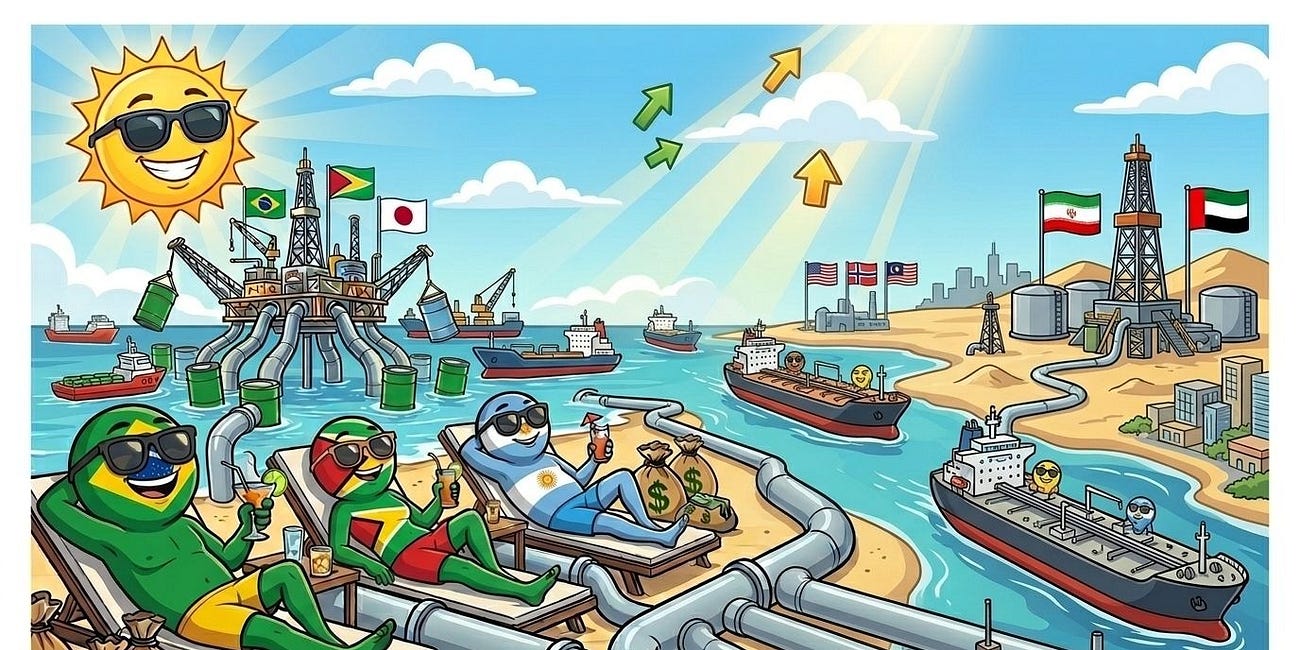
What makes this announcement more credible than the false starts before it is that, for once, to everybody’s surprise (perhaps Trump included), Iran confirmed said announcement. With the blockade now lifting, oil has already fallen from its $119 spike back to the low $80s, and the market expects it to keep sliding toward the $50-60 the oversupply crowd …
What we did not anticipate was the market’s reaction in the rates complex to the end of the conflict, the violent hawkish repricing of the Fed path that, in turn, triggered the heavy sell-off in gold, which fell 16% over the quarter, the largest quarterly drawdown in 13 years. That single misread is the source of essentially all of our relative shortfall, and it decomposes cleanly into two drivers:
1. The gold bet (-200 bps). Gold fell roughly 16% on the month, dragging our precious-metals and copper mining complex — approximately 10% of the portfolio — down about 20%. This is the single largest contributor to the month’s underperformance.
2. The currency effect (-60 bps). Our structural underweight of the US dollar cost us as the greenback strengthened to its firmest in over a year on the hawkish Fed. The fund carried roughly 39% USD exposure against approximately 65% for the benchmark; in a month where the dollar rallied hard, that gap was a direct headwind.
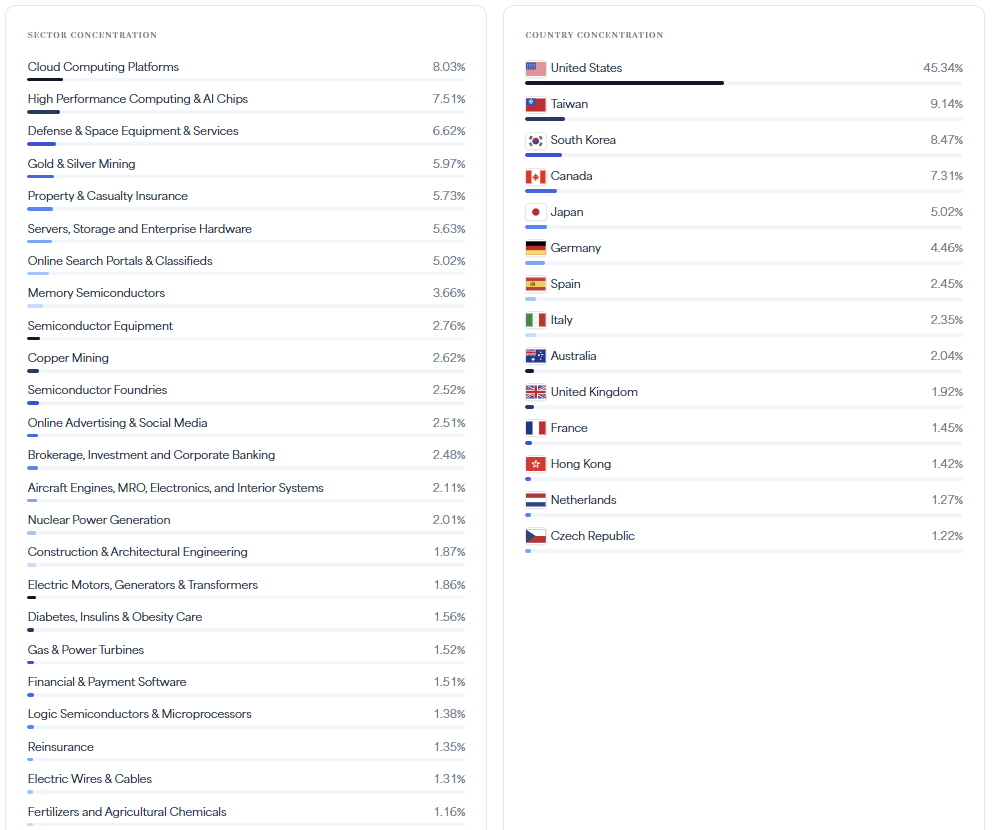
The mechanics of the rest of the book were unusually binary. Three of our structural pockets (gold miners, defense, and enterprise software) each declined by double digits. The violent, simultaneous rally in our AI hardware sleeve, while spectacular in absolute terms, was not large enough to fully offset those three drawdowns landing at once. Let me take them one by one.
Gold suffered its sharpest correction of the cycle, breaking below $4,000 per ounce in late June for the first time since November 2025 and touching seven-month lows, roughly 25% below its late-January record. The trigger was not a failure of the structural thesis (China central bank accelerated purchased during the plunge) but a brutal repricing of US monetary policy: a May payrolls print of 172,000 jobs against an 85,000 consensus, followed by Chairman Warsh’s first FOMC meeting, where the easing bias was removed from the statement and nine of eighteen dots signaled at least one hike by year-end. When the market shifts from pricing cuts to pricing hikes, a non-yielding asset such as gold absorbs the adjustment first, and levered miners absorb it twice. K92 Mining, OceanaGold, Equinox Gold, Buenaventura, and Laopu Gold all corrected by double digits.
Our conviction here is unchanged. Central banks remain structural net buyers (China has now added to reserves for 18 consecutive months), the official-sector bid has not responded to price, and every major institutional year-end target still sits materially above spot. What changed in June is sentiment and positioning, not the fiscal reality of $37 trillion in US federal debt.
The US–Iran framework announced on June 15, instantly confirmed by Tehran, as we flagged in our May letter, triggered a textbook “peace dividend” de-rating across the global defense complex. Hyundai Rotem, Indra Sistemas, Deutz, BHI, SNT Energy, and Palantir all sold off hard as the market extrapolated the end of the Iran war into the end of the rearmament cycle itself.
May 2026 — Navigating the coming oil influx
·
Jun 18
Before diving into the market commentary, I am incredibly proud to share a significant milestone for our franchise. Driven by the continued momentum of our Emerging Equity Trends strategy, we have officially crossed $50m in assets under management (AuM) across all investment vehicles and managed mandates.
We respectfully disagree with that extrapolation. European NATO rearmament budgets are legislated over a decade, not a news cycle; Korean defense exporters are working through multi-year order backlogs that a Gulf ceasefire does not cancel; and the war itself demonstrated precisely how quickly Western interceptor and munition inventories are exhausted in a modern kinetic conflict. Ceasefires change headlines; they do not change procurement law.
Our software exposure, most visibly Microsoft and Guidewire, also declined by double digits. Two forces converged: the hawkish repricing of the rate curve compressed long-duration multiples, and, more structurally, the market continued its violent factor rotation out of application software and into physical AI infrastructure, as investors interrogate whether seat-based software models are AI’s beneficiaries or its victims. We view this debate as healthy but overdone for genuinely entrenched vertical franchises, and our equal-weight discipline treated the weakness accordingly by adding more into the weakness.
On the other side of the ledger, our AI hardware sleeve had an extraordinary month. Marvell Technology, up more than 200% year-to-date, was added to the S&P 500 on June 22. SK Hynix joined the trillion-dollar market capitalization club alongside Samsung. Onto Innovation, Advanced Energy Industries, Bel Fuse, and Amphenol all surged as the Hormuz reopening removed a genuine supply-chain overhang (helium and tungsten had become real bottlenecks during the blockade) and the PHLX Semiconductor Index printed its largest single-day gain since April 2025 when the final round of strikes was canceled.
Quietly, our specialty insurance pocket (Skyward Specialty, Palomar, Progressive, Hamilton) also compounded steadily higher. These are among the purest disinflation beneficiaries in the book: falling claims-cost inflation flows almost mechanically into underwriting margins while headline rates and underwriting discipline keep margins healthy.
We articulated in November last month why Specialy Insurance companies (buyers of falling reinsurance policies) are sitting in a sweet spot in current rate environment.
Impactfull Weekly #14 - Inflection for Insurers?
·
November 14, 2025
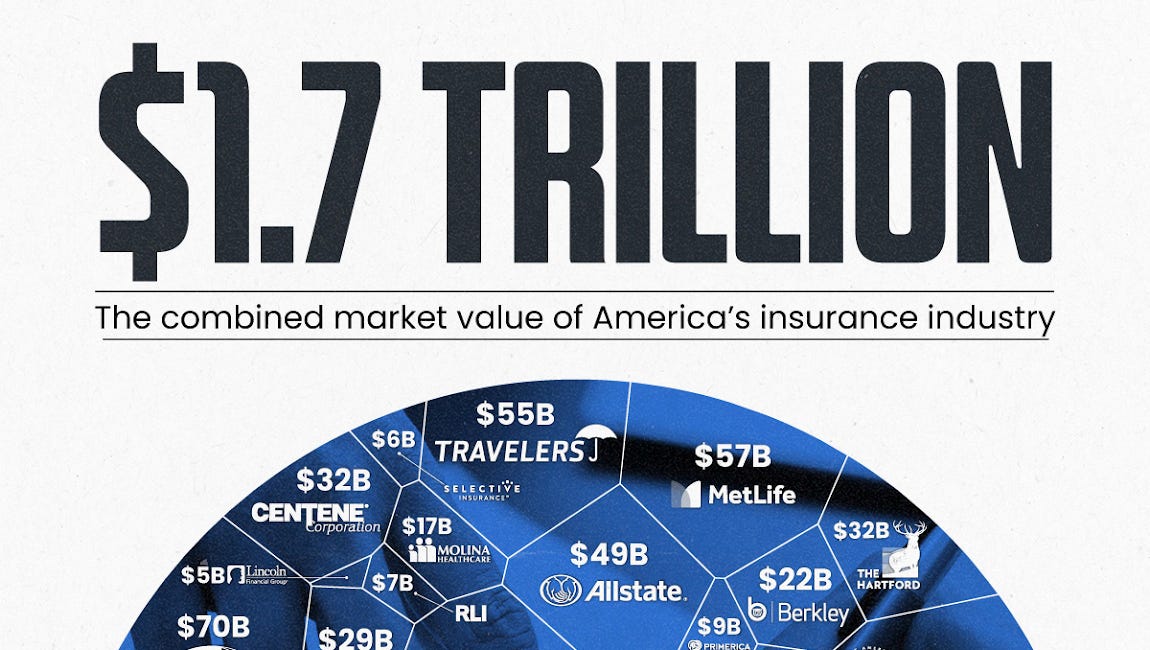
There aren’t many corners of today’s market where you can still get value (10–15x PE), growth (15%+ EPS), and low beta in one shot. Yet one overlooked niche ticks all three boxes: specialty Property & Casualty insurers, the underwriters of earthquakes, cyberattacks, crop failures, and construction risks.
As we do every month, our equal-weight discipline forced us to act against the crowd. We took substantial profits in the names the market loved most, trimming Onto Innovation, Marvell, and Bel Fuse into strength, and systematically recycled that liquidity into the names the market hated most: our gold miners and our defense holdings, rebuilding each position back toward its equal weight philosophy.
This is not a heroic contrarian call; it is the mechanical output of our process. The same discipline that instructed us to add to Futu into the CSRC panic in May instructed us to add to gold miners below $4,000 gold and to defense contractors into the ceasefire euphoria in June.
In conclusion, this first real reversal of the year stems from a single misread — the reaction of the rates market to the end of the conflict (rather than a break in our theses). We are keeping the course, and we intend to use this weakness to reinforce our gold and defense exposures, both of which we believe have been unjustly punished as we expect rates to come off gradually. Historically, this forced anti-cyclicality has been one of the most reliable sources of our long-term alpha.
Here is the part of the letter I want ou investors to retain. Beneath the hawkish headlines, June marked, in our view, the precise inflection point where the global economy tipped from an inflation scare into a durable disinflation phase and disinflation, historically, is the single most benign macro regime for equities.
Consider these elements :
The headline print is backward-looking. US CPI reached 4.2% in May, the highest since April 2023 — but it was driven almost entirely by a 23.5% surge in energy tied to the Iran war. Core CPI printed just 2.9%, below consensus. Strip out the war, and the underlying disinflation trend of late 2025 never stopped.
The energy shock is unwinding in real time. Crude has collapsed from its $119 wartime peak back to the mid-$70s as Hormuz reopens, with our baseline unchanged: a gradual reversion toward the structural $50–60 range as sanctioned Iranian and Russian barrels return, the Gulf states fight for market share, and US shale prints record throughput. The arithmetic is unforgiving: at current spot, the energy component of headline CPI flips from a +20% contributor to an outright negative contributor by the fourth quarter, purely through base effects.
The Fed is fighting the last war. Chairman Warsh’s hawkish debut, the shortened statement, the deleted easing bias, the hiking dots, was calibrated to an oil price that no longer exists. We believe the nine dots projecting hikes will age as poorly as the market reprices the probability of zero cuts.
The AI deflation wave is accelerating. The labor displacement we described in May continues to compound, and structurally cheaper energy plus structurally cheaper cognition is the most deflationary cocktail the global economy has been served since the 1990s. With cosntrained balance sheet, the hyperscalers and Neoclouds (Oracle, Anthropic, Corweave, OpenAI) cannot afford to keep paying up for AI pick and shovels (HBM, CPU, GPUs). SK Hynix and Samsung just announced massive CAPEX plans for capacity additions recently while China two largest memory chip producers
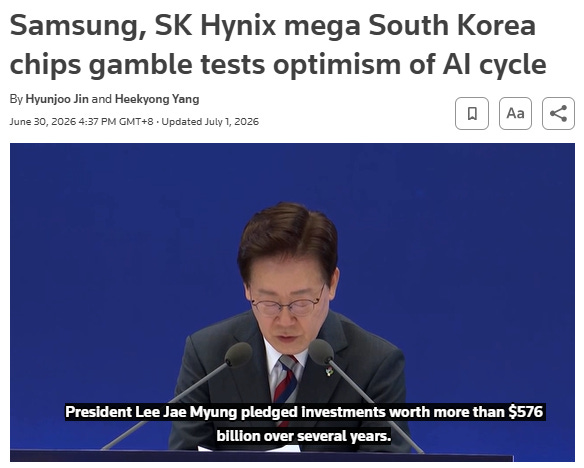
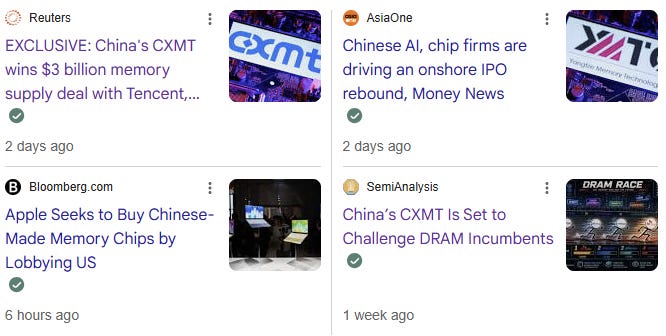
For equities, the destination matters more than the journey: falling headline inflation removes the hiking tail-risk, restores central banks’ optionality, and re-opens the path for the capital-intensive IPO and infrastructure pipeline that defines this cycle. We are positioned for that world.
One final observation, and we regard it as unambiguously positive: in the last days of June, the market began to price what we have been repositioning for since the spring, that semiconductor capital expenditure, however enormous, is cyclical, not eternal. The most cyclical segments of the complex, ODM server assemblers (Wiwynn, a bottom performer this month despite the sector euphoria), legacy cooling, have started to correct even as the headline indices celebrate.
This is exactly the kind of internal differentiation a healthy market produces. Indiscriminate euphoria is what ends cycles; selective skepticism is what extends them. As detailed in May, we continue to execute our gradual sell-off across names exposed to maturing sub-trends where PEG ratios have stretched beyond 2.0x, while retaining full exposure to the segments where physical scarcity, not sentiment, sets the price: power generators for data centers, high-bandwidth memory, interconnects, and process control.
The market rewarding discipline over momentum is not a threat to our strategy. It is our strategy.
Stay invested, cautiously,
Keith Bortoluzzi
Disclaimer: Thoughts are my own and for informational purposes only. Not investment advice. Does not represent the views or strategies of Impactfull, Ternary Fund management or the IMP Emerging Equity Trends. Not an offer to buy/sell securities or UCITS funds. May hold positions in mentioned assets. Do your own research.
No posts
Comments
Nothing yet. Say the first thing.
Sign in to join the conversation.