
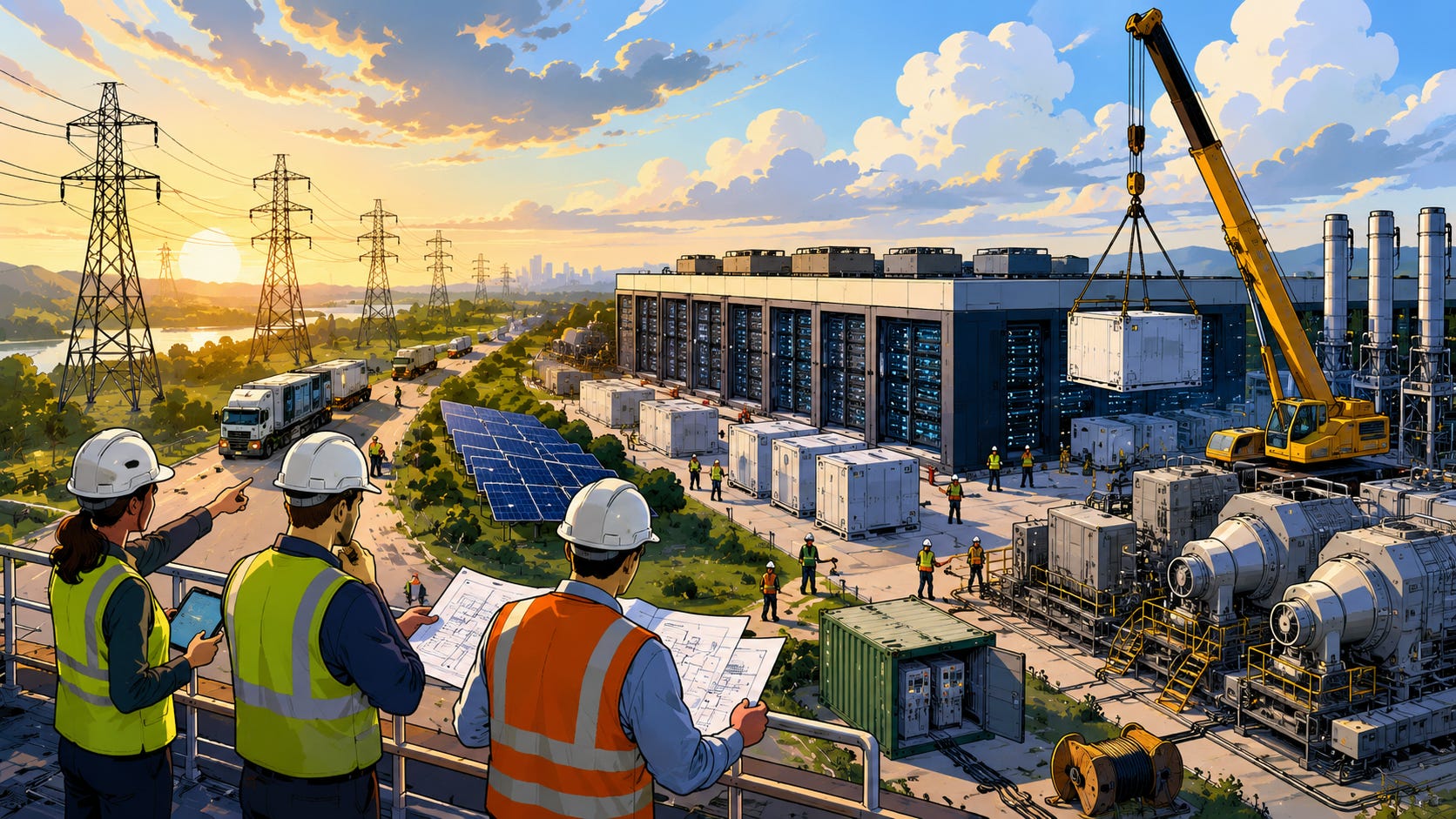
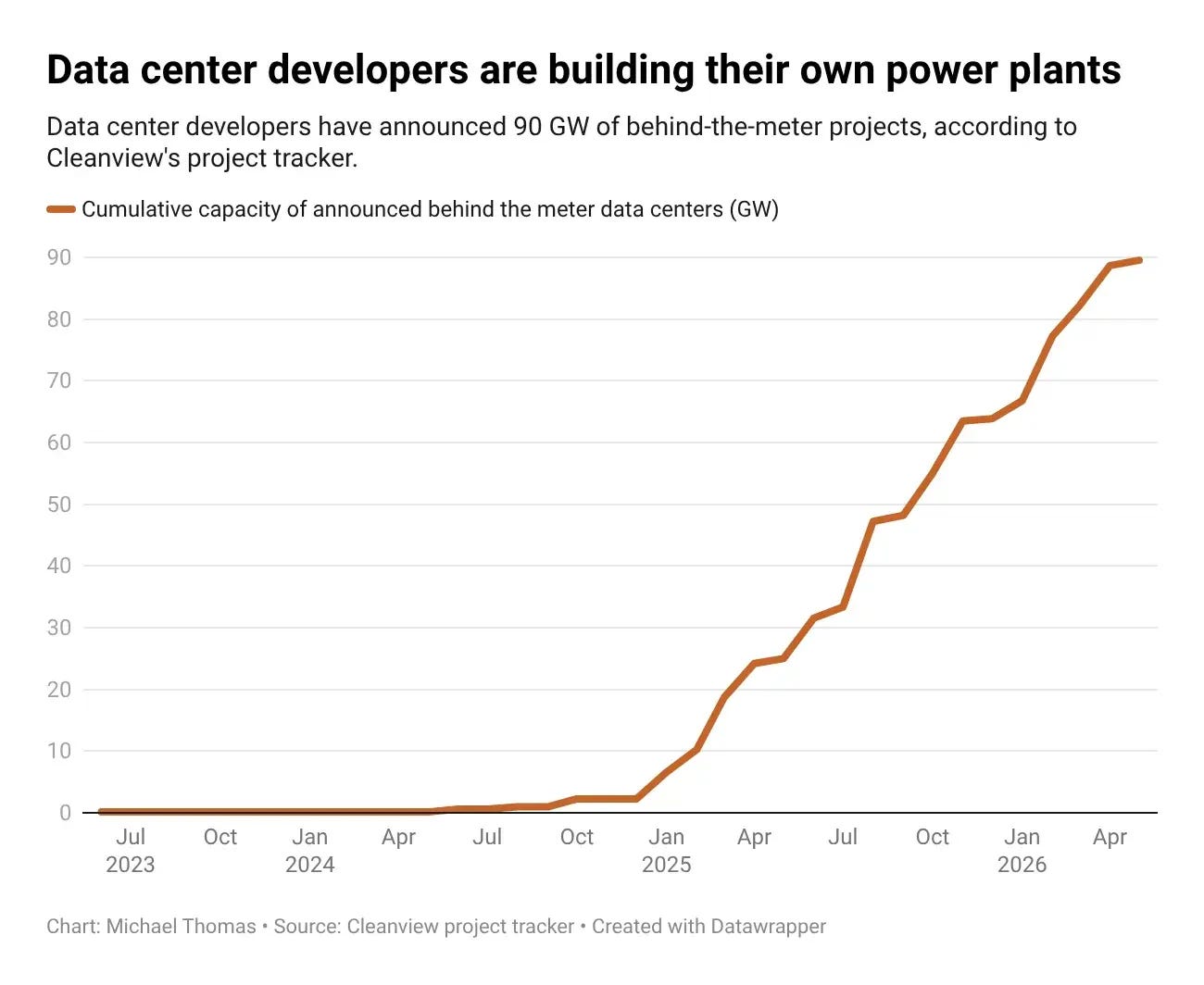
This week, Meta said its Louisiana data centre will grow to 5 gigawatts, taking the investment past $50 billion. Five days earlier, it announced a campus in Alberta where it will pay for its own power plant, in a province that now lets you build your own power generator to skip grid limits. The question is: who gets paid when all other players follow suit?
In this Impactfull Weekly, we’re trying a different format than the ones you’re used to, a section of our posts will be open to paid subscribers only to drive better quality research, and better stock picks. Consider subscribing to our Substack for detailed deep dives and opinionated picks on where we see the market going.
Today, we’re looking at the epicenter of the AI datacenter capex boom in the USA, and why connecting a new datacenter the normal way has become a 3-5 year wait, how the biggest buyers of compute, from hyperscalers like Meta to neoclouds like Nebius (specialised landlords that rent out GPU capacity), are “skipping the queue” by generating power on site, and who gets paid for the equipment that makes this bypass possible.
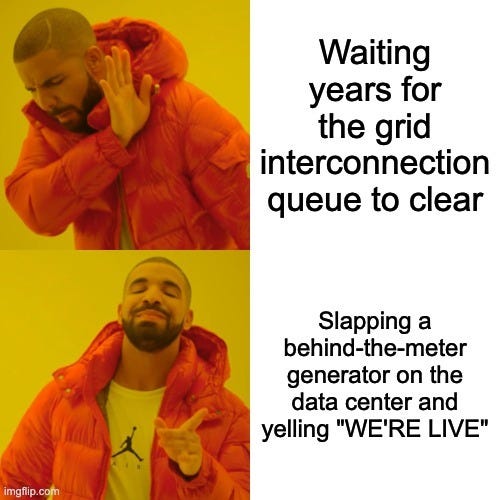
In 2025, hyperscalers stopped treating datacenters as a cost line and started treating them as the capex required for their product. Alphabet, Amazon, Meta, Microsoft and Oracle spent a combined $448 billion on capex that year alone.
For 2026, the five largest are guiding to roughly $690 to $725 billion between them, up 77% in a single year: Amazon is spending near $200 billion, Alphabet is aiming for $185 billion, Meta is scaling to $135 billion, Microsoft is investing $120 billion and Oracle is spending upwards of $60 billion. This isn’t like 2024 where spare cash was used to build some extra compute.
These figures may seem mind boggling, but this growth in capex comes in part from the 200-500% increase in prices of memory (HBM) chips manufactured by companies like Micron, SK Hynix, and Samsung.
If you add it up today, this is one of the largest coordinated capital deployments in modern history.
Which makes what follows strange: true scarcity is in the bottlenecks along each step of the physical supply chain.
Every physical step between electricity production and a working GPU, now carries a longer delivery date than it did when the cheques were signed.
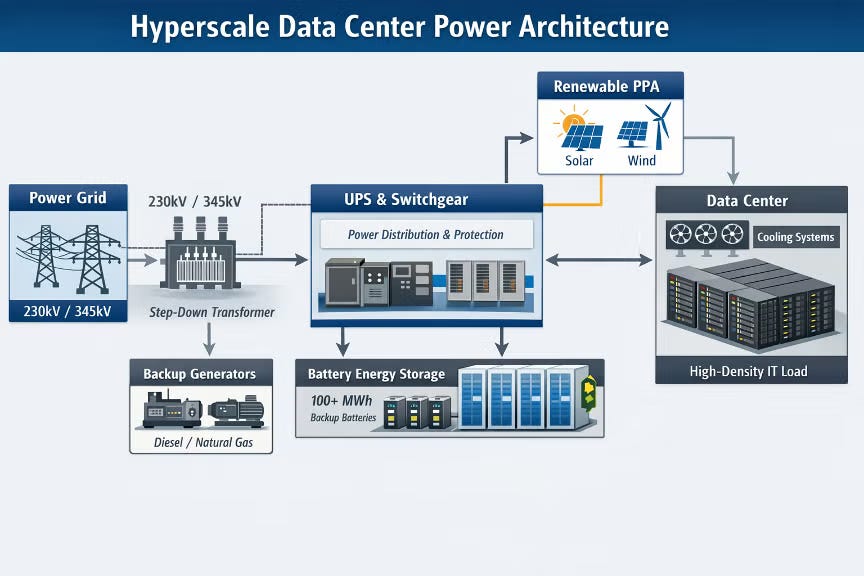
The queue got longer at every stage, all at the same time.
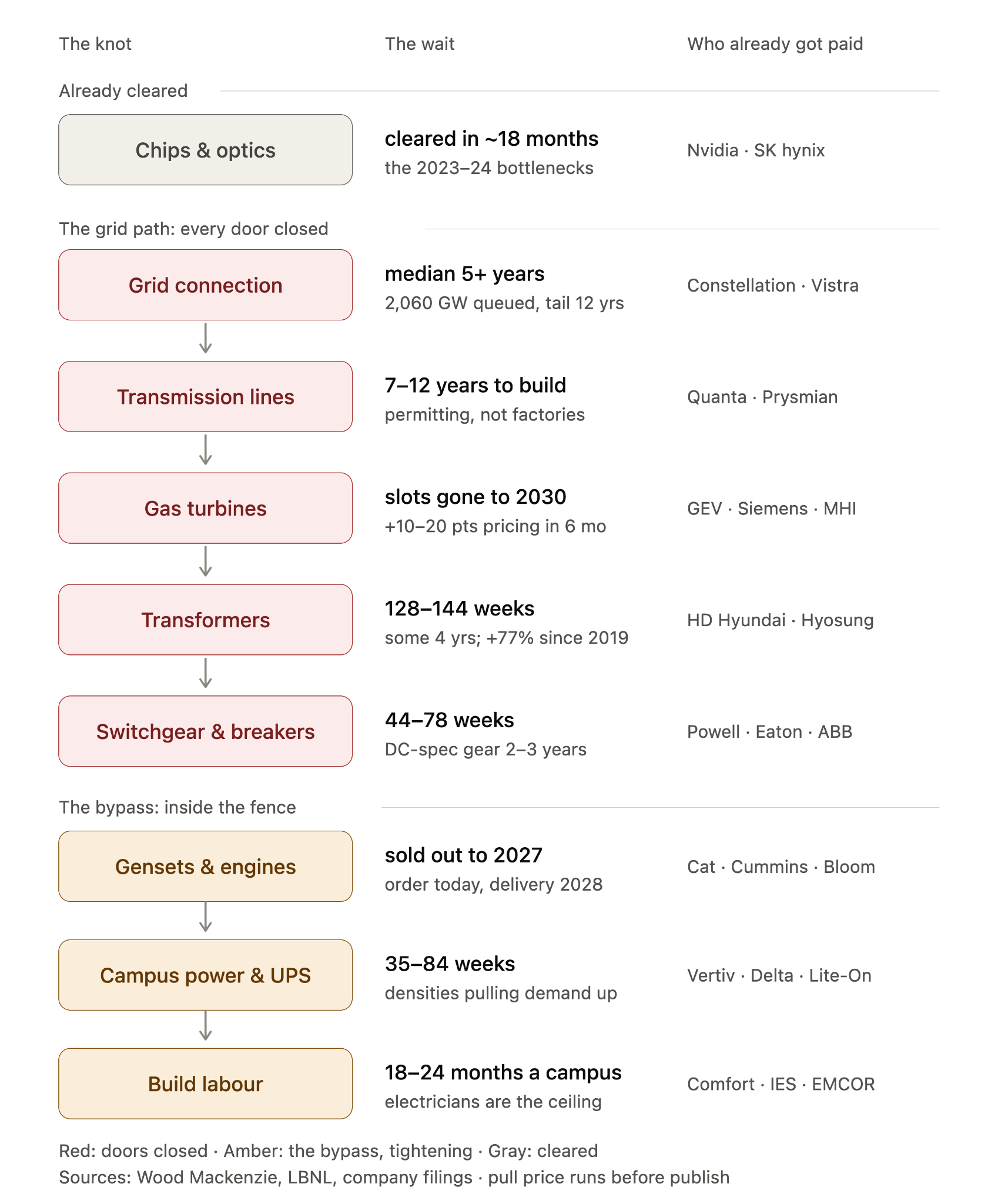
Let’s walk through the chain, bottleneck by bottleneck: what each segment does, how long it now takes, and who has already been paid for the wait.
In 2023 the bottleneck was advanced packaging. TSMC could not mount GPUs onto a single substrate alongside their memory stacks fast enough, and Chip on Wafer on Substrate (CoWoS) production capacity became the most-watched number by semiconductor industry analysts.
Since then, TSMC got its chequebook out and started investing in new chip fabs across Taiwan, Japan, and the USA. TSMC spent $29.8 billion on capital expenditure in 2024, then in 2025, it spent $40.9 billion. In 2026, it is aiming towards $56 billion in total spend.
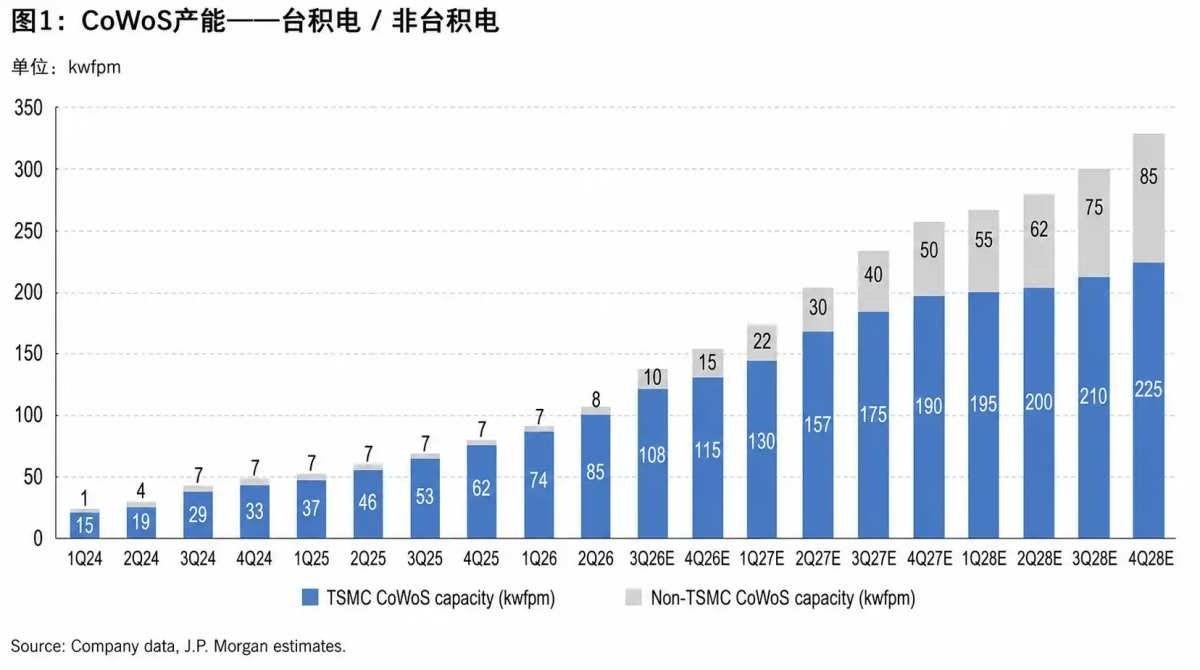
This is the first example of how despite doubling capex in three years, TSMC still hasn’t managed to clear the bottlenecks that we’re seeing cascade downwards.
Last October, TSMC CEO C.C. Wei admitted to the market that they can’t make enough 3nm wafers, and they can’t package enough of the ones they do make.
Connecting datacenters to the grid is the one knot in this chain with no factory behind it: there’s nothing to build, nothing to buy, only a queue that doesn’t seem like it will resolve anytime soon.
The median wait from connection request to commercial operation went past five years for projects that came online in 2025, according to Lawrence Berkeley National Laboratory, and the wait time is only getting longer despite the shrinking power generation queue that’s down 10% last year to roughly 2,060 gigawatts.
Meanwhile, a second queue is exploding: the Electric Reliability Council of Texas (ERCOT), the organisation that operates Texas’ electrical grid, told the Texas Senate in April it was tracking roughly 410 gigawatts of large loads seeking connection, about 87% of them datacenters, up from 233 gigawatts in December 2025.
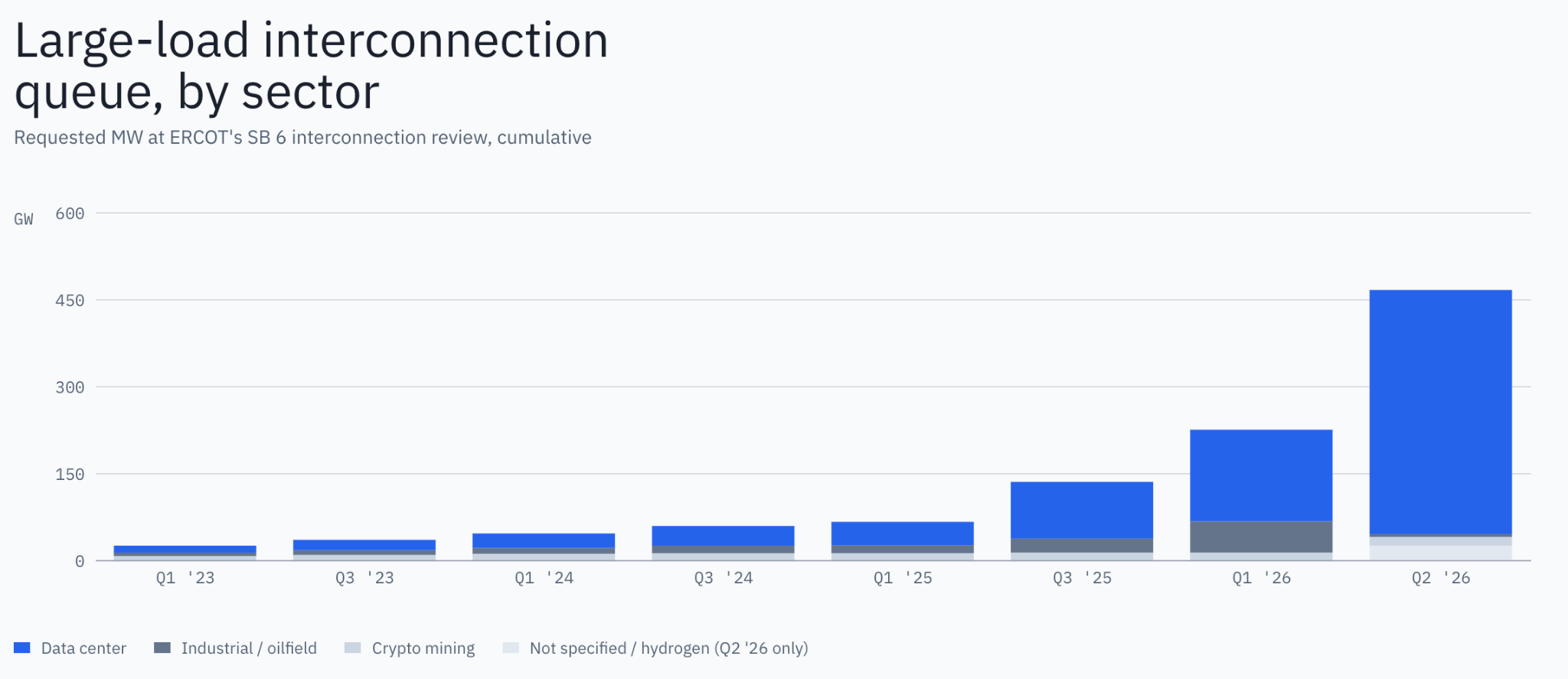
Texas’s record peak demand is 86 gigawatts. The state is being asked for five times its entire grid, and even discounting for hyperscalers filing the same project in three states at once, a habit Texas has just passed a law to expose, the math still doesn’t math: ERCOT connected about 23 gigawatts of new generation between 2024 and 2025, against a request book of 410.
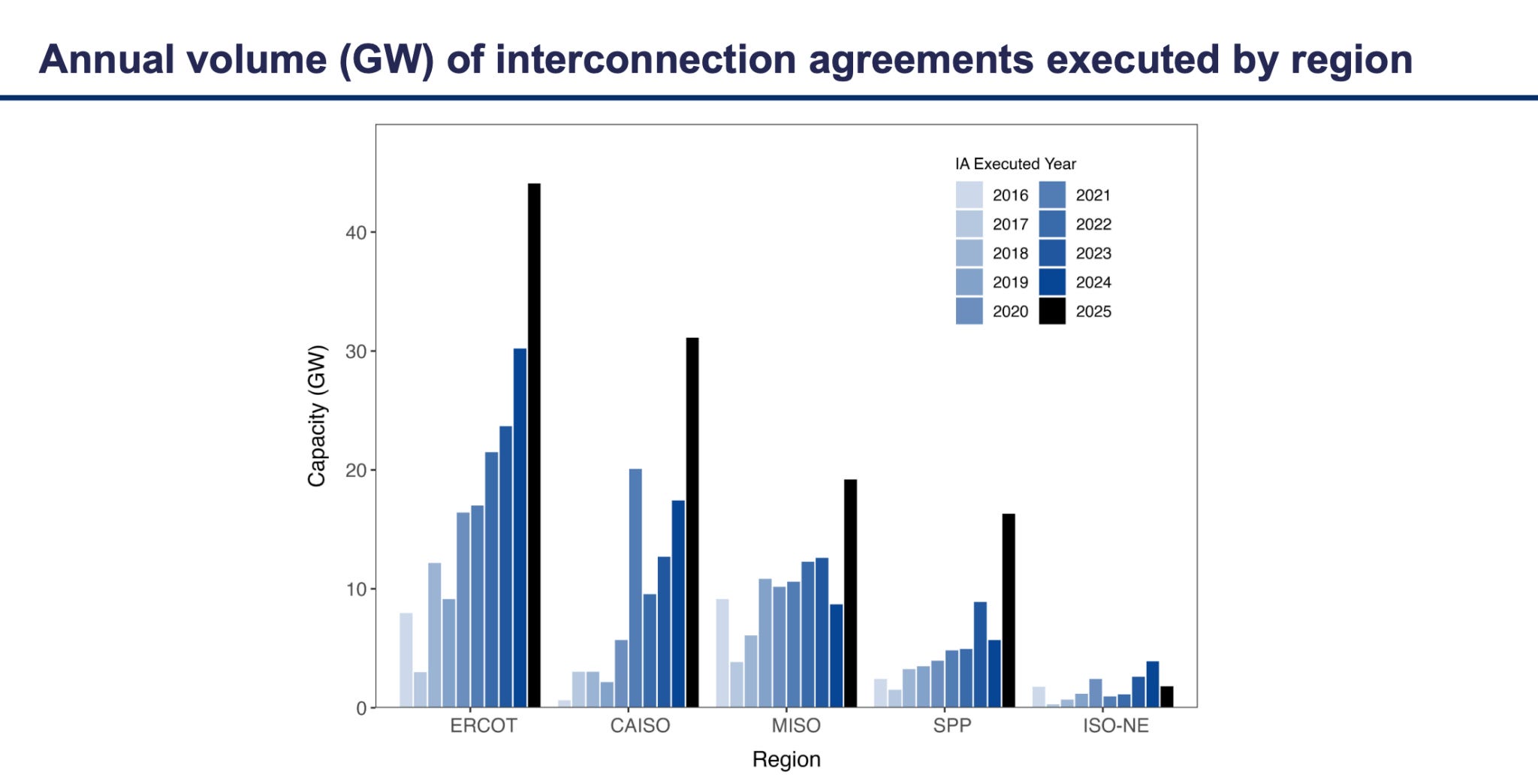
Meaning: you cannot buy a spot in this queue, because nobody gets paid waiting. The only way to have owned it was to hold an energy producing site before the demand arrived, which is why the power generators sitting on existing nuclear and gas fleets: Constellation, Vistra and Talen, were the first stocks in this entire story to re-rate (Constellation up 122%, Vistra up 315%, Talen up 534% since Jan’24).
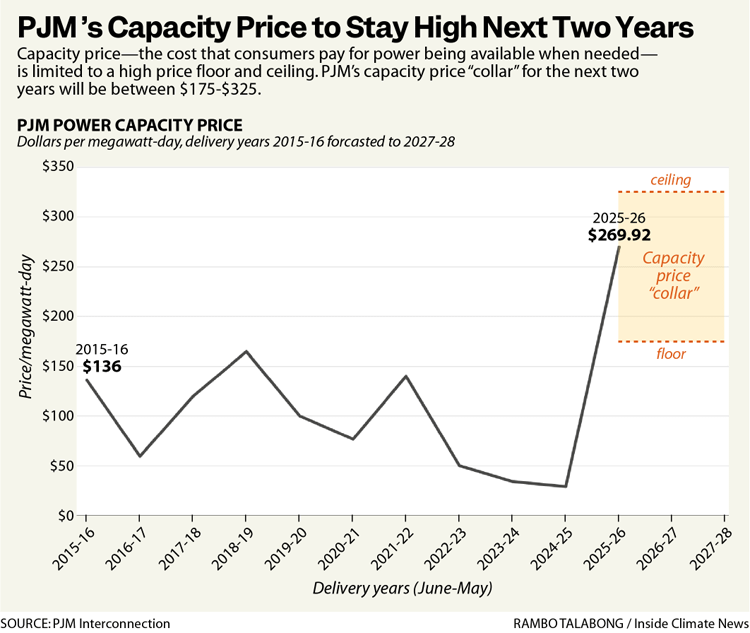
This is also why Microsoft paid upfront for twenty years of Three Mile Island’s output before the reactor had even restarted.
We introduced Constellation and Vistra to you in a previous essay, the market has since completely priced it in, and that trade is over.
Which begs the question: if the front door takes five years and its owners have already been paid, what does a buyer with $50 billion dollars and no patience do?
Texas has answered this question in its rulebook. ERCOT now runs a formal program called BYOG: Bring Your Own Generation.
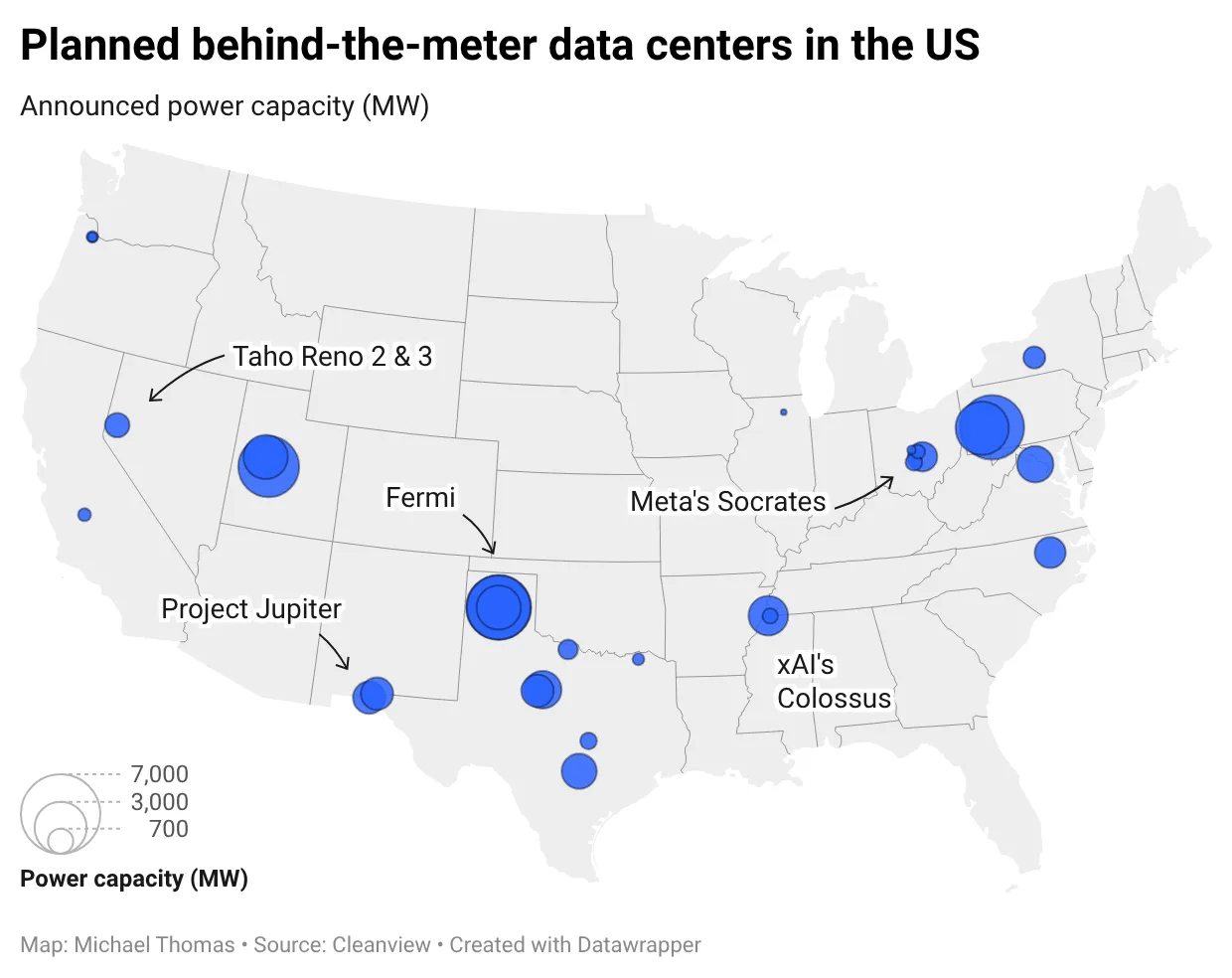
If you think the waiting time for connecting your datacenter to the grid was slow, wait till you find out how long it takes to build the wires that transport all that generated power.
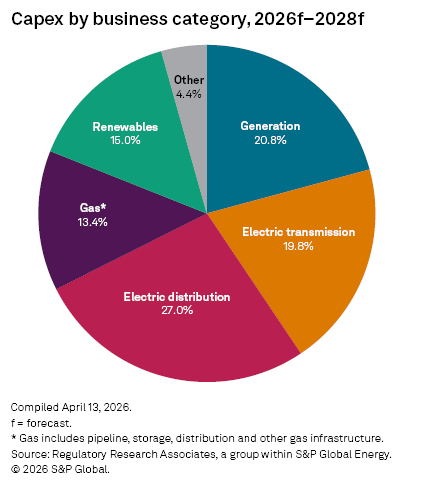
America’s utilities spent a record $204 billion on the grid in 2024, their fourteenth consecutive record year, and projected $239 billion for 2026, a 17% jump, as part of a five-year investment plan that now runs to $1.4 trillion.
Roughly 90% of transmission spend in recent years went to replacing and hardening what already exists rather than adding a mile of new delivery capacity.
A transmission project takes ten to twelve years to complete, most of it siting and permitting in the United States, with the federal permits alone averaging four years and running as long as twelve.
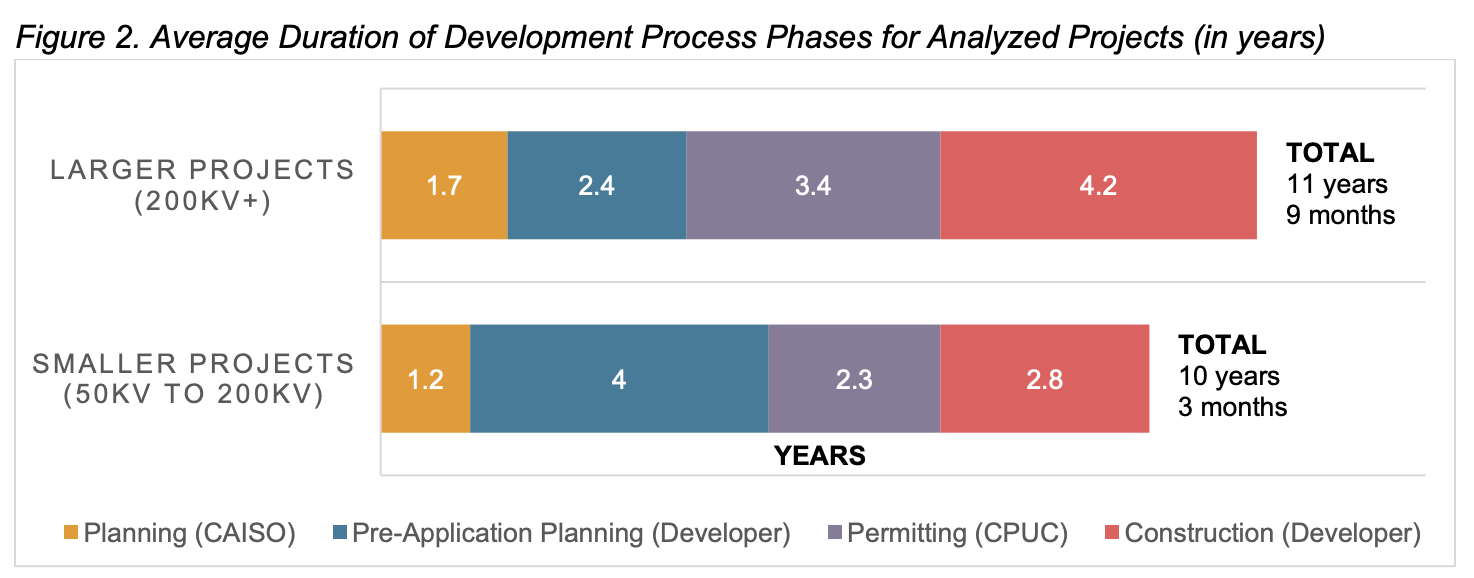
For context, China invested around $40 billion in high-voltage transmission in 2023 alone and had 38 ultra-high-voltage lines operating by 2024.
Nobody can own a transmission line permit, so the market rewarded the next best things: the crews and the wire.
Quanta and MasTec, the contractors who actually upgrade the lines, repriced early and hard (Quanta up 225%, MasTec up 408% since Jan’24), and the cable and conductor makers, Prysmian and Nexans, carry multi-year backlogs (Prysmian has an order backlog of €9 billion as of Q1’26 with a market cap of €40 billion).
Only three companies in the world make heavy-duty gas turbines at scale: GE Vernova, Siemens Energy and Mitsubishi Heavy Industries.
All three are now sold out on a horizon no other industrial market can take. GE Vernova ended 2025 with an 80-gigawatt backlog stretching to 2029, booked 18 gigawatts in the fourth quarter alone, reached 100 gigawatts including slot reservations by March, and its CEO expects to be sold out through 2030 by the end of this year.
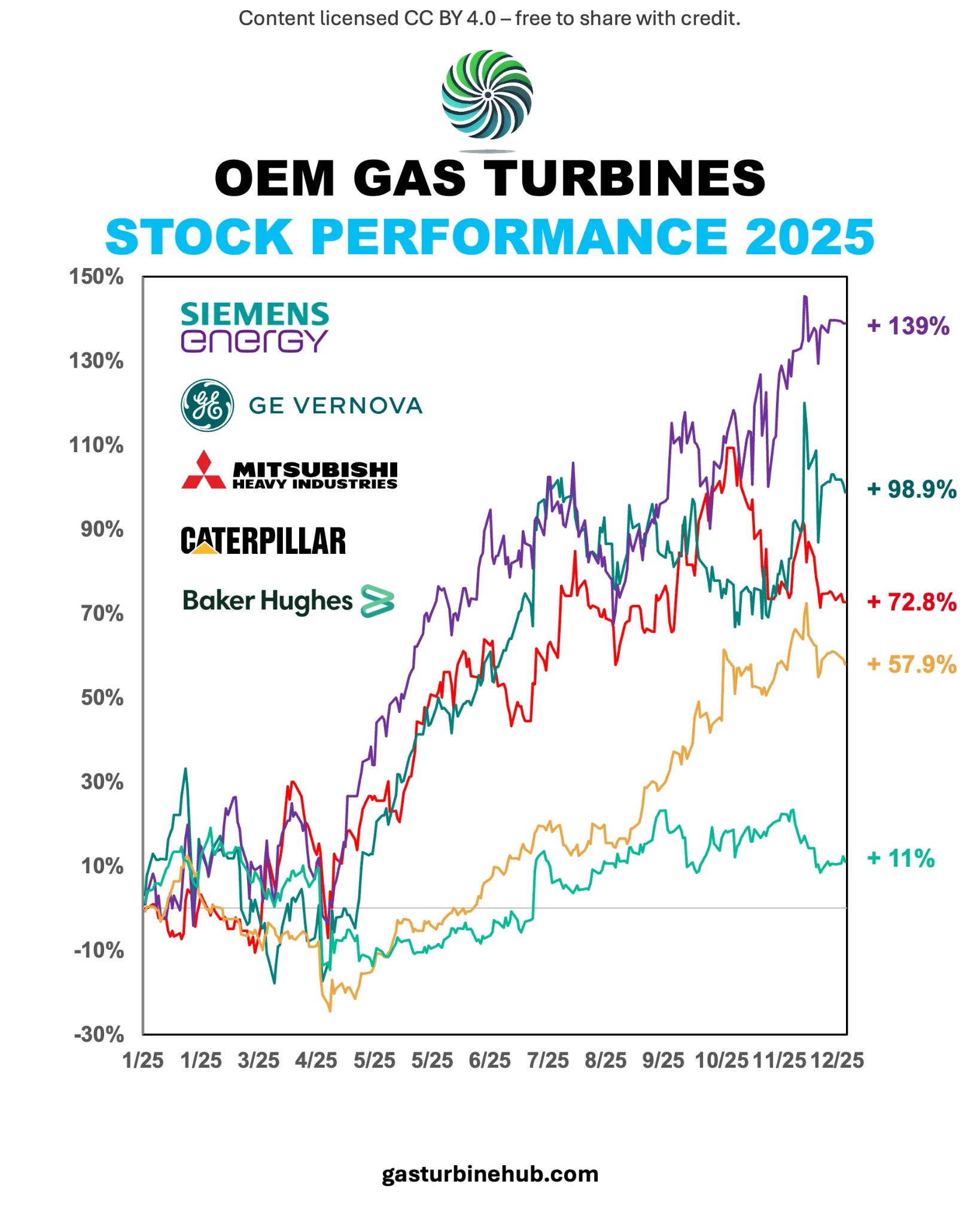
Siemens Energy reported a record €146 billion group backlog in February, its strongest turbine order quarter ever, and told investors two weeks ago it is booked out until fiscal 2028 with 2029 and 2030 slots filling quickly. And Mitsubishi is sold out through 2028.
Lead times on large turbines have gone from two to three years around 2022 to around five years today, and the manufacturers are now advising customers to plan on seven-to-eight-year timelines.
The price of impatience is being written into contracts in real time: turbine capital costs have nearly tripled in two years, reservation fees are now standard, orders signed this half are priced 10 to 20 points higher per kilowatt than two quarters ago, and a Siemens executive summed up the whole essay in seven words when he told the market that speed “is currently more critical than efficiency”.
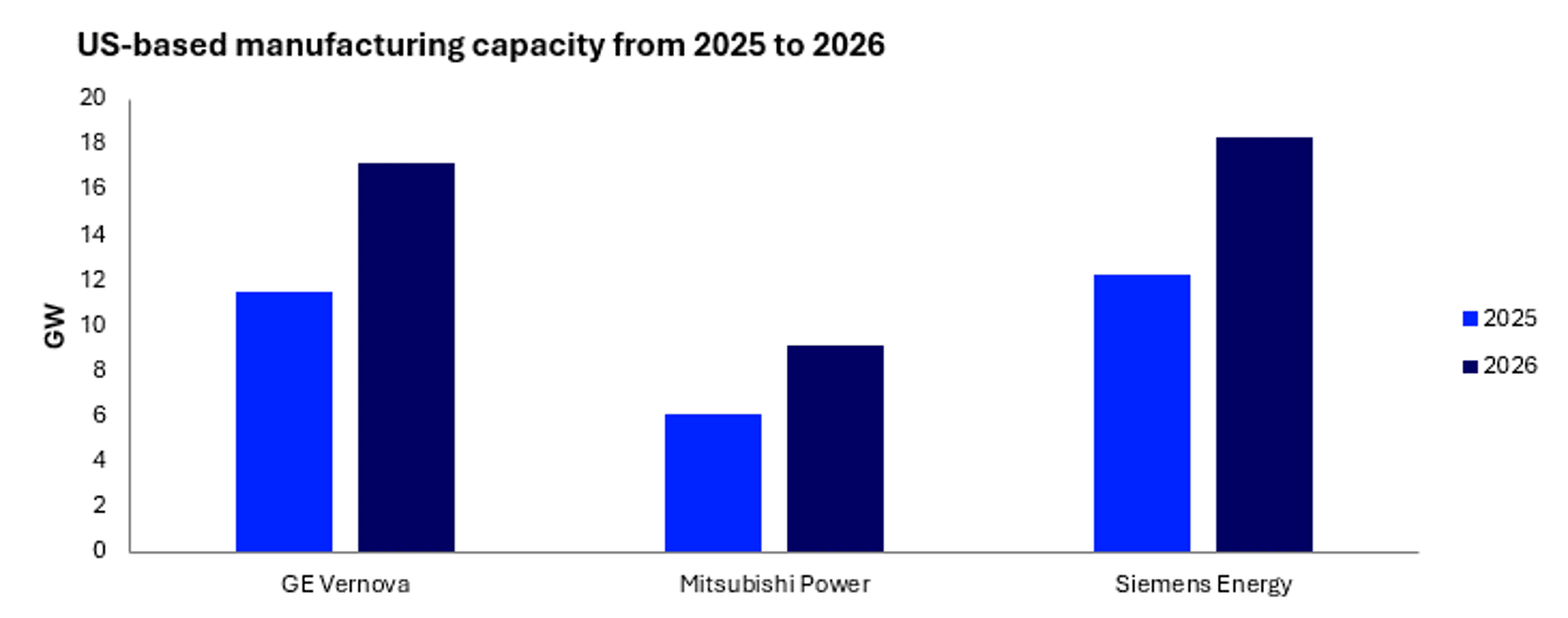
Here is what makes this knot different from the last two: the factory exists, and its owners are refusing to floor the accelerator.
These three companies have been burned by every turbine boom in living memory, the early-2000s overbuild, then 2008, then the 2018 collapse that helped push GE into breaking itself apart, and the scar tissue shows in the expansion plans.
GE Vernova is lifting output from roughly 48 turbines a year to 20 gigawatts annualised by mid-2026 and 24 by 2028, at existing plants, against a book that’s already past 100.
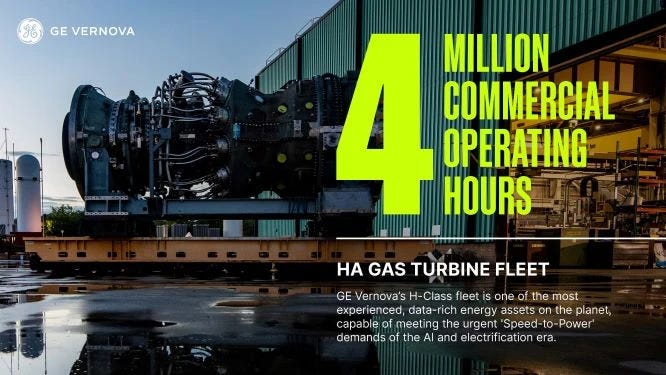
Siemens Energy’s flagship blades-and-vanes plant in Florida has grown from about 200 employees to 450 in two years.
Industry output is running an estimated 20 to 25% below what buyers want, and genuinely new capacity from today’s announcements lands only after 2030.
This discipline in maintaining deliberate scarcity in production is paying off: GE Vernova (up 657% since its IPO in Apr ‘24), Siemens Energy (up 1,190% since Jan ‘24), Mitsubishi (up 342% since Jan ‘24).
The supply is tight and the stocks are fully priced, which is precisely why the buyers who cannot wait are getting second or third best options: aeroderivative units, reciprocating engines and even bringing back retired aeroplane engines for bridge power.
And even the buyer holding a confirmed turbine slot owns nothing usable yet, because the machine produces power at the wrong voltage, and the transformers that fix this problem have a queue of their own: 128 weeks and counting.

Every electron changes voltage at least three times between the power plant and the rack, and the transformer is the machine that does it. Large units are custom-wound to order: there is no spot market, no warehouse, no inventory to draw down from.
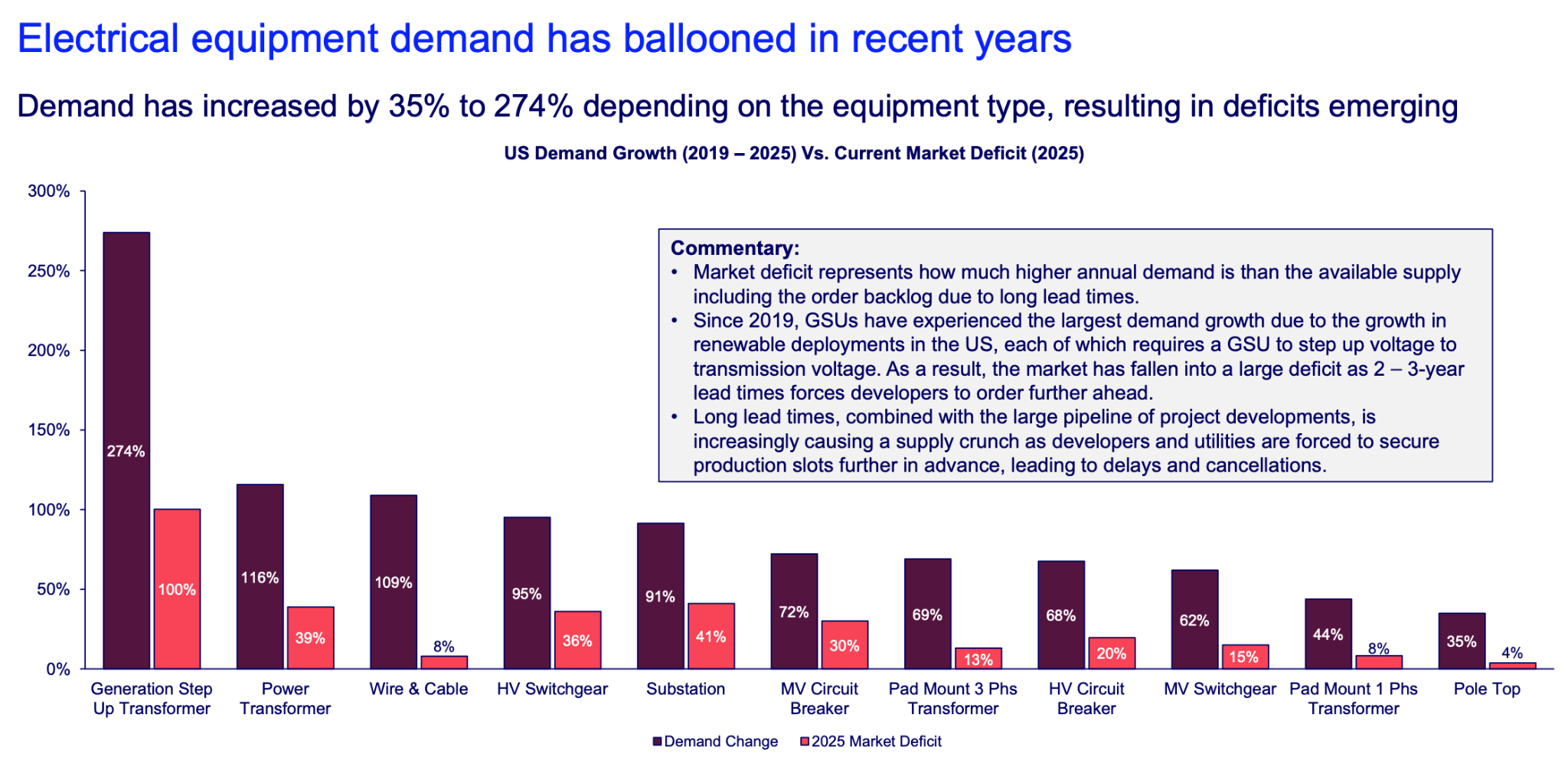
There is an order book, and it is yet another knot in this chain where the waiting time is still visibly lengthening.
Power transformers averaged 128 weeks for delivery in Wood Mackenzie’s mid-2025 survey, and generator step-up units, the ones that connect new power plants to anything, have gone from 143 weeks on average in 2024 to more than 160 weeks as of the first quarter of this year, three-plus years, with PwC putting some large orders at four.
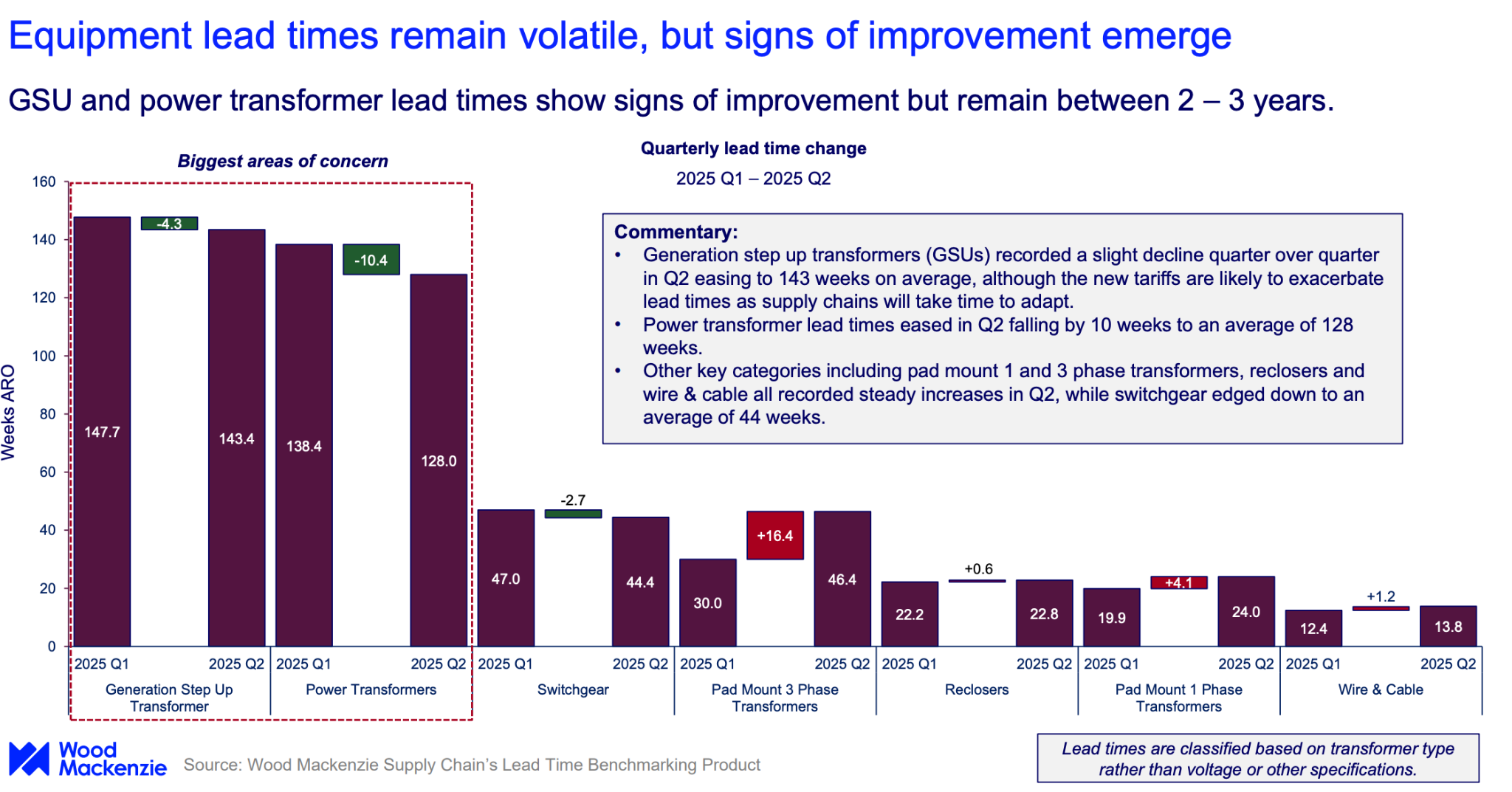
Note the shape of the shortage: standard distribution units have actually improved, to 8 to 16 weeks, while the top end deteriorates, meaning the scarcity has concentrated exactly where generators and data centres buy.
The reason America cannot simply build its way out is that America mostly does not build these. Roughly 80% of large power transformers are imported, exactly one domestic mill produces the specialised grain-oriented electrical steel at the core of every unit, Cleveland-Cliffs in Butler, Pennsylvania, and it has its own capacity limits, while the winding itself is craft labour trained over years, not months.
Tariffs cut both ways here: they protect the lone steel mill and lengthen the import queue, and Wood Mackenzie has warned that trade policy could undo the modest lead-time improvements already made.
So the money went to the countries that still had factories when America needed them: Korea’s HD Hyundai Electric (+782% since Jan ‘24) and Hyosung Heavy Industries (+1,546% since Jan ‘24) became the price-setters of an American shortage, with operating margins that have expanded from 6.3% in 2022 to almost 25% in Q1 2026.
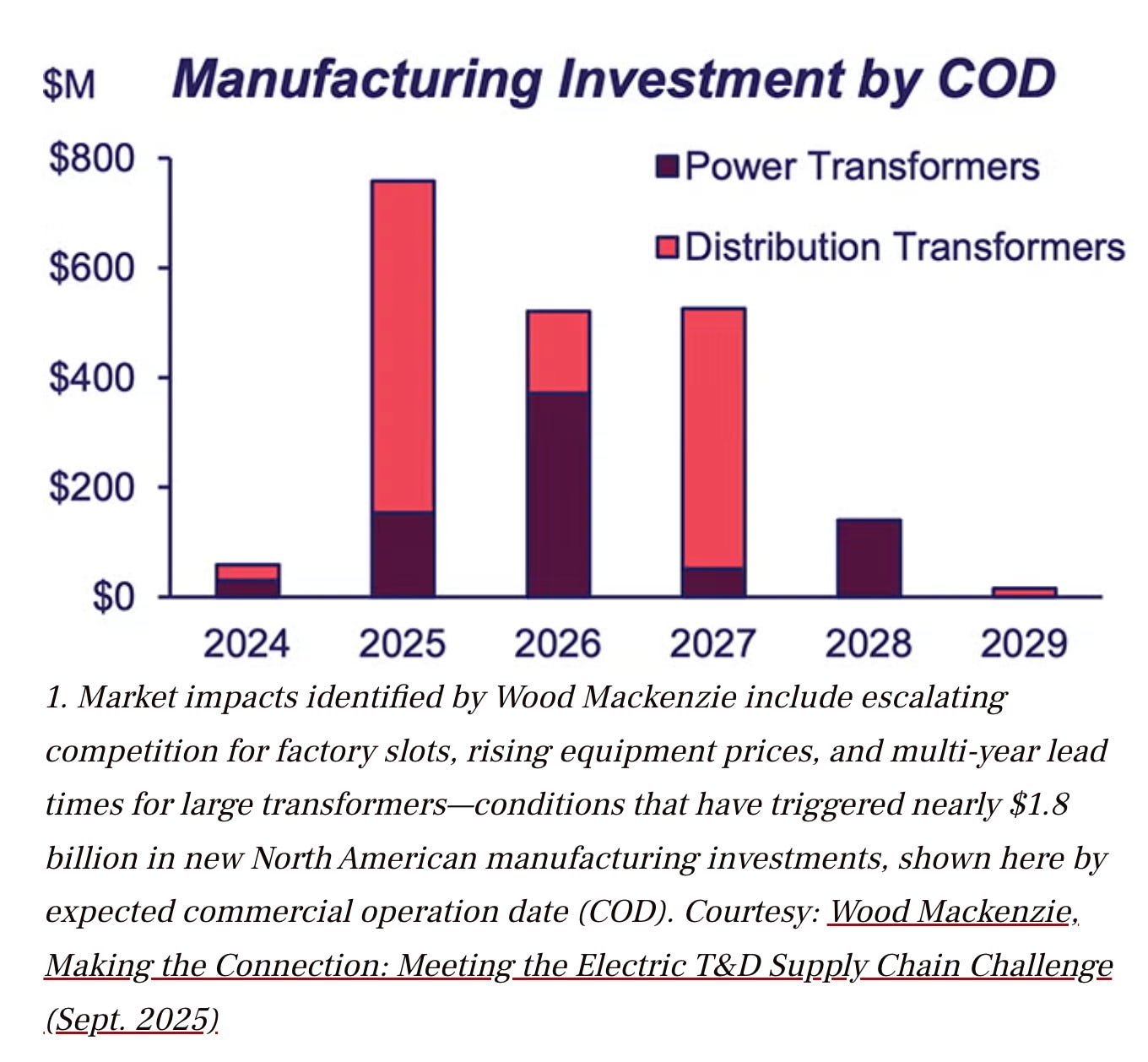
More than $2 billion of new manufacturing capacity has been announced, with Hitachi Energy and Siemens Energy facilities due online by 2028, but transformer plants take years, steel and winders do not scale on a press release, and with Korea’s order books full, purchase orders are now spilling to the second-source makers in Taiwan and India.
Meanwhile the transformer’s output feeds straight into a wall of circuit breakers with a queue of its own, and that queue just doubled: 77 weeks in 2023, 125 weeks by late last year.
Switchgears are the data center’s immune system: the wall of circuit breakers, busbars and panels routes power to where it’s needed and when something fails, isolates the faulty part before it takes the whole center down. It is in reality quite similar to the circuit breaker panel in your house, except a hyperscale campus needs thousands of electrical positions, custom-engineered for fault currents that would melt the circuit breaker in your home.
The engineered gear a datacenter actually orders runs a delay of 1-1.5 years against 20 to 30 weeks a few years ago, panelboards that used to ship in 8-12 weeks now are quoting 28-48, power circuit breaker switchboards are past the 1.5 year mark, and high-voltage circuit breakers have gone from a little under 1.5 years in 2023 to almost 2.5 years today, with some critical components at 18 to 36 months and market commentary calling the category effectively sold out through 2028.

Every maker of this gear is booking faster than it can build: GE Vernova’s electrification division, where its switchgear business sits, is taking orders at two and a half times the rate it ships.
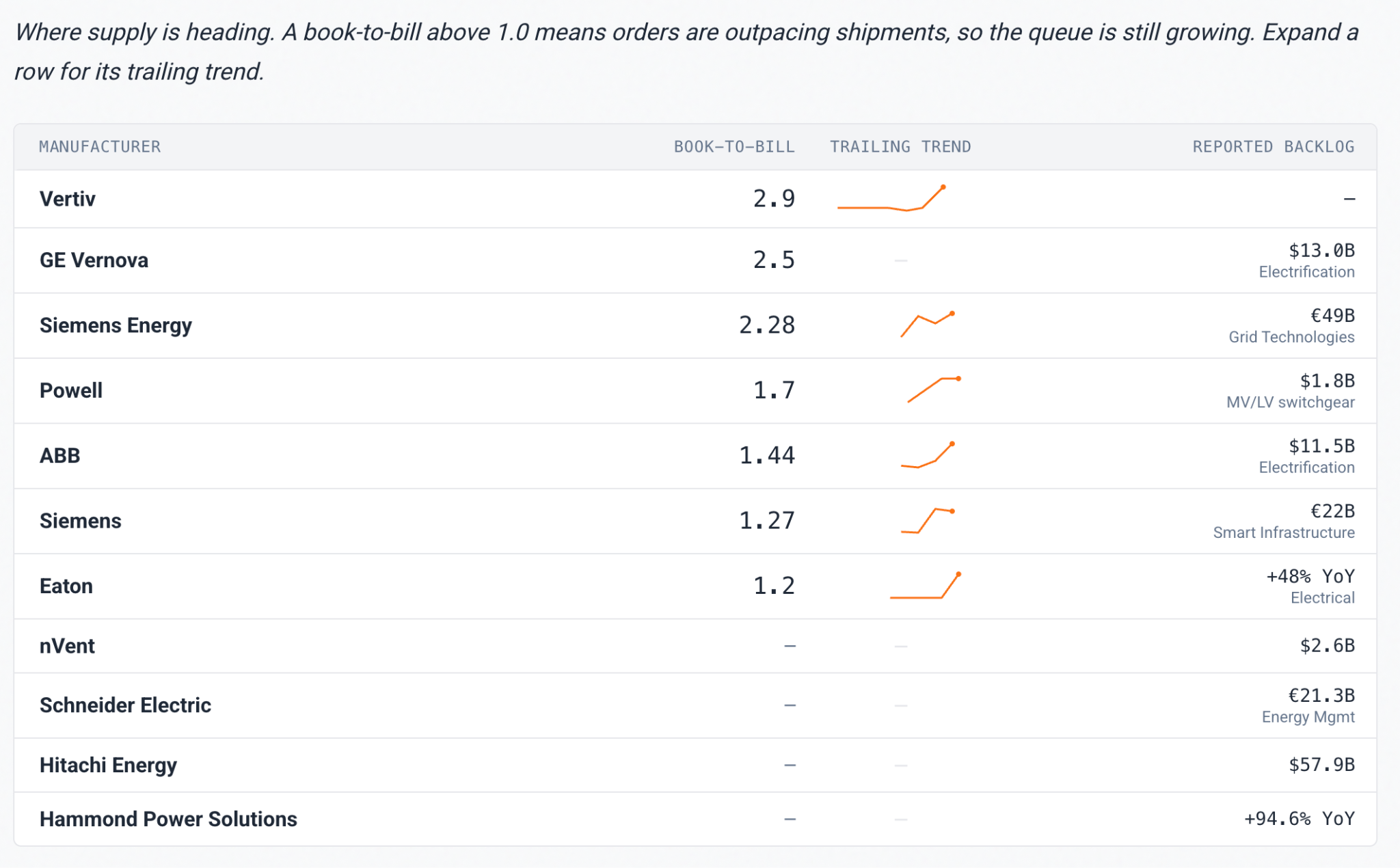
Hitachi Energy’s grid unit, the largest maker of this equipment alongside its transformers, is at 2.3x book-to-bill ratio on a $58 billion backlog, Eaton’s is at 1.2x and Powell Industries, the largest American pure-play in custom switchgear, at 1.7x, including a single data centre order for switchgear and electrical houses worth over $400 million, a quarter of its order book.
A book-to-bill above one means the breaker queue lengthens every quarter by definition, and the makers are filling hyperscale allocations first, leaving everyone else to fight over the remaining factory slots.
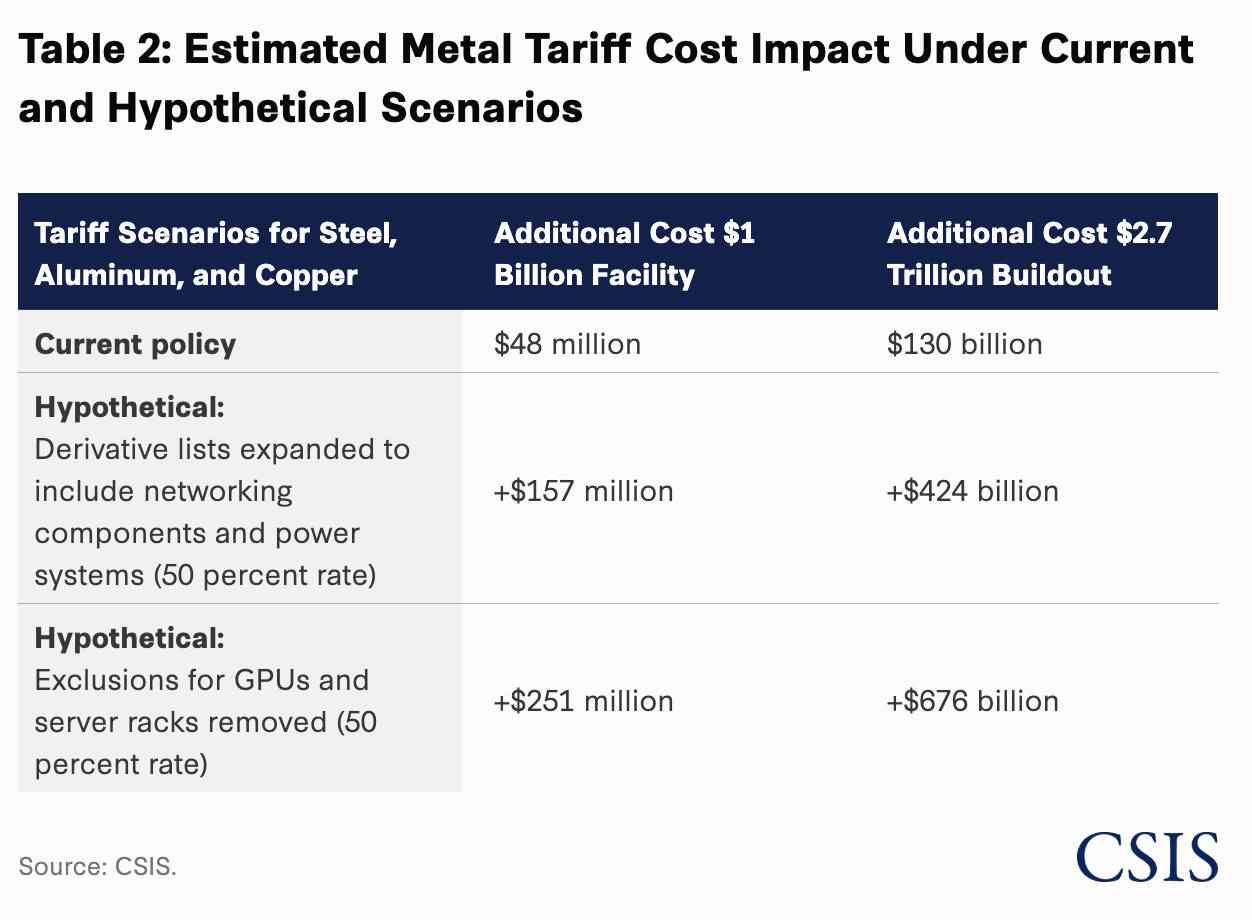
To make matters worse, the American switchgear manufacturing base shrank roughly 10% since 2020, and Washington’s metal tariffs have made every busbar more expensive: the copper and steel inside this gear now carry 50% duties under Section 232, which CSIS estimates adds $48 million to the electrical bill of a single $1 billion facility, and $130 billion across the full AI build-out, before the reshored factories arrive, which is not present in volume until 2027 at the earliest.
The market has noticed this knot in the supply chain and has who sells the scarcity: ABB (+120% since Jan ‘24), Eaton (+70% since Jan ‘24), Schneider Electric (+51.6% since Jan ‘24).
Let’s say we handed you $50 billion to build a new gigawatt-scale datacenter from scratch and a contract with a major AI lab to sell it to. That’s exactly what TSMC Chairman C.C. Wei says it usually costs his customers.
With the Nvidia Vera Rubin-generation chips themselves costing about $20-30 billion for a 1 gigawatt scale datacenter, let’s also consider that Jensen gave you his personal blessing and jumps you to the front of the queue.
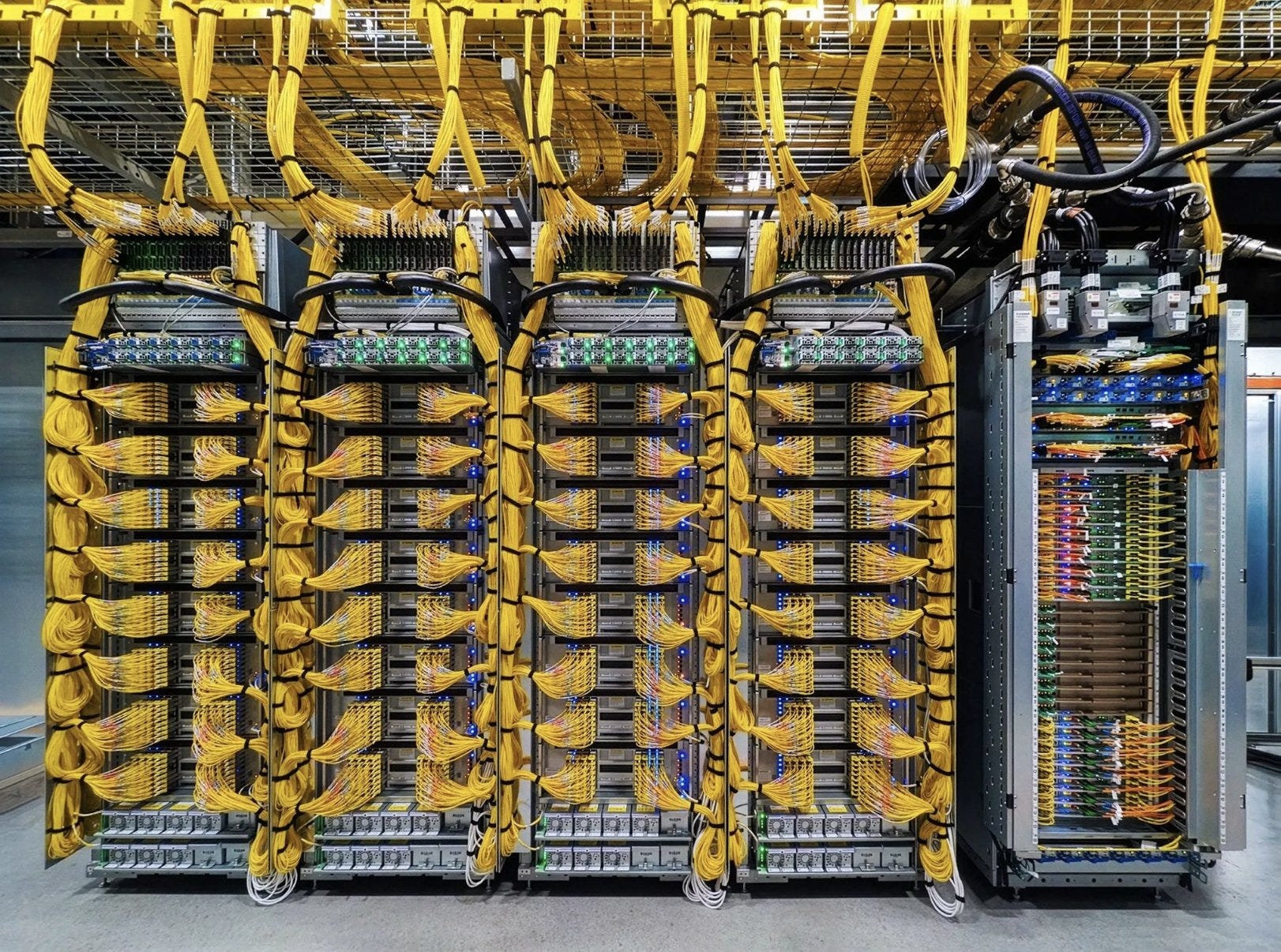
But with $50 billion in the bank, you start looking at what we just covered above: the grid connection takes five years, the transmission line takes ten, the big turbine is for 2030, without even looking at the transformers, switchgear & circuit breakers.
How do we get to our datacenter? Here’s a recipe.
You find yourself with zero access to grid electricity but have already secured plots of land in West Texas, where the price of natural gas is negative more than half the year thanks to the Permian basin.
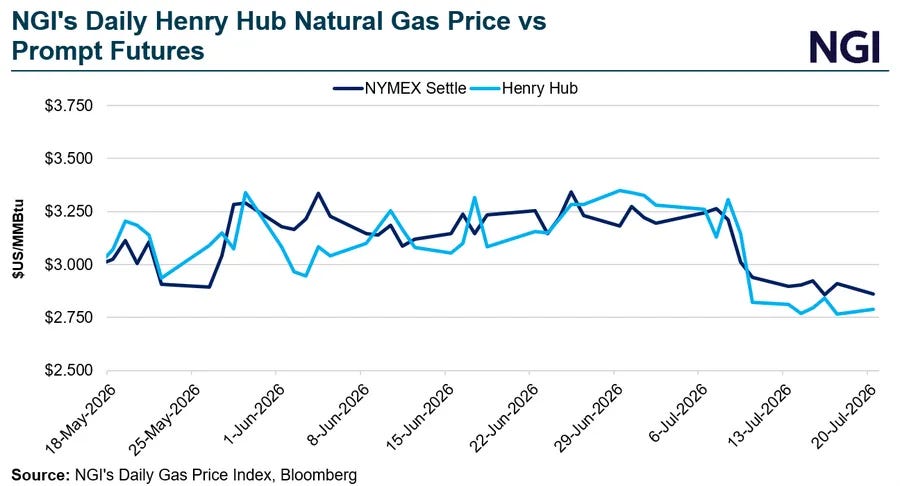
The gas in these oil wells keeps pouring out, whether anyone wants it or not, so grab it while it stays under $3 per million British Thermal Units (MMBtu).
A gigawatt-scale datacenter would require anywhere between 70-80 million MMBtu/year and worst case scenario, it would cost about $250 million/year if the Waha (Permian Basin Gas Hub) stays at a price of $3/MMBtu.
For context, it is currently just under $3 today, with a downward trend as some increased capacity coming in the fall is expected to relieve some of the pressure.
You’re looking at different power generation options and you have to get your datacenter running as soon as you physically can, gas turbines are out of the running as their latest delivery times to you are anywhere between late 2028 & 2030.
Even the large reciprocating engines that you were eyeing, have now gone up to a 18-24 month waiting period which makes it useless in the short run. So you decide to take the playbook that the Monarch Compute Campus did - order 2 gigawatts worth of gensets from any of the following players who can give it to you the fastest: Monarch ordered from Caterpillar (+208% since Jan ’24), but other great options are Wärtsilä (+130% since Jan ‘24) on the premium end, Generac (+83% since Jan ‘24) as the new one, Cummins (+177% since Jan ‘24), and Weichai Power (+88% since Jan ‘24).
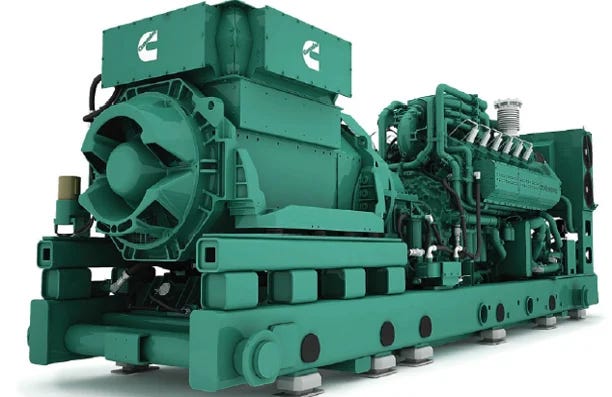
As it happens in most scarcity markets, you have to order double the quantity to get what you initially wanted, so putting this order in will cost you between $1,700-2,000/kW, as per SemiAnalysis, or simply put - around $2.5-4 billion depending on the choice of generator you make.

Remember when we said above that the average transformer and other gear would take anywhere from 2-3 years to get delivered? Turns out you have to build your own if you want it quicker. Korean transformer companies like HD Hyundai have already completely filled their order books for the next three years, so the spillover is falling to other geographies like Taiwan and India.
Look at Chung-Hsin Electric (+36% since Jan ’24), Shihlin Electric (+78% since Jan ‘24), Iljin Electric (+444% since Jan ‘24), and Indo Tech Transformers (+414% since Jan ‘24) for ideas on where to place your orders. Do remember that you have to pay your way to the front of the queue every single time and it comes with a price tag.
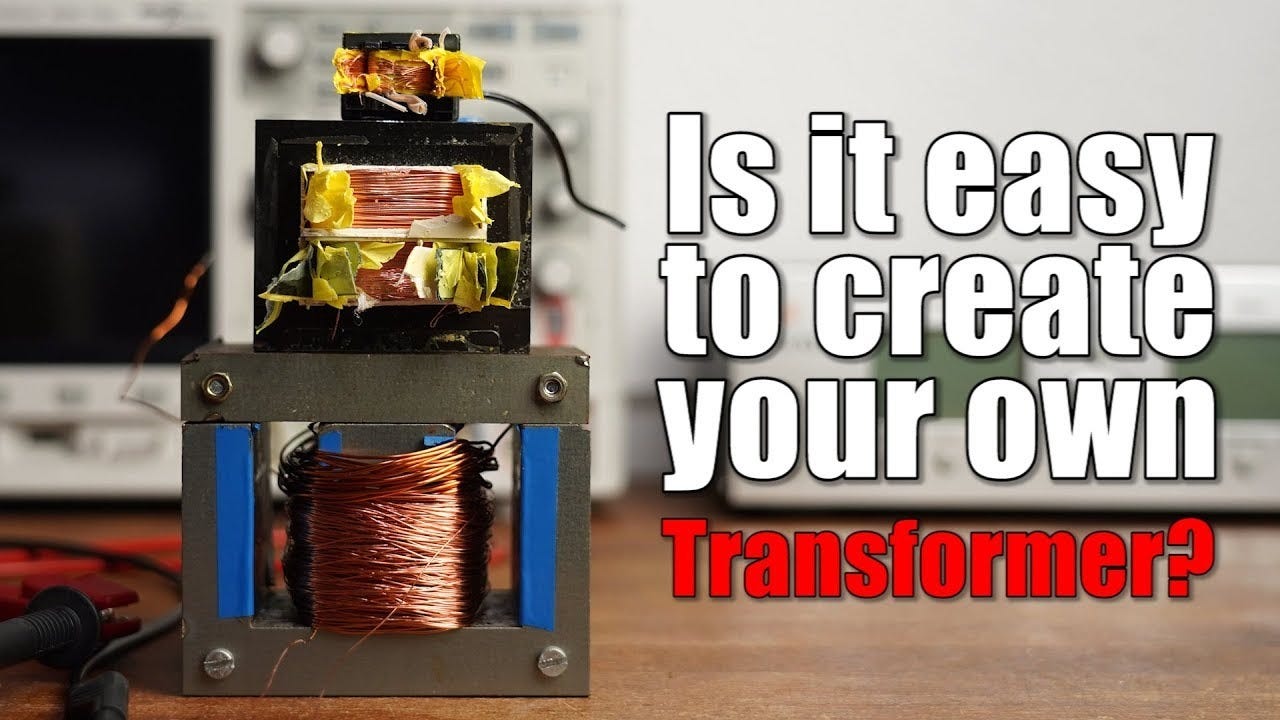
Today, that estimated price tag is around $800 million to $1 billion for the power electronics you buy from Chung-Hsin, Iljin, or Indo tech, because Shihlin’s order book is already full for the next 2 years.
Here are just some of the parts you need to keep in mind: EHV power transformers (the 345kV kind, made for Texas/ERCOT), extra transformers as redundancy measures, gas-insulated switchgear (Chung-Hsin’s specialty), some medium voltage switchgear and circuit breakers from Schneider Electric (+55% since Jan ‘24), the conduits from Atkore (-51% since Jan ‘24), and the enclosure to keep all these power electronics safe comes from nVent (+185% since Jan ‘24).
Normally, all of this should end up costing under the $1 billion mark, with some buffer kept aside to jump the queue.
An Nvidia chip rack drew 10-15 kW five years ago for the chips of its generation, versus today the power consumption per rack has spiked to nearly 200 kW per rack, with Nvidia’s product roadmap (Vera Rubin chips and beyond) suggesting you will need even more specialised equipment to feed it power: rectifiers, UPS, rack power shelves, connectors, etc.
The easy way out has already been repriced through the roof, with Vertiv (+557% since Jan ‘24) seeing a book to bill ratio of nearly 3x from its last earnings call. So when Vertiv’s books are full, it flows to other players like Lite-On (+80% since Jan ‘24), Advanced Energy (+201% since Jan ‘24), and Fuji Electric (+106% since Jan ‘24) for power conversion, and Amphenol (+234% since Jan ‘24) for every connector to the chips.
All this would set you back another cool $1-2 billion depending on the choices you make on each supplier, and what it would take to skip the queue.
A gigawatt-scale datacenter consumes high-voltage calves by the thousand tonnes, and the high-voltage makers Prysmian (+220% since Jan ‘24), Nexans (+83% since Jan ‘24), and NKT (+107% since Jan ‘24) are all booked out through 2029 at the earliest.
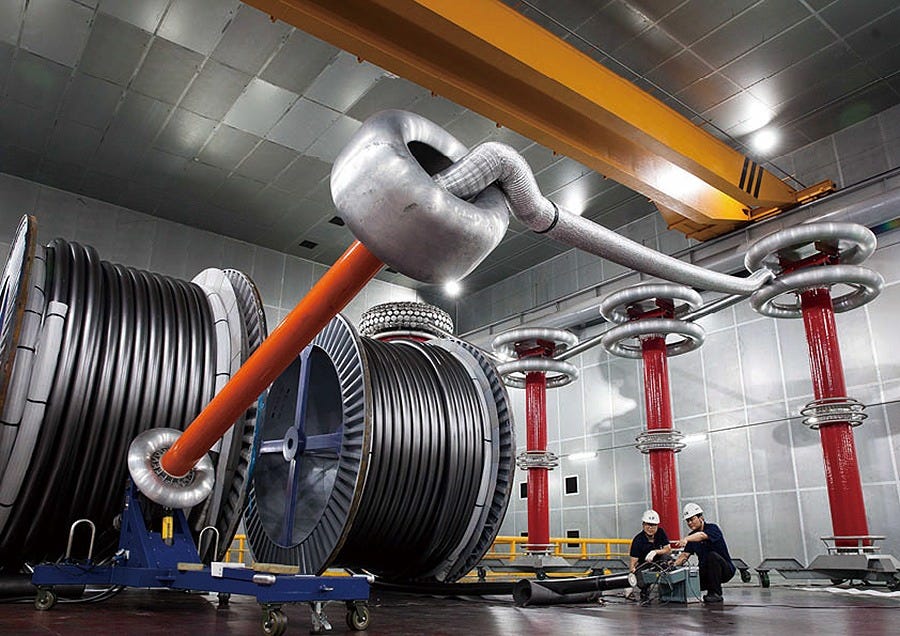
The only other hope for such cables is LS Eco Energy (+110% since Jan ‘24), which recently entered the US market, and already has a global backlog of 7 trillion KRW (or approx. $5 billion).
These heavy duty wires are estimated to cost anywhere between $1.5 billion to 3 billion depending on the company, the wait times, etc.
While you’re scrambling to order all of the abovementioned parts in parallel, and trying to jump the queue for every component, the last piece of the puzzle remains building the datacenter.
Look no further for this project than Turner Construction, the biggest contractor in the USA, with $29.2 billion of revenue in 2025, and a backlog that hit nearly $49 billion in May 2026. More than a third of these orders are coming from upcoming datacenter buildouts, some of which include Meta’s $10 billion Indiana campus, CoreWeave’s $6 billion Pennsylvania, and another site in Maryland that completed building in five months.
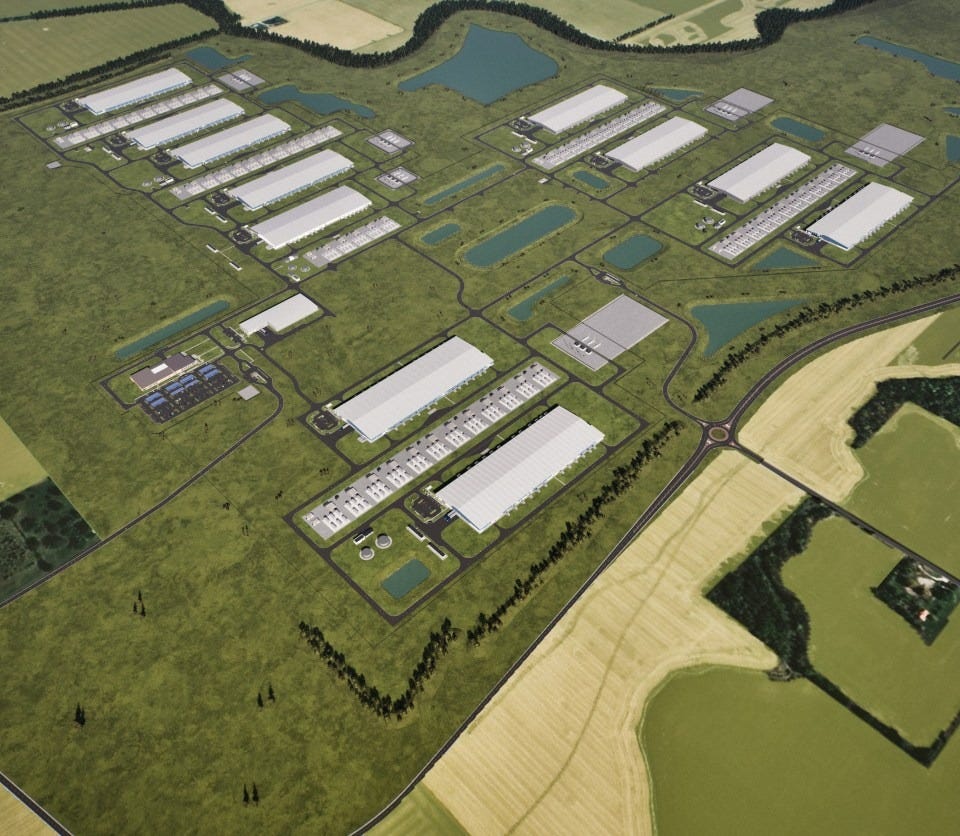
However, you can’t buy Turner’s shares directly, as it is owned by Hochtief Group (+ 363% since Jan ‘24), the German construction services giant.
At the very low end, you’ve blown past your $50 billion budget with such a massive construction undertaking costing around $15 billion.

Simple answer: You shouldn’t buy the datacenter as one block. You’re buying its shopping list. Every new campus that follows Meta in its behind the meter playbook orders the same five things in order: power generation, a substation, power conversion, cables, and the people who know how to put it all together.
We have three tiers of stock picks that reflect whether the stock has repriced to its market potential, how well it is priced for the upcoming explosive growth, and where does it lie in the pecking order of fallbacks to the name brand products whose stocks have gone up by anywhere between 200% to 1400%.
Chung-Hsin Electric (EV/EBITA: 11.1x) holds Taiwan’s sole certified monopoly in 345-kilovolt gas-insulated switchgear, the hardware Taipower’s $62 billion grid plan requires. A NT$41.7 billion backlog, funded upfront by client deposits, covers output to 2029. It trades near a third of Fortune Electric’s multiple for the same buildout, a gap the market has not closed.
Disclaimer: Thoughts are my own and for informational purposes only. Not investment advice. Does not represent the views or strategies of Impactfull Partners. Not an offer to buy or sell securities or UCITS funds. May hold positions in mentioned assets. Do your own research.
No posts
Comments
Nothing yet. Say the first thing.
Sign in to join the conversation.