
What makes this announcement more credible than the false starts before it is that, for once, to everybody’s surprise (perhaps Trump included), Iran confirmed said announcement. With the blockade now lifting, oil has already fallen from its $119 spike back to the low $80s, and the market expects it to keep sliding toward the $50-60 the oversupply crowd always wanted. The obvious reading is that the crisis is over, and the energy trade that worked through the disruption is finished.
We indeed think that reading is wrong. The global oil market is adapting to a permanent structural shift that is fundamentally rewriting traditional market dynamics, and it is a mistake to view this transition as a temporary disruption that will simply reverse when the ships sail again.
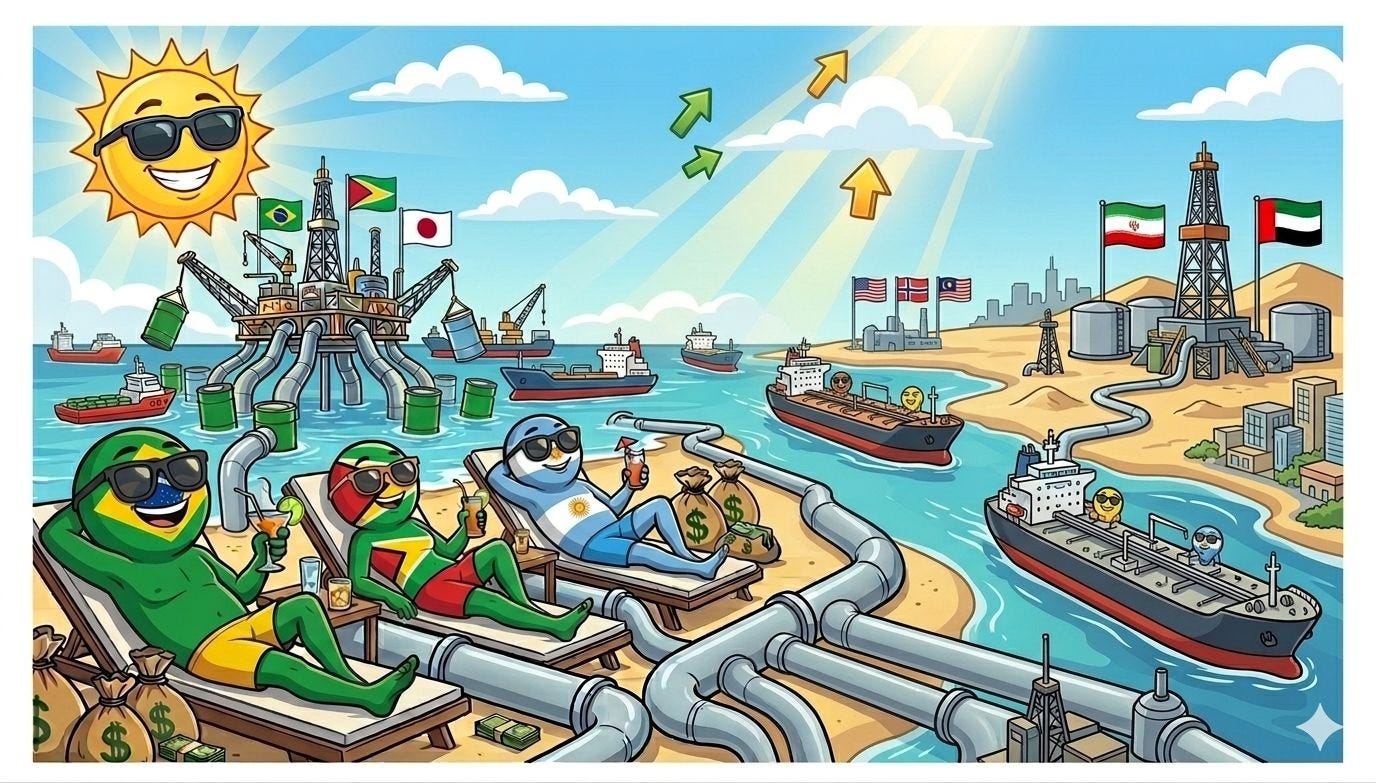
While the Gulf was shut, Latin American producers led by Brazil, Guyana, Venezuela, Argentina, and Trinidad and Tobago built real, permanent capacity that won’t simply be switched off now that the Gulf is back. Therefore, the market does not snap back to what it was; it emerges structurally altered, with oil spread across more independent producers and more diverse routes instead of being concentrated in one dominant source.
This decentralization is further compounded by a booming U.S. domestic sector poised to maintain a firm ten-million-barrel threshold, Abu Dhabi’s pledge to inject an additional million barrels per day, and shifting geopolitical restrictions that allow Russia and Iran to bring significant volumes back online.
As these diverse supply sources fully materialize, the global market will inevitably swing from a state of deep undersupply to a massive, structural oversupply. However, a market built this way swings far more than the old one did, meaning oil is now structurally cheaper and more volatile at the same time. To navigate this chaotic new reality, the energy industry’s primary focus must shift decisively toward heavy capital expenditure and physical logistics, both to repair the vital midstream assets destroyed by recent conflicts and to construct the entirely new, diversified infrastructure required to handle these new routes. For market participants, the smart way to be exposed to this volatile landscape is not to bet on where the price of oil goes, but to own the companies that paid a fixed fee to move and handle the commodity. Because these logistics networks are essential to the new geography of oil, a fixed fee gives investors a reliable floor when the price falls while keeping the upside when it spikes.
When we wrote the issue #29, the Strait of Hormuz had just closed and Brent was rocketing toward $119; our call was that the shock had permanently validated the case for non-Gulf energy. By issue #33 the spike had already begun to fade, and we told you the companies that supply and service the LatAm oil build-out and ramp up, rather than the oil producers themselves, were the trade. Both calls have indeed aged rather well.
And now the Strait has a very high probability of reopening: the price of oil which is so central to the world’s economy, is coming back from the moon, falling from $119 down to the low $80s, and with the Gulf coming back online most people expect the next move lower, toward the $50-60 the oversupply crowd always wanted. They are probably right about the price and many may be wrong about what it means.
A lower oil price in a market with more producers and more routes is not calm, it is cheap and unstable at the same time. That is the world the companies we advised for were built for, and it is why the LatAm position is not a trade we put on for the crisis and take off at the reopening. The change in the market is permanent, so the position stays on: you hold SBM, TechnipFMC and Modec as a standing allocation, not a bet on the next print of the oil price.
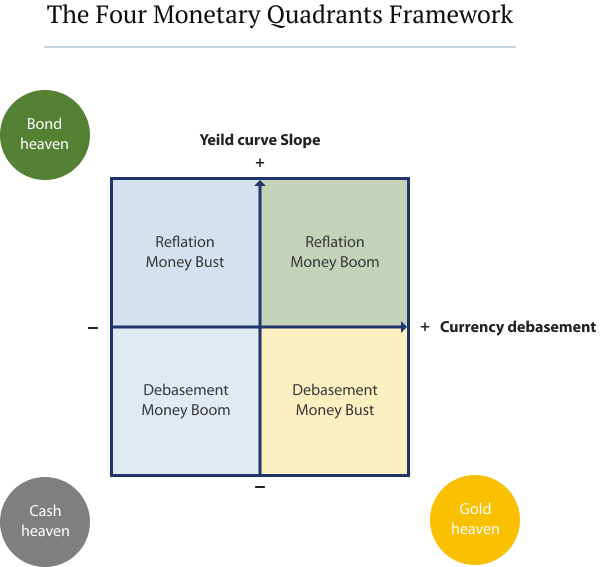
According to Gavekal, if you want to build a diversified portfolio in an inflationary market, energy is the new bond: Charles & Louis-Vincent Gave posits that the true ballast against equity risk is no longer fixed income, but energy. They have been advocating an allocation framework consisting of 60% equities, 20% gold, and 20% energy.
But in the current oil market, what kind of energy exposure do you need? If oil is downtrending on additional supply from LATAM and Iran, explorers are hardly a good candidate.
If there is one certainty about the spot price of oil, it is that at this point, nobody knows where this is going. Crude could slowly fall to $60. It could spike if the conflict flares up again, then crash. It could sit where it is and barely move. Nobody knows the path, and a thesis that needs you to know it is not a thesis, it is a bet.
To avoid encouraging our esteemed reader to bet with their investment money, we’d rather present a thesis that does not care where the price goes. The companies we recommend in this issue own the infrastructure that oil has to pass through, and they get paid a fixed, agreed fee (what we’ll call later, take or pay contracts).
The companies we will come to like and recommend below in Part 4 either move offshore oil or move gas, and the reason their contracts are safe is that the barrels passing through them are the cheapest on the continent: cheap oil is exactly the oil that keeps flowing, so the fee keeps getting paid. The third moves gas, paid on capacity that is reserved and billed in advance, which the oil price never touches at all. Indeed, in the volatile landscape we described in Part 1 we favor ‘volume plays’, companies that benefit from increased throughput and activity levels, regardless of oil price fluctuations.
Oil holds near $80. This is roughly where it trades today and where the market expects it to stay. The whole sector earns.
Oil falls to $50-60. The price that the market forecasts.. The capacity Latin America, Russia, the US and Iran brought back online does not switch off, and as it builds the price comes down to $50-60. Not all at once: the reopening is gradual, and the reserves drawn down during the disruption have to be refilled first, which holds the price up in the meantime. When it gets there, the high-cost barrels and the smaller, debt-heavy producers get shut down.
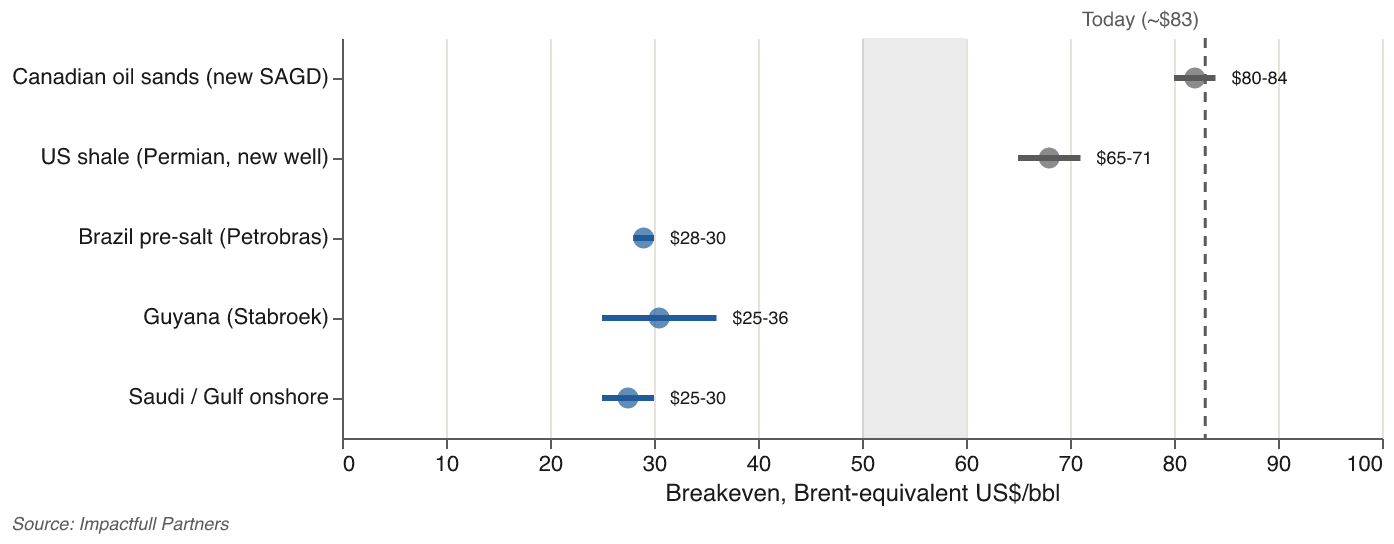
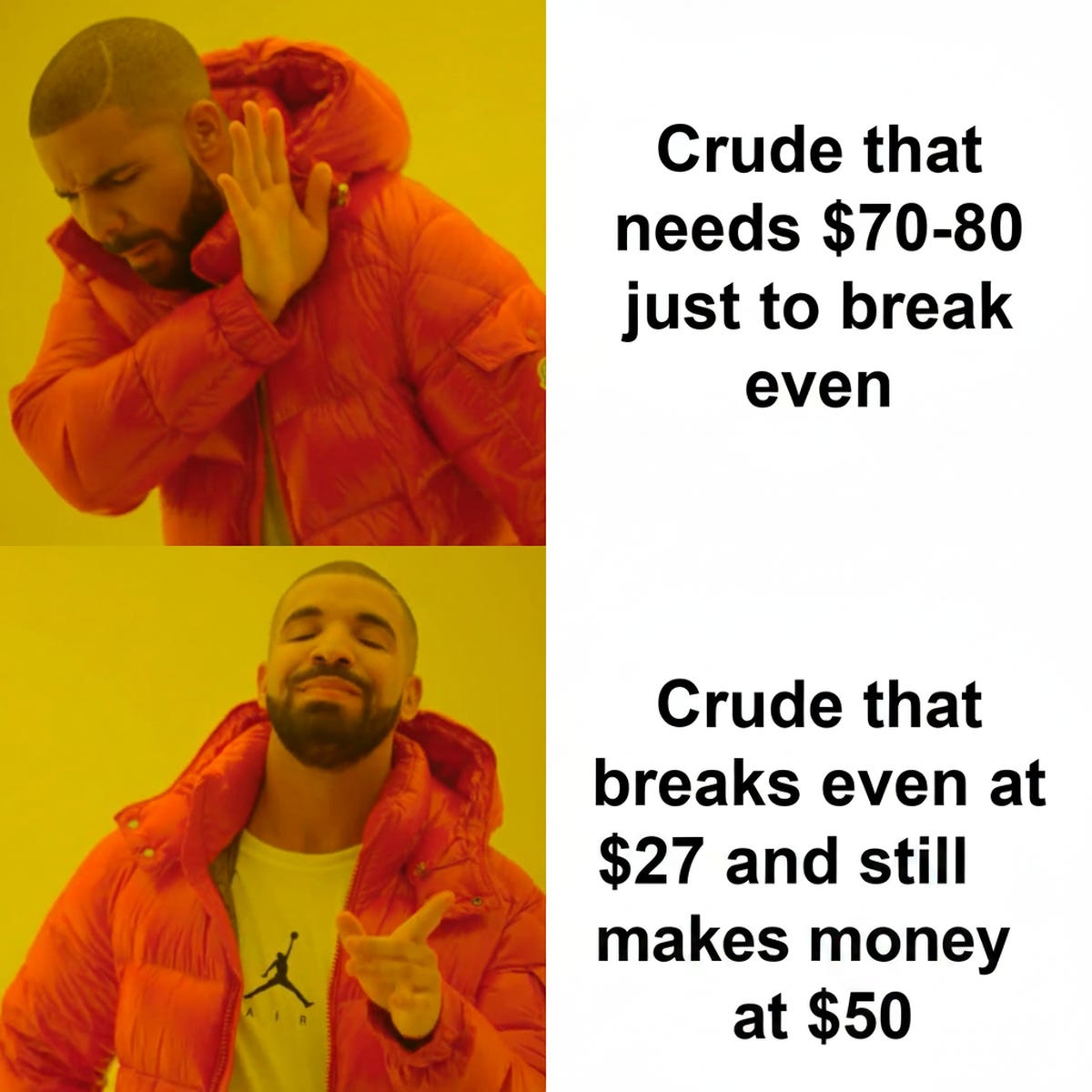
That is the whole argument in one picture. If prices drop, the market will lose the marginal barrels produced by Canada and Venezuela. In the 80 to 60 dollars band, US shale is still operating. But, most importantly, the producers that rely on the firms we will be presenting today are still very competitive.
The only question worth asking about your energy exposure is the following: does it get paid because oil is high, or does it get paid the same no matter what oil does? The ones worth owning get paid the same. That is what a take or pay contracts are about, the customer pays for the booked capacity whether or not it actually uses it. So the company collects its fee whether oil is cheap and oversupplied or expensive and scarce, and the oil price stops mattering to its revenue.
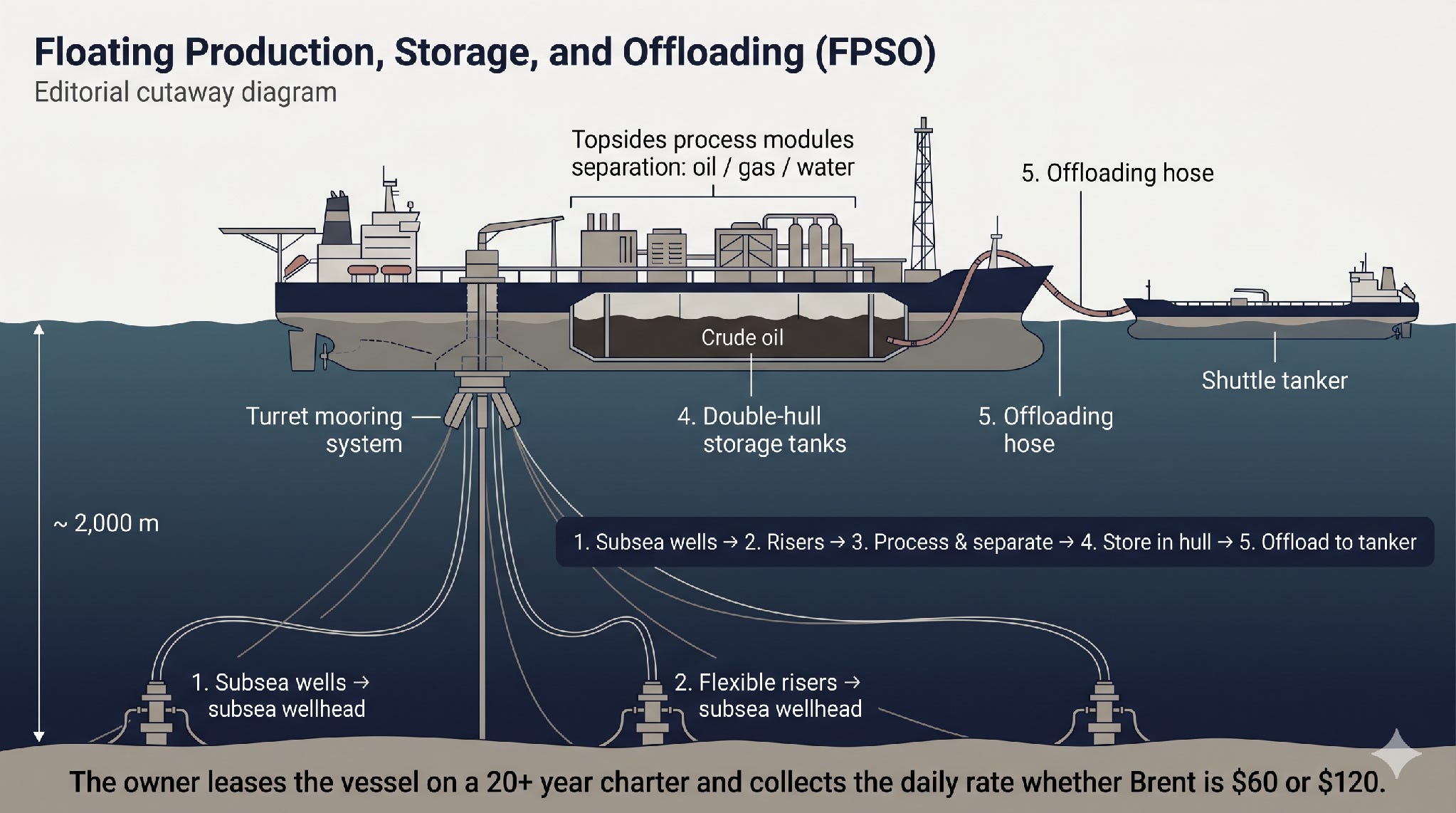
A strong illustrating example is the floating production vessel (FPSO, cf the diagram presented below). In Brazil’s Santos Basin, a massive offshore oil region famous for its deepwater “pre-salt” reserves, the ocean plunges down to 2,000 meters. That is far too deep to anchor a traditional fixed platform to the seabed. Instead, the only way to tap this oil is using an FPSO vessel. This is a giant ship that floats directly over the wells to pump the crude up into itself, separate it from gas and water, store it, and offloading it onto tankers, just like we walked through in #33.
The company that owns that ship does not sell the oil; it rents the ship to the producer on a lease that can run more than twenty years. SBM Offshore (SBMO.AS) has about $31.1 billion of such leases already signed, mostly these multi-decade take-or-pay contracts, with revenue visible all the way out to 2050, and it collects that rent whether Brent is $60 or $120.
There is a second reason the payment is safe, indeed one must never forget that a contract is only as good as the customer who signs it, and these customers are the lowest-cost barrels alive. Petrobras lifts pre-salt oil at $4.22 a barrel and breaks even near $28, so when $60 oil shuts down the expensive barrels elsewhere, the cheap one flowing through SBM’s ship keeps flowing.
It is important to mention that the take or pay test does not work the same way in every country.
Below, you’ll find our country by country breakdown, using the following first principle reasoning: is there a listed liquid company that owns a take or pay contract on an unavoidable bottleneck, and that is paid whether volumes actually flow or not?
Brazil and Guyana are an offshore story. Two bottlenecks. The floating production ship that sits over the wells and pumps the crude up, owned by SBM Offshore, and the gear that connects the wells on the seabed up to that ship, the pipes, cables and risers running through the water, manufactured by TechnipFMC. The crude is light and clean, so nothing has to be refined before it sells, which means there is no third bottleneck to own. Both companies are paid on take or pay contracts, the lease and the work booked and paid whether the oil keeps moving, so both pass the test. You meet them again in Part 3, among the three we buy. Gold star for them.
Argentina is a pipeline story. Vaca Muerta, the giant shale field in Argentine Patagonia which the country’s equivalent to the Texas shale boom, sits inland with no coast, so there is no production ship at all. The bottleneck is getting the gas out, the pipelines that push it from the field to the sea are controlled by Transportadora de Gas del Sur (TGS), the largest gas carrier in the country. It moves roughly 60% of the gas Argentina uses, with 89.4 million cubic metres a day on take-or-pay terms: customers pay for the booked space whether or not they use it. It passes the test, and it is the third name in Part 3.
Venezuela is a refining story, and also a government story. Orinoco crude is extra-heavy and full of sulphur, so it cannot go into a normal refinery until it has been expensively upgraded and cleaned first. That upgrading is the bottleneck, and it is where the money has to go. But the upgrading plants are joint ventures controlled by PDVSA, the state oil company, so there is nothing you can buy that is a clean bet on them, and the only customer is a government that lets its plants sit idle for years and rewrites the law when it suits (like playing Monopoly with my kids). There is no take or pay contract to hold and no clean company to hold it, so Venezuela fails the test. Saying so out loud is how you know the test is real: a bottleneck you cannot safely own is one to walk past.
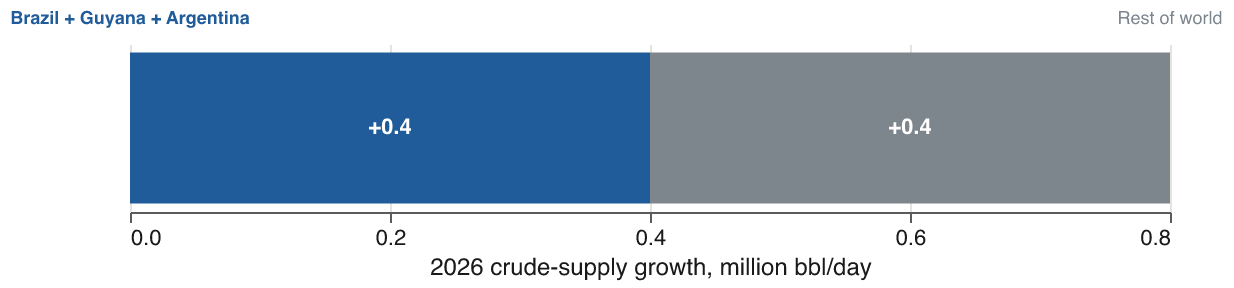
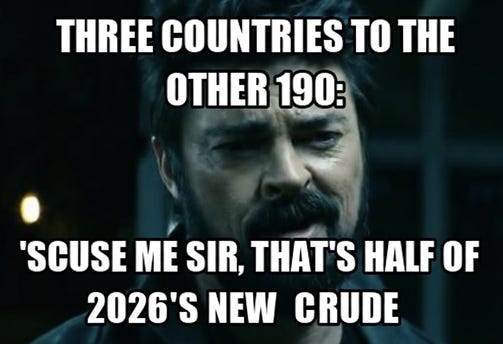
One barrel, several different bottlenecks, several different sets of winners. And the volume is concentrated: Brazil, Guyana and Argentina together account for about half of all the extra crude the world will pump in 2026. Colombia and Trinidad are gas-and-contract stories, not places where the barrel count is climbing.
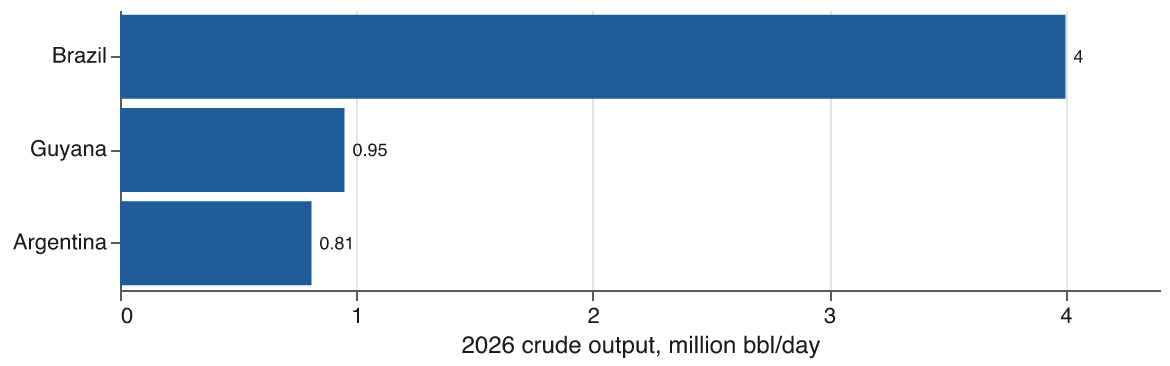
Forecast 2026 crude output, million bbl/day: Brazil and Guyana offshore, Argentina onshore shale. Source: EIA Short-Term Energy Outlook, December 2025.
Put that next to global supply and the scale is clear: these three countries supply about half of all the growth in world crude output in 2026.
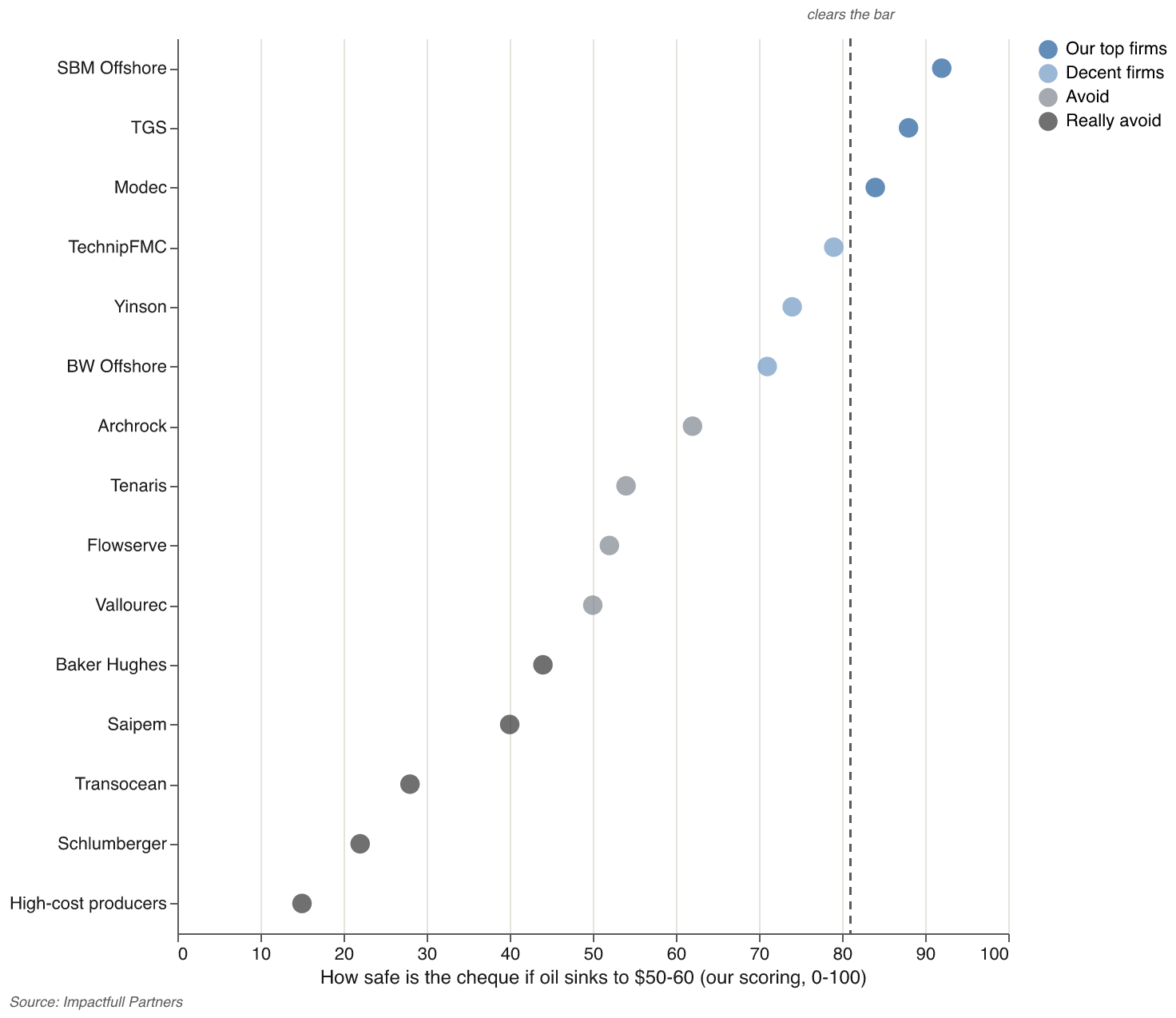
Passing the take-or-pay test from Part 3 is necessary, but it is not enough. A company can hold a great contract and still be a bad place for your money if it is buried in debt. So we ask two questions. Does it receive a gold star with the take or pay test? And is it financially strong? Six companies pass the first question. They do not all pass the second one equally, and that is what sorts them below.
The proud gold star owners:
SBM Offshore (SBMO.AS). SBM owns the giant production ships and rents them out on contracts that run for decades, with about $31 billion of work already signed and revenue locked in out to 2050. Importantly, SBM gets paid to keep the ship available, not for the oil or what it sells for. And the oil feeding those ships, Brazil’s deepwater pre-salt, is some of the cheapest on earth. It costs under $5 a barrel to pump and still makes money at around $28, so even if oil slides to $50 this is the last oil anyone shuts off, and SBM’s rent keeps coming in (gold star). The one catch is the share price, which has nearly tripled, so you own it for a decade of steady cash, not a quick jump.
Modec (Tokyo: 6269). SBM’s main rival, building and running the same production ships, and you can buy it more cheaply than SBM today. More of Modec’s money comes from building the ships, which are one-off jobs, than from the long rental contracts, so it is a slightly less pure version of the same idea. But it is the same idea, and the lower price is real.
TGS (NYSE: TGS). The Argentine gas play. TGS owns the pipelines that carry gas out of Vaca Muerta, Argentina’s giant shale field, moving roughly 60% of the country’s gas, most of it on firm contracts where customers pay for the space whether they use it or not (you guessed it, gold star). The one thing to manage is currency: a meaningful part of its income is set in Argentine pesos, so hedge that currency exposure.
Also clear the bar (good, just less interesting):
TechnipFMC (FTI). Makes the seabed equipment that connects the wells to the production ship, with about $16 billion of signed work booked out to 2028, no net debt, and cash flowing back to shareholders. It clears the bar. It ranks lower for one reason: it has to keep winning new projects to refill that order book, and new projects need a healthy oil price, so it leans on the oil price a little more than a pure rental contract does. Fine to own, not where we would start.
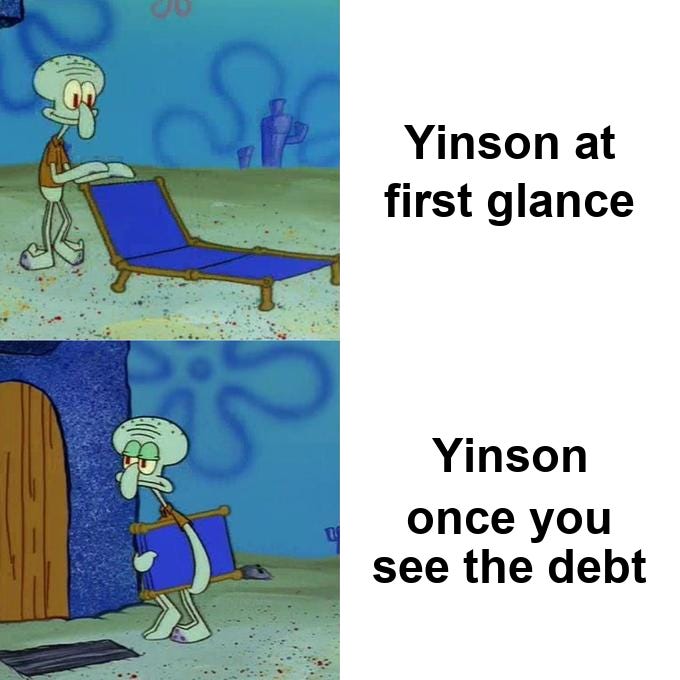
Yinson (Malaysia). Another owner of production ships, with about $20 billion of contracts running to 2050, and a genuinely good business. What keeps it off the top list is debt: it carries the most of anyone here.
BW Offshore (Oslo). The cleanest version of the rental model. It sold off its oil-production side a couple of years ago and now simply owns and rents ships, including a 15-year contract worth $4.6 billion in Australia, with cash on hand and almost no debt. The catch is the ship itself. BW’s newest and biggest vessel, the one on that Australian contract, hit a mechanical fault and has not been running at full capacity, so the company just warned that this year’s profits will come in lower than expected. The full payoff only arrives once that ship is running properly. Until then you would be buying on a promise, so wait for proof it is working before you buy.
The lookalikes we skip:
Tenaris (TS) and Vallourec (VK) make most of the premium steel pipe every deepwater well needs, and both are financially solid (Tenaris sits on billions in cash with no debt; Vallourec cleaned up its debt years ago). But they only get paid when someone drills a new well, and when oil is cheap, drilling is the first thing companies stop. Tenaris’s sales fell by about a third in 2015 and again in 2020. A strong balance sheet keeps them alive through a downturn, but it does not change the fact that their income rises and falls with drilling.
Archrock (AROC) rents out gas-compression equipment on fixed monthly fees that, unlike the two above, do not move with the oil price. It is the closest of these to passing. But while the fee per machine is fixed, the number of machines in use depends on how much gas is flowing, and half its fleet sits in fields where the gas is a byproduct of oil drilling. Part fixed fee, part activity. Worth watching, not yet a buy.
Flowserve (FLS) sells pumps and valves plus a lot of repair-and-parts work that looks like steady, recurring income. It is not as steady as it looks. That repair work follows how busy its customers are, and it slipped last quarter. Recurring is not the same as guaranteed.
For every company we highlighted in Part 4, there is one that looks like the same trade but gets paid for activity instead of a fixed contract. When oil is cheap, those are the ones that get hurt first, and naming them is half the job.
Start with the obvious: the producers. The oil companies themselves, above all the high-cost ones (Mexican, British and Canadian barrels are among the most expensive to pull out of the ground). When oil falls, these are squeezed first, because their barrels are the first that stop making money.
The offshore drillers: Transocean (RIG). Transocean owns the rigs that drill the wells, and at a glance it looks like one of ours: about twenty high-end rigs and billions of dollars of signed work. The difference is how it gets paid. It is paid by the day, at whatever the going rate happens to be, not a fixed fee locked in for years. When oil drops, those daily rates fall, rigs finish their jobs and sit idle with nothing to replace them, and the roughly $5 billion of debt it carries stops looking harmless. Two things make it worse. Last year the company wrote down the value of its own rigs by about $3 billion, which is management admitting those ships are worth far less than the books say. And it is now merging with a rival, Valaris, which doubles down on this risk rather than reducing it. This is a bet on the oil price dressed up as a safe infrastructure stock.
The fixed-price trap: Saipem. Saipem used to be the cautionary tale here. A few years ago a single fixed-price job, a wind farm off Scotland, ran so far over budget that it helped push the whole company to a loss of more than a billion euros for the year. The lesson holds: when a company agrees to deliver an entire project for one set price, a single delay can wipe out its profit, and delays pile up exactly when oil is weak. Saipem still carries two versions of this risk. Roughly a fifth of its profit comes from drilling oil, and after its merger with Subsea7 a further slice comes from building offshore wind farms, an industry notorious for running late. That mix is why it sits at the bottom of the names we looked at. The other side of the story is that it has cleaned itself up: most of its work now is the seabed pipe-and-cable business we like, it holds cash rather than debt, and the merger gives it the size this kind of work needs to absorb the occasional blow-up. So it is no longer the clear loser it once was, just the weakest of the names worth watching.
The two service giants, which are not the same: Schlumberger and Baker Hughes. It is tempting to lump them together. Only one of them belongs here.
Schlumberger (SLB) is the clearest casualty in the whole letter. It is the largest oilfield-services company in the world, and it gets paid when its customers drill and complete wells, which means it gets paid only when oil is high enough to justify the spending. When oil crashed in 2015 its sales fell by more than a quarter. In 2020 it lost ten billion dollars and cut its dividend by three-quarters. Its latest results already show the business shrinking. In a cheaper-oil world this is the wrong place to be.
Baker Hughes looks like Schlumberger but is really two companies in one. Half of it does the same oil-services work, and that half will hurt. The other half, now the bigger one, builds equipment for natural gas: the kit that runs export plants and power stations. That side has years of orders booked, more than $30 billion worth, and does not move with the oil price. So Baker Hughes is half casualty, half the kind of steady, fixed-fee business this whole letter is about. It is not the clean loser Schlumberger is.
When the Strait of Hormuz closed, the price of oil rose to $119. Now that it is reopening, the price is coming back down, to the low $80s and probably lower still. Most people see the price go up and then come back down and assume the story is over. It is not. The oil market itself is changing.
The Gulf used to be one large, cheap, central source of oil, and that is what kept prices steady. When it shut, other countries stepped in to fill the gap, and they are not going to stop now that the Gulf is open again. So the world now has more sources of oil, and more places where something can go wrong. That means the price moves around more than it used to, even though it is lower on average.
As we said in issue #29, the companies we like do well either way. If oil rises, their customers are the cheapest producers in the world and keep pumping, so the fee gets paid. If oil falls, the fee is fixed and gets paid anyway, while the expensive producers shut down. A fixed fee in a market that moves this much is the strongest position you can hold: you are protected when the price falls, and you still gain when it rises, and it costs you nothing extra. The hardest thing in this business is guessing where oil goes next. This approach never asks you to guess.
This is the next step in the approach we have run since issue #28. Do not chase the boom, and do not gamble on the oil price. The companies that win are the ones paid a fixed fee to move and handle the oil, the ones whose customers cannot afford to stop paying: SBM, Modec and TGS. Three companies, one promise that does not depend on us being right about the price. Let the oil price do whatever it does. These three are built to win either way.
Stay invested, cautiously.
Disclaimer: Thoughts are my own and for informational purposes only. Not investment advice. Does not represent the views or strategies of Impactfull Partners. Not an offer to buy or sell securities or UCITS funds. May hold positions in mentioned assets. Do your own research.
No posts
Comments
Nothing yet. Say the first thing.
Sign in to join the conversation.