
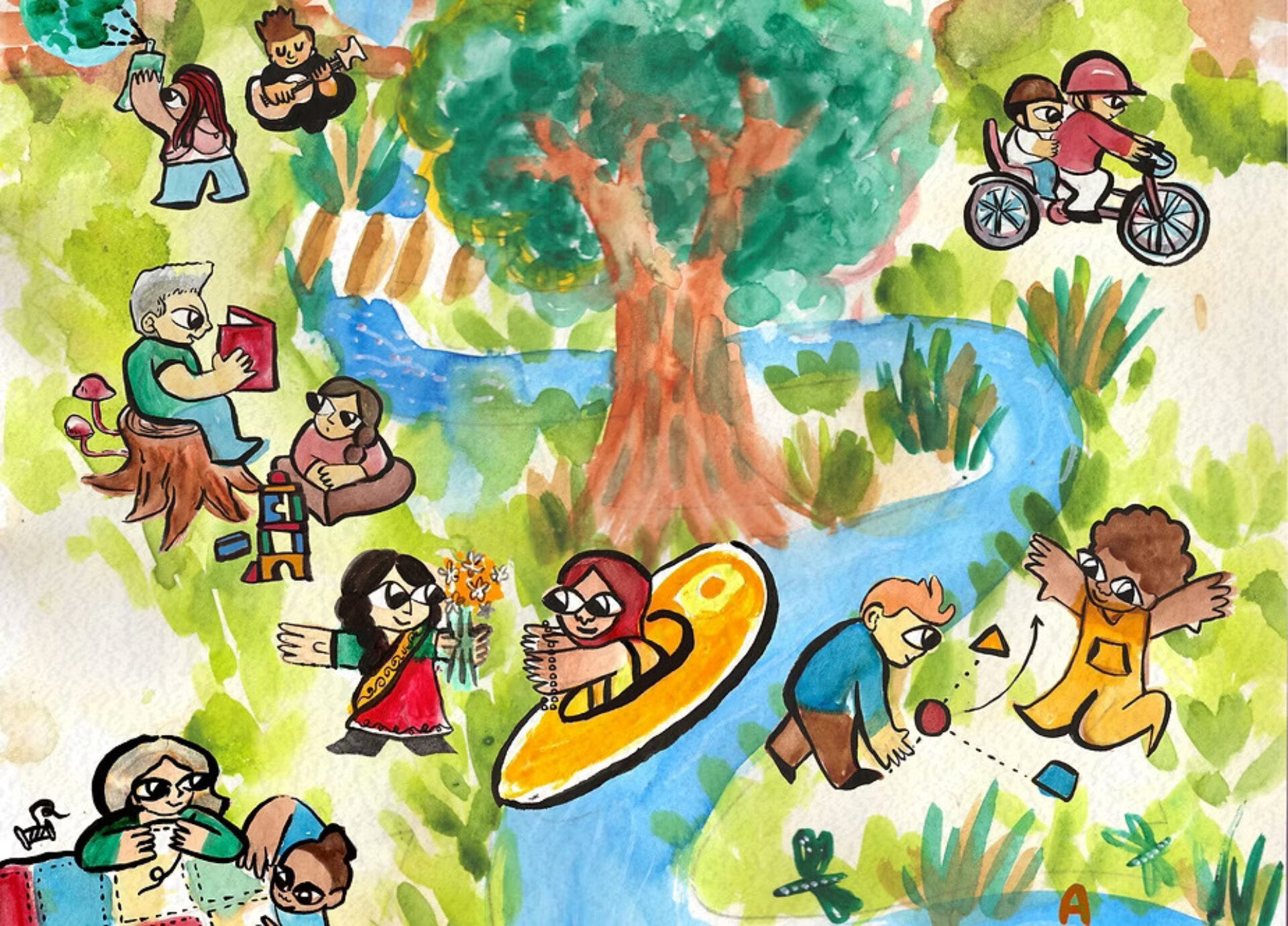
Over the past two years The People’s Newsroom has been exploring a premise that is both simple and demanding. If we want societies that are regenerative, fair, and capable of thriving futures, then the way we tell stories has to change. Not only the stories themselves, but the conditions in which they are gathered, held, and shared.
This is the territory of what the People’s Newsroom calls a story commons.
At the Generative Journalism Alliance, this idea resonates deeply. We have often described generative journalism as a shift from story as product to story as practice. A shift from extraction toward relationship. A shift from interpretation toward direct experience.
The story commons invites us to take that shift seriously. It asks a different set of questions about storytelling.
Who tends the stories that shape civic life?
Who benefits from them?
Who is protected by them?
What agreements allow them to circulate with dignity?
These questions sit within the wider context of the just transition. As societies seek to move away from extractive economies toward regenerative ones, storytelling becomes part of the infrastructure of that transition. Media and narrative systems shape what people can see, what they can name, and what they can imagine as possible.
If the future is to change, the story systems that hold it must change too. The People’s Newsroom has been exploring this through a peer learning group of organisations across the UK. Together they have surfaced six lessons for building and sustaining a story commons. These lessons are not a model or a framework to replicate. They are orientations that emerge from practice.
What follows is a reflection on those lessons in the spirit of generative journalism. You can read each lesson in full through the links shared throughout this piece.
In many systems, process is treated as the administrative path to a final product. In a story commons the opposite is true. The process itself is the civic work.
It is where trust is built.
It is where consent becomes meaningful.
It is where power can be surfaced without collapse.
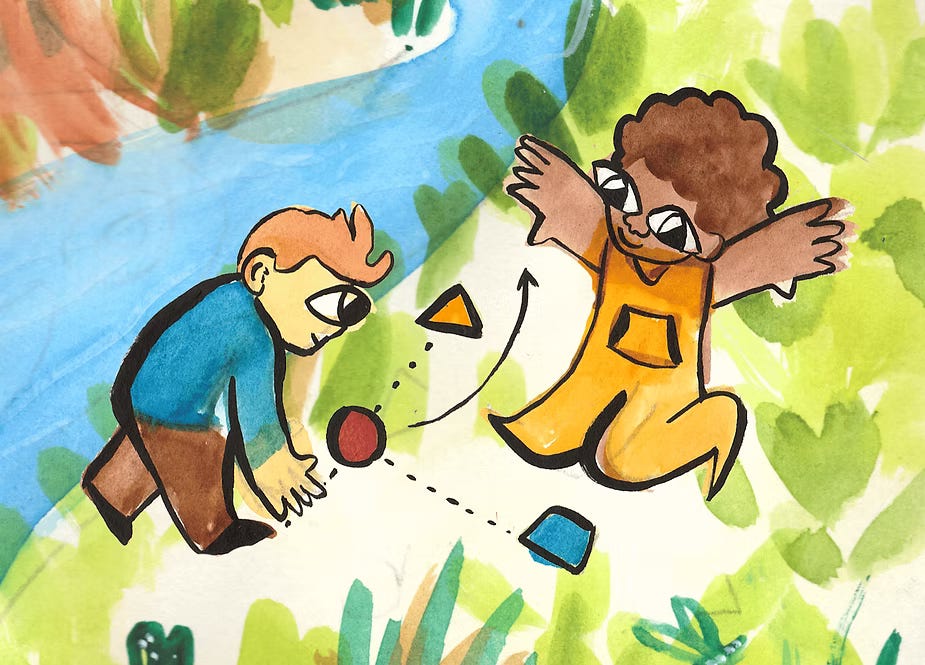
The People’s Newsroom reminds us that if we want life giving stories, we need life giving processes. The way we gather people, hold conversation, listen, edit, and publish becomes part of the public good.
This is familiar territory for generative journalism. Structure matters because structure shapes relationship. When the process changes, the story that emerges from it changes as well.
→ Read the lesson: In a story commons, the process is the purpose
A story commons refuses amnesia. Communities carry histories that shape how the present is experienced. Those histories include harm, resilience, inheritance, and unfinished work. If storytelling skips over this terrain it cannot support real transformation.
The People’s Newsroom invites us to hold three time horizons together.
What was
What is
What could be
Holding all three allows storytelling to become a place where futures can be rehearsed rather than merely reported.
In generative interviewing we often begin by noticing what is alive in the present moment while also making space for what has been carried into it. The future enters that conversation not as speculation but as possibility.
→ Read the lesson: In a story commons, we explore what was, what is and what could be
Collaboration is often spoken about as a virtue, but in many systems it remains transactional.
People are invited into story processes for their reach, their resources, or their legitimacy. Once the story moves on, the relationship dissolves.
A story commons asks a different question.
Does storytelling leave the people and places it touches healthier than before?
Regeneration requires reciprocity. It requires patience. It requires shared responsibility for the conditions in which stories circulate.
This means acknowledging the labour involved in storytelling and ensuring that it is not extracted from those who already carry disproportionate burdens.
→ Read the lesson: In a story commons, we collaborate to regenerate
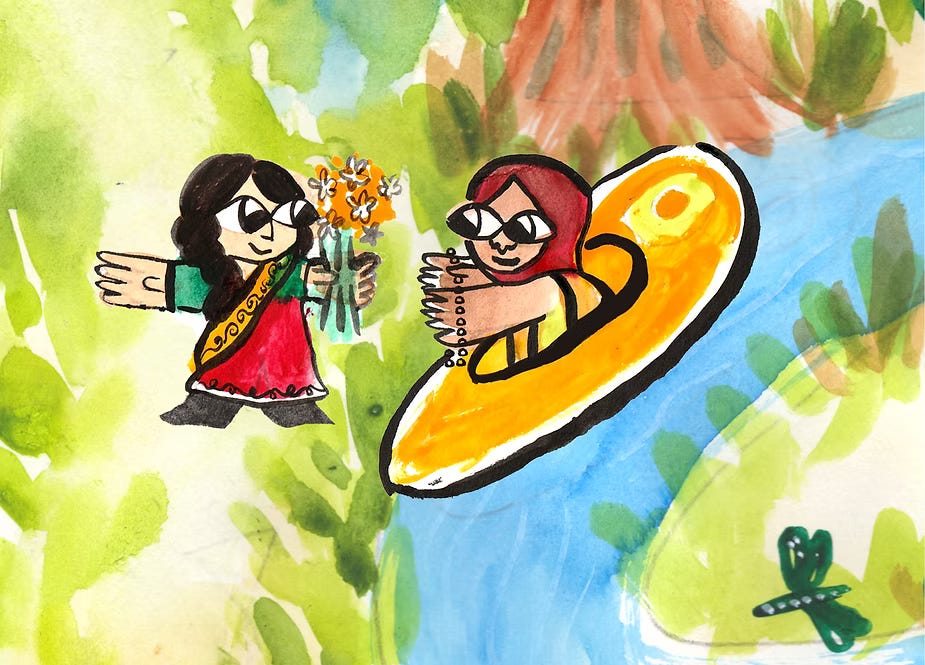
Stories do not only describe economies. They help produce them.
Narratives shape what society recognises as valuable. They influence which forms of labour are visible and which remain hidden.
The People’s Newsroom asks us to notice the economies that already exist beneath dominant narratives. Mutual aid networks. Informal care infrastructures. Cultural labour. Grassroots governance. Community resilience.
These forms of value rarely sit at the centre of mainstream storytelling, yet they sustain everyday life.
A story commons allows those economies to become visible and imaginable. It also invites journalism to look inward and ask how its own economic structures shape the stories it produces.
→ Read the lesson: In a story commons, we envision new economies
Accountability and care are often treated as opposites.
Accountability is associated with scrutiny and critique. Care is associated with protection and sensitivity.
A story commons recognises that both are necessary and that neither can function well without the other.
Accountability without care can become punitive. Care without accountability can become sentimental.
Reimagining both together means creating conditions where people can speak honestly without fear of misrepresentation. It also means recognising the uneven risks people carry when their stories become public.
This is why generative journalism emphasises source ownership and protection from co-option. Stories cannot serve the commons if they can be taken, reframed, or weaponised without consent.
→ Read the lesson: In a story commons, we reimagine accountability and care
Creativity is sometimes treated as the final flourish of storytelling. In a story commons it becomes part of the method.
Creative practice allows communities to imagine alternatives to the systems they currently inhabit. It helps people hold complexity without shutting down.
The People’s Newsroom illustrates this through collaborative artwork developed alongside the lessons themselves. The act of creating together becomes part of the learning process.
Creativity opens the space where new language, new practices, and new institutions can begin to take shape.
→ Read the lesson: In a story commons, we inspire creativity
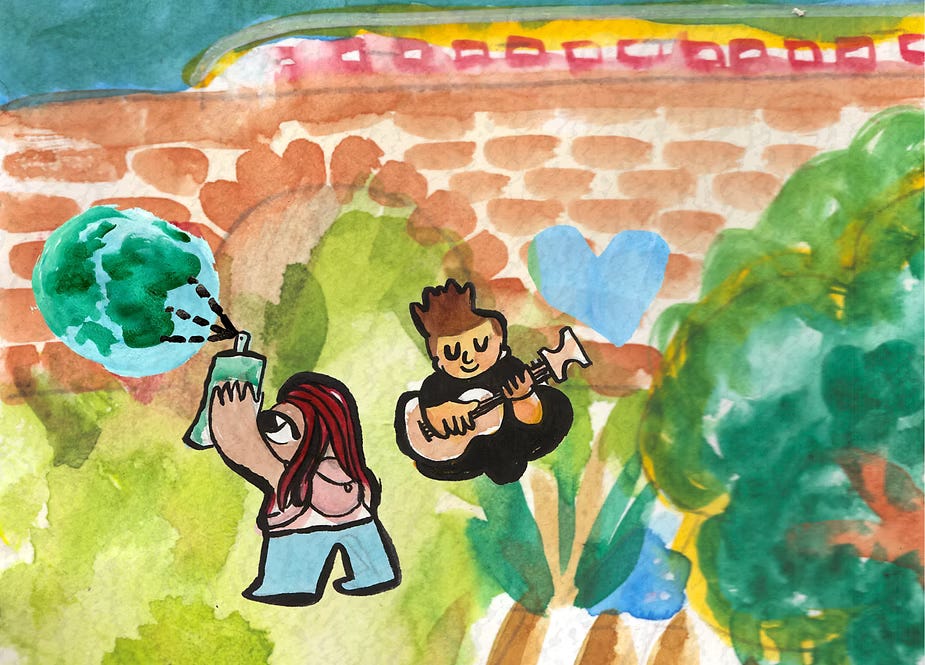
This work reaches beyond journalism. It speaks to how stories are held in common, and how they shape the futures communities are able to imagine. Stories shape how societies understand themselves. They shape what is considered possible and influence how power is interpreted and futures imagined.
If storytelling systems remain extractive, the futures they support will remain extractive too. The People’s Newsroom offers a different orientation. It invites us to treat storytelling as a shared resource that must be tended collectively.
Recently, the Generative Journalism Alliance had the privilege of supporting a People’s Newsroom Story Club session exploring these lessons. Together we practised generative listening and questioning as a way of staying with the deeper invitations inside the work.
For those who feel resonance with that approach and would like to explore it further, the Generative Journalism Alliance is opening a three session weekly workshop series, Generative Journalism as Life-Giving Practice, beginning on 2 April. The series offers a space to practise these methods together and reflect on what it means to hold storytelling as a relational and regenerative practice.
You can learn more and register here:
https://www.tickettailor.com/events/generativejournalismalliance/2097215
If storytelling is going to open the door to thriving futures, then the practices through which we hold story will matter more than ever.
And that is the deeper work of a story commons.
All Illustrations: Charlotte Bailey
No posts
Comments
Nothing yet. Say the first thing.
Sign in to join the conversation.