
Hello and welcome to June’s challenge.
Each month I will be sharing a new post with a different theme and a challenge for you to go out and complete, should you wish to do so. The idea is to share some of your favourite images from the challenge on the chat page of my substack. Please feel free to post your images and comment on others so that we can build a supportive community around our shared love of photography.
This month the theme is ‘composition with shapes’.
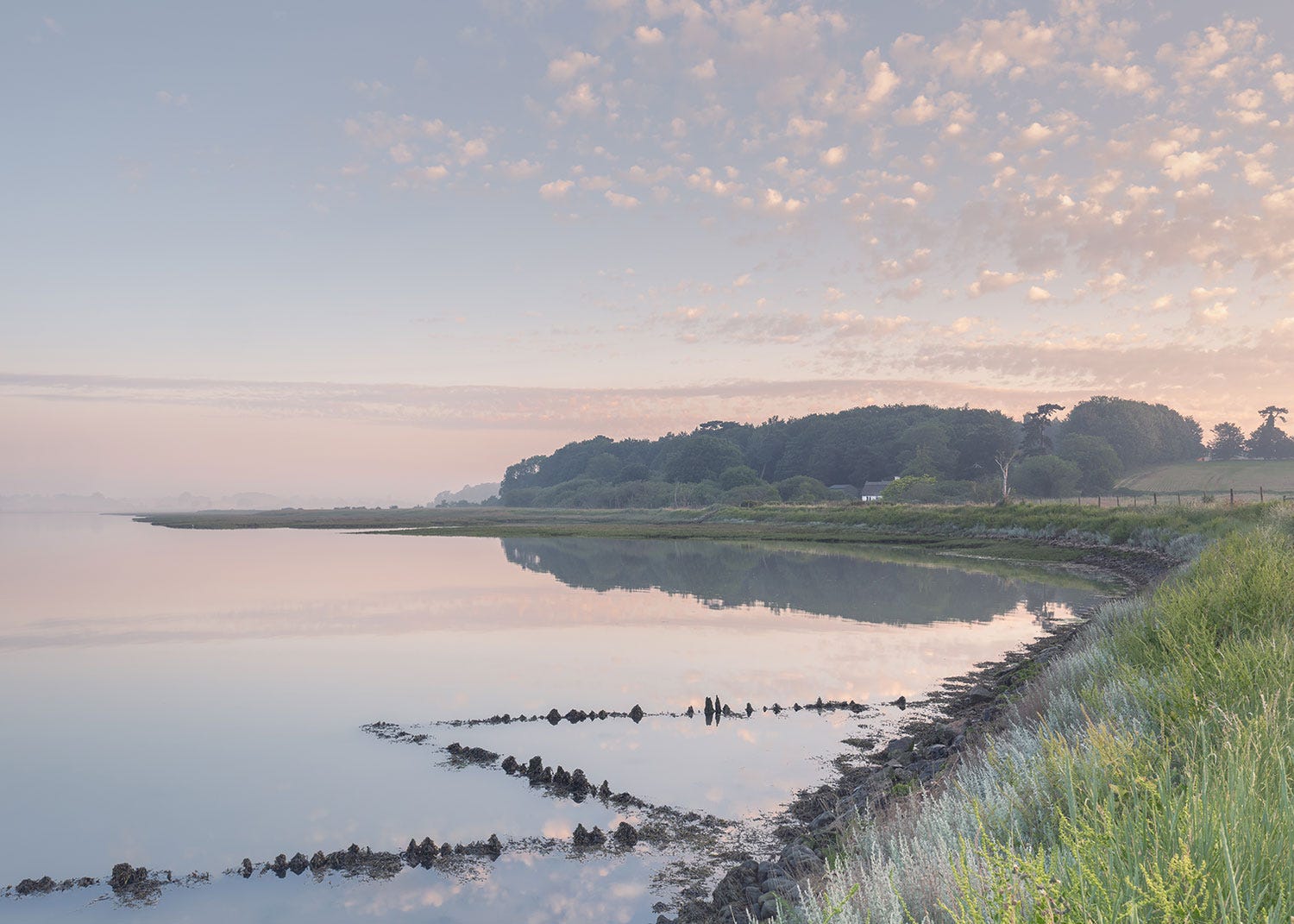
This months photography challenge is all about shapes and how we can use them in our landscape photography. Shapes are often overlooked as a compositional tool but they work really well to bring order to chaos, guide the viewers eye through a scene and add depth and structure to an image.
Shapes are among the basic building blocks of visual design. By learning to recognise and use shapes intentionally we can create stronger more structured compositions.
Among the most useful shapes in landscape photography are circles, S-curves, triangles, and squares or rectangles. Each brings its own visual qualities and can be found naturally or in man made capacities in a wide variety of environments.
Circles and S Curves
Circles are relatively uncommon in nature, which makes them particularly effective when they appear within a landscape. Unlike straight lines that direct the eye from one point to another, circles encourage the viewer to explore the frame continuously. The eye tends to move around the shape rather than leaving the image.
In the image below the circular clumps of sea kale lead the viewers eye into the frame.
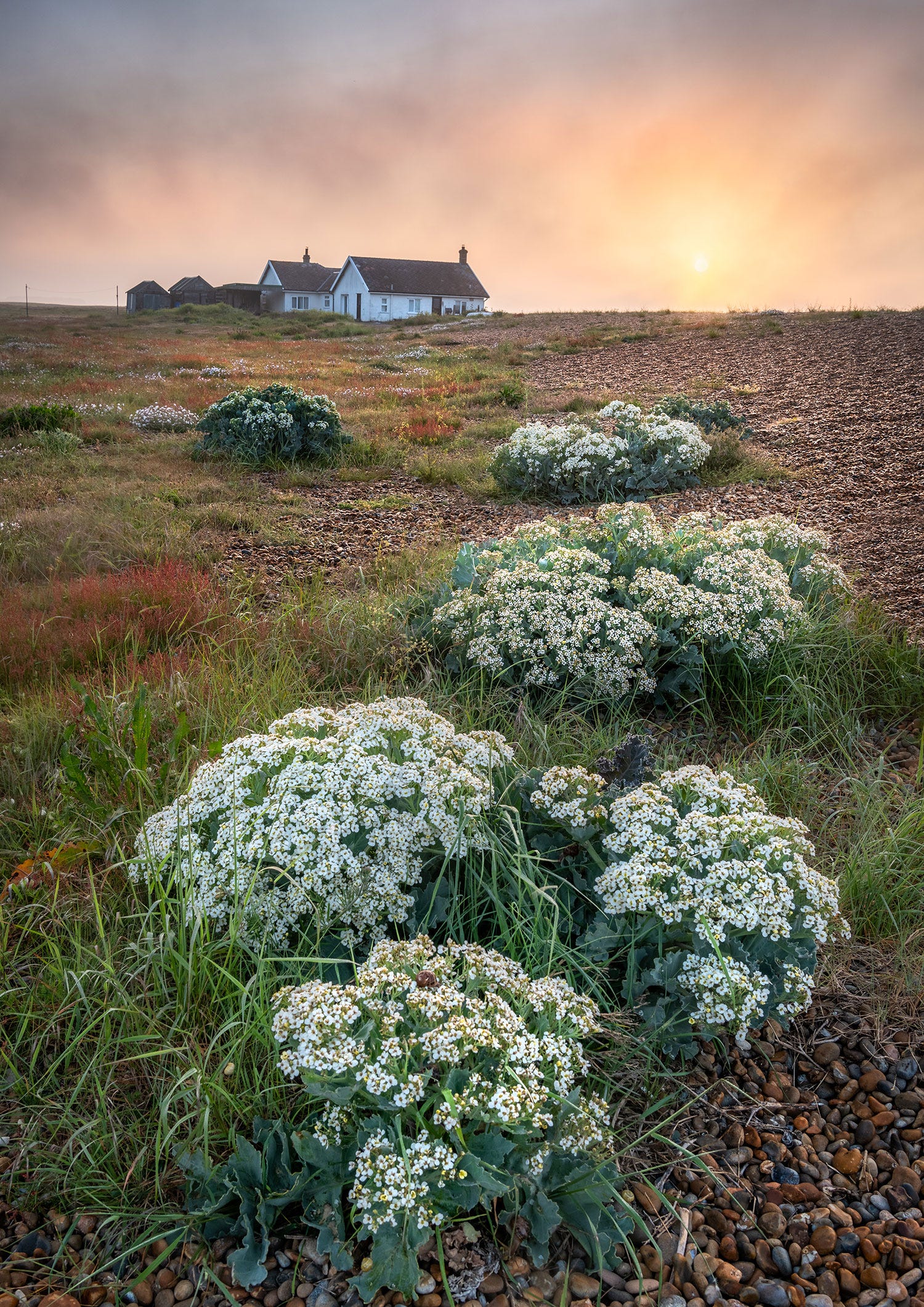
Whole circles are hard to find in the landscape and you are more likely to come across half circles or curves. Where true circles do exist they are often man made. Whatever their origin circles can provide a compelling focal point drawing attention to a specific part of the composition. When placed carefully within the frame, circles create harmony and balance while encouraging the viewer to spend more time exploring the image.
In the image below the circular pool invites exploration with the rock in the centre and the sand patterns around the edges.
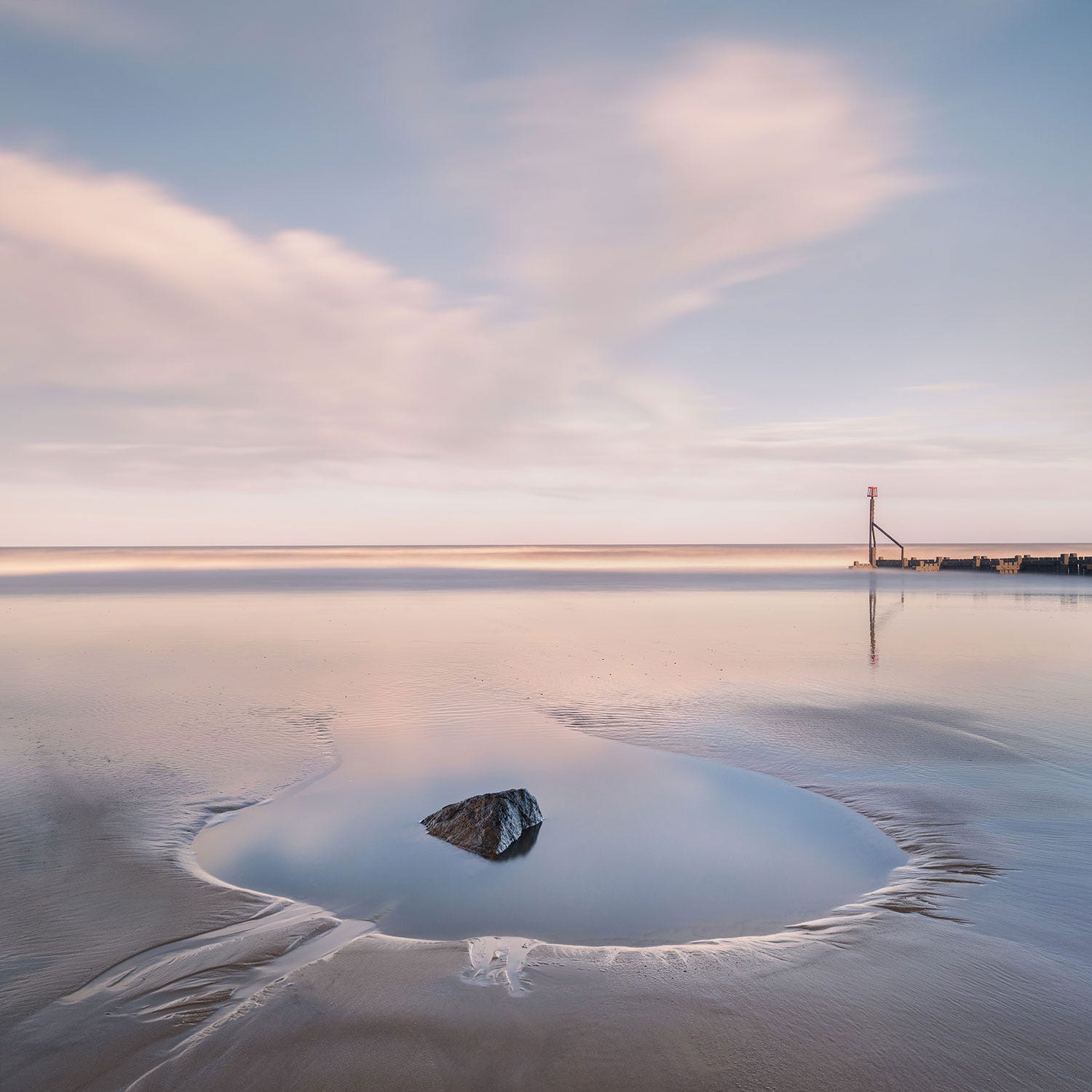
Curves are much more regularly encountered in nature and they can be a really useful tool to guide the viewers eye through the frame.They create natural pathways through a scene and generate a sense of movement and depth.
S curves are particularly good because they feel fluid and natural and the human eye follows them instinctively. Rather than moving directly from foreground to background, the eye gradually travels through the frame, discovering different areas along the way.
S-shapes and curves can often be found in:
Meandering rivers
Coastal shorelines
Winding roads, tracks and paths
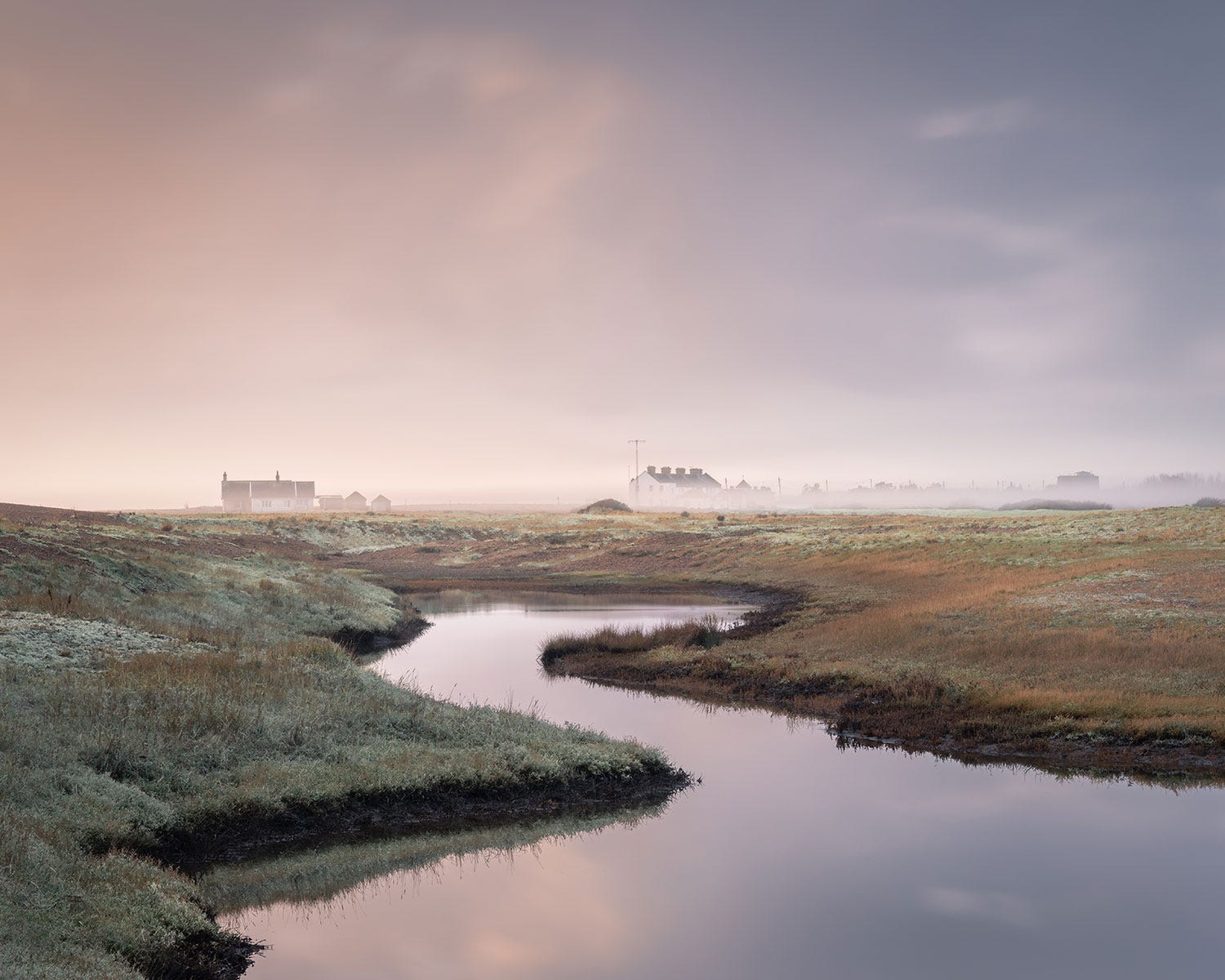
An S-curve is particularly useful because it links foreground, mid ground, and background elements creating a sense of depth within a two-dimensional photograph.
When composing an image with curves look for opportunities to place the beginning of the curve in the foreground. This invites the viewer into the scene and guides them towards the main subject.
Triangles
Triangles are among the strongest and most dynamic shapes in composition. They create stability while also introducing direction and energy.
Our eyes naturally move between the three points of a triangle, creating a visual relationship between different parts of the image. Triangles can help organise a scene and establish balance between subjects.
Triangular forms can be found in:
Mountain peaks
Rock formations
Trees arranged in groups
Light and shadow patterns
They are useful for creating depth and can bring order to complex landscapes. They provide a framework that helps organise visual elements and create a more cohesive image.
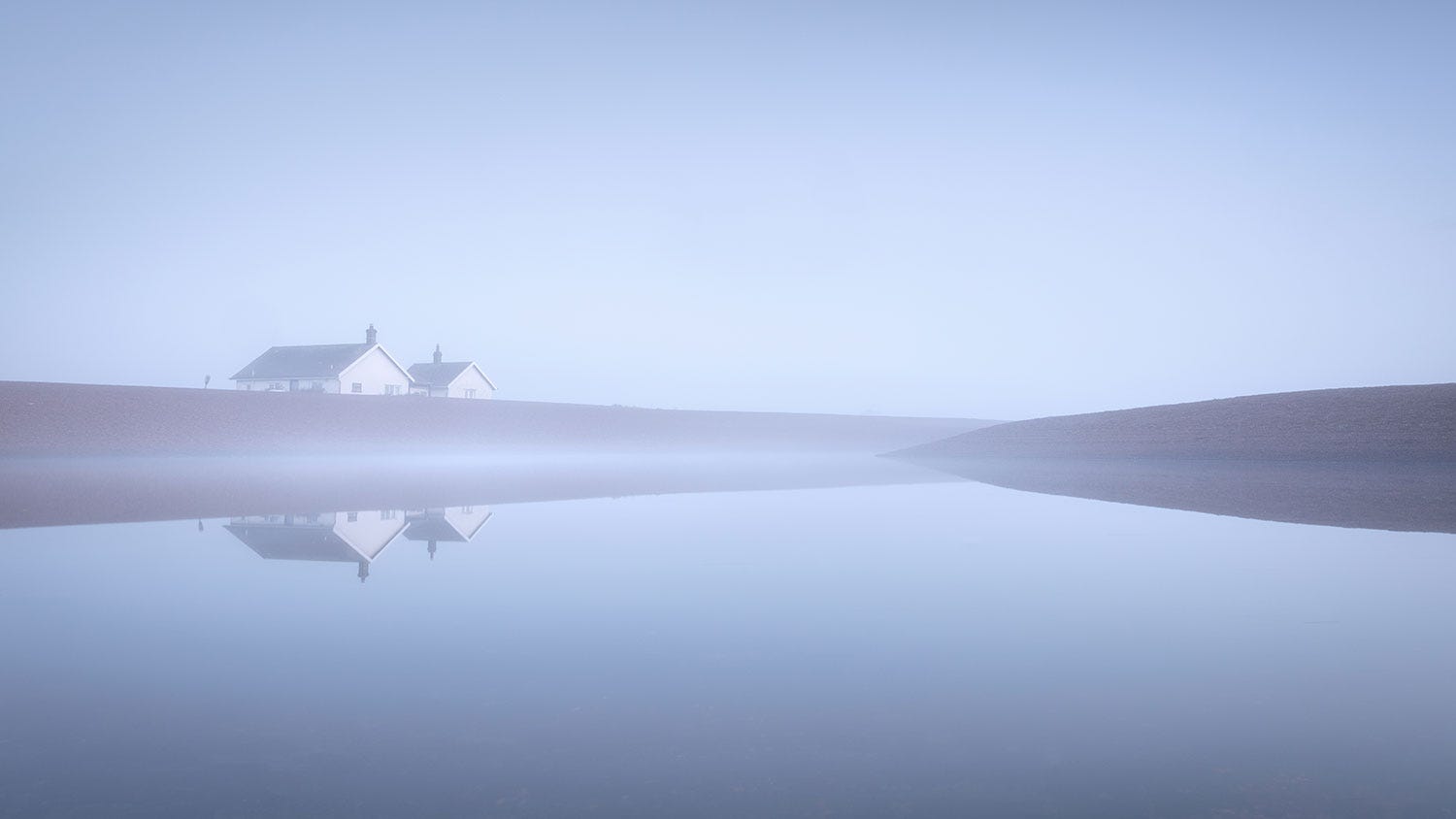
The image below is made up of a series of triangles - the two banks on either side of the frame, the water in the foreground and the roofs of the buildings are all composed of triangular shapes. The eye will follow the triangles to their points, leading us to the intersection where the two shingle banks and the water meet. We then see the triangles of the buildings.
Squares and rectangles
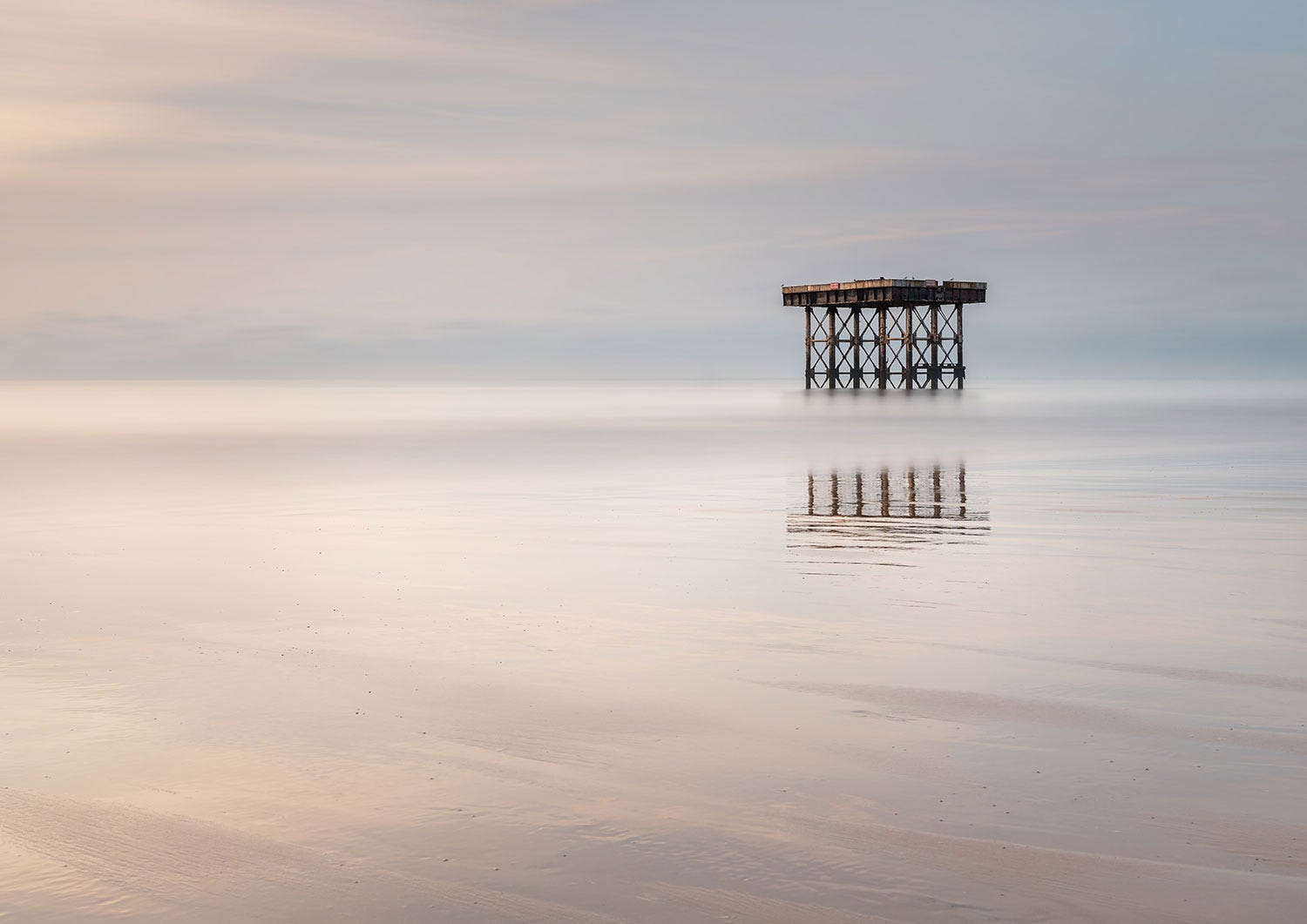
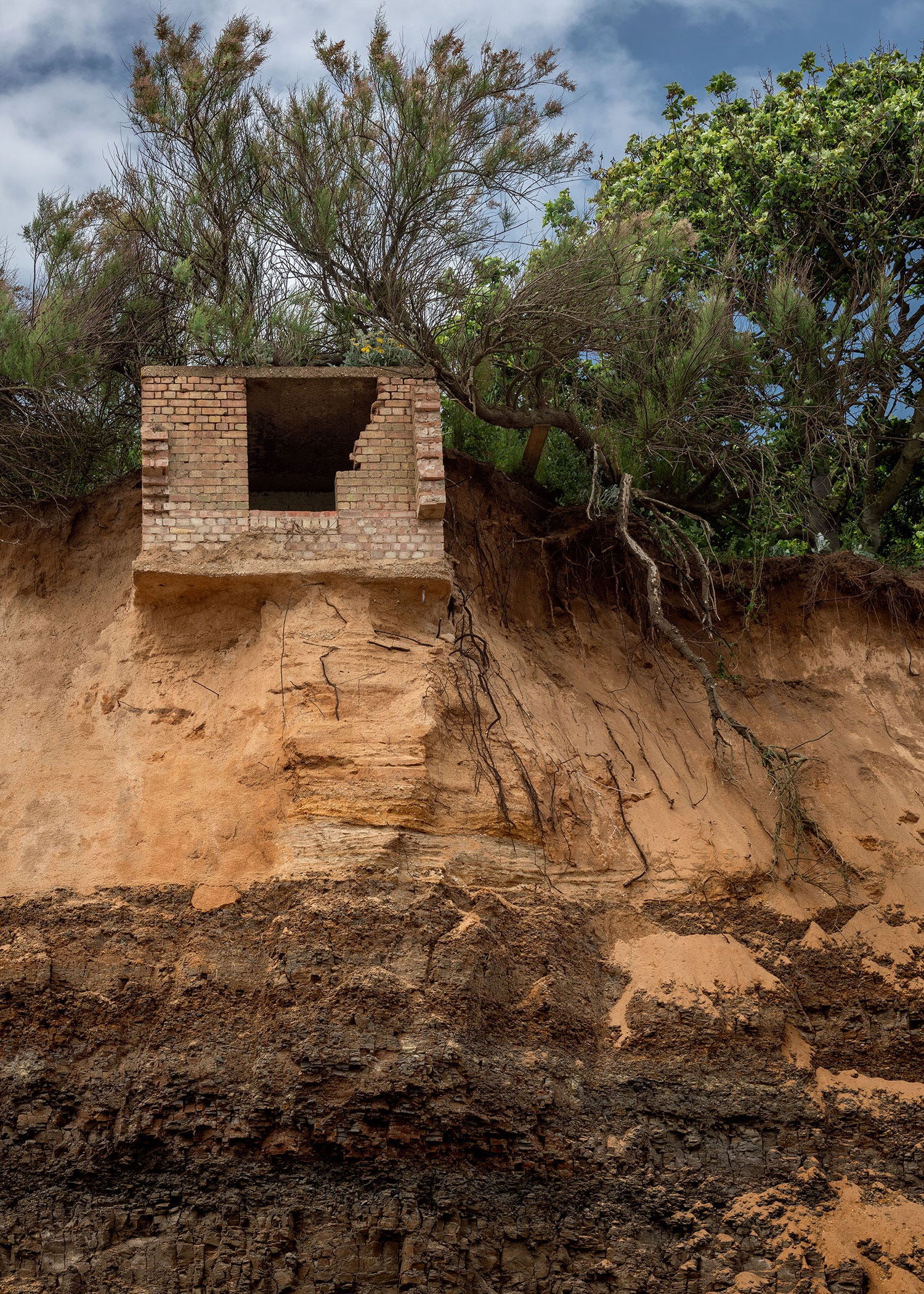
Squares and rectangles are associated with stability, order, and simplicity. As geometric shapes they are rarely found in nature but they do appear in the landscape in the form of buildings, man made elements, agriculture and architecture.
Squares and rectangles tend to act as static elements within the frame creating a sense of calm and balance, whereas triangles and curves are more dynamic and create more movement.
Real or implied shapes
Not all shapes in the landscape are made of physical elements. Shapes can also be implied rather than real. An implied shape occurs when the viewer’s eye connects individual subjects to form a recognisable shape. These hidden shapes are powerful because they help organise a scene subtly. They create structure without drawing attention to themselves - we often tend to see the overall shape rather than the individual elements.
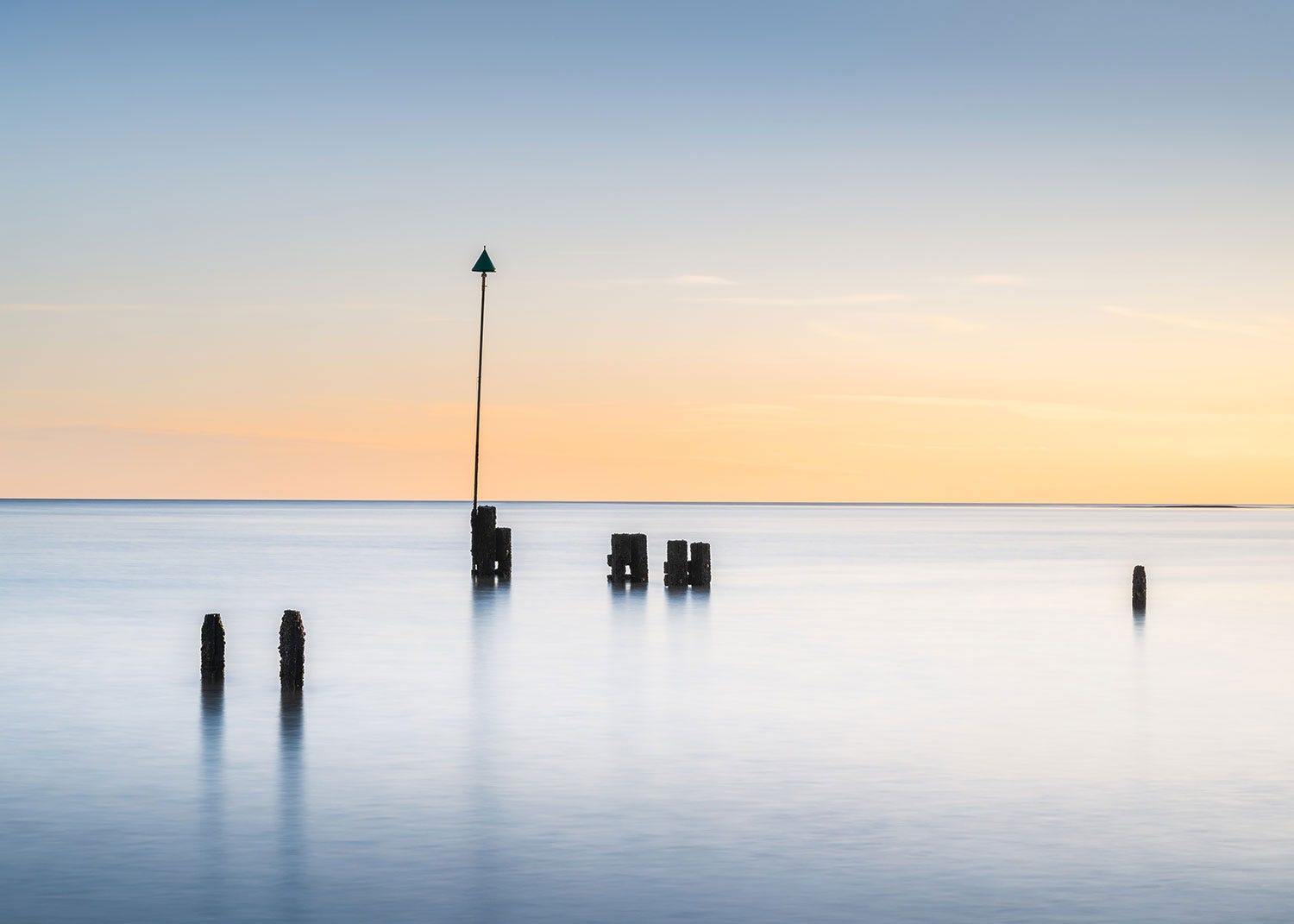
Implied shapes can be found in groups of subjects - eg three trees could form an implied triangle or an arrangement of posts as in the image below.
One of the best ways to improve composition is to simplify what you see. Before pressing the shutter, ignore colour, texture, and detail for a moment and look only for shapes.
Ask yourself:
What is the dominant shape in this scene?
Where does it lead the viewer’s eye?
Does it create balance or tension?
Can I change my position to strengthen the shape?
Are there other shapes that support the composition?
By focusing on the geometric building blocks within a landscape, you gain greater control over how viewers experience your photographs.
Inspiration
If you would like some more inspiration have a look at the work of Mark Fearnley. His images feature the built environment but his use of geometric shapes is brilliant.
July Challenge
This month’s challenge is to photograph shapes within the landscape and use them as a principal part of your composition. We will be looking at:
Circles and curves
Triangles
Squares and rectangles
I will discuss these ideas further in my weekly inspired posts, but in the meantime if you would like to take part in the challenge then please share your images to the chat and if you have any questions please leave them in the comments.
No posts
Comments
Nothing yet. Say the first thing.
Sign in to join the conversation.