
Hello and welcome to Inspired, a weekly email for my paid subscribers. In this series I want to explore topics which I hope might spark some inspiration for your own photography. I will talk about my thought process for creating images, both in the field and in post processing. The posts will be linked in some way to the monthly challenges, hopefully giving you all lots of food for thought.
Composition in landscape photography is made up of many elements. When we stand in front of a scene we subconsciously use leading lines, horizons, paths, and any obvious structural elements we can find within the landscape to create a visual flow through the image. Manmade lines tend to be straight and the horizon is always so, but in nature lines are usually composed of gentle curves or circular forms that offer a greater sense of movement than straight lines ever could. This week we are going to look at curves in composition and how we can use them to create flow within our images.
Curves within the landscape feel natural. Unlike straight lines, which tend to move the eye directly from one point to another, curves encourage the viewer to slow down and explore the photograph. They guide the eye through the frame, allowing it to linger on different elements before arriving at the main subject. For the viewer this creates a more immersive experience allowing us to explore the frame in a slower and more deliberate way.
One of the most effective compositional shapes is the classic S-curve. This is a longer more drawn out shape than a simple curve and it allows the eye to be guided naturally through the frame weaving between foreground, mid ground and background before arriving at the focal point. Rivers, streams, winding roads, footpaths and even lines of vegetation often form S-curves that add movement and structure to an image. They help transform what might otherwise be a static landscape into one that feels dynamic and immersive.
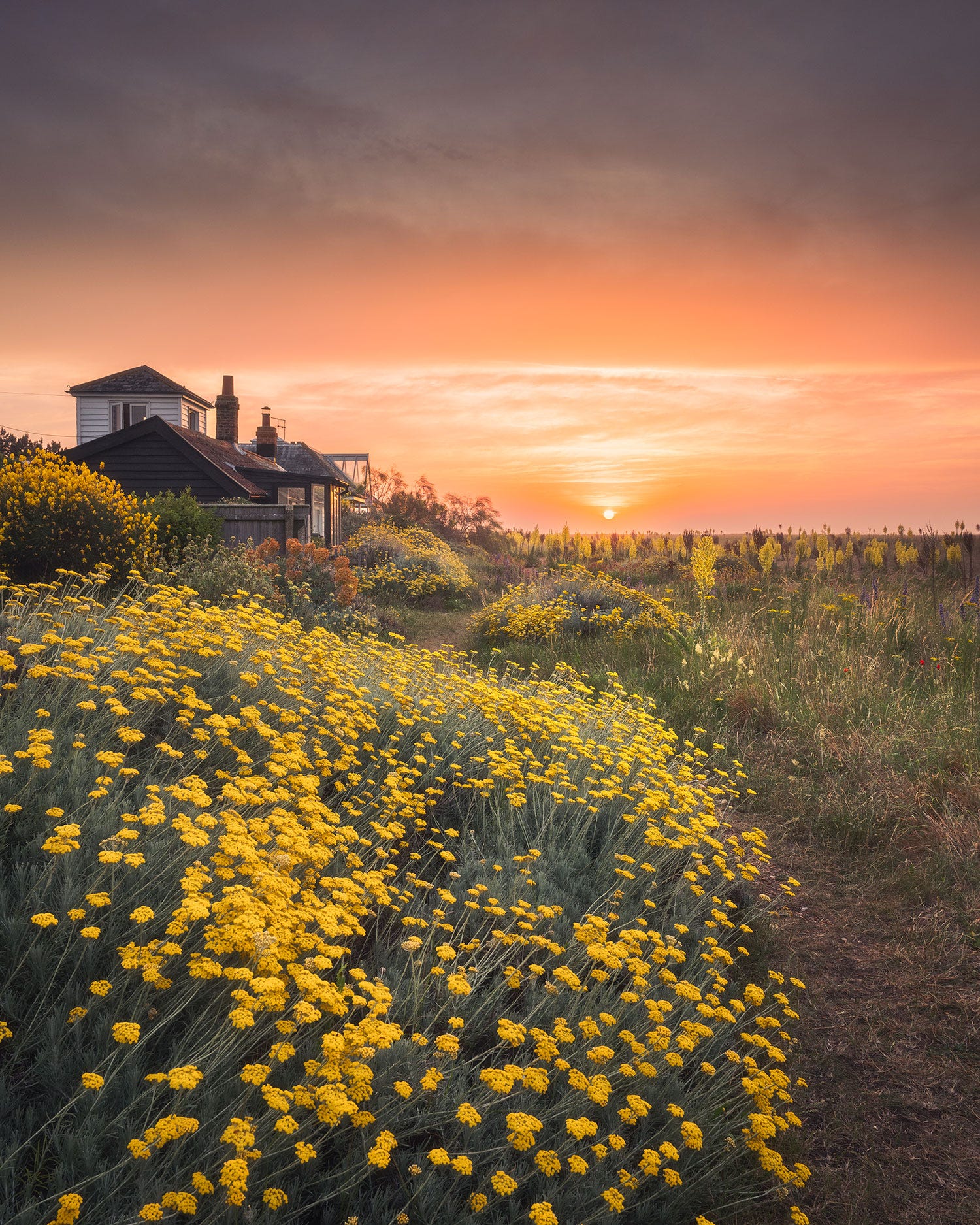
In this image below I have used the edge of the flowers growing around the path to create a visual flow towards the horizon and the rising sun. The curve is created by the placement of elements within the frame, which in turn creates the visual flow and depth with the image. By placing the flowers at the bottom corner of the image I have created some initial impact which immediately draws the eye into the frame.
Curves do not have to be s shapes, they can just be gentle bends within the image. The important thing is that they should act as a visual bridge between different parts of the composition.
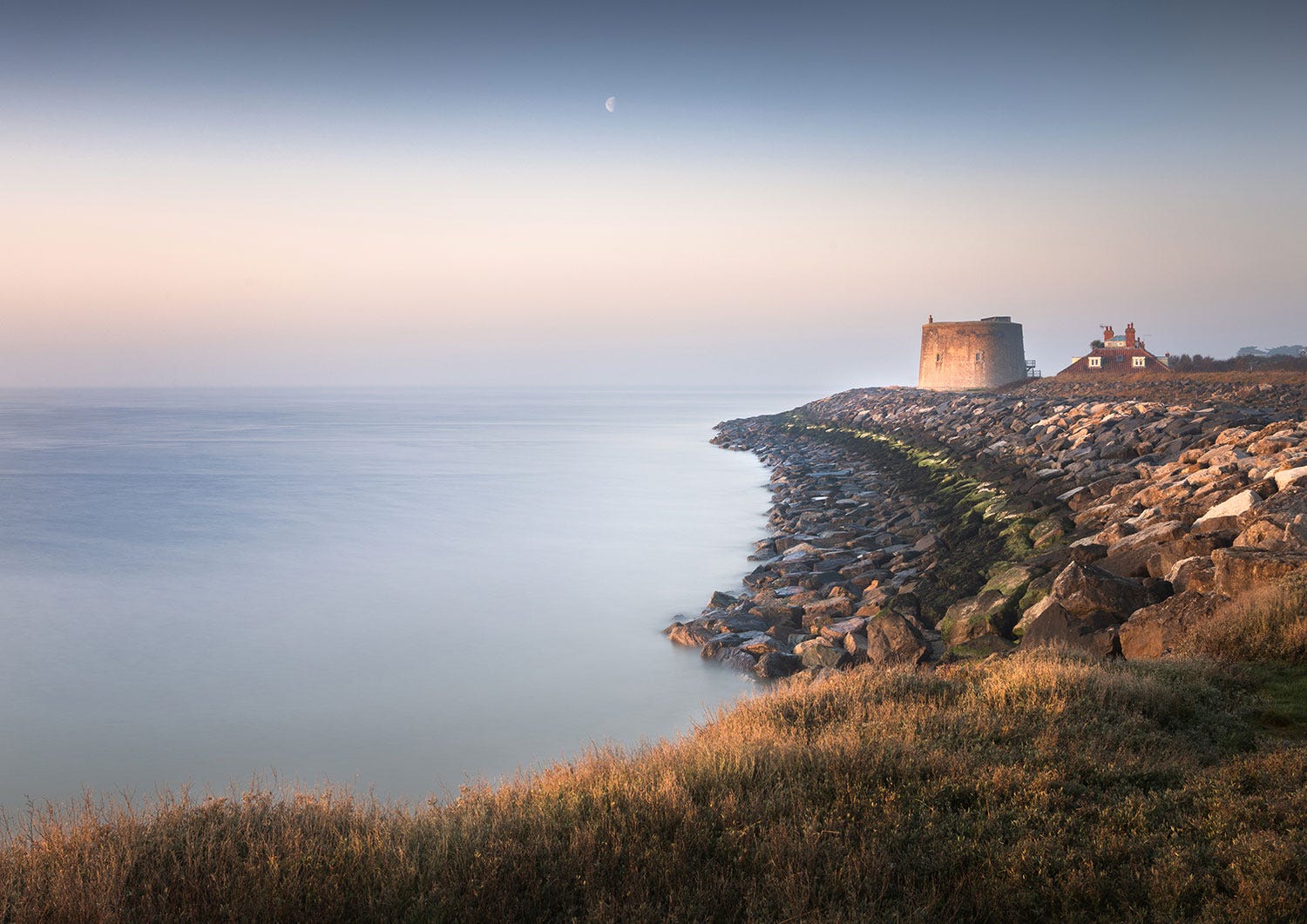
In the image below the curve starts in the bottom left corner and takes the viewers eye into the image and around to the Martello tower. This is the main focal point in the scene. From here the eye then tends to go to the moon in the sky above.
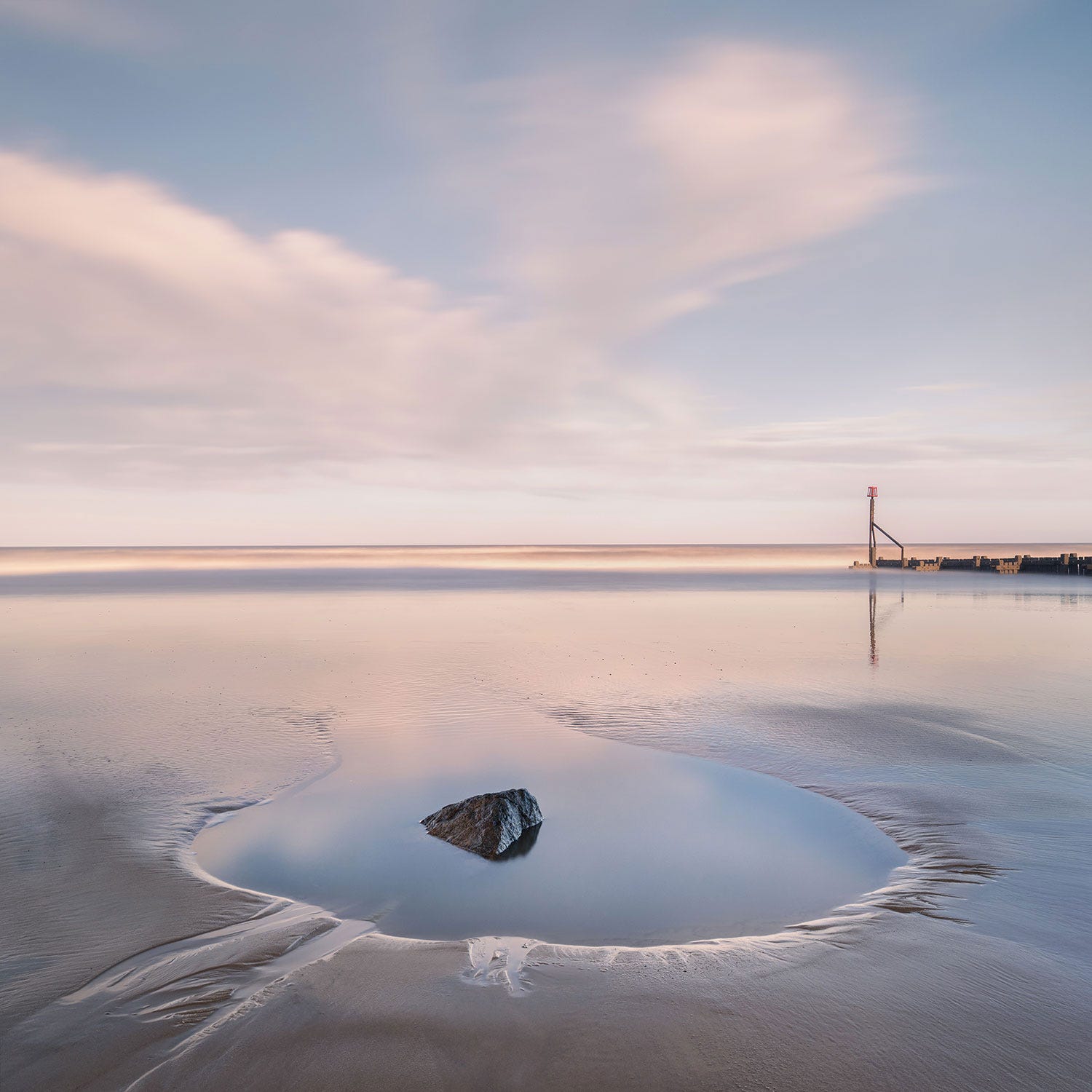
Circular shapes work in a slightly different way, they don’t lead the eye but encourage it to stay in one place within the image and explore that in more detail. Instead of creating flow circles can create a sense of balance and completeness. encouraging the viewer to keep exploring the image rather than quickly moving on. The image below is a good example of this. The eye tends to explore the pool, looking at the edges, the sand patterns and the light on the sand before exploring the rock and then moving on towards the horizon and the groynes in the distance.
Finding circles and curves within a landscape can often feel challenging and I don’t think it is a good idea to go out and focus specifically on looking for these elements. Instead ask yourself a few questions and focus on noticing how natural elements flow within the scene. Curves are not always physical objects, they might be composed of the edges of things or created by the play of light and shadow. Ask yourself:
How does my eye naturally travel through this scene?
Is there a curve that connects the foreground with the background?
Does the curve lead towards my subject or away from it?
Can I position myself so the curve becomes more prominent?
Is there a way to use the curve to keep the viewer’s eye inside the frame?
Changing your viewpoint is often the key to revealing stronger curves. Moving just a few metres to one side, lowering your camera closer to the ground or finding a slightly elevated position can completely change the relationship between the curves in the landscape.
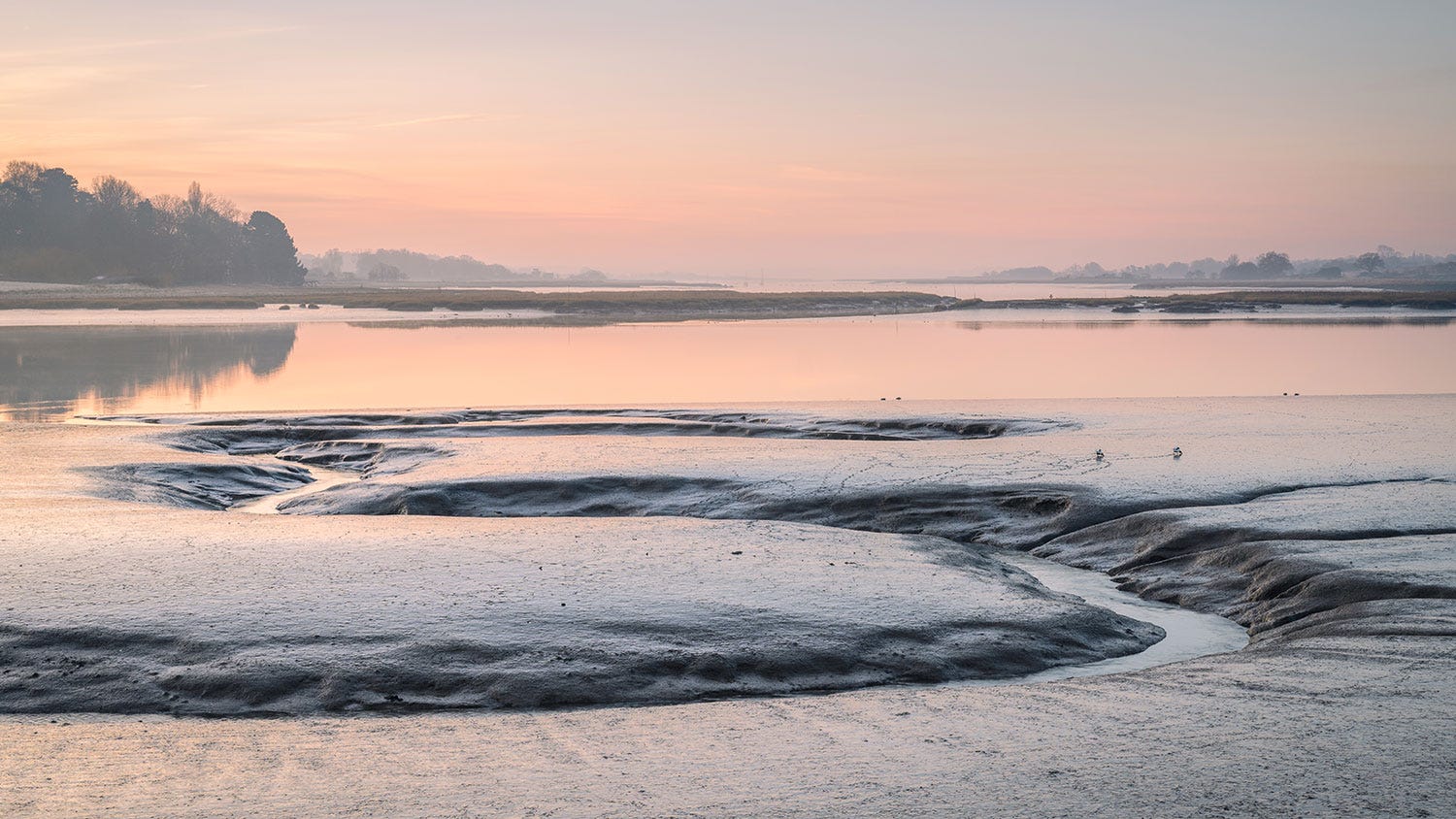
In the image below the gentle sweeping curve of the channel allows the viewers eye to travel into the scene slowly taking in all the detail of the mud and eventually allowing the viewer to see the colours of the reflected light on the water beyond. It allows the viewer to savour the image instead of leading them quickly into the scene. A straight line in this composition would have been a direct route to the river but a much less interesting one.
Wide-angle lenses are particularly effective at emphasising curves because they exaggerate perspective, making foreground lines appear larger and more dramatic. Placing a curving element close to the camera creates a dominant feature that draws the viewer deep into the scene (as in the first flower image above.) Longer focal lengths allow you to isolate subtle curves within the landscape, simplifying the composition and removing distractions.
Light also plays an important role. Side lighting accentuates the shape and texture of curved features by creating shadows that define their form.
When using curves, think carefully about where they enter and leave the frame. A curve that begins in the corner of the image immediately acts as an attention grabbing element drawing the viewer naturally into the scene. Curves work best if they have a destination - they should lead somewhere, ideally to the focal point within the image.
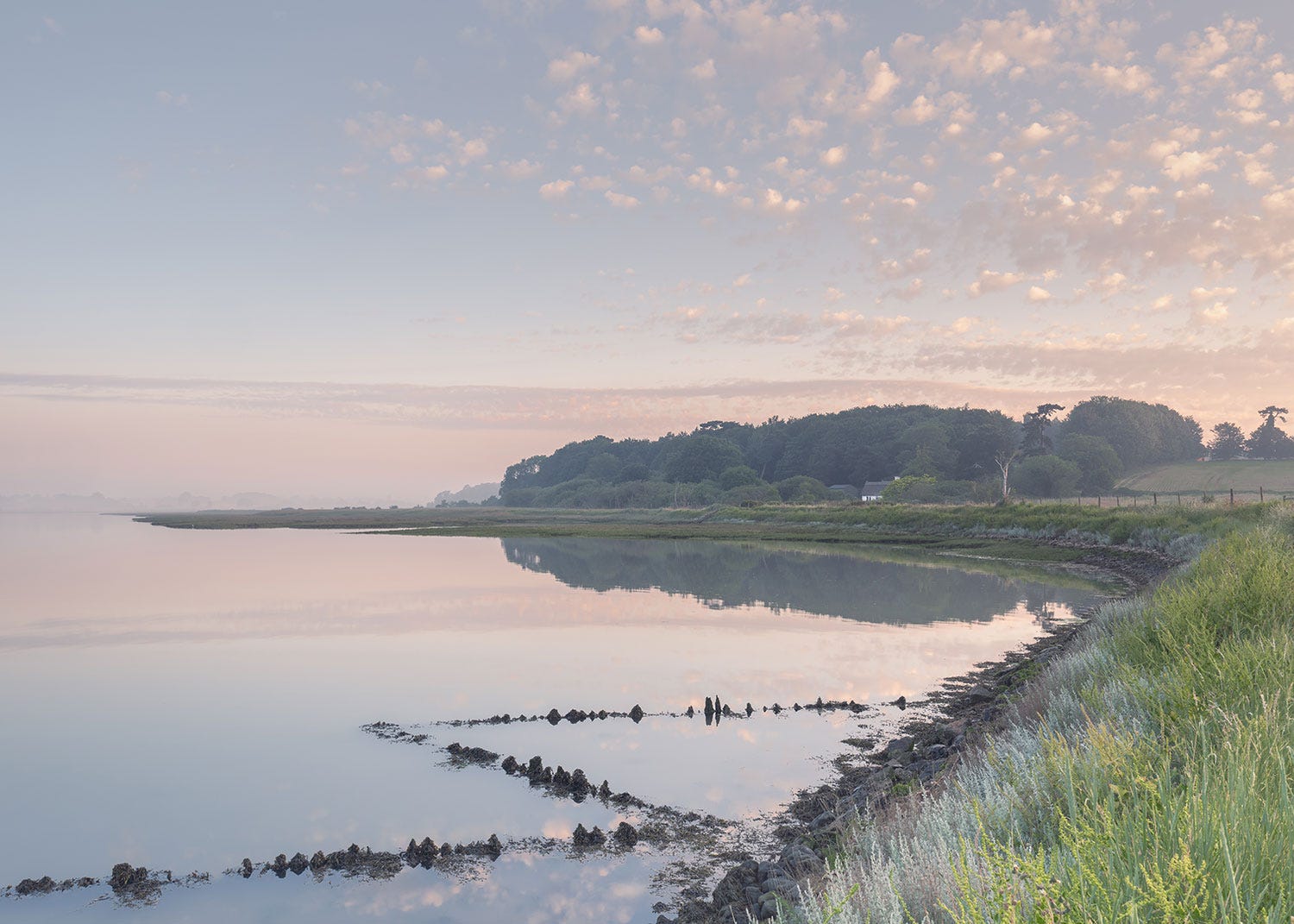
In the image above the curve of the river leads the eye around to the little white house in the woods and then on to the river beyond. The addition of triangular shapes in the foreground have the effect of bringing the eye back into the bottom of the frame so repeating the circular journey.
Curves are a very useful compositional tools, creating visual flow through the frame and allowing the viewer to slow down and explore the scene in more detail. They are less directional than a straight leading lines, but in my opinion they are more interesting because of this. Curves create movement and visual flow through an image, but they also create order and balance and invite the viewer to immerse themselves within the scene rather than just look at it.
I hope this has given you some inspiration for creating your own images featuring curves and circles. If so please share your images in the chat.
Thank you again for taking out a paid subscription and please chat or comment to get the most out of it.
Gill
No posts
Comments
Nothing yet. Say the first thing.
Sign in to join the conversation.