
Fast forward a couple of centuries, and distilling has made its way to Europe. In language we would use now, distilling is becoming one of the key enablers of a growing phenomenon - medicine, still a brand new idea. Then, at a monastery in Southern Europe, there is a huge moment in our story.
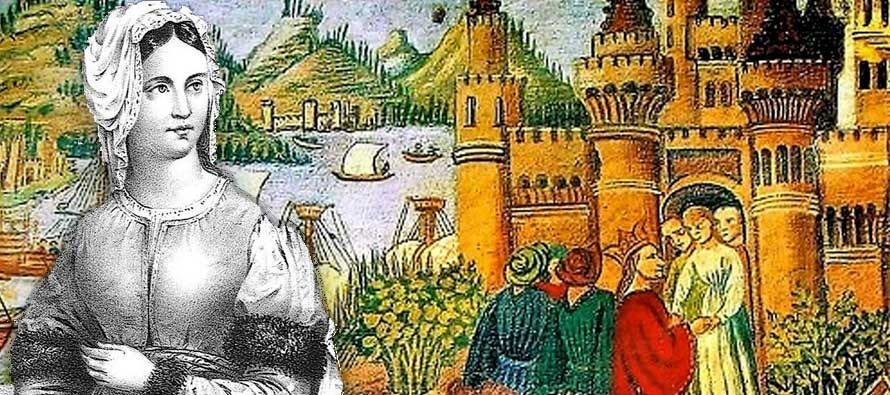
The Schola Medica Salernitana was founded in the 9th century and for four hundred years was far and away the most important source of medical knowledge in Europe. Based in Salerno in Southern Italy, just next to Naples, the school was in the middle of a trade route between Tunisia, Libya, and Italy and gradually the school became the bridge between Islamic and European science.
Crucial medical texts came pouring out of the school. One, Antidotarium Nicolai, commonly known as the bible of medieval practical pharmacy, was packed with recipes for the creation of medicines from different plants, including - drum roll please - a juniper based distilled spirit, or the first ever recorded gin recipe.
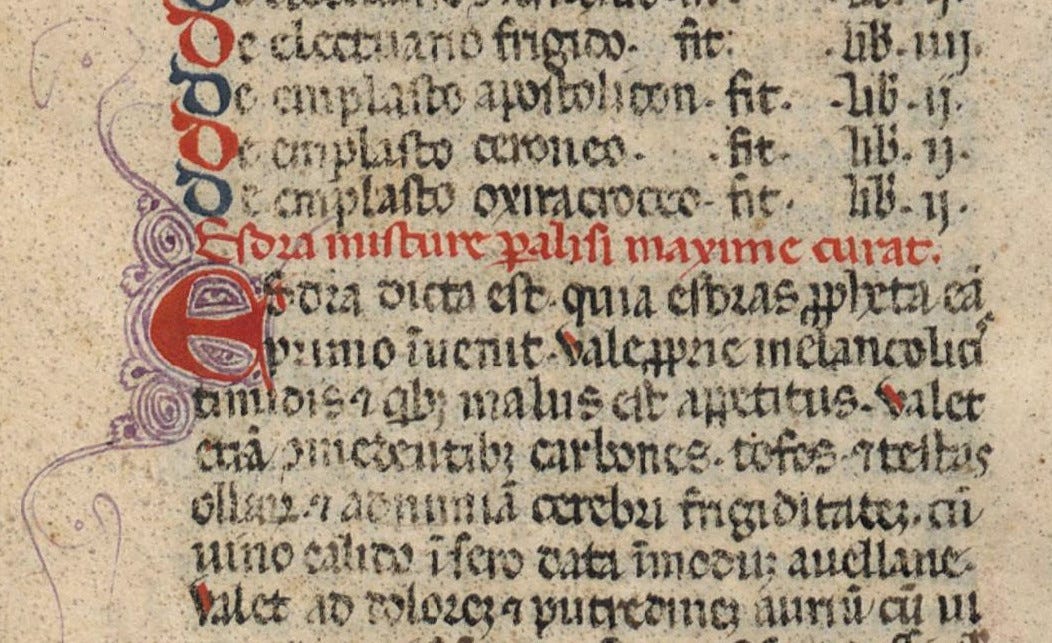
This invention of this ur-gin is still pretty early for us, and the drink would be utterly unrecognisable - distilled wine that has been distilled again with juniper would be seriously fiery, completely unforgiving, and mouth puckeringly tart - but, we are definitely on our way.
What people are describing as medicine at this point is what today we would call a tonic - drink this and you will feel better. Juniper based cordials with their antiseptic qualities quickly become the rage - they make colds better, they comfort the heart, they help with toothache, they improve digestion, they heal the bite of a mad dog, they help you sleep, they help warm you up if the weather is freezing, and so on, and so on. Juniper had centuries of trust from its history at the heart of society. Now it was being paired with alcohol. Humans seized the opportunity and never looked back.
Medicine was big news and it was catching on like wildfire. Distilling, together with the required skills and equipment, was swept along with it. Medicine was still the privilege of the learned few - primarily monks - and supply was scarce. Monasteries at this point were not just religious centres. They were also places of learning, medicine, and innovation.
In 1347 the Black Death landed in Italy and swept through Europe. The role of monasteries and their supply of doctors and medicines, not to mention distilled spirits flavoured with juniper, was about to become even more crucial.
It’s pretty hard to imagine now how terrifying this period must surely have been. Members of your family would go from being healthy to their skin turning black and dying in 24-48 hours. Their body would be untouchable, presuming you understood the idea of infection. As a result, people were surrounded with corpses and panic, waiting.
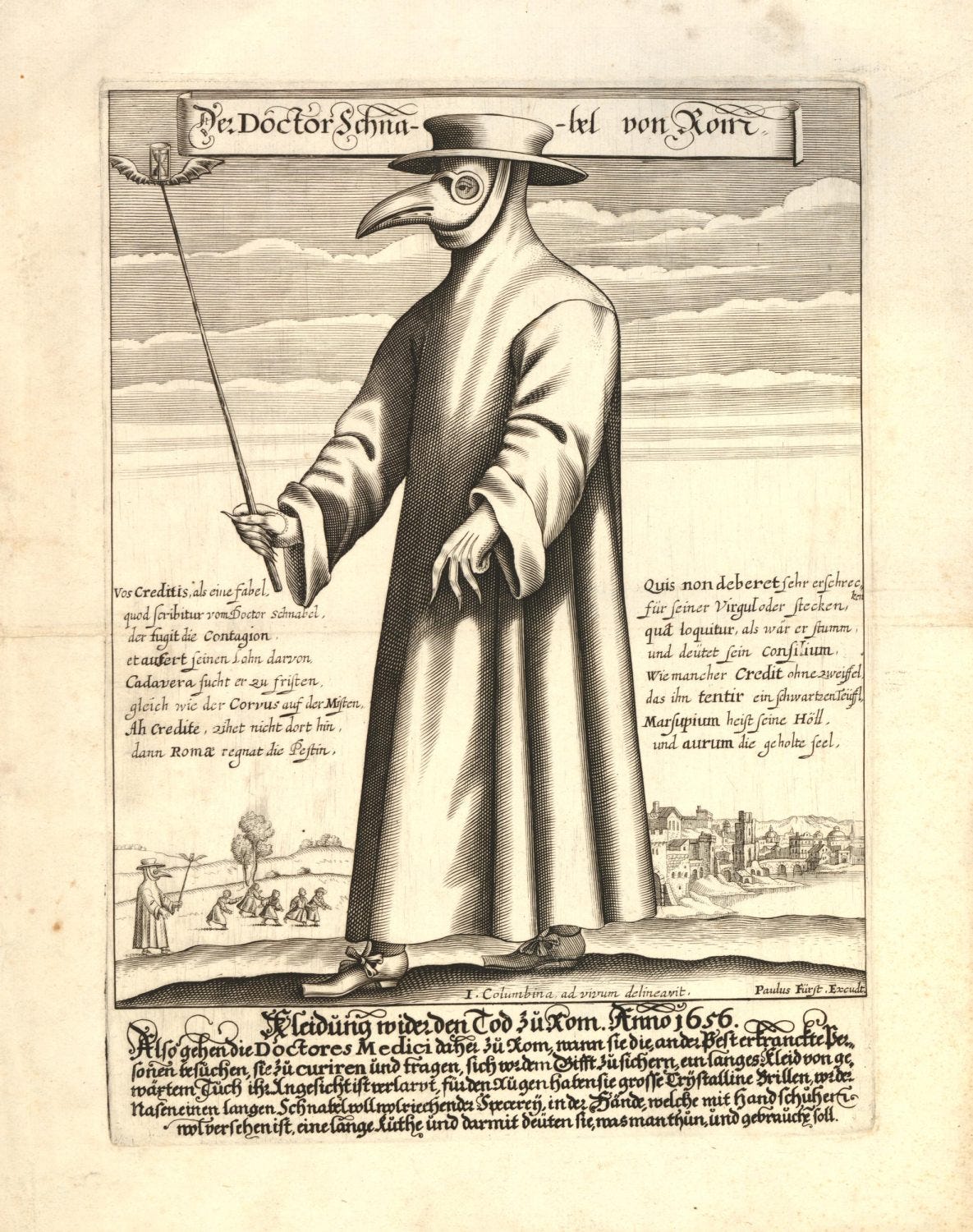
If you ventured outside your door, you might see the plague doctors, who with their Darth Vader black cloaks and giant bird-like masks stuffed with aromatics and juniper berries, were presumably utterly terrifying.
The beak was full of juniper, and was designed to filter the air the plague doctors would breathe. They were carrying ur-gin with them to treat people with. Juniper was believed to ward off the disease. Even the fiercest most throat-burning spirits, that must have seemed undrinkably potent in normal times, presumably felt acceptable if there was a chance you might not die.
Monasteries, with their herb gardens and distillation knowledge, were where these powerful medicines and cordials came from. They already controlled much of the wine production, and they had the education, literacy and stability needed to work on their distillation skills. This was the network that spread distilling skills across Europe, their knowledge becoming increasingly valuable as people desperately sought remedies for the waves and waves of devastating disease that wracked Europe for 300 years. Distilling, and ur-gin, moved fast.
The scarcity of distilled spirits made them extremely valuable. Monks were well aware of this. Anybody who likes a Last Word or a Naked & Famous and lived through the Chartreuse drought of 2023 has a tiny window into what it must have been like 500 years ago, when you knew medicine was available and you just couldn’t get it.
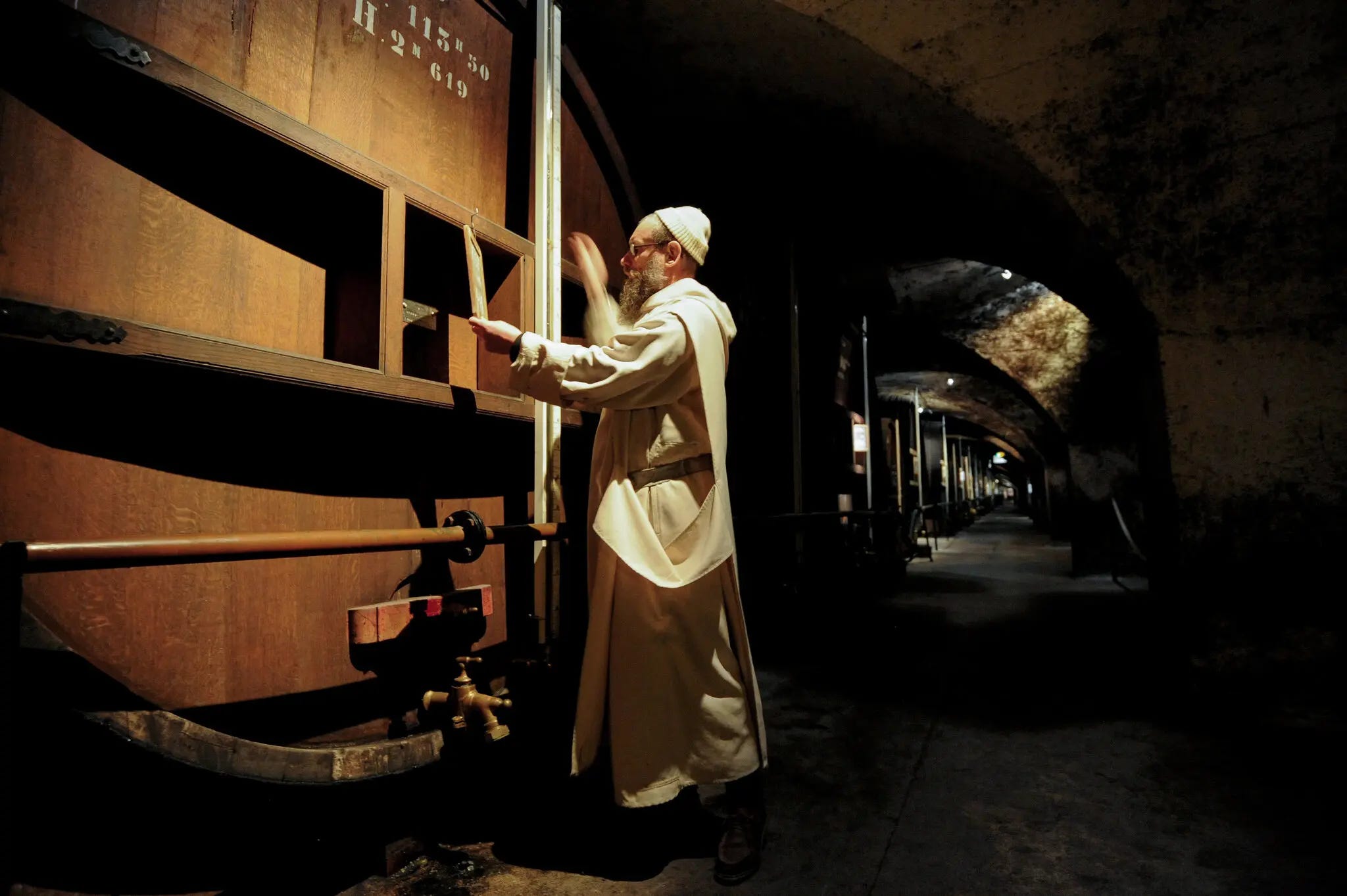
Charteuse is the last remaining liqueur made exclusively by monks in a monastery, The Carthusian monks' dedication to maintaining traditional production methods for Chartreuse, including their refusal to ever expand production beyond what they can personally oversee, is well worthy of its own article. Only two living monks know the full recipe for Chartreuse, and even during the Covid pandemic they stuck to their Middle Ages motto: “The cross is steady while the world turns.”, roughly translated as “We live happily in eternity, even when the hipsters cry”.
Up in the French Alps, the Carthusian monks live a simple, unchanging life - spending their days in prayer, silence, and making Chartreuse, just as they have done for the last 900 years.. For everyone else back in the late 1400s, everything was just about to change . One of the biggest inventions in the history of mankind was going to turn society on its head. More to follow.
Comments
Nothing yet. Say the first thing.
Sign in to join the conversation.