
NASAMS—the National Advanced Surface-to-Air Missile System—is a networked, modular, short-to-medium-range ground-based air defence system jointly developed by Norway’s Kongsberg Defence & Aerospace and America’s Raytheon. It reached operational capability in the mid-1990s and is now operated by roughly 16 nations. A NASAMS fire unit comprises a Kongsberg-built Fire Distribution Centre (FDC) for command and control, an AN/MPQ-64 Sentinel radar for detection and tracking, launchers, and Raytheon’s family of missiles1. NASAMS fires the same AMRAAM used by fighter aircraft, giving air forces logistics commonality. The upgraded NASAMS 2—operational from 2006—offers roughly 40 km missile range; NASAMS 3, from 2019, adds AIM-9X and AMRAAM-ER out to 50–60 km. Australia has a customised NASAMS 3-generation build.
It’s important to note that NASAMS have two distinct launcher types: a six-missile canister launcher that is truck-transported but must be lowered to the ground and datalinked to the FDC before it can engage, and a lighter, four-missile High Mobility Launcher that fires directly from its host vehicle, trading magazine depth for speed and no-notice readiness.
Neither launcher is co-located with the radar or the FDC that cues it; a fire unit is not a single vehicle but a networked cluster of separately-vehicled, separately-positioned assets, with radar and launcher elements able to disperse more than 20 km apart while still sharing target data over a low-latency datalink. This “any sensor, any shooter” design, present in NASAMS from its original 1990s architecture, trades the vulnerability of a single co-located kill chain for survivability: destroying or jamming one sensor or launcher does not blind or silence the rest of the fire unit.
The acquisition, run under Project LAND 19 Phase 7B, is mature and consistently described in sovereignty terms: Defence Minister Richard Marles tied the July 2025 first live-firing directly to “growing our sovereignty.” The program is valued at around A$2.5 billion, delivering two batteries of three fire units each, with introduction into service tracking to mid-2026. This is not a straight import—the standard Raytheon Sentinel radar is replaced with two Australian-designed AESA radars from CEA Technologies, and the FDC is built in Adelaide under technology transfer, giving the Australian variant more than 50 per cent local industry content. But that figure describes the launcher, not the payload: the missiles the system actually fires are entirely American, ITAR-controlled, and delivered via Foreign Military Sales. The radar is Australian. The round is not.
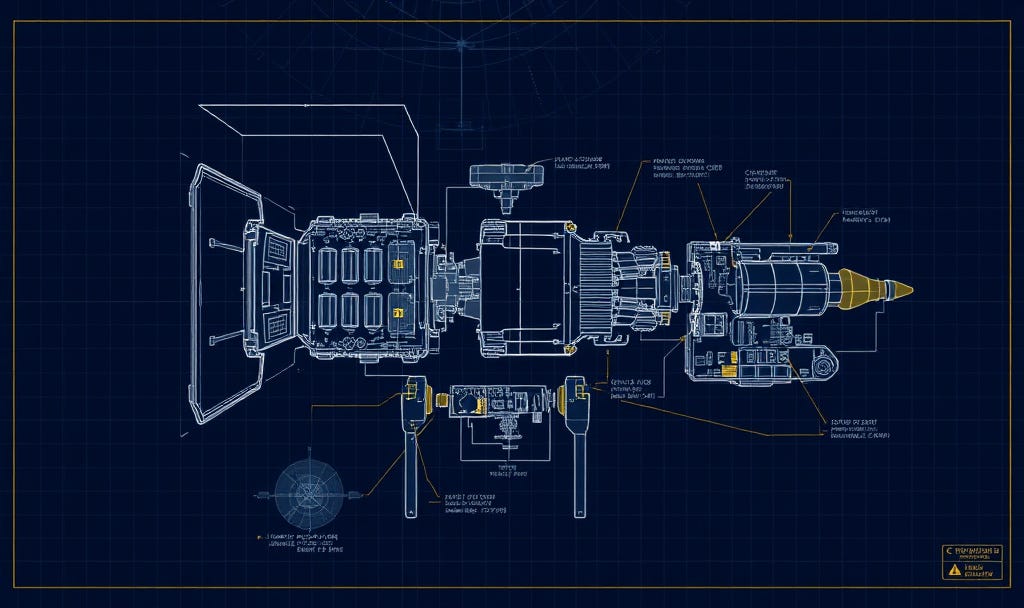
As with previous Supply Chain Anatomy pieces, and loosely inspired by Sven Biscop’s observations on strategic autonomy, here is a breakdown of the NASAMS’s key components, assorted into degrees of Australian sovereignty.
Full Autonomy
Nil. No part of the Australian NASAMS fit is entirely free of foreign design, IP or licensing control, including the sovereign radars, which still operate inside a Kongsberg-integrated architecture.
Strategic Autonomy
CEA Technologies‘ CEATAC and CEAOPS AESA radars, acquired under a roughly A$137 million contract. Designed, built and majority government-owned in Australia, with the underlying GaN AESA2 technology already sovereign, this is the strongest link in the chain.
CEAOPS, the larger radar that cues the whole battery, is housed in a 20ft ISO container on an HX77 8×8 truck.
Thales Australia’s Hawkei Protected Mobility Vehicle sits alongside the radars in this layer: built in Bendigo under an established Australian program.
The Hawkei hosts the CEATAC radar, Raytheon’s AN/AAS-52 sensor and the High Mobility Launchers—if used—across multiple Hawkei vehicles within a singular fire unit.
Shared Autonomy
The Fire Distribution Centre, built in Adelaide by Kongsberg Defence Australia with a supply chain of hardware components sourced through local firms including REDARC Electronics, Daronmont Technologies, Eylex and Defence Coating Systems.
It rides in a truck-mounted shelter; a lighter HX40 4×4, reserving the HX77 specifically for CEAOPS’s heavier container.
Australia can build and maintain the FDC hardware, but the core C2 architecture and mission software remain Norwegian IP.
Dependence
The AIM-120 AMRAAM and AIM-9X Sidewinder interceptors: all US-manufactured, delivered through Foreign Military Sales, with missile-level maintenance and deeper repair sitting outside Australian control.
The launchers that fire the missiles sit here too:
The High Mobility Launcher’s (HML) underlying design for the truck-mounted four-missile launcher array belongs to Raytheon and Kongsberg, with development reaching back to at least 2018. Raytheon Australia has stated the Hawkei-specific fit involved 24 months of local assembly, integration and testing, so there is adaptation and assembly in-country.
The Kongsberg Mk 2 six-missile canister launcher is an unmodified Norwegian design, carried on a HX77 or HX40/HX40M then lowered to the ground for firing.
The AN/AAS-52 Multispectral targeting sensor, with high-resolution day/night optical and infrared tracking, produced by Raytheon, providing passive surveillance and target queuing to the FDC.
The Rheinmetall MAN HX-series trucks themselves are a German/Austrian design out of the Rheinmetall–MAN joint venture; IP control remains firmly offshore, and Australia is reliant on that overseas supply chain for major driveline and chassis components regardless of local content.
Rheinmetall’s Military Vehicle Centre of Excellence at Redbank, Queensland, has been building local capacity and workforce through the Land 121 logistics truck program, which included heavier HX-series variants—a genuine, if partial, mitigant against being a straight import.
Subordination
Not a formal export ban but the standing ITAR regime governing AMRAAM release, technical data and end-use, backed by US allocation discretion under the Defense Priorities and Allocations System in a crisis. The constraint sits with a decision-maker in Washington regardless of how much of the surrounding platform is built at Edinburgh or Mawson Lakes.
Utilising the Resilience Triangle, as developed by Tierney and Bruneau3, we can assess some sample cases of the potential disruptions to the supply chain. In NASAMS as a platform and Kongsberg Australia as a local subsidiary, Australia has some strong points, but the ammunition is an issue. And without ammunition, there’s no air defence.
Assessment
Both of the most critical vulnerabilities for Australia’s NASAMS supply chain run through the United States and through Raytheon. Raytheon, and any decision of the US government, controls the ammunition and Australia’s ability to repair. The integration site at Mawson Lakes means that there is domestic hosting of the necessary repair, and Australia holds right-to-repair over the domestic radars and—through Kongsberg Australia—the hardware and basic software of the FDC, but genuine maintenance and deeper repair of the missiles themselves is contractually tied to Raytheon.
Australia’s sovereignty over its own NASAMS capability is resilient in its skeleton, but brittle in its arsenal and its genuine operability.
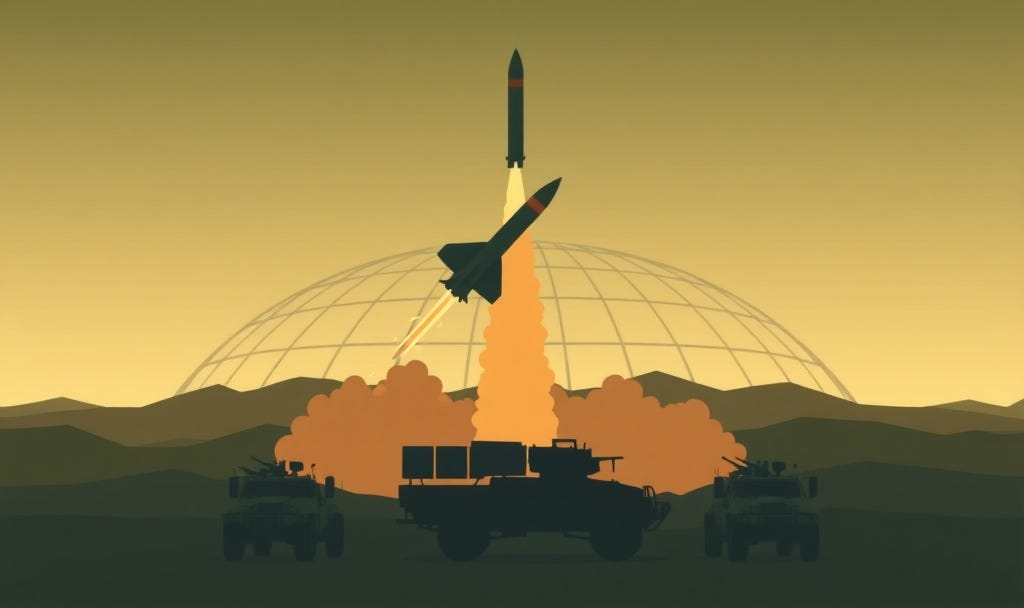
NASAMS’s service record is now extensive. In Ukraine, fielded since November 2022, the system has intercepted more than 900 aerial threats at a 94 per cent effectiveness rate, per Colonel Per Steinar Trøite, head of Norway’s Ukraine support effort, around 60 per cent cruise missiles, the remainder chiefly Shahed loitering munitions. And demand for air defence, given Russia’s invasion of Ukraine and the air war between Iran, the US and Israel that dragged in multiple nations in the Middle East, is climbing drastically.
On the production front, it is less about the NASAMS themselves, but the greater pressure on the ammunition, with US munitions and missile stockpiles dropping dangerously low. NASAMS’ production landscape outside Norway and the US is thin but growing. Japan and the US are jointly assessing co-production of the AIM-120 through the two countries’ bilateral defence-industrial consultations, likely more of a production license in the early stages. No such arrangement exists for Australia, which acquires every round as a finished US import. Tellingly, AMRAAM does not appear on the Guided Weapons and Explosive Ordnance Enterprise’s (GWEO) domestic production priority list, which is instead standing up local GMLRS and Joint Strike Missile manufacturing. There are also options for acquisition expansion for Australia with the AMRAAM-ER and the GaN-based GhostEye MR radar, but these remain roadmap options without any commitment.
More concretely, the 2026 National Defence Strategy prioritises a Medium-Range Ground Based Air Defence capability, and the June 2026 “Taipan Strike 26” live-fire—an SM-2 launched from an expeditionary trailer launcher, cued by a CEA radar and integrated with a virtualised Aegis combat system—suggests Australia’s medium-range future may run through an Aegis/CEA path rather than a NASAMS-derived one.
NASAMS have shown themselves to be an incredibly valuable part of Ukraine’s air defence, while the quick spiral of conflict in the Middle East following Iran’s retaliation against their neighbours with their conflict against the US and Israel showing how quickly the lack of air defence can be punished. Australia seemingly has a coherent structure for the NASAMS and potential tie-in to the wider platform apparatus with intriguing technology involvement at the radar level. What Australia lacks is the scale, either at the launcher or the ammunition level; these are also the elements likely to either run out the fastest or be spread too thin, trying to cover too much ground.
Defence should declare AMRAAM magazine depth as a tracked capability metric, benchmarked against Ukraine-scale expenditure rates. This is entirely within Australia’s own control and requires no external cooperation. Australia’s numerous AIM orders and buy-in are clearly necessary on some level to acquire munitions we don’t have, but without a published (even if classified-in-detail) days-of-supply benchmark, “sufficient stock” remains a future assertion rather than a current, measured position, let alone an acquisition we can judge across a broader capability-development timeline.
Australia should pursue formal access to Japan’s emerging AMRAAM co-production arrangement with Mitsubishi Electric and Raytheon. Australia has numerous companies and SMEs that have the capability to serve as elements of the supply chain if Japan and the US wish to scale up production numbers—and thus requisite component sourcing—fast. Australia’s defence SMEs need opportunities to get involved in larger deals that will enable them to scale. There are few larger prospects than air defence as the military drone capabilities evolve.
A second certified integration and depot-repair site should be scoped as insurance against the Mawson Lakes single-point-of-failure identified in the Resilience Triangle. This need not be immediate, but the option should exist before, not after, a disruption. This should also serve as a future prospect for expansion in itself, going from integration and depot-repair to greater manufacturing options, if Australia’s commitment to air defence capability is genuinely focused on domestic production rather than forking over money to sit in the queue for overseas acquisition.
Principally the AIM-120 AMRAAM, plus the AIM-9X Sidewinder and extended-range AMRAAM-ER.
Active Electronically Scanned Arrays (AESA) is a type of computer-controlled radar that streets its radio beam electronically without physically adjusting the antenna. A flat panel covered in hundreds to thousands of tine, independent transmit-and-receive modules (TRMs), instead of a single large transmitter and moving dish. The Gallium Nitride (GaN) indicates that it uses gallium nitride semiconductor technology.
Comments
Nothing yet. Say the first thing.
Sign in to join the conversation.