
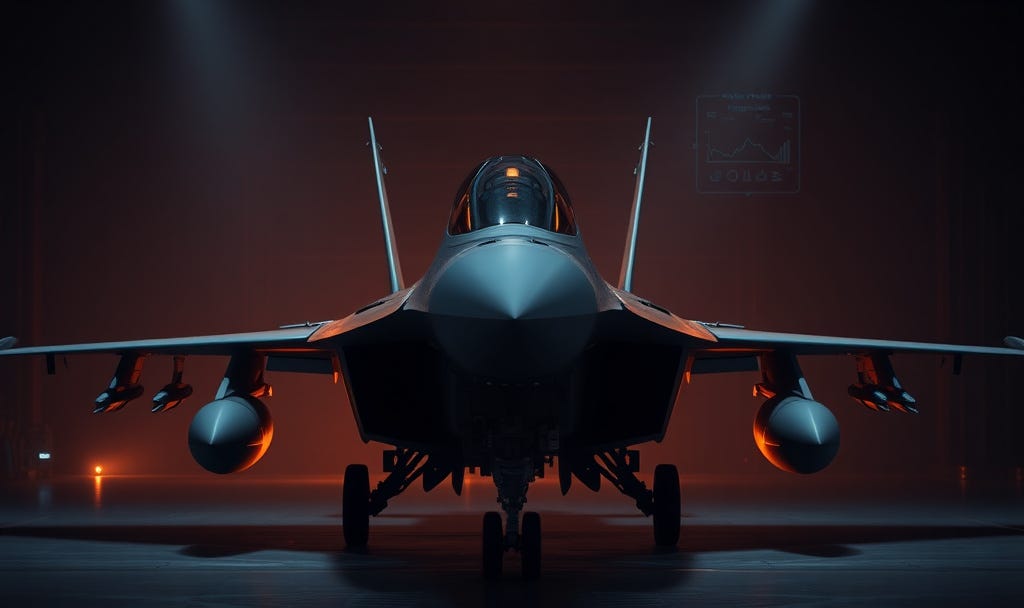
Aerial Intercept Missiles, or Air-to-Air Intercept Missiles, are the critical munitions both of increasingly advanced and long-distance air forces, as well as doubling up as the ammunition for ground-based air defence and interception platforms like the National Advanced Surface-to-Air Missile System (NASAMS). In this piece the three we’ll primarily be looking at is the AMRAAM and Sidewinder, the two most prominent munitions in Australia’s air force and interceptor arsenal, and the JATM, which Australia has already signed up for, despite the expected waiting time for delivery being close to a decade at best.
The AIM-120 AMRAAM (Advanced Medium-Range Air-to-Air Missile) is the Western world’s standard beyond-visual-range air-to-air missile, built by RTX/Raytheon in Tucson, Arizona. It flies under inertial guidance with mid-course datalink updates, then switches to its own active radar seeker for the terminal intercept. Australia fields it in two roles: as the RAAF’s primary air-to-air weapon on the F-35A, F/A-18F Super Hornet and EA-18G Growler; and as the baseline interceptor on the Army’s NASAMS—the same round, unmodified. The current order, approved by the US State Department on 9 April 2025 and formalised in a July 2025 Letter of Offer and Acceptance, covers up to 200 AIM-120C-8 rounds for NASAMS and up to 200 AIM-120D-3 rounds for RAAF fighters, at an estimated US$1.04 billion.
The AIM-9X Sidewinder is the short-range, infrared-guided complement—also RTX/Raytheon, using an imaging infrared focal-plane-array seeker and thrust-vectoring control for extreme off-boresight shots. It arms the same RAAF fighters and can also fire from a NASAMS Hawkei launcher.
The newest arrival is the AIM-260A Joint Advanced Tactical Missile (JATM), built by Lockheed Martin for the US Air Force and Navy since around 2017, purpose-built to counter China’s long-range PL-15 and PL-17. On 6 August 2026, at Exercise Pitch Black in Darwin, Defence Minister Richard Marles announced Australia’s commitment—almost A$736 million against a US-approved package of up to 450 missiles—making Australia the first country outside the United States to operate the weapon, once received1.
As with previous Supply Chain Anatomy pieces, and loosely inspired by Sven Biscop’s observations on strategic autonomy, here is a breakdown of the of the AMRAAM, Sidewinder’s key components, along with a brief note regarding just how little public information there is around the JATMs, assorted into degrees of Australian sovereignty.
Full Autonomy
Nil, plainly. No component of AMRAAM, AIM-9X or JATM is designed, fabricated or assembled in Australia.
Strategic Autonomy
Depot-level sustainment through Raytheon Australia. This is extremely limited: it covers storage, handling and routine testing, not deep seeker- or motor-level repair, which stays with the US primes.
Shared Autonomy
Nil. While the United States is pursuing licensed AMRAAM co-production with Japan and RTX has arrangements with European suppliers at various levels, Australia remains a buyer, rather than a contributor. This remains consistent with the JATM, a US Air Force/Navy program with Australia strictly as an FMS purchaser.
Dependence
AMRAAM’s guidance section is RTX at Tucson; its warhead (WDU-33/B, WDU-41/B) is built as an integral part of the airframe with no distinct external subcontractor identified in open sources.
The AMRAAM rocket motor, historically, has two qualified sources: Northrop Grumman as the original US supplier, and Nammo of Norway, which was qualified in 2012 and now in genuine full-rate production, producing 90 rocket motors per month for the AMRAAM production line.
AIM-9X, by contrast, has its Mk 139 rocket motor coming solely from Northrop Grumman at Allegany Ballistics Laboratory, West Virginia.
The AIM-9X WDU-17/B warhead is produced by Argotech Corporation.
Only in September 2025 did RTX receive a contract to qualify a second-source rocket motor assembly and a second source for the WDU-17/B warhead itself, explicitly to support US Navy/Air Force/Army demand plus Ukraine and other FMS customers.
JATM sits entirely with Lockheed Martin, Orlando, with no component-level detail public—a data vacuum, not evidence of single-sourcing, but consistent with it.
Subordination
Each and every round of all three missiles moves via US Foreign Military Sales under the Arms Export Control Act; delivery timing, prioritisation and repair authorisation are US government decisions.
The AUKUS ITAR exemption (in force since September 2024) eases license paperwork but doesn’t touch FMS allocation, nor does it affect the US’s Excluded Technologies List (ETL) on which targeting and smart weapon intelligence features heavily.
Utilising the Resilience Triangle, as developed by Tierney and Bruneau2, we can assess some sample cases of the potential disruptions to the supply chain. In this case we’ll be looking at the physical layer, the wider US-dependent structural layer, and the ongoing software and mission data upgrades and reliance.
Assessment
Australia’s position for sovereignty and supply chain security over its air intercept missiles is poor; it can’t establish a clear pathway to be able to definitively say that such missiles are or—for the foreseeable future—will ever be sovereign.
The most pertinent example of Australia’s dynamic here is Australia’s former missile in this role; the ASRAAM. Australia chose the British-designed short-range ASRAAM in 1998 to equip its F/A-18A/B “Classic” Hornets, and only its “Classic” Hornets. When Australia acquired 24 F/A-18F Super Hornets in 2007, they also opted to buy into the US munitions the Super Hornets were pre-configured for, the Sidewinder and the AMRAAM. To incorporate the ASRAAM onto the Super Hornets would have meant that Australia carried the engineering and software testing costs to modify Boeing and US Navy operational programs3. When Australia acquired 72 F-35As, it again chose to buy into the US’s baseline weapons package to maintain seamless access and utility of the US Air Force software updates.
This meant that when the Classic Hornet fleet was retired in 2021, the ASRAAMs were lacking a role on either the Super Hornets or the F-35As, and so were retired along with the Classic Hornets, despite the ASRAAM program having a level of access and involvement of Australian industry, RAAF and The Defence Science and Technology Group (DSTG) that could have served as the foundations for a domestic supply chain.
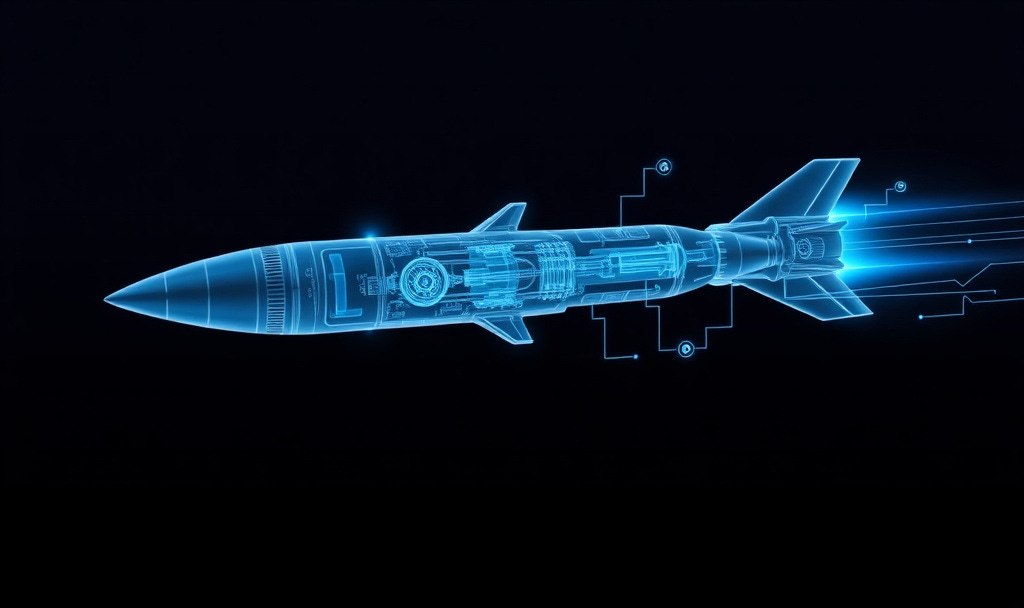
Unfortunately, there are few good answers that enable any democratic country to scale anti-air missiles to the extent that Ukraine has shown is necessary. Near-term, the trajectory is more rounds on the existing US baseline: continued AMRAAM/AIM-9X replenishment, and JATM arriving—if the 2033 estimate holds—toward the end of this decade’s planning horizon. Nammo’s manufacturing expansion into Florida could hasten this production, but it’s unlikely to significantly alter timelines for countries that are buyers and not producers or contributors, who will likely prioritise their own needs first.
MBDA’s Meteor is the most mature alternative but is being built by a six-nation consortium—the UK, France, Germany, Italy, Spain and Sweden—and is currently being produced in smaller numbers than the AMRAAM, which also means that its unit cost is higher. While MBDA has publicly announced a €5 billion investment over the next four years, that’s a portfolio-wide number that includes Aster, Storm Shadow, Mistral and MICA alongside Meteor. MBDA has doubled missile production between 2023 and 2025, but the Meteor remains an alternative option, not a volume solution.
Similarly, South Korea’s KM-SAM Block II (Cheongung-II), produced by LIG Nex1 and Hanwha, recently performed at excellent rates during Iranian strikes against the United Arab Emirates earlier this year, while being around one third of the price of US Patriot systems. The delivery timelines are also less backlogged than the US pipeline, although how much that will shift with orders coming in Saudi Arabia, Qatar, Iraq and Kuwait remains to be seen. South Korea is also in the position of having to invest in production further to meet rising demand.
As for Japan, the JNAAM (Joint New Air-to-Air Missile) research program came to an end in the 2023 Financial Year. The program, which essentially attached a Mitsubishi Electric AESA seeker to a Meteor ramjet body ran since 2014, and while Japan committed to developing a domestic sixth generation air-to-air missile in 2024, news has remained quiet since. Given the US and Japanese exploration of Japanese production of AMRAAMs, as well as advancing engagement between Japan, the US and Australia on air and missile defence, Japan likely thinks that scale is needed before domestic missile design.
Australia has deeply entwined itself into the US’s aerial interceptor consumer system, but it likely cannot afford to stay there; the timelines are too tenuous even in the most optimistic of futures. There is now overwhelming interest in scaling cheap, effective air defence and interceptors, but there will remain a widening window of vulnerability before that production scaling is accomplished.
Australia should push for a co-development partnership with Japan on interceptors, with both countries developing and scaling domestic manufacturing capabilities. Both countries have a need for sovereign access to a stockpile, both countries have companies that can contribute elements of the missile, and Australia’s position here means that Japan will have an extra regional supply chain with a comparatively stable location that aids resilience, while Australia can learn industrial lessons it can then apply domestically.
Australia should make an acquisition of KM-SAM Block II missiles to help cover gaps while other developments are in progress. The relative low-cost, high performance and likely faster delivery timeline makes the KM-SAM the most attractive proposition here. While not an air-to-air missile the same way other options here are, Australia can probably coordinate more with allies in the short-term on potential air-to-air, while ground-to-air is much less flexible.
Australia should seek to gather as much data from Ukraine’s air defence experience as possible, with the eye of developing testing, threat profile and scenario limitation briefs for Australian defence SMEs. Ukraine has endured probably the most varied aerial attack profile of recent history, certainly the fastest evolving. Australia, while not at the forefront of anti-air interceptors or air-to-air missiles, has a number of smaller SMEs working with anti-air directed energy projects as well as evolving drone companies, and building information packages that can aid them in their development and testing, serve as a basis for domestic anti-air software packages and eventually expand while Australia grows it industry will give Australia a data base to work with that could easily become a stumbling block later if unaddressed.
Reported across multiple outlets in August 2026 (Defense News, The War Zone, Army Recognition); the approved US package covers up to 450 missiles at an estimated US$3.16 billion, with Australia’s own commitment implying a first tranche well under that ceiling.
These costs are not insignificant. The UK chose to stick with ASRAAM, funding the integration of the missile into their F-35B—the F-35 variant designed for Short Take-Off/Vertical Landing—fleet. In 2021 the UK Ministry of Defence (MoD) estimated that cost of integrating the ASRAAM to be around £47 million. How that number interacts with the £184 million the UK MoD contracted out to MBDA for the actual work we’re not going to get into; because that initial contract number isn’t the trap. Every time the US Joint Program Office releases a new major software block for the F-35, weapon integrations outside of the US’s portfolio, such as the ASRAAMS, must undergo re-testing and recertification at the other nation’s expense.
Comments
Nothing yet. Say the first thing.
Sign in to join the conversation.