
[The bits of news and links got a little long this dispatch; scroll down to find them as a PS below.]
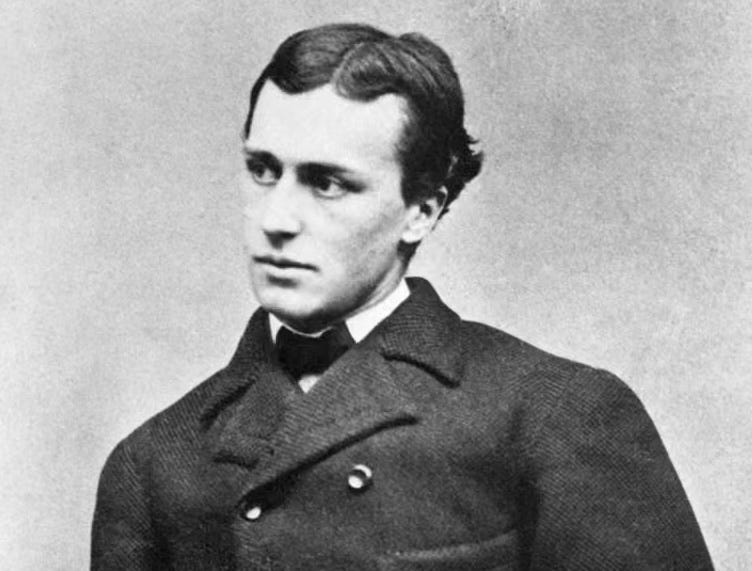
Quick & dirty version. Starting on September 19, I’m making a longstanding dream (my own, I mean) come true: I’m teaching a year-long sequence of six classes on Henry James. Each class can be taken individually, but they’re designed as a sequence; for more thoughts on the value of spending the whole year with James, see below. Each class is four sessions, with four weeks off between them. The first book we’ll read is Portrait of a Lady, the 1881 version, which, if you’ve ever been even slightly curious about James and unsure where to start, this is it. It’s a marvelous novel, moving, fun, beautiful—and, as I say in the course description, it conveys the excitement of a young-ish writer discovering his own mastery more thrillingly than any other book I know.
Each class individually is $300; or you can enroll in the whole year for $1500, which means six classes for the price of five. (There’s an option to split that up over three payments, if you’d like.) If you enroll in all six classes you’ll also get a one-on-one conference with me, which we’ll schedule for June 2027, before the final class. All classes will be recorded and videos will be sent out to everybody enrolled. Limited full and half scholarships are available for individual classes; scholarship applications for Portrait are open now. You can find all the details here.
As I say on the course page, you don’t have to love Henry James to take these classes; I love him enough for all of us. Sometimes I hear people say that James isn’t for everybody, but I’m not convinced; certainly I think anybody who cares about literature needs to be acquainted, and should have a sense of why he’s important. I’ll say that I do have a pretty good track record of helping people who are unsure of James, or who have had a hard time with him in the past, find their way in; I think there’s a good chance, even if you’re skeptical, that by the end of the class (especially if you take the whole year) you’ll be a convert.
I would also love your help in spreading the word about the class. If you have friends you think might be interested, please forward them this email and / or share this post.
The full skinny. I’ve taught a graduate seminar on James for the MFA students at NYU for the past two years. After one of the last classes this spring a student asked me if I was ready to take a break, to which my response was Absolutely not. I never get tired of James; after finishing each of the four novels I read with my NYU students, the only thing I wanted to do was read them again, right away. (There are greater and lesser James novels, I don’t love all of them equally; but everything we’re reading in our course is top-shelf.) There are lots of writers I love, but no others that make me feel that. James’s novels seem infinite to me, infinitely rich; when I say I could spend hours discussing a single page, I’m speaking literally: it has happened. Every time I read him, even a novel I know very well, I discover new things, often things I want to learn how to do. He’s revolutionary on every level: in his representation of psychology, in his conception of what constitutes narrative action, in his moral thinking, most of all in his sentences.
I discovered him at the very beginning of my life as an artist. I’ve talked about this before: the miraculous thing that happened to me, when I was a lost kid in Kentucky, failing my high school English classes, was being noticed by the choir teacher in my public school, who heard something in my voice and started giving me free lessons after school, just an unimaginably generous act. He also gave me tickets to the Kentucky Opera. As I’ve also said before, the first thing I saw was Mozart’s Cosí fan tutte, which is now one of my favorite operas but flew over my head when I was fourteen. But the second opera I saw was Benjamin Britten’s Turn of the Screw, and it made my head explode. It’s kind of crazy to think how much I owe to that one night in the theater, which introduced me to both Britten and James, who have each probably had more impact on my life as a writer than any other two figures. Even though it would be a decade before I started writing, I think pretty much the entirety of my writerly DNA was set by that opera.
Anyway: he’s been there since the beginning, a true first love. I’ve never stopped being amazed by him, and for years now I’ve wanted to engineer a way to justify wallowing in my obsession. The James seminars were meant to do that, and they did, but not enough; I was teaching workshop at the same time, and also trying to do my own writing—there was never enough time to go as deep into James as I wanted to. Over the years I’ve found that these online classes offer me the intensest way to engage with books, to take the deepest dive. A large part of that is because of the Q&A and the chat; more than once a question or comment has sent me off in a direction I never would have explored on my own.
Each class will be focused on particular works by James, reading them as closely as we can. But there’s a theme to the whole sequence as well. As I’m constantly saying, I think engaging deeply with great works of art is how a writer really pursues an aesthetic education—much more so than by taking workshops, say. (More thoughts on workshop and its deficiencies coming in a future Substack.) This is especially powerful when you learn from a writer’s whole career: not just diving deep into a book, but seeing how a writer grows and evolves over decades, how they explore and deepen similar themes, similar narrative geometries. (This last is especially amazing in James, the way the same basic figures are shuffled around and refigured in book after book. He constantly repeats himself; he never repeats himself.)
So: we’ll start with what I think is the best introduction, which is the original, 1881 version of Portrait of a Lady. This is one of those landmark novels that everyone really should read; as I say above, if you’re only going to do one of the classes, this should be it. Portrait is a bridge from the Victorian novel (think Middlemarch, a novel James very much admired) to modernism; its famous Chapter 42, in which Isabel Archer sits by the fire and just thinks for a dozen or so pages, really does invent something new in the novel. Or, rather, it imports something—those of you who took Daddy Augustine with me last year will be well prepared to see what tradition James is drawing from.
I wanted to start with a big masterwork, one of the best things James did. But James is also a master of the short form, and in the second class, we’ll do a survey of James’s career through a series of shorter works. We’ll start with Daisy Miller, James’s first big hit, which made him famous. (He would never have so much popular success again.) We’ll use it to talk about some of James’s big themes, especially “the international theme.” James is the great writer of Americans abroad, and the great chronicler of rising American influence. He was endlessly fascinated by the way Americans and Europeans fail to understand each other. After this, we’ll read two of James’s great stories about writers—the artistic life is another enduring theme—from his middle period, and then, in the third session, tackle his great novella The Turn of the Screw, which is possibly a ghost story and certainly a story about strange things happening to unhinged people in an isolated manor house. Fun! We’ll end with two of James’s greatest, late stories, which explore another of his great themes: the unlived life. All of these themes will be developed and deepened in the major works we’ll read in the later classes.
The third class is in some ways the most interesting, pairing two of James’s less studied great works, each exploring in very different ways the corruption of innocence. The greatness of the first, What Maisie Knew, is pretty much universally acknowledged. This is a devastating short novel, told from the POV of a young child whose parents are divorcing. James’s ability to remain true to her perspective while also allowing us to understand more than she can is kind of miraculous. The Awkward Age is maybe a little more controversial; it has polarized even hard-core Jamesians. I think it’s fascinating, James’s most experimental novel, written almost entirely in dialogue. It’s also James’s bitterest novel, a scathing take on a world without a moral center. I think it will be revelatory to talk about these two books together.
At the end of his career, after a great deal of disappointment and a humiliating foray into the theater, James wrote three great novels, each of them a masterpiece. I’m not sure there’s another run like it in English literature. In the last three classes, we’ll read all three of them, in the order in which James wrote them. The Ambassadors was James’s favorite of his novels; it was also James Baldwin’s favorite novel; it’s a very queer novel about a morally beautiful man’s revolution in morals. Wings of the Dove is a great, passionate, morally profound soap opera of love and betrayal. And The Golden Bowl, a story about adultery, the mystery of relationships, and one woman’s desperate fight to save her marriage, is simply the greatest novel anyone has ever written. All three novels are written in James’s famous “late style,” which has its difficulties and also, overwhelmingly, its beauties. We’ll spend a lot of time trying to figure out how it works.
As I say, I’ve been wanting to offer a cycle of classes like this for years. It’s the most ambitious teaching plan I’ve ever come up with—online for sure, but also I think in general. Twenty-four class sessions, spread over eleven months (plus individual conferences for those who do the whole sequence): I don’t think we’ll be able to call ourselves experts at the end of it, James is too huge for that. But we’ll have done a real immersion—and we’ll all be better readers, better writers, for it.
I would really love for you to join us.
As always, thank you for reading—
G.
As a PS, this dispatch, here are some bits of news and notes:
The recording of David T. Little’s What Belongs to You, an operatic adaptation of my first novel, was released last Friday. You can listen to it on streaming platforms or (strongly encouraged!) get a physical CD, which has the added advantage of being a beautiful object; the cover image is from a photograph by the great Mark Armijo McKnight. The opera is performed very remarkably by Grammy Award-winning tenor Karim Sulayman and Grammy Award-winning ensemble Alarm Will Sound, conducted by Alan Pierson. My friendships with Alan, Karim, and many of the members of Alarm Will Sound go back thirty years, to my undergraduate days at the Eastman School of Music, where Karim and I were in the same studio and Alan was my accompanist (we preferred the term “chamber partner”). I’ve written here before about how excellent I think David T. Little’s score is, but you don’t have to take my word for it: the opera won the 2025 Music Critics Association of North America award for Best New Opera. And, in an even bigger honor, to my mind, the great Alex Ross, classical music critic for The New Yorker and one of the best writers in English at the moment, wrote a very beautiful essay for the liner notes, which he has made available on his long-running, indispensable blog. I hope you’ll read it. I can’t resist noting that he gives a shout-out to this Substack (“Periodic concert and opera reviews on his Substack, To a Green Thought, are apt to make professional critics feel superfluous”); I also can’t resist sharing the immensely beautiful final paragraph of his essay:
“Early on, listeners may wonder—even as they admire the intricacy and complexity of the construction—how operatic this opera is. By the end, they will be in no doubt. Mitko, at first so potent, so sexily in command, sheds his aura of dominance as the work goes on. He is on the social margins, and when his health begins to fail, from alcohol consumption and sexually transmitted diseases, he cannot or will not avail himself of the resources that are available to the American. In the process, he becomes a wrenchingly vivid sufferer, almost a male version of the courtesan Violetta in La Traviata. At first, everything we hear and imagine is filtered through the American’s welter of preoccupations—his desires, his fears, his hang-ups, his risk-taking, his cawing crowd of memories. In the final scene, he has stepped back, beholding Mitko’s fully operatic tragedy with an artist’s wide-open, if tear-stricken, eyes. Little gives the last word to Schubert, who, significantly, speaks from both points of the equation: he transcribed in imperishable tones our deepest sorrows, and he died of syphilis at the age of thirty-one.”
Speaking of Alex Ross and great writing—they often go together—I read with something very much like awe Alex’s essay on Jürgen Habermas in a recent issue of The New Yorker. The piece synthesizes a mind-boggling wealth of information; it’s really a super-concentrated capsule history of German thought from Kant to the present, which somehow achieves accessibility without cutting corners or dumbing things down. It’s an extraordinary introduction to Habermas, and also a blistering indictment of what passes for discourse in our current moment. I can’t remember the last time I read something in a major magazine that took thinking so seriously and assumed such intelligence on the part of its readers. It made me feel something that mid-century readers of The New Yorker could take for granted, maybe: that alongside all the other nonsense, Americans can have some intellectual culture, too.
Alex has also just announced that he is stepping down as The New Yorker’s classical music critic after thirty years of service. Truly the end of an era. Happily Alex will still be writing for the magazine as a critic-at-large, and if the Habermas piece is any indication of things to come, we will all be the richer for it. But the world of classical music is losing its finest observer. As a critic Alex truly has been in a class all his own. Here on Substack, Will Robin has written a beautiful appreciation of Alex’s career, full of breathtaking quotations. Please read it.
I’m grateful for this very beautiful essay on Small Rain by Maisie Wiltshire-Gordon at the Cleveland Review of Books. “Greenwell’s beautifully meandering sentence structure creates its own webs of connection. The approach recalls Virginia Woolf’s depiction of consciousness, the way that distinct ideas cohabitate within a single stream of thought … In Small Rain, the shortcomings of facts and knowledge make space for attention and acknowledgment. The novel begins with a medical mystery: what is wrong with the narrator, and what will happen to him? But the mystery changes shape as the novel redirects us to questions that are at once bigger and smaller. What makes life meaningful? Why do potato chips taste so good? The novel’s moments of transcendence emerge most clearly in its close attention to the mundane, in the very recognition of the mundane as inextricable from the value of life, and of relationship.” A reminder that if you would like a signed copy of Small Rain, or any of my books, you can order them from my local bookstore, Prairie Lights. Just use this link and request signing/personalization in the notes.
Finally, I would love for you to join us for the next To a Green Thought Book Club, on Sunday, August 16 at 3:00pm ET. We’ll be discussing Mohamed Mbougar Sarr’s 2018 novel Pure Men, which Other Press has just released in English, translated by Lara Vergnaud. (Sarr’s follow-up, The Most Secret Memory of Men, won the Goncourt in 2021, amazingly the first book by an author from sub-Saharan Africa to do so.) In Pure Men, a thirty-something, disaffected literature professor in Dakar watches a viral video of a gay man’s corpse being disinterred, and finds his sense of himself and his world destabilized, leading him into Dakar’s queer demimonde. Fun! Book Club meets six times a year and is open to all Founding Members of this newsletter. You can sign up or upgrade your membership by clicking on the button below.
Comments
Nothing yet. Say the first thing.
Sign in to join the conversation.